Art, Nature, and Spirit by Judith Shaw

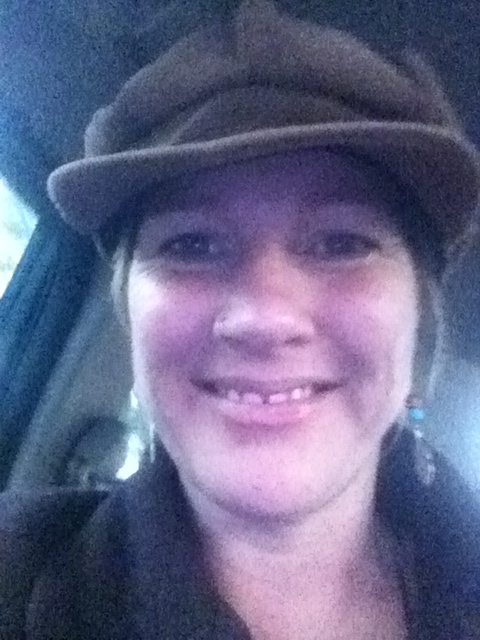
judith Shaw photoThe beauty and the power of the Earth are all around us.  Even in the poorest and most blighted urban environments trees, hollyhocks, sunflowers and other sturdy plants grow up through the concrete.  We are children of the Earth, of the Goddess, who in Her many forms, is the manifest symbol of the sacred Earth.

Most of us love the space we find ourselves in when spending time with nature –  hiking, walking, camping, birdwatching, swimming in the sea, riding a bike, working in our gardens – all activities that help us feel connected to this Earth we walk upon; that help us find an inner peaceful place.

Continue reading “Art, Nature, and Spirit by Judith Shaw”

Painting “Unknown” Holy Women: Commissions, Gifts, and the Unsung Stories of “Ordinary” Women by Angela Yarber

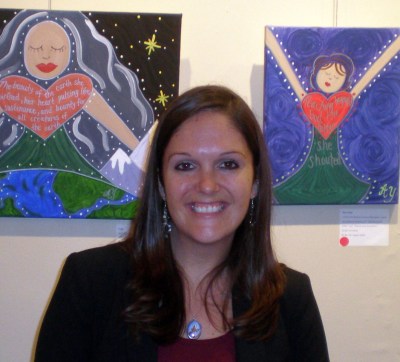
angelaEach month on Feminism and Religion, I feature a Holy Women Icon with a folk feminist twist. The painting is accompanied by an essay describing the holy woman’s life and the ways she stood for justice and peace, the ways in which she embodied feminism. Thus far, we have explored the stories of holy women that are well-known, perhaps not by the wider public, but by feminists seeking to uncover the forgotten truths of holy women throughout history. They are goddesses, saints, artists, dancers, scholars, clergy, and pillars of the faith: Virginia Woolf , the Shulamite, Mary Daly, Baby Suggs, Pachamama and Gaia, Frida Kahlo, Salome, Guadalupe and Mary, Fatima, Sojourner Truth, Saraswati, Jarena Lee, Isadora Duncan, Miriam, Lilith, Georgia O’Keeffe, Guanyin, Dorothy Day, Sappho, Jephthah’s daughter, Anna Julia Cooper, the Holy Woman Icon archetype, Maya Angelou, Martha Graham, Pauli Murray, La Negrita, Tiamat/tehom, and Mother Teresa, just to name a few.

We tell their stories in our classrooms. Other artists paint them. Many have biographies or autobiographies recounting their lives. Their stories embolden us to stay strong, and continue working for justice and equality. But what of the women whose songs really are unsung, whose stories never grace the pages of our textbooks? What about the “unknown” women who have, indeed, emboldened us, paved the way for us to be who we are, but who most people have never heard of? Many such women are also holy, thus deserving of canonization as Holy Woman Icons.
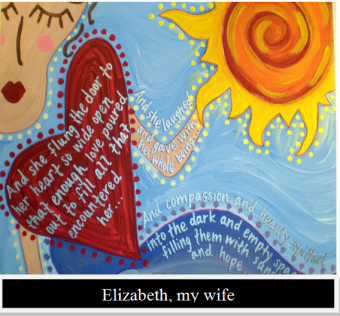
ElizabethI would like to dedicate this post to all the holy women who fill our lives, yet whose stories we never hear. Because it is not only these seemingly famous women—these heroines of feminism—who are holy and whose stories matter.   Continue reading “Painting “Unknown” Holy Women: Commissions, Gifts, and the Unsung Stories of “Ordinary” Women by Angela Yarber”

Max Dashu: Feminist Scholar, Author, Historian, Artist by Jassy Watson

JassyI had the honour of hosting Max Dashu, Feminist Scholar, Historian and Artist here at Goddesses Studio this weekend past. Max is currently on her second Australian tour and we were blessed for her to come on quite the journey to present to an intimate group of Wide bay Goddesses, “Rebel Woman Shamans: Women Confront Empire” and “Deasophy: Goddess Wisdom” with a little “Female Iconography” thrown in.

Max’s knowledge and gift of story-telling is inspirational. “Rebel Woman Shamans: Woman Confront Empire” looked at holy women and female prophets who led many rebellions to resist conquest, slavery, and colonization. These women visionaries, priestesses, diviners and medicine women challenged systems of domination on multiple levels and drew on their cultural traditions to resist empire. It was their direct access to transformative power that these women had, that makes the spiritual political, as they act to lead, defend, and protect their peoples. Continue reading “Max Dashu: Feminist Scholar, Author, Historian, Artist by Jassy Watson”

Painting Mother Teresa by Angela Yarber

angelaOf all my Holy Women Icons, Mother Teresa joins Blessed Mary in being one of the most familiar, and often the one least cited for the cause of feminism. Joining Virginia Woolf , the Shulamite, Mary Daly, Baby Suggs, Pachamama and Gaia, Frida Kahlo, Salome, Guadalupe and Mary, Fatima, Sojourner Truth, Saraswati, Jarena Lee, Isadora Duncan, Miriam, Lilith, Georgia O’Keeffe, Guanyin, Dorothy Day, Sappho, Jephthah’s daughter, Anna Julia Cooper, the Holy Woman Icon archetype, Maya Angelou, Martha Graham, Pauli Murray, La Negrita, Tiamat/tehom, and all my other Holy Women Icons with a folk feminist twist is this holy Catholic nun.

When I first began the Holy Women Icons project, she was an obvious woman who came to mind, but I resisted painting her for several years. Perhaps it’s because her story is so familiar. Maybe it’s because this pillar of humility and service embodies so many virtues that have been used to oppress women for centuries. I cannot quite articulate my resistance, but it was real. Continue reading “Painting Mother Teresa by Angela Yarber”

Painting Tiamat/Tehom by Angela Yarber

angelaToday I am honored to give a lecture on “Queering Iconography: Holy Women Icons from Sappho to Pauli Murray” at the North Star LGBT Center in Winston-Salem, NC. So, I want to continue the theme of featuring some of my queer Holy Women Icons. Joining Virginia Woolf , the Shulamite, Mary Daly, Baby Suggs, Pachamama and Gaia, Frida Kahlo, Salome, Guadalupe and Mary, Fatima, Sojourner Truth, Saraswati, Jarena Lee, Isadora Duncan, Miriam, Lilith, Georgia O’Keeffe, Guanyin, Dorothy Day, Sappho, Jephthah’s daughter, Anna Julia Cooper, the Holy Woman Icon archetype, Maya Angelou, Martha Graham, Pauli Murray, La Negrita, and all my other Holy Women Icons with a folk feminist twist is the often overlooked and misunderstood primordial goddess of creation: tehom.

In Genesis 1 we read, “In beginning, God created the heavens and the earth, the earth was a formless void and darkness covered the face of the deep, while a wind from God swept over the face of the waters.” It is the creation narrative held dear, formative, and meaningful for countless Jews and Christians. Interestingly, this word, deep, in Hebrew is tehom. Tehom translates as “deep or depths,” but it’s also a cognate for Tiamat, a Babylonian Goddess of creation. Out of the face of the deep, the world begins. Out of tehom, God creates. Out of Tiamat, the earth comes into being. This dancing Babylonian goddess syncretistically intermingles with the creation myth so pivotal to the faith of Christians and Jews in a way that could be terrifying, or beautiful, or—like the chaotic body of Tiamat that brings the world into being—both. Continue reading “Painting Tiamat/Tehom by Angela Yarber”

Painting La Negrita by Angela Yarber

angelaOne week ago thousands of Costa Ricans made a pilgrimage to visit their patron saint on August 2. Some penitents walked the 22 kilometers on their knees from the capital of San José to the Nuestra Señora de los Angeles Basilica in Cartago where the small statue of La Negrita is now on display. Joining Virginia Woolf , the Shulamite, Mary Daly, Baby Suggs, Pachamama and Gaia, Frida Kahlo, Salome, Guadalupe and Mary, Fatima, Sojourner Truth, Saraswati, Jarena Lee, Isadora Duncan, Miriam, Lilith, Georgia O’Keeffe, Guanyin, Dorothy Day, Sappho, Jephthah’s daughter, Anna Julia Cooper, the Holy Woman Icon archetype, Maya Angelou, Martha Graham, Pauli Murray, and all my other Holy Women Icons with a folk feminist twist is this seemingly small saint who has done big and mighty things: La Negrita.

Also known as La Virgen de los Angeles, the Black Virgin is a very small representation of the Virgin Mary. She was originally discovered by an indigenous woman on August 2, 1635. When the poor indigenous woman tried to take the stone statuette, it miraculously reappeared. The people responded by building a shrine around her. Continue reading “Painting La Negrita by Angela Yarber”

Queering Iconography, Painting Pauli Murray by Angela Yarber

angelaEven as my book, Holy Women Icons, is printed, bound, and available for purchase, filled with the stories of nearly fifty holy women, my project of painting these beloved saints continues. Joining all my other Holy Women Icons with a folk feminist twist is the brave, bold, and revolutionary Pauli Murray.

This month is a celebration of Murray’s life and witness is several meaningful ways. The first of July was her feast day, as she was deemed an Episcopal saint in 2012. LGBTQ author and activist, Kittredge Cherry, detailed Murray’s feast day, celebrating her as a “Human rights champion and queer saint…renowned civil rights pioneer, feminist, author, lawyer and the first black woman ordained as an Episcopal priest.” And the celebration of Pauli Murray’s radical witness continues as the icon bearing her image joins seventeen of my other Holy Women Icons at the North Star LGBTQ Center Gallery in Winston-Salem, NC for an exhibition entitled, “Queering Iconography: Holy Women Icons from Sappho to Pauli Murray.” Continue reading “Queering Iconography, Painting Pauli Murray by Angela Yarber”

Painting Martha Graham by Angela Yarber

angela

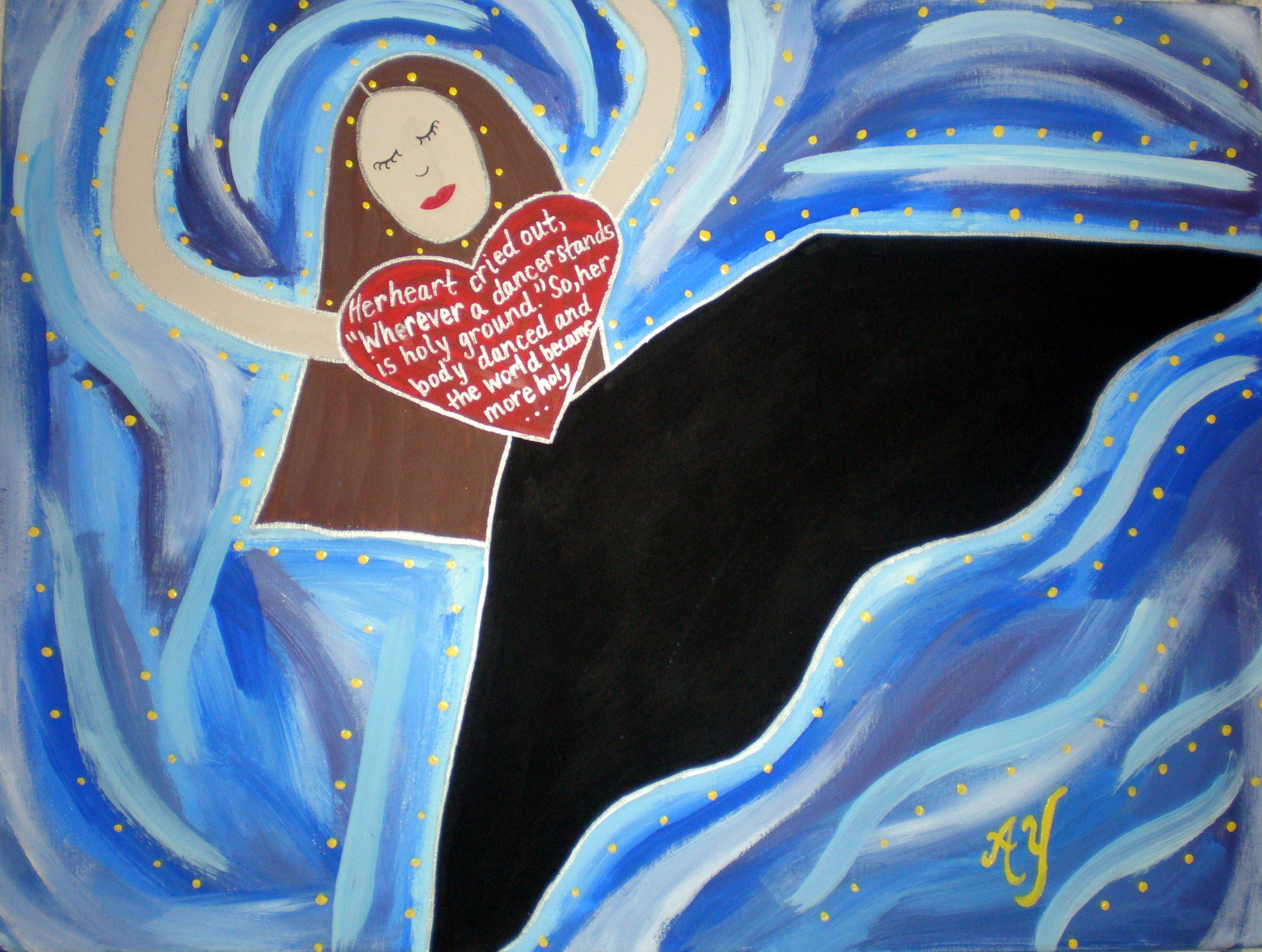
Joining Virginia Woolf , the Shulamite, Mary Daly, Baby Suggs, Pachamama and Gaia, Frida Kahlo, Salome, Guadalupe and Mary, Fatima, Sojourner Truth, Saraswati, Jarena Lee, Isadora Duncan, Miriam, Lilith, Georgia O’Keeffe, Guanyin, Dorothy Day, Sappho, Jephthah’s daughter, Anna Julia Cooper, the Holy Woman Icon archetype, Maya Angelou, and all my other Holy Women Icons with a folk feminist twist  is the dancing revolutionary Martha Graham. So, as the contemporary and modern dancers on So You Think You Can Dance continue to amaze us this summer, let us remember from whence they came.

Martha Graham’s contribution to the world of dance cannot be overestimated. She is regaled as the Picasso of the dance world, revolutionizing it by introducing an entirely new quality of movement known as modern dance. Not only did Graham revolutionize the dance world, like Isadora Duncan before her, she also made great contributions to feminist spirituality. One of her most famous statements may well have been “wherever a dancer stands is holy ground.” Like most dancers who are so in tune with their bodies, Graham new the holiness therein, the ways in which the body can express the ineffable when words alone simply cannot. “The body never lies,” she famously reminds us.

Martha Graham Continue reading “Painting Martha Graham by Angela Yarber”

Tis Babos: The Dance of the One Who Gives Life by Laura Shannon

Laura Shannon

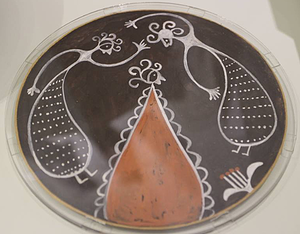
The one who gives life, the one who gives birth: this was the original image of the Creator. Not God but the Goddess, both mother and midwife to the world. Throughout Eastern Europe, Asia Minor, North Africa and beyond, Goddess worship laid the foundation for European culture. Thousands of years later, a deep reverence for the woman who gives life – the midwife – survives in Greek and Balkan dance rituals which still echo from the distant past.1

The mamí (from mámmo, grandmother) or bábo (old woman) was a respected woman, usually older, with the wisdom and experience of age. The midwife is publicly honoured on Midwivesʼ Day, January 8th. Known as Babinden in Bulgaria, Tis Babos in Greece, this women-only celebration is an important holiday in Bulgaria and in numerous villages of displaced Thracians now relocated in Greek Macedonia. One such village is Kitros, whose inhabitants originally came from Bana, on the Black Sea coast of northern Thrace (today Bulgaria). A hundred years have passed since they left, but the womenʼs festive costumes still indicate their old Bana neighbourhoods; traditional foods, songs, dance, and other customs are kept alive despite decades of brutal loss and change. Continue reading “Tis Babos: The Dance of the One Who Gives Life by Laura Shannon”

Reincarnation – A Belief Found Worldwide by Judith Shaw

judith Shaw photo

Reincarnation is a spiritual belief that our souls are reborn many times to this physical Earth plane. These many lives give us the opportunity to experience a variety of circumstances and create karma, the law of cause and effect. Through these experiences one grows, until ultimately one’s soul reaches a level in which it transcends to another dimension. Once in these other dimensions our souls continue their evolution toward oneness with Source.

I have always believed in reincarnation myself and have explored the idea in various paintings. This painting, Many Lives, illustrates that belief. The far left figure is my present self and the other figures represent selves I might have been in past lives. But the concept of reincarnation is not as ancient as I thought it was.

Many Lives, painting by Judith Shaw

It is difficult to known exact beliefs of peoples who lived before written history began but some scholars feel that ancient cultures who practiced shamanistic Earth-based religions had a concept of reincarnation. But other scholars believe that these tribes taught only of the preexistence of the soul before birth or its independent survival after death in an Otherworld. Continue reading “Reincarnation – A Belief Found Worldwide by Judith Shaw”