The Difficult Issue of the Origins of the Buddhist Nuns’ Order by Oxana Poberejnaia

oxanaThe origins of the Buddhist Nuns ‘ Order are a contentious issue in Theravada Buddhism. Paradoxically, it is also the issue that is not discussed a lot. Which is surprising, as in current Buddhism there is a gaping hole where a Theravada Bhikkhuni (Nuns) community should be. The prevailing view is that the nuns’ full ordination line was irrevocably lost long in the past and cannot be restored.

There are separate attempts here and there to bring Theravada Nuns’ Order back, including Ajahn Brahm’s ordaining a group of nuns in Dhammasara Monastery in Australia in 2009. This resulted in severe criticism by some Theravada religious leaders and expulsion of Ajahn Brahm and the monastery he leads from the organisation of the Sangha of Wat Nong Pah Pong.

AniPemaChodronMahayana Nuns receive full ordination, as it is considered that historically the Order did not lose continuity since the Buddha’s times. However, for both Theravada and Mahayana something called “The Eight Garudhammas” – the eight heavy rules – remain a painful issue. These are the rules that the historical Buddha is supposed to have given the first nuns to whom he gave ordination. These eight rules were the condition on which the Buddha would even allow women to become Bhikkhuni.

Continue reading “The Difficult Issue of the Origins of the Buddhist Nuns’ Order by Oxana Poberejnaia”

Mother of All Buddhas by Oxana Poberejnaia

oxanaQueen Maya, the Mother of the Buddha of our age, who before his Enlightenment was known as Siddhartha Gautama, died shortly after his birth. So the future Buddha was raised by his aunt and stepmother. It is said that the womb of the Buddha’s Mother needed to remain unsullied by further pregnancies. This is similar to the belief that Mary Mother of Christ did not bear any more children after Jesus, which is held by some Christian traditions.

280px-Dream_Queen_Maya_BM_OA_1932.7-9.1In addition, the Buddha’s conception and birth were both miraculous, according to the legend and some Mahayana texts (such as the 44th chapter of the Gandavyuha Sutra). The Buddha was conceived when a white elephant entered Queen Maya’s right side, or, in the Sutra, light entered the Queen’s body. The Buddha was born from his Mother’s right side. The light was emanating from every pore of the body of the Bodhisattva Buddha, while he resided in the Tusita (joyous) heaven before descending to earth. This light reminds us of the golden rain form that Zeus took to reach Danaë in her cell to conceive Perseus, and links these two Indo-European patriarchal discourses. Continue reading “Mother of All Buddhas by Oxana Poberejnaia”

Broken heart, soft heart by Oxana Poberejnaia

oxanaToday my topic is a bit weird – it is about broken heart, but in a good sense.

I’ll start with an example. My best friend and I once went to see “La Bohème” at the Leeds Opera House. It was great: the singing, the modern production. Nevertheless, the story, is, of course, heart-breaking. A working-class woman dies. However, although my friend and I were sad at the end of the opera, we also felt strangely uplifted. My friend commented on that and I said that I recall that in Christian Orthodoxy they say that a broken, shattered heart (сокрушенное сердце) is a way to God.

Open_Heart_by_charcoaledsoulIn Buddhist terms this broken heart could be described as shattered walls of an identity. It can be interpreted as a complete disillusionment with samsara: the world of the conditioned phenomena, where one thing begets another and everything revolves according to the law of conditioned arising. The broken heart may happen from realising that everything is subject to this law, but in particular: your own personality, or identity (which I discuss quite a lot in this blog).

Continue reading “Broken heart, soft heart by Oxana Poberejnaia”

Transcendence, Immanence, and the Sixth Great Extinction by Carol P. Christ

carol christIn my recent blog “The Flourishing of Life and Feminist Theology” I discussed Grace Jantzen’s view that theology should focus on “natality” or birth and life, rather than life after death or life apart from this world. This week Tikkun magazine published its summer issue with a feature called “Thinking Anew about God.” In it two male thinkers, one Buddhist and one Christian, argue for a similar turn toward the world in their traditions. Their calls for religions to focus on this world were published the same week scientists warned that the world stands on the brink of the sixth great extinction.

I have come to believe that any religion espousing cosmological dualism (devaluing this world in favor of a superior reality such as heaven) and individual salvation (the idea that what ultimately happens to me is disconnected from what ultimately happens to you) is contributing to our world’s problems rather than offering a solution. … [Religions should] stop emphasizing the hereafter and focus instead on how to overcome the illusion that we are separate from this precious, endangered earth. –David Loy, Buddhist, writing in Tikkun Summer 2014

My aim in this regard is to reawaken in each of us an emotionally felt and primordial sense of spiritual belonging within the wider natural world. In turn, my hope is that this deep sense of belonging to the earth — to God’s body, as it were — will en-flame our hearts and empower our wills to commit us to healing and saving the earth.—Mark I. Wallace, Christian, writing in Tikkun Summer 2014 Continue reading “Transcendence, Immanence, and the Sixth Great Extinction by Carol P. Christ”

Women are like countries: both need to fight hard for independence by Oxana Poberejnaia

oxanaRita M. Gross in her book Buddhism After Patriarchy presents portraits of prominent women from Buddhist history. Some stories are extraordinary for the brutal details they contain. For example, Yeshe Tsogyel was raped, kidnapped and beaten by her suitors to the point that her back was a bloody pulp. She subsequently escaped to meditate in a cave.

In a patriarchal society, religious fervour is not recommended for women. Submission and obedience – yes. The life of an ascetic, a wanderer or a hermit – no. A son is relatively free to pursue religious activities (especially if he is one of the younger children and the issue of inheritance is sorted out). However, all daughters are better off tucked into a marriage. Supporting your husband and sons on their spiritual path – yes. Independent striving away from family life – no. Continue reading “Women are like countries: both need to fight hard for independence by Oxana Poberejnaia”

“Don’t break the bucket” by Oxana Poberejnaia

oxanaVictor Pelevin is a prominent contemporary Russian author, with books translated into a multitude of languages. To me, his novels act as a series of Dhamma talks (Buddhist sermons, if you will).

I have also always thought that Pelevin’s novels can be broadly divided into two groups: “This is how to do it” and “This is how not to do it” groups. For instance, “The Clay Machine Gun” and “The Sacred Book of the Werewolf” are “How to do it” stories, with the protagonists reaching his and her (respectively) destinations. “Babylon”, on the other hand, is the “How not to do it” story, as the protagonist ends up enslaved by the world he has created.

Victor Pelevin
Victor Pelevin

One of my favourite novels by Pelevin is “Life of Insects”, which tells the tales of a number of characters, all of them “How not to do it” stories bar one. One of the most interesting quotes from the positive story for me is “Don’t break the bucket”.

Continue reading ““Don’t break the bucket” by Oxana Poberejnaia”

Meditating on Woman by Oxana Poberejnaia

oxanaI decided to run a little experiment and to explore the notion “woman” from inside meditation. I practice Anapanasati Meditation, or mindfulness of breath. I learnt it from Theravada teachers. However, through my Buddhist career I have studied in various Buddhist centres and from various schools. The latest one with which I went on retreats is the Western Chan Fellowship (Chan is one of the Chinese schools of Buddhism, from which Japanese Zen developed).

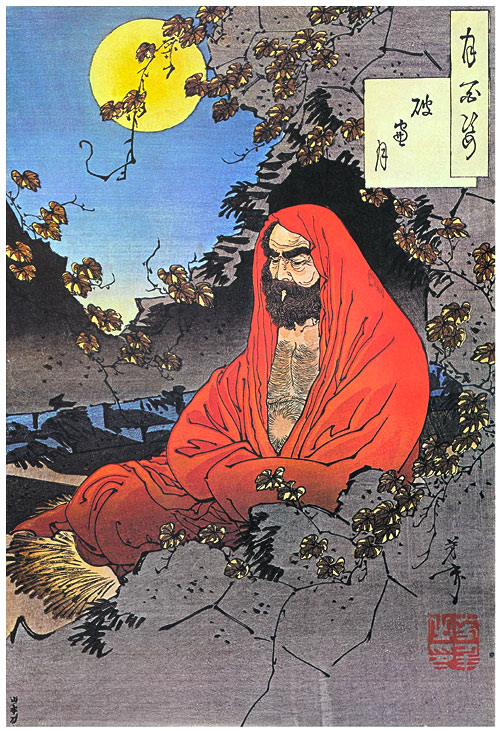
BodhidharmaYoshitoshi1887 Anapanasati meditation involves mindfully staying with your breath and following it as it goes in and out of your body. It is supposed to both quieten the mind and to lead to more clear vision, or insight. In Chan tradition there is also a practice of asking one simple question in meditation, for instance: “What is this?” or “Who am I?” Sometimes exploration of other topics from within the mind which has been quietened and made clearer by meditation is also practiced.

Continue reading “Meditating on Woman by Oxana Poberejnaia”

Identity as an enemy of Feminism by Oxana Poberejnaia

oxanaRita M Gross is her “Buddhism after Patriarchy” says that Buddhism is Feminism. I think I understand what she means.


The goal of Buddhist practice, Enlightenment, is often called Liberation. Liberation can be seen as the goal of Feminism too. In different schools of Buddhism is interpreted differently, but one of the classic explanation is that it is freedom from or absence of anger, lust and ignorance. Enlightenment is also described as a state of ego-lessness.


Rita M. Gross justifiably clarifies the Buddhist understanding of “ego” and “ego-lessness”, which is different from conventional Western notion of ego as “strength” or “scale” of personality. Rita M Gross points out that sometimes feminists say that women need larger egos, not smaller or no egos.

Continue reading “Identity as an enemy of Feminism by Oxana Poberejnaia”

Meditating on Oneness by Amy Wright Glenn

Utah native Amy Wright Glenn will talk about her book: "Birth, Breath, & Death: Meditations on Motherhood, Chaplaincy, and Life as a Doula." Courtesy Amy Wright GlennAt the age of fourteen, I began to question the Mormon faith of my family. I embarked on a life long personal and scholarly quest for truth. While teaching comparative religion and philosophy, I was drawn to the work of supporting women through labor and holding compassionate space for the dying.

In my book, “Birth, Breath, and Death,” I share moving tales of birth and death while drawing on my work as a doula, hospital chaplain, and mother. I weave together these stories with philosophical reflections on truth, meaning, and Spirit.

This is an excerpt taken from the first chapter entitled “Search.”

I spent much of my early twenties traveling throughout The Middle East and India. I lost track of time gazing at an ancient copy of Homer’s Iliad at a museum in Cairo. I remember sleeping through a freezing cold night on Mt. Sinai and awakening to a brilliant sunrise over the Arabian Peninsula. I climbed the pyramids in Egypt and protested the Israeli occupation of the West Bank with Arab and Jewish women peace activists. For a year, I studied in Jerusalem. Later, I dedicated myself to the practice of meditation at an ashram in the Himalayas.

A lively mix of debate and discussion characterized my Hebrew University days. In the evenings, I worked illegally as a waitress in the Jewish Quarter of the Old City. Adorned in Roman attire, I served fantastic platters of Middle Eastern cuisine and performed folk songs and dance routines for photo-snapping tourists. I was nineteen and living in Jerusalem, a place saturated in religious symbolism. Known as Al-Quds in Arabic and Yerushalim in Hebrew, Jerusalem is a city renewed and ravaged due to contested paradigms of poetry and politics. Continue reading “Meditating on Oneness by Amy Wright Glenn”

Happy International Women’s Day, Men and Women of the World by Oxana Poberejnaia

oxanaI am writing this on International Women’s Day. I know from living in three different countries what different faces this day can have. And I can see how these different perceptions are informed by each country’s history and political situation. This is a Buddhist principle of dependent co-arising: nothing exists in separation from anything else, all phenomena arise in dependence on everything else.

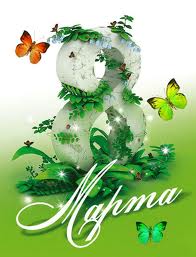
8 Marta - 8 March Russian card
8 Marta – 8 March Russian card

For instance, the Soviet 8th March was a public holiday and culturally it was a day to celebrate femininity, and – separately but connected – awakening of nature in spring. In the US, International Women’s Day was next to non-existing when I lived there in mid-1990s, apart from for hardcore Communists and Socialists, who celebrated it as a milestone on the road to Socialist equality. In the UK nowadays, International Women’s Day takes on a shape of a women-only day, a statement of women’s independence and very often celebration of same-sex love between women.

Continue reading “Happy International Women’s Day, Men and Women of the World by Oxana Poberejnaia”