Hopscotch Spells by Annelinde Metzner

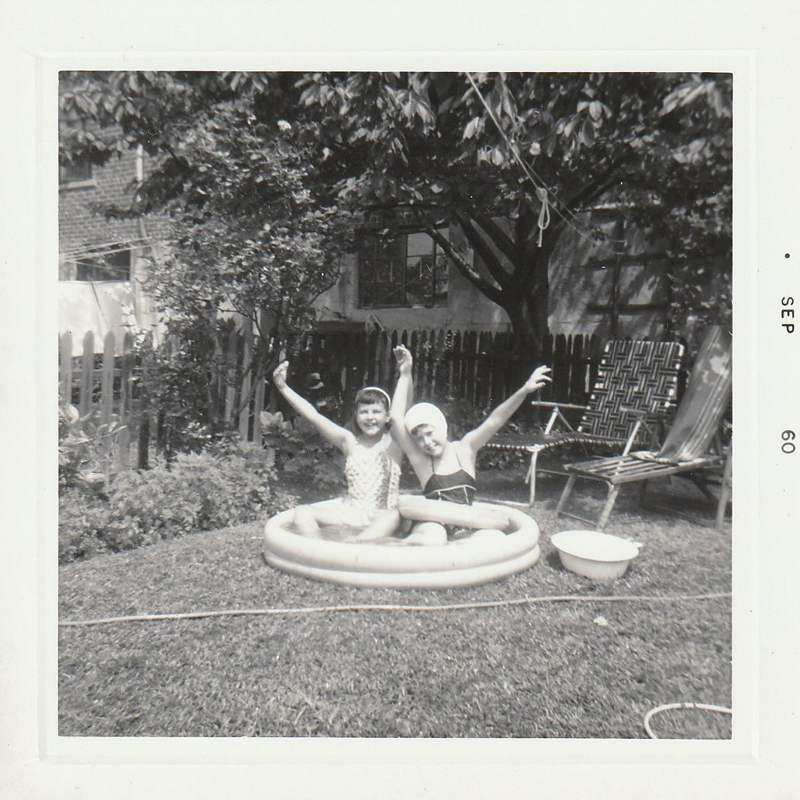
Two girls swimming

  In my work with the folklore and music of children’s games and circles, I’m enchanted by how many bits of magic are interwoven into everyday children’s games from many, many years ago. Our childhood closely intersects with the deep, witchy, magic world of spells, talking animals and whispering spirits.

POEM: “Hopscotch Spells”

One, two, three, O’lary,
four, five, six, O’lary….

I’m pulled like a slingshot’s band
   back to those childhood, everyday spells.

Ally, ally, in-come-free!

Each day, we’d open the screen door
   and hurry to our witches’ college,
   pursuing a degree in the Child’s School of Magic.

One potato, two potato, three potato, four!

What drew us to each other this way?
The circle of street kids, our pals,
   our fists beating out the rhythms,
   our jumps and our skips conjuring powers.
Continue reading “Hopscotch Spells by Annelinde Metzner”

From the Archives: To Nurse at the Same Breasts: Muslim-Jewish Kinship in Literature and Life by Joyce Zonana

It is tempting to read these recurring images of milk twins in Arab-Jewish literature as no more than a symbol, albeit a powerful one, of the profoundly intimate “brother- (and sister-)hood” of Jews and Muslims in the  pre-partition culture of the Middle East and North Africa.

But the image of “milk twins” is much more than a metaphor or a symbol: it represents a reality. For it seems that many Jewish and Muslim women, living side by side as they did, had in fact regularly nursed one another’s children.

Moderator’s Note: We received the devastating news yesterday that Joyce has died. (She was born on July 16, 1949, and passed on June 11, 2025 during the full moon.) She wrote bravely of her diagnosis of glioblastoma multiforma from Feb 2022. She survived far longer than her diagnosis would suggest. Joyce is a long time contributor to FAR, writing many brilliant pieces along the way. We’ve been so lucky to have been a platform for her writings. We are posting this one today in honor of her. It was originally posted on Jan. 20, 2022 and has special poignance given the situation happening now in the Muslim/Jewish world.

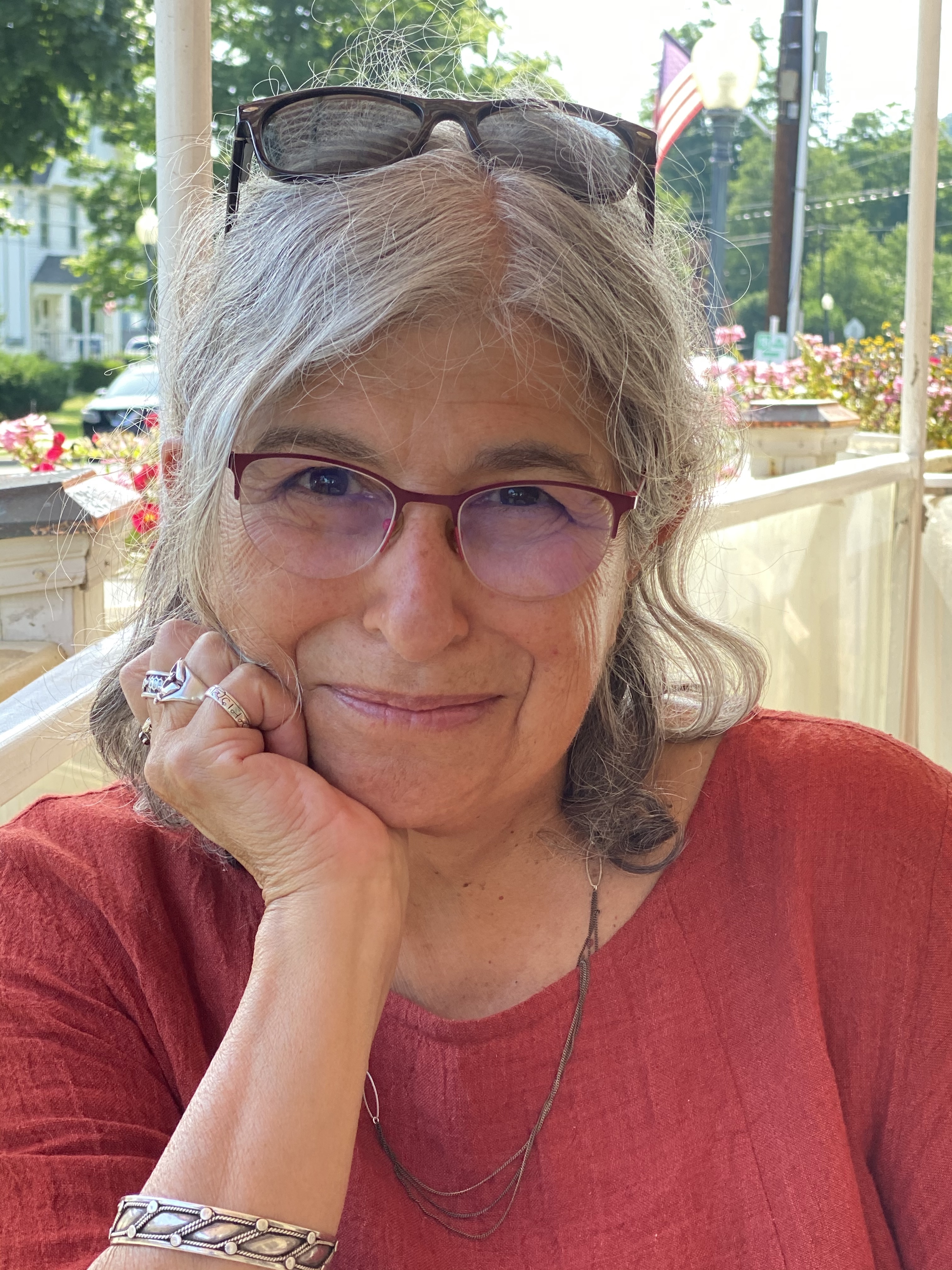
Joyce Zonana. headshotTobie Nathan’s panoramic novel about Jews and Muslims (and Christians) in early twentieth-century Egypt, A Land Like You, revolves around one central image: two infants—one Jewish, one Muslim; one male, one female—peacefully nursing at the breasts of a young Muslim woman, Oum Jinane (“Mother Paradise”).
After the birth of her long-desired daughter Masreya (“The Egyptian Woman”), Jinane travels from her poor Muslim neighborhood to a poor Jewish neighborhood to help another young mother whose long-desired infant son is languishing because she has no milk.  “It’s a miracle, a great miracle,” the Jewish boy’s relatives declare:

images

Never had any neighborhood in Cairo been so excited by a baby’s nursing. Until bedtime, the child nursed three more times at the breasts of abundance. He took hold of one nipple, little Masreya  another, and the two children’s hands sometimes touched. You would have thought they were two lovers entering Paradise as they held each other’s hands.

Continue reading “From the Archives: To Nurse at the Same Breasts: Muslim-Jewish Kinship in Literature and Life by Joyce Zonana”

From the Archives: Forgive Me My Ancestor(s) by Elizabeth Cunningham

This was originally posted on January 19. 2020. An ‘Update Note’ has been added at the end of the post.

Elizabeth Cunningham

When I was a child in the 1950s we often played cowboys and Indians. There is a photograph of my brother and me in no doubt inauthentic costume complete with feathered headdress. In kindergarten I named myself Morning Star. (I just googled and see that I must have gotten the name from the 50s television series Brave Eagle, the first with an indigenous main character. Morning Star is the female lead.)

When I was a teenager, my aunt came across a privately printed book The Gentleman on the Plains about second sons of English aristocracy hunting buffalo in western Iowa. My great grandfather accompanied them as their clergyman. I wish I could find that book now to see how this enterprise was presented. In my adolescent mind these “gentlemen” looked like the local foxhunters in full regalia. On opening morning of foxhunt season an Episcopal clergyman (like my father) was on hand in ecclesiastical dress to bless the hunt and then invited to a boozy breakfast.

Continue reading “From the Archives: Forgive Me My Ancestor(s) by Elizabeth Cunningham”

My Daughter’s Religions by Sara Frykenberg

I find it interesting how certain or settled we often expect our little ones to be instead of getting curious about them or acknowledging that they are curious.

My daughter, Hazel, is six years old and will be starting first grade next week. She loves cats, swimming, her cousin, and food. Purportedly, Chinese style barbecue pork buns come first in her heart, even before mommy and daddy (though we are a close second). She also prefers to run instead of walk; and has recently declared that she is Taoist and Shinto. This determination came after some discussion which went something like this:

Sitting at the kitchen table one morning, Hazel declares “My best friend asked me if I was a Christian and I told her I was. I am a Christian.”

Mommy the agnostic is a little surprised. Daddy, the atheist, is biting back a retort—he is somewhat hostile towards Christianity. I am only hostile to abusive, hetero-Patriarchal Christianity. I say to Hazel, “Oh. That’s interesting. Do you know what that means?”

“No. What do Christians believe,” she asks.

Continue reading “My Daughter’s Religions by Sara Frykenberg”

From the Archives: Child of the Earth by Elizabeth Cunningham

Moderator’s note: This marvelous FAR site has been running for 10 years and has had more than 3,600 posts in that time. There are so many treasures that have been posted in this decade that they tend to get lost in the archives. We have created this column so that we can all revisit some of these gems. Today’s blogpost was originally posted October 18, 2020. You can visit the original post here to see the comments.

I have a vivid childhood memory of being sick with the stomach flu and standing in the doorway of my parents’ bedroom looking for my mother. Her care for sick children was tender and thorough. She would bring us ginger ale and toast with jelly. When she had time, she read us stories. I can remember her steering me, heavy with fever, back to a bed that she had magically smoothed and cooled. But that day my mother lay in her own bed in an old nightgown, not stirring. She had the flu, too, and could not get up to care for the rest of us. It was a shocking and sobering moment.

As I grew older, I transferred my need for comfort, reliability, and continuity from my mother to the earth, the sure turning of the seasons, beloved trees, waters, and rocks.  As a young mother, I looked forward to sharing my own childhood joys with my children, among them jumping into autumn leaf piles. The first time my children leaped into a leaf pile, they came up covered with the ticks that have now made my region the epicenter of Lyme and other tick-borne diseases. Nor was I able to share with my children the joy of drinking water straight from a stream.

Continue reading “From the Archives: Child of the Earth by Elizabeth Cunningham”

To Nurse at the Same Breasts: Muslim-Jewish Kinship in Literature and Life by Joyce Zonana

It is tempting to read these recurring images of milk twins in Arab-Jewish literature as no more than a symbol, albeit a powerful one, of the profoundly intimate “brother- (and sister-)hood” of Jews and Muslims in the  pre-partition culture of the Middle East and North Africa.

But the image of “milk twins” is much more than a metaphor or a symbol: it represents a reality. For it seems that many Jewish and Muslim women, living side by side as they did, had in fact regularly nursed one another’s children.

Joyce Zonana. headshotTobie Nathan’s panoramic novel about Jews and Muslims (and Christians) in early twentieth-century Egypt, A Land Like You, revolves around one central image: two infants—one Jewish, one Muslim; one male, one female—peacefully nursing at the breasts of a young Muslim woman, Oum Jinane (“Mother Paradise”).
After the birth of her long-desired daughter Masreya (“The Egyptian Woman”), Jinane travels from her poor Muslim neighborhood to a poor Jewish neighborhood to help another young mother whose long-desired infant son is languishing because she has no milk.  “It’s a miracle, a great miracle,” the Jewish boy’s relatives declare:

images

Never had any neighborhood in Cairo been so excited by a baby’s nursing. Until bedtime, the child nursed three more times at the breasts of abundance. He took hold of one nipple, little Masreya  another, and the two children’s hands sometimes touched. You would have thought they were two lovers entering Paradise as they held each other’s hands.

Continue reading “To Nurse at the Same Breasts: Muslim-Jewish Kinship in Literature and Life by Joyce Zonana”

Feminist Parenting About Sexuality Part 4: What to tell my daughters by Trelawney Grenfell-Muir

In this blog series, we have discussed:

—The importance of admitting how painful this subject is

—Reminders that I am NOT saying all men are bad or maleness is bad, because men and maleness are truly inherently beautiful and divine

—The necessity of facing honestly just how scary and horrifying the epidemic of violence against females is in our world today

—The truly evil, vicious destruction pornography is causing to female bodies and male psyches in training many, many males to rape and abuse females, and grooming females to normalize and comply with rape and abuse by males

Continue reading “Feminist Parenting About Sexuality Part 4: What to tell my daughters by Trelawney Grenfell-Muir”

Lucky by John M. Erickson

This past weekend, I was asked by an individual why I decided to get my Ph.D. in American Religious History focusing on LGBTQ spirituality and sexuality.  Now, I’ve been asked this before, and if you know anything about me, you know I like to shock people at times, so my usual response is: “I have always been fascinated with people tell me I was going to hell.” 

It’s almost the end of Pride Month and I wanted to take a moment to reflect on where we’ve come and where we must go.

This past weekend, I was asked by an individual why I decided to get my Ph.D. in American Religious History focusing on LGBTQ spirituality and sexuality.  Now, I’ve been asked this before, and if you know anything about me, you know I like to shock people at times, so my usual response is: “I have always been fascinated with people telling me I was going to hell.” 

Continue reading “Lucky by John M. Erickson”

Homebound by Joyce Zonana

When my parents left Egypt, they left behind everything they’d grown up with, all the objects that carried their deepest associations and memories. They taught me to scorn such “things”—what others value as mementos or souvenirs—rightly reasoning they can be lost in a moment. But while we have them, it is lovely, I’m learning, to let the spirits embedded within them, the memories and feelings they evoke, surround and comfort us. As I move through this house, I feel bound to my own and others’ histories, embedded in a rich and complex life that nurtures and sustains me. And as I sit still and knit, I sense that I am knitting (knotting) up the by now long, loose threads of my own life, shaping them into a coherent and satisfying whole.

Joyce ZonanaWhen I was growing up, home was the last place I wanted to be. It’s not that ours was an abusive or angry household: both parents loved me and my mother labored to create a calm, clean space to contain us all. It’s just that I felt suffocated.
Part of the problem was that we were immigrants. My parents were struggling to find their way in an alien culture, and, with little else to hold onto, they clung to their customs and traditions. I wanted to be “American,” to mingle with classmates, to venture into the vastness (New York City!) just beyond our door. The Middle Eastern culture from which we hailed had strict rules for women and girls, and my mother expected me to follow them. She herself was an excellent cook, a creative seamstress and scrupulous housekeeper, a devoted and dutiful wife. I rejected all of it, refusing to cook, ripping out seams, balking at my weekly chores of dusting and vacuuming and ironing. Instead I dreamt of life as a writer, a renegade, an outlaw. My role models were hobos and witches and gypsies; more than anything, I yearned to be free, longing to “walk at all risks,” like Elizabeth Barrett Browning’s Aurora Leigh.

Continue reading “Homebound by Joyce Zonana”

Child of the Earth by Elizabeth Cunningham

I have a vivid childhood memory of being sick with the stomach flu and standing in the doorway of my parents’ bedroom looking for my mother. Her care for sick children was tender and thorough. She would bring us ginger ale and toast with jelly. When she had time, she read us stories. I can remember her steering me, heavy with fever, back to a bed that she had magically smoothed and cooled. But that day my mother lay in her own bed in an old nightgown, not stirring. She had the flu, too, and could not get up to care for the rest of us. It was a shocking and sobering moment.

As I grew older, I transferred my need for comfort, reliability, and continuity from my mother to the earth, the sure turning of the seasons, beloved trees, waters, and rocks.  As a young mother, I looked forward to sharing my own childhood joys with my children, among them jumping into autumn leaf piles. The first time my children leaped into a leaf pile, they came up covered with the ticks that have now made my region the epicenter of Lyme and other tick-borne diseases. Nor was I able to share with my children the joy of drinking water straight from a stream. Continue reading “Child of the Earth by Elizabeth Cunningham”