It’s Time for Nuns on the Bus to take to the Road Again: Getting Beyond Being “Pro-Birth” to Protecting all at the Margins by Dawn Webster

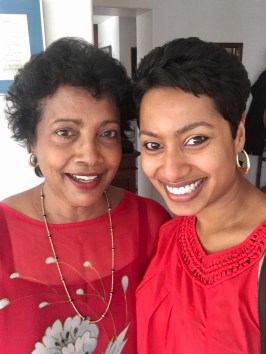
Author and daughter, Dr. Sheela Jane Menon, Assistant Professor at Dickinson College, PA

The country desperately needs to see the Nuns on the Bus on the road again. I just watched Radical Grace, nearly three years after my daughter and son-in-law gave it to me as a Christmas gift. My tardiness made me feel guilty, but despite the passage of time, the film still feels very timely.  Three years after the cancer that is 45 entered the White House; three years after the corruption and cruelty he unleashed has metastasized into key branches of government; three years after Catholics  have witnessed the heart of the Gospels ripped out the way children have been ripped from the arms of their parents at the southern border, this documentary about how a few nuns risked their place in the church to fight for justice tells me we need the leadership of the nuns more than ever.

Catholic voters from the heartland gave 45 the keys to the White House.—60 percent of them voted for him. Many justified voting for a man with Donald Trump’s appalling sexual, business, and racist history by pointing to his supposedly “pro-life” stance. Continue reading “It’s Time for Nuns on the Bus to take to the Road Again: Getting Beyond Being “Pro-Birth” to Protecting all at the Margins by Dawn Webster”
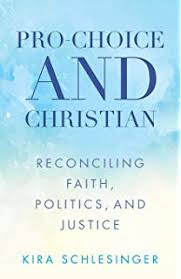
Pro-Choice and Christian: Reconciling Faith, Politics, and Justice BOOK REVIEW by Katie M. Deaver

In 2015 Kira Schlesinger wrote piece for Ministry Matters about how her own pro-choice stance on abortion had become more complicated the more she explored the issue of abortion. The article was widely read and shared, as well as hotly debated by many. You can read this article and the many comments here. Out of the response to this article grew Schlesinger’s Pro-Choice and Christian: Reconciling Faith, Politics, and Justice.

The book does a great job of walking the fine line of being both academically engaging and an easy enough read to engage a book or Bible study group as well. Schlesinger uses the first couple of chapters to dig into the history of abortion, listing recorded examples of the process as early as 1300 BCE. From there she briefly walks the reader through the roughly 100 years (Comstock Act in 1873 until Roe v. Wade in 1973) during which abortion was illegal in the United States. Finally, she wraps up this beginning historical section with details about the generations after Roe v. Wade up to our current reality.

Continue reading “Pro-Choice and Christian: Reconciling Faith, Politics, and Justice BOOK REVIEW by Katie M. Deaver”

May is the Month of Mary by Mary Jane Miller

 Mary Icons

There are three classic prototypes of Mary Icons, their collective messages point toward a new contemporary kind of trinity. Perhaps the concept of Mary is still undeveloped, as our society has changed her message is still provocative and meaningful. It has been through contemplating her image, and painting icons of her that I have come to realize a deeper mystical message. Her popular iconography may have the keys to how we are to care for creation and one another in the world.

Mary Icon of the Panagia

Mary looks directly at the viewer, beckoning us towards poised stillness and constant prayer with palms extended outward in total surrender to what she receives. She contains the Creator of the Universe in her womb.

Mary Icons of the Theotokos

She is the feminine energy which tenderly nurtures Jesus to become a teacher, rabbi, master and lord. She is the icon which reminds us to love one another, to love life, and to love creation.

Mary Icons of the Hodegitria

Mary becomes a mystical location where we can be taught to give ourselves to God and one another. There, held by the church tradition, we like Mary are called to release to the world what we most love and cherish.

Continue reading “May is the Month of Mary by Mary Jane Miller”

Open Letter to the Pope and all the King’s Men by Natalie Weaver

Dear Sirs,

It breaks me down.  My anger, my revulsion, my powerlessness.   I have been searching for the way since I was a child old enough to remember my mind.  For a time, I thought Jesus was a white guy knocking on my door after having seen a religious pamphlet placed under our windshield wiper.  I’m not sure he has blond hair anymore, but I still feel him knocking.  I have been in love with him for as long as I have been a self, so much so that I baptized myself as a little girl.

Somewhere along the way, I figured my little, lonely way wasn’t good enough, and I wanted a church home.  I finished a doctoral dissertation trying to find some place I could hang my hat.  I picked the Roman Catholic Church, despite what I knew of it and what I had to defend about its patriarchy and history to family and friends.  I loved the conversation, the so-called “Catholic Intellectual Tradition.”  I always felt myself to be a covert, a conversa, a definitive outsider, and someone not to be trusted entirely as a cradle Catholic might be trusted, yet I tried to be family. I’ve been bringing up my kids in the Church, volunteering, working in Catholic education, paying the boys’ tuition.  I do work-arounds, making excuses for the exclusion of women, defying the Church’s stance on sexuality with a critical repertoire of cross-disciplinary scholarship.  Lord, I even had to help my Seventh-Day Adventist mom with a hostile annulment process that was dropped on her unsuspecting by a horrendously insensitive marriage tribunal.  It wounded us all. Yet, here I have sat, until this.

Continue reading “Open Letter to the Pope and all the King’s Men by Natalie Weaver”

Catholic Bishops: Corporate Executives or Prophets? by Dawn Morais Webster

Dawn Morais Webster, the Pope off to his summer palace, Castel Gandolfo. He tells the world he will now become just a “humble pilgrim.”

This is a moment to drive the merchants of hate out of the Temple, as Jesus did.  But will the United States Conference of Catholic Bishops (USCCB) bear prophetic witness? Do they have it in them to proclaim the Gospel?

I am a Catholic from Malaysia who has lived in the United States for nearly two decades. I became an American citizen two years ago.  Every day I look for two of the Big Ideas –Catholicism and American democracy—to which I am forever tethered, to be rearticulated by new, principled leaders. And they are: not by those who command the pulpit or political power but by those who live the Gospel through their faith-inspired service to the community.  People like Sister Erica Jordan who asked House Speaker, the conspicuously Catholic Paul Ryan to explain how he translates Church teaching into health care and tax policy. He could not.

Continue reading “Catholic Bishops: Corporate Executives or Prophets? by Dawn Morais Webster”

Contemplative Resistance by Esther Nelson

I recently arrived in Las Cruces, New Mexico, after driving across much of the country from Richmond, Virginia. It’s the second summer I’ve driven this distance (2,000 miles) so I varied my route a bit from last year, stopping at the Abbey of Gethsemani in Trappist, Kentucky, for a short visit. This is the place the popular and prolific monk, Thomas Merton, also known as Brother Louis, called home for twenty-seven years (1941-1968) . (Merton was accidentally electrocuted by an electric fan in Bangkok while attending a conference—December 1968.)

The grounds are verdant, well-kept, and peaceful. Visitors are free to wend their way along various paths on the property, attend any (and all) of the services held in the church, and watch a film on (male) monastic life (running continuously) in the visitors’ center. The gift shop sells books (many authored by Merton), fruit cake and fudge made by the monks at the Abbey, and an array of “stuff.” Accommodations for retreat are available by reservation.

Some time ago, I audited a class that included readings by Thomas Merton. During the semester, the professor mentioned a book titled, At Home in the World The Letters of Thomas Merton & Rosemary Radford Ruether, Edited by Mary Tardiff, OP (1995). Ruether (b. 1936) is a feminist scholar and Catholic theologian. She is also a prolific author and popular speaker. Continue reading “Contemplative Resistance by Esther Nelson”

Sexuality and Spirituality: Convergence or Alienation? by Stephanie Arel

stephanie-arelI just finished reading for review The Bloomsbury Reader in Religion, Gender, and Sexualityedited by Donald L. Boisvert and Carly Daniel-Hughes. Targeting an undergraduate audience, the text explores ways that religion, gender, and sexuality intersect and interact in a variety of religious traditions.

The book’s essays traverse a wide sampling of religious inheritance including indigenous traditions, Christianity, Judaism, Islam, and various Asian religions. The topics examined range from the culture of male love in Japanese Buddhism to various themes of love in Haitian Voodoo, from sexual desire in Beguine communities to Gandhi’s experiments in sexual chastity, and from the passion of St. Pelagius to the transgender performance characteristic of the Hijra identity in India. Among other things, the book offers a wide array of interpretations regarding how sexuality emerges in particular traditions and contexts. One is left with a feeling that nearly anything goes depending on which set of rules or religious mores a particular group of people follow. The variations presented in each chapter related to the interpretation of sexuality’s embeddedness in spiritual expression problematize the notion of the “normal” emerging in sexual desire and expression. Continue reading “Sexuality and Spirituality: Convergence or Alienation? by Stephanie Arel”

Remembering Sor Juana Inés de la Cruz’s Life and Legacy: Champion of Universal, and Non-Human Rights November 12, 1648/51 – April 17, 1695 by Theresa A. Yugar

She studies, and disputes, and teaches,
and thus she serves her Faith;
for how could God, who gave her reason, want her ignorant?

—Sor Juana Inés de la Cruz, Villancico, or, “Carol”, in celebration of St. Catherine of Alexandria (1692)

05.Yugar 1The reason for this blog, and for writing it on this day, is to celebrate and remember the life and legacy of Sor Juana Inés de la Cruz.

In 1994, I was exposed, by chance, to the life and writings of 17th century Novohispana feminist Sor Juana Inés de la Cruz. I am the product of twelve years of Catholic education, eight years of which were in an all-women setting. Again, by chance, I learned about Sor Juana in a liberation theology class while studying feminist theology at Harvard Divinity School. In this class, I learned about Sor Juana’s bold advocacy of the right of women to be educated. This spurred me to learn more about this Catholic Latina theologian whom I would later discover was the last great author of El Siglo de Oro (Spain’s Golden Age), recognized in her era as an esteemed poet, mathematician, astronomer, and more. This was the beginning of my life-long passion to reclaim the legacy of Sor Juana and her-story within the Christian, non-Christian Western tradition, and in Spanish and Mexican history. Continue reading “Remembering Sor Juana Inés de la Cruz’s Life and Legacy: Champion of Universal, and Non-Human Rights November 12, 1648/51 – April 17, 1695 by Theresa A. Yugar”

“Tricolor Mary: Encountering Three Faces of the Divine Feminine” by Simone Grace Seol

simone-graceI always felt curiously distant from the figure of Mary. I always sensed that there is so much there and yet, I could never connect to it emotionally.

The foil to Eve, vessel of Love, suffering mother. I wanted to love her, I wanted to feel her, I wanted to feel drawn to the mystery of Marian devotion. But I felt alienated by the vision of the feminine that she seemed to project: the pure, immaculate, virginal, submissive, obedient, quietly suffering.

Most days, I feel like the opposite of every single one of those qualities.

It’s exactly the kind of feminine archetype I don’t really relate to — the kind of person about whom people say, “oh, she’s really nice” as if yielding compliance and non-offensiveness are her primary attributes. The kind of woman who fades into the background, whose worth lies only in her utility to the patriarchal narrative. Continue reading ““Tricolor Mary: Encountering Three Faces of the Divine Feminine” by Simone Grace Seol”

Honoring St. Mary of Magdala by Gina Messina

Gina Messina-Dysert profileWhile I am joining the conversation a bit late, I find it necessary to comment on the significance of the “upgrading” of the celebration of  St. Mary of Magdala to a feast – on par with the male apostles.  While such a day that honors her is quite overdue, I am grateful to Pope Francis for acknowledging this incredible woman and her leadership in the Christian movement.

As we know from the Gospels, it was Mary Magdalene who stood at the foot of the cross with Mary the mother of Jesus, during his crucifixion.  When the male apostles ran in fear – and rightfully so – Mary of Magdala stood with Jesus refusing to disavow him and was a face of love for him to see during his darkest moment.

It was Mary of Magdala who was the first witness of Christ’s resurrection.  The very first Easter began with her and she was commissioned by Jesus to go and share the good news – to tell the other apostles – and that is why she is known as the apostle to the apostles. Continue reading “Honoring St. Mary of Magdala by Gina Messina”