

 A case brought forth by a mining company challenging the required coverage of contraception without a copay by employer health care plans was dismissed Friday in a Missouri court. The mining company argued that the requirement was conflicting with its owners religious beliefs. Continue reading “IN THE NEWS: Health Care, Contraception, and Religion”
Category: Contraception
Lucy Burns, A Look at a Catholic American Suffragette by Michele Stopera Freyhauf
 As we approach the election period infused with controversy, saturated by television commercials, as well as endless advertisements on the radio, Internet, and yes, even Facebook, we must remember the sacrifices made by our foremothers during the suffrage movement, which gave women the right to vote. While all elections are important, this one has targeted issues involving women in a way that could negatively impact our rights – to the point of rewinding the clock on progress made in women’s equality during the last 40+ years. This election needs the voice of all informed voters. However, it is imperative for all women to make their voices heard this year by casting a vote. To turn a blind eye to these issues diminishes the sacrifices our foremothers made for us. To not cast a vote takes away your voice, makes you a silent bystander – something that was tried by the government and patriarchal system during the suffrage movement.
To illustrate this, I would like to highlight Lucy Burns and the Night of Terror endured at the Occoquan Workhouse by her and many of her friends. Of all Suffragettes, Lucy Burns spent more time in jail then any other protesters. Born 1879 in Brooklyn, Lucy was raised in the Roman Catholic tradition by a father who believed that his sons and daughters should be educated equally. Burns gradated from Vassar College in 1902, then attended Yale Graduate School studying linguistics. She eventually went to Oxford University in England to resume her studies. It was at Oxford that she became involved with activism and the suffrage movement. Continue reading “Lucy Burns, A Look at a Catholic American Suffragette by Michele Stopera Freyhauf”
Is the Republican Party Platform Truly Pro-Life? by Michele Stopera Freyhauf
As many feminists invest their life fighting for women’s rights to be the center of attention – no one could predict the occurrences of this election year. In my previous post “Rape is Not a Political Platform – Rape is a Violent Crime!” Carol P. Christ made a comment about women’s issues and politics:
“I have been waiting all my life for women’s issues to become central in an election campaign, but I guess I should have been more specific in my wish: this is not the format I imagined…”
Christ’s reaction is like so many others in the election; no one could have imagined such a bizarre and backwards slide being lobbied against women’s rights. Issues being bantered around continue to be rooted in a purported pro-life stance. This ranges from trans-vaginal ultrasounds, definitions of “legitimate” rape, and now using an Ob/Gyn’s “best guess” to define the gestational age of a baby from the time of a woman’s last period. This is not a game – this is semantics, this is politics, this rhetoric, and frankly, this needs to stop. Continue reading “Is the Republican Party Platform Truly Pro-Life? by Michele Stopera Freyhauf”
Abuse of Power in the Catholic Church Part II – WE are the Church! By Michele Stopera Freyhauf
Spiritual Power is arguably the most dangerous power of all. In the wrong hands, it gives the power to make judgments even about the eternal fate of another person. It needs a sign on it at all times saying, ‘Handle with extreme care.’ The greater the power a person exercises, the more need there is for checks and balances before it is used and accountability after it is used.” – – Bishop Geoffrey Robinson
May 6th, I addressed the issue of abuse of power in the Catholic Church and how we seem to be unraveling any kind of progress made since Vatican II. Since writing that article, the Leadership of the LCWR met with Vatican Officials and expressed their concerns openly. A dialogue occurred and left no resolution, just information that the leadership will discuss with the community at their August meeting. That meeting will reveal their next step in this controversy – concede and follow the conditions and rules sets forth by the CDF or disband and form a new religious community or maybe there will be another option revealed.
I have to ask though – Was this a meaningful meeting or was it meant to pacify the Sisters and their supporters? Will the Vatican change its stance? Certainly, the U. S. Catholic Sisters have not been
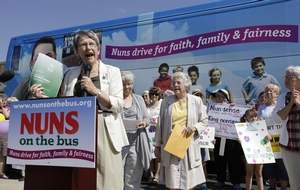
pacified, nor have their supporters. For example, there is a “Nuns on the Bus” tour traveling around the United States, prayer services for the Sisters, #nunjustice and #whatthesistersmeantome campaigns on Twitter. Even the Women’s Ordination Conference delivered a petition containing over 57,000 signatures to the Vatican in support of the Sisters. Certainly, the support for the sisters and their mission is not dwindling, but growing stronger every day.
As for the Vatican, a change in their position is doubtful, but we can continue to pray. I am, however, very discouraged by a statement attributed to Pope Benedict that indicates a desire to have a smaller more faithful Church of Catholics then a large Church of people who do not adhere to Church Teaching – seeking out a small, strong, holy community.
Obviously, it is my hope that this statement was taken out of context, but I have to be honest and say
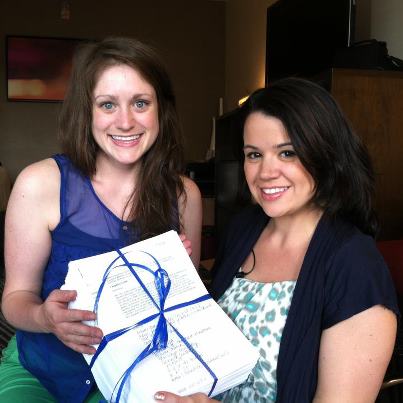
Picture reprinted from WOC’s page on Facebook
that my hope is filled with doubt. This is not the first time I have heard clergy make this statement. Priests have made this statement in my presence – wanting a more faithful flock and dismissing those that do not adhere to their interpretation of Church teaching. This stance does not bear fruit, but is rather a power play – a play that can be called many things – misogynist, arrogant, non-pastoral, cold-hearted, and frankly un-Christian. It also plays with a person’s spiritual fate and in many cases their soul. The psychological impact of something like this is dangerous for some. Some ordained will go so far as to withhold sacraments or even compromise the person’s status in the Church, including their role in ministry, for the sole purpose of inducing compliance – a tactic that dates to the medieval period.
The Crime of Being a Girl Scout: The Sin of Raising Strong Female Leaders by Michele Stopera Freyhauf
 Cradle Catholic and Woman
Educated by the U. S. Vowed Religious
Support the U. S. Catholic Sisters
Support, Minister, and Live the Social Gospel
Theologian, Feminist, and Critical Thinker
Former Girl Scout Leader of Three Troops
Former Girl Scout
I am all of these things and more. By the recent attacks by the hierarchy of the Catholic Church, I am beginning to think I am the problem. I seem to stand for everything the Vatican and USCCB seek to silence. Is it because of my organizational ties with the U. S. Vowed Religious and Girl Scouts, or my writings as a Feminist and Theologian? Maybe the answer is simply – because I am a woman.
According to the criticisms launched by the USCCB and the Vatican, I seem to be part of the problem rather than the solution. Why is this so? It was not until I started my journey in ministry that my idealistic “Catholic” bubble popped – not so much by me, but by those in ministry and leadership, by those that did not like laity to pose questions and think critically about their faith beliefs, and by those that do not like people who do not fit within the preconceived mold of what a “good Catholic” should be. This ideological construct is difficult enough when you are part of a Church community, but when you begin to embrace leadership as a woman, question teachings, exercise your canonical rights, your peers and even people you thought were your friends, no longer talk or associate with you. The betrayal is vicious and runs deep – it is behavior not becoming of a minister or one who professes the Catholic faith.
If the attack on you is not enough, these same people victimize your children through their words and behavior. It is a difficult position for anyone to survive spiritually. For children of the Church who bear witness to this hypocritical behavior, a journey begins – they search for meaning within the spiritual realm and become disgruntled with anything that resembles organized religion. A place where one seeks community and spiritual nourishment becomes a place of oppression and starvation. If attacking family is not enough, let’s start attacking groups that promote community – groups like the Girl Scouts of America.
So, what is the USCCB’s problem with the Girl Scouts of America? Basically, this organization is under fire for suspected deviant thinking and positions that stand opposed to Church teaching. Continue reading “The Crime of Being a Girl Scout: The Sin of Raising Strong Female Leaders by Michele Stopera Freyhauf”
Is Baptism a Male Birthing Ritual? By Michele Stopera Freyhauf
 Quite a number of years ago I had a conversation with one of my professors, a feminist theologian, who posed the question “Why do I need a man to purify my baby with the waters of baptism? Is there something wrong or impure about the blood and water from a mother’s womb – my womb?” Before you jump and shout the words Sacrament or removal of original sin, this question bears merit in exploring, especially in today’s world where women are taking a serious beating religiously, politically, and socially. In today’s world, violations and rants are causing women to stand up and say STOP! This is MY Body. This outcry was provoked by chants of ethical slurs against women– Slut! Prostitute! Whore! The cry got
  even louder when the issue of religion and government was raised in the fight of healthcare coverage of contraception. The cry got even louder with the enactment of the laws in Virginia and Texas (and many other states to follow suit) that forces women to undergo transvaginal ultrasounds in early stage abortions. The mandatory insertion of a wand into a woman’s vagina (mandated by the government, mind you), is a violation and has women crying RAPE!
The memory of this conversation did not re-appear by chance, it was prompted by a book I read for my History of Sexuality Class – Imperial Leather: Race, Gender, and Sexuality in the Colonial Context by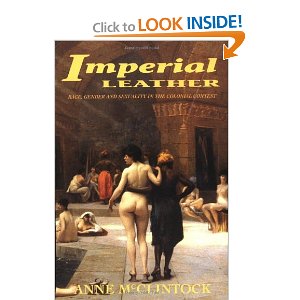 Anne McClintock who addresses the notion of baptism through origins, property, and power. So many things are currently being taken away from women and reading McClintock’s assertion regarding male baptism is perplexing. She believes that male baptism or baptism by a man takes women’s role in child bearing and diminishes it. These are the same men who historically treated and regarded women as vessels. She further asserts that this act is a proactive removal of creative agency with respect to a woman’s ability to have the power to name. That is, the last name of the child belongs to the husband. A point that supports the notion that patrimony marks the denial of women. Anyone doing genealogy encounters a perplexing struggle to identify mothers because their names are essentially erased from memory and rarely attached to a child’s name. Continue reading “Is Baptism a Male Birthing Ritual? By Michele Stopera Freyhauf”
Get Your Laws off my Body! by Elise Edwards
 After considering Virginia’s Transvaginal Utrasound Bill in light of the womanist critique, I wonder if religiously-motivated lawmakers considered that they alone do not have access to God’s intentions, but that the divine spirit is operative in a pregnant woman as well, would they be so willing to negate her moral agency?
On Tuesday, the senate in Virginia approved a law that would require women to get an external ultrasound before an abortion. This is a scaled-back version of an original bill that mandated transvaginal ultrasounds prior to abortions. According to this Washington Post article, opponents like Sen. Janet D. Howell describe the measure as “state rape,” since it is the state, not the woman and her doctor who decides that she must undergo this procedure requiring the insertion of a probe into the vagina. Although proponents of the bill say that it is designed to give women more information about a fetus’ gestational age and development, most would agree that it is ultimately intended to discourage the women from having an abortion. This is why bloggers like Kendra Hamilton believe that religion is the motivation behind this and the other 5 abortion-related bills introduced in the Virginia General Assembly connected to issues of women’s sovereignty over their bodies. Yet, as I heard about these bills, another religious response came to mind – one that expresses horror and condemnation of coercive practices regarding women’s childbearing. Continue reading “Get Your Laws off my Body! by Elise Edwards”
Catholicism, Contraception, and Conscience: Church Imposed Teaching, God’s Gift of Free Will, and Political Rhetoric by Michele Stopera Freyhauf
Certainly one cannot turn on the news without seeing a story about the feud over the Catholic Church’s stance on forbidding the use of contraception and Obama’s Patient Protection and Affordable Care Act (PPACA) that mandates free contraception to women. In preparing this article, I took the time to review many articles from liberal and conservative news outlets, law professors who are experts on constitutional law, and statements from the USCCB and Bishops. Before asking questions, I want to outline the following points:
- In the literature reviewed, only two women, Sr. Carol Keehan and Sr. Mary Ann Walsh, made a statement against this policy stating that the government is interfering with the working of the Church. Most voices heard and shouting the loudest are members of the clergy.
- Hospitals considered “Catholic” hire people of all faiths and various beliefs. They also treat patients of all faiths. They are not exclusively “Catholic.”
- Catholic identified Colleges hire professors and staff that are not Catholic. Moreover, their student body is not totally Catholic.
- Catholic Charities, once again, hire non-Catholics.
- Insurance plans currently in place often offer contraception prescriptions at a zero to low co-pay price. These plans are in-force at many Catholic Institutions.
- Under HIPAA, healthcare of employees are protected and the Employer, even the Catholic Church cannot violate the privacy of the patient, even if it is an employee.
- Birth Control Pills are often prescribed for women with endome
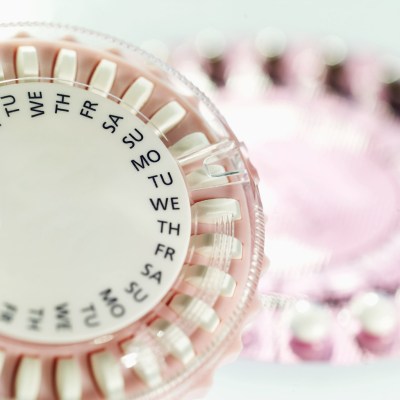 triosis or other “female” reproductive disorders and not birth control.
 - Women pregnant, carrying a dead baby, cannot have surgery due to risks are given medication to induce abortion are given. Continue reading “Catholicism, Contraception, and Conscience: Church Imposed Teaching, God’s Gift of Free Will, and Political Rhetoric by Michele Stopera Freyhauf”
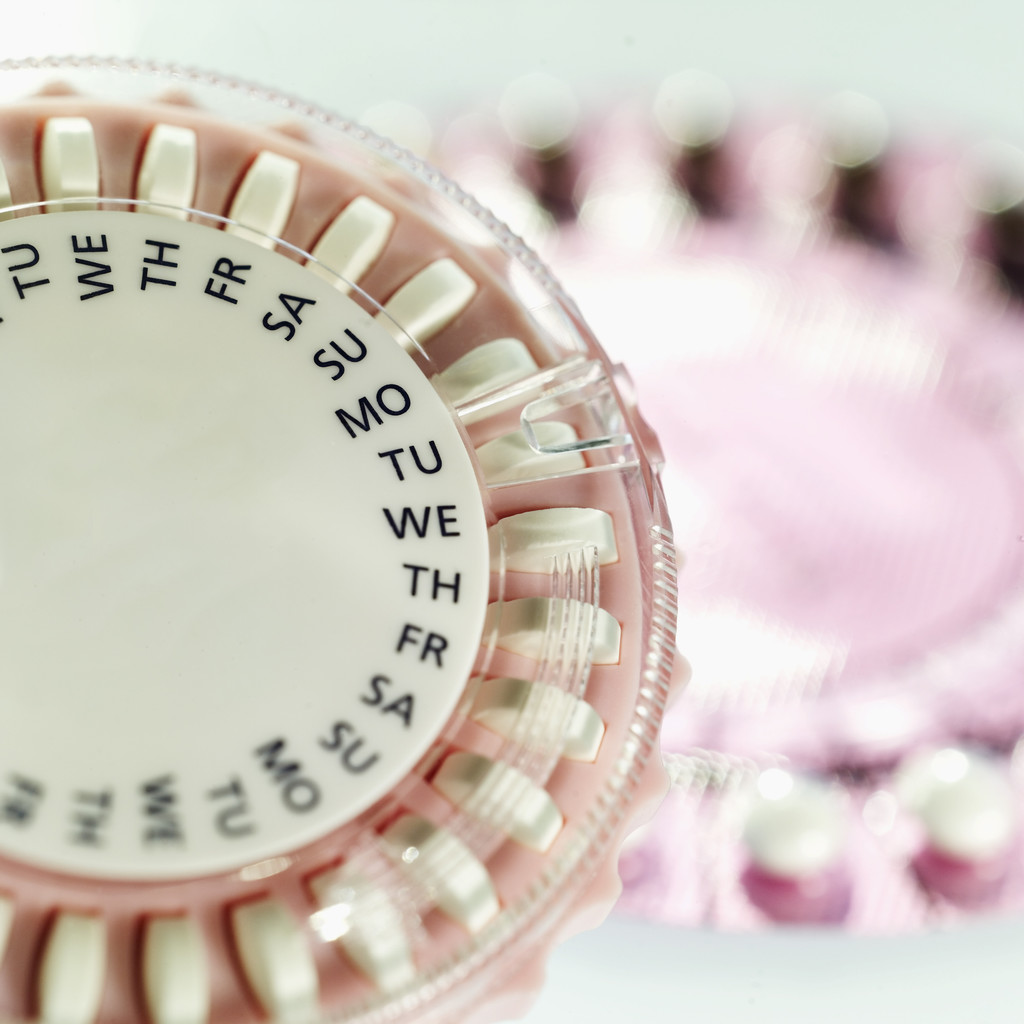
The Rhetoric of Freedom of Religion in the Debate about Contraception Coverage By Elise M. Edwards
 Does freedom of religion include the right to impose your religious views on your employees? Should freedom of religion exempt you from financially contributing to a medical benefit for your employees that you consider sinful?
According to an Associated Baptist Press article, Richard Land, president of the Southern Baptist Convention Ethics and Religious Liberty Commission, “called a new rule [by the Obama Administration] requiring insurance plans to cover birth control — including those paid for by religious employers that believe artificial birth control is a sin — a ‘horrible decision’ that poses a problem not just for faiths that object to birth control” in the January 28 broadcast of Richard Land Live. Land believes that this policy infringes on religious freedom. (Note that the health care policy does exempt houses of worship and religious organizations that employ primarily those of the same faith, but not organizations like hospitals and colleges that employ and serve people of all faiths, or no faith. An article by Religion News Service, posted here, also on a Baptist media outlet, explains the policy in more depth.) Continue reading “The Rhetoric of Freedom of Religion in the Debate about Contraception Coverage By Elise M. Edwards”
Taking my body back from… the pill? A call for more of “her stories” about contraception By Sara Frykenberg
 I recently made what felt like a very big decision in my life to stop taking the birth control pill… not to try to get pregnant mind you, though some of those I told incorrectly read this as the subtext of my decision. I stopped taking the birth control pill because I didn’t like what it was doing to my body. So, I am taking my body back… but from the pill? Really? Didn’t it, in some ways, give me a kind of freedom? Didn’t it do what it promised and help me to feel that I was being responsible in my sex life (since I don’t want kids right now)? Yes, I suppose it did; and I very much believe that access to contraception is a very important feminist and religious issue. … But after a three year on and off relationship and six years steady with pills, all with different side effects, all with different demands on my metabolism and libido, I began to feel a stranger to my nether regions and so I have decided to stop. Continue reading “Taking my body back from… the pill? A call for more of “her stories” about contraception By Sara Frykenberg”
 Feminism and Religion