

 IN RESPONSE TO my recent memoir, Breaking Up with God: A Love Story, several reviewers came close to calling me stupid. Many suggested I didn’t know what I was talking about. As the title of the book suggests, I used the analogy of a romantic relationship gone wrong to describe my faith and its dissolution. These reviewers seemed to believe I understood my metaphorical romantic relationship with God to be a literal one. They wrote about me as if I actually thought God was my real boyfriend, as if I sat around waiting for God to take me to the prom and just couldn’t understand why my date never showed up. Silly girl. Continue reading “Sexist Responses to Women Writing About Religion by Sarah Sentilles”
Category: Feminism
Hitting the Trifecta in Women’s Issues by Michele Stopera Freyhauf
 One did not have to watch the debate between Barack Obama and Mitt Romney this past Tuesday to know that Romney hit the trifecta in the area of women’s issues. It was all over social media within minutes of statements being made that marginalized or treated women as “less than.”
The issue of contraception and rape is still a topic of debate. Church’s post signs to “Vote for Religious Freedom” and hand out voting guides that help you gauge the moral candidate. Bulletin boards stating that “Obama believes in abortion and gay marriage – do you? vote Republican” appear by the highway. This issue will not be settled during the election.
If people in power set an example of bullying and/or oppressive behavior, this behavior becomes acceptable. If women are treated “less than,” then their dignity as well as their humanity is compromised.
An extreme example of this de-humanizing treatment of women in American society appeared October 13th in Cincinnati.com. A story was published about a flyer found in the men’s restroom of a co-ed freshmen dorm at Miami University. The title of this flyer – “Top Ten Ways to Get Away With Rape:” Continue reading “Hitting the Trifecta in Women’s Issues by Michele Stopera Freyhauf”
Social Engagement as Feminist Praxis in the lives of Patricia A. Reif & Rita Nakashima Brock By Teresa A. Yugar
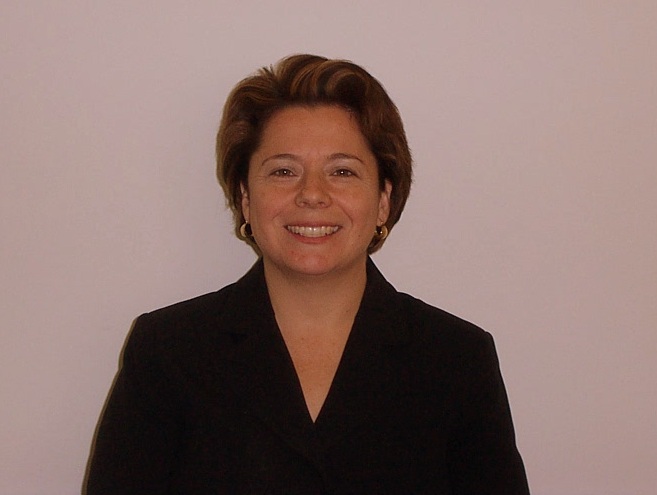 Today our country and global community need religious leaders to utilize their theological education and feminist principles to model the formation of ally ships across ecumenical and interfaith perspectives, laying the foundation for a more just and peaceful society. While Reif and Nakashima Brock did not know each other, their feminist stance of commitment to social justice and praxis should give us pause.
In 2002, Claremont Graduate University and the Immaculate Heart Community collaborated and created an endowment to sponsor a Lectureship in honor of the memory of feminist teacher, scholar and activist, Dr. Patricia A. Reif. Each year the Dr. Patricia A. Reif committee invites cutting edge feminist scholars in religion to discuss the intersection of their research interests and its influence on their scholarship, activist work and teaching in the broader sense of the term, both inside and outside of the classroom. This year the Reverend Dr. Nakashima Brock is the select guest Lecturer to honor Reif’s life, memory, and legacy. Tammi Schneider, committee member and Dean of the School of Religion stated Nakashima Brock’s visit is timely because in three weeks the national U.S. presidential elections will define the trajectory of our country for, minimally, the next four years. Nakashima Brock’s involvement in the Occupy Movement on a local and national level extends from her feminist commitment and advocacy for the rights of the 99% of our country who are being squelched by U.S. policies that favor the elite 1% of our nation. For Nakashima Brock it is a moral imperative for persons of faith and goodwill to educate individuals and take a stand on policies, on a state and nation-wide level that safeguard the livelihoods of the majority poor of our country. For Nakashima Brock this means quality health care for all, living wages and decent jobs, free high quality public education through college, and an end to the prison-military-industrial complex. Continue reading “Social Engagement as Feminist Praxis in the lives of Patricia A. Reif & Rita Nakashima Brock By Teresa A. Yugar”
“From Teshuvah to Justice: Jonah’s Call to Change” by Ivy Helman
 (I offer here an abridged version of the sermon I gave on Yom Kippur (5773) at Temple Emanuel in Lowell, MA. The full version will be available on their website soon. The book of Jonah is always read on Yom Kippur in the afternoon service as the Haftorah. It is rather traditional that someone (usually the Rabbi) offer an interpretation of it. Temple Emanuel asked me this year. I thank the congregation for the honor and I hope my words offered them, and now you, food for thought.)
Scholars believe the Greek philosopher Plato lived between 428 BCE and 348 BCE. The Allegory of the Cave is one of Plato’s most famous stories. It illustrates the effects of a change in knowledge, education and experiences on the human being. Some of you may know it or have read it at some point but for those of you who don’t, let me offer a very brief summary.
There are human beings shackled to a cave in a way that they can only see the wall directly in front of them. Continue reading ““From Teshuvah to Justice: Jonah’s Call to Change” by Ivy Helman”
Painting Frida Kahlo By Angela Yarber
 As we begin the month of October and ghosts and skulls fill our homes, I am reminded of the holy days that await us. Poignant to my own background, Dia de los Muertos beckons us to remember who has gone before us. Dia de los Muertos is a Mexican holiday that is officially celebrated on October 31 and November 1 in a manner similar to the pagan Samhain holiday and the Catholic holidays of All Saints Day and All Souls Day. It is a time for Mexican families to remember their lost loved ones, to celebrate their lives, and to pray on their behalf.
It is fitting that we remember the many Holy Women Icons with a folk feminist twist that have gone before us: Virginia Woolf , the Shulamite, , Mary Daly, Baby Suggs, Pachamama and Gaia. These icons join with many others on display as my solo show at Woven Soul Gallery in Winston-Salem, NC. As we prepare for Dia de los Muertos, the holy woman icon dearest to my heart is none other than the Mexican feminist and revolutionary artist, Frida Kahlo. Continue reading “Painting Frida Kahlo By Angela Yarber”
IN THE NEWS: To Have Eyes to See
 Recently at a symposium on interreligious dialogue one of the Muslim feminist scholars present said, “Just once I would like to be able to have a conversation about Islamic Feminism without automatically having to be put on the defensive.”
When someone is a member of a targeted group it is very hard to have the space to critically reflect on one’s tradition, much less be willing to do so with others. From the get go the person is put in the position of having to defend and speak for the whole. And as feminists, the amount of criticism received for participating in a tradition that others have judged to be irredeemably patriarchal and oppressive, can be downright exhausting, making dialogue all the more difficult. Continue reading “IN THE NEWS: To Have Eyes to See”
Visions of My Grandmother by John Erickson
“I never told my grandmother I was gay. I’ve often wanted to visit her grave, clench my hands together, and pray that she forgive me for betraying the trust she instilled upon me long ago. However, even today, I cannot bring myself to make that trek, up the hill into the countryside where her ashes lay below the ground.”
 I haven’t dreamt of my grandmother since her passing one hot summer July evening.
The night, and the days that followed, continue to be a blur. However, as my family members continue to see her in their nightly visions, I, go on unabatedly longing to see and hear the voice of a woman who made me feel the presence of the divine with each passing story.
My sister saw her in a dream when she was buying shoes, my mother has seen her multiple times when she would be undergoing a particularly stressful situation, and I, left alone and oftentimes wondering through an abyss of loneliness and disarray, wake up each morning wondering why, I am left all alone. Continue reading “Visions of My Grandmother by John Erickson”
Like Rain on Dry Land by Marcia Bedard
 When first I moved to a rural mountain community near Yosemite, I was spiritually parched, and my soul felt dry as a bone. Desperate for the rich conversations of my sisters, after taking an early retirement from the CSU Fresno Women’s Studies Program, I had an intuitive sense that I might find some like-minded women friends in a small group that met weekly at our local church, led by Diana, our courageously and outrageously feminist pastor, who has since moved on to what I hope are friendlier communities for feminist pastors.
If PFLAG, and similar marginalized groups, had found an oasis there, in what was called (in order to please the church fathers) a Women’s Bible Study Group, so could I. A year before, this would have been my last choice of groups to join, but in a town where fundamentalist churches thrived, and Starbucks was the only place you could find a copy of literature as subversive as The New York Times, it was my only choice. It was in the church basement, amidst a thinly disguised knitting/bible study group, that we gathered weekly to receive what turned out to be a truly holy (meaning wholly) communion of spirit, enriched by various reading that Diana generously shared with us. Continue reading “Like Rain on Dry Land by Marcia Bedard”
Validating the Gospel of “Jesus’ Wife” is not Necessary to Prove Female Discipleship by Michele Stopera Freyhauf
The Gospel of “Jesus’ Wife” is certainly at the center of a battle that was last seen when questions of authenticity were raised about the James (Jesus’ brother) ossuary. In a New York Times article, September 30th, Judith Levitt states that this document adds weight to theological and historical flaws surrounding the issue of the ordination of women. The Vatican believes that their theology is still sound, calling the document a forgery.

Nor do we need this document to show that the standing from the Vatican’s point of view of ordaining women is theologically and historically flawed.
“In 1976, experts of the Pontifical Biblical Commission determined that there were no scriptural reasons preventing women’s ordination. The Congregation for the Doctrine of Faith overturned the commission’s judgment and instead wrote its own statement (Inter Insigniores, 1976) stating that women do not image Jesus who was a man; and therefore only male priests can adequately represent Christ.” – Women’s Ordination Conference
John Ortberg, in the Huffington Post, addressed a bigger issue surrounding female leadership in the Church brilliantly:
“perhaps what matters most in this discussion is the impact Jesus had — not on one woman — but on the status of women as a whole.”
Impotent* Rage by Sara Frykenberg
 Rage, for me, feels intrinsically connected to instinct, like an uncontrollable urge to fight and fly all at the same time but with no place to flee and a need to literally, physically restrain myself from the “FIGHT,” or violence I don’t want to create.
Many feminist theorists talk about the value of anger and particularly, “women’s (diverse experiences of) anger” for consciousness raising, community building and healing. I remember considering this concept for the first time early in graduate school. I was both scared because I associated anger with abusive control; and curious, as I was finally learning to express this “bad” emotion. Overall, embracing anger taught me to speak up and break out of abusive spaces. But sharing this concept with students last semester and discussing the Bible’s descriptions of “God’s Wrath” this semester, I find myself considering levels of anger. When is or is rage appropriate? Some of the feminist theology I have read definitely advocates for a constructive relationship to rage. But many of my students, who can embrace the creative space of anger, had difficulty embracing this positive valuation of rage (even understanding that it is ‘what we do with our anger’ that counts). I have recently found myself facing my own rage… And I am not sure what to think.
I often consider anger a teacher. It shows me where my boundaries are being crossed or where injustices are rising. I have experienced mild anger that, when mediated through humor, has helped me laugh at life and struggle. I have experienced white-hot anger that left me unable to sleep or function “normally.” Betrayals have dragged me out of my bed early in the morning, seeking to run/ walk so that I could breathe and think at a pace that matched the beating of my heart. Continue reading “Impotent* Rage by Sara Frykenberg”
 Feminism and Religion