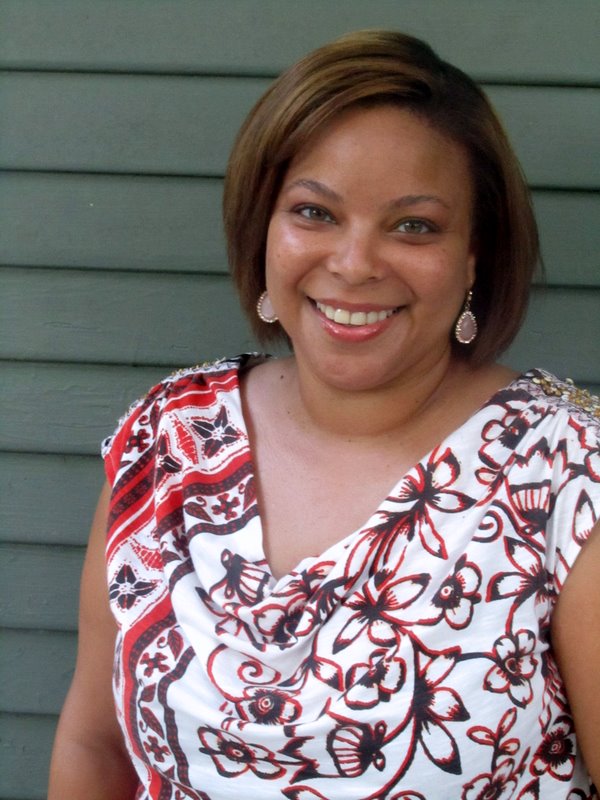
Theapoetics by Molly

I think there is a poet in me

she’s been hiding

I didn’t know she was there

I didn’t see her
I didn’t hear her

I didn’t watch for her
wait for her
listen to her
or know her

and yet, when I come to this place in the woods
and I sit down
and I open my mouth

poetry comes out

and I really think
she’s been here all along.

In the woods behind my house rest a collection of nine large flat rocks. Daily, I walk down to these “priestess rocks” for some sacred time alone to pray, meditate, consider, and be. Often, while in this space, I open my mouth and poetry comes out. I’ve come to see this experience as theapoetics—experiencing the Goddess through direct “revelation,” framed in language. As Stanley Hopper originally described in the 1970’s, it is possible to “…replace theology, the rationalistic interpretation of belief, with theopoetics, finding God[dess] through poetry and fiction, which neither wither before modern science nor conflict with the complexity of what we know now to be the self.” Theapoetics might also be described, “as a means of engaging language and perception in such a way that one enters into a radical relation with the divine, the other, and the creation in which all occurs.” Continue reading “Theapoetics by Molly”

If You’re Lucky, You get Old, Part II: Stories from the Yoga Mat by Marie Cartier

Yoga is about in the moment, and gifting yourself with that moment.

I am interning right now and teaching classes in yoga. I am teaching in a park– donation based yoga. The other morning, I had no students, so was sitting on my mat and just holding the space as we wait for these classes to catch on and students to come—if we build it, they will come! A woman sat at a picnic table near me. I started up a conversation with her about yoga. She told me her lower back was “frozen” from sitting at a computer and did I know anything she could do? Yes, gratefully I did! I demonstrated some postures to her—cat/cow, cobra, downward facing dog…but also just standing in mountain pose and feeling the pelvis tuck under the hips, tucking the chin slightly and lowering the shoulders. She did not move from the picnic table—in fact held onto the picnic table edges and said she was not ready for yoga. However, she also kept asking me questions and I kept answering and demonstrating.

The next day she returned with a mat, and took a physical class. And has been coming back to my class ever since.

How has increased body awareness through yoga led to a positive change in me? Continue reading “If You’re Lucky, You get Old, Part II: Stories from the Yoga Mat by Marie Cartier”

Rape is Not a Political Platform – Rape is a Violent Crime! By Michele Stopera Freyhauf

Just when you think you have heard it all, here we go again – another politician with “open mouth-insert foot” syndrome.  Discussing his zero-tolerance policy for abortion, Missouri Representative Todd Akin made the following statement last Sunday about pregnancies that result from rape:

“from what I understand from doctors, that’s really rare.  If it’s a legitimate rape, the female body has ways to try to shut that whole thing down.  But let’s assume that maybe that didn’t work or something.  I think there should be some punishment, but the punishment ought to be on the rapist and not attacking the child.”

In an inadequate attempt to apologize and clarify his words, Akin stated that he meant to say “forcible rape.” This clarification fares no better nor does the fact that he later acknowledges that women “do become pregnant” during a “forcible rape.”  It is interesting to note what Akin considers to be “rare.”  According to the Washington Post, approximately 5% of rape victims become pregnant.  Akin reduced this to a statistic – 1 out of 32,000 women.  This, for Akin, is a rare occurrence.

Stating that a woman’s body is capable of preventing pregnancy in the case of “legitimate rape” demonstrates how out of touch politicians are and further (re)affirms the bigotry that exists within our political system.  The same politicians who have waived a “war against women” this year, try to promote policies that exercise control over what a woman can and cannot do with her body; policies that are  based on ill-advised misinformation.  Decisions politicians make for a woman – what she can and cannot do with her body – are rooted in personal faith beliefs, party-line agendas, and supporters (campaign financing dollars and lobbyists).  This year, a woman’s body has become a platform for votes.

Inasmuch as I would like to think Akin’s statement is an isolated event, Garance Franke-Ruta points out that this is not the first time a politician made a statement about rape victims and pregnancies: Continue reading “Rape is Not a Political Platform – Rape is a Violent Crime! By Michele Stopera Freyhauf”

Muslim Masculinities: Men Have Gender Too by Kecia Ali

Twenty years ago, when I was an undergraduate, another student in a history seminar casually referred to women as “people of gender.” He was not being ironic. At the time, I felt amused and superior and frustrated: not only did he not get it but he really didn’t get it. Two decades later, my amusement has taken on a rueful tinge: despite the formulaic acknowledgment that masculinity and femininity are reciprocally constructed, “gender” scholarship in my field, Islamic Studies, has focused almost exclusively on women.

That is, until recently. Scholars, especially anthropologists, have begun serious work on Muslim masculinities; increasingly, those of us more historically and textually inclined are joining the party. My own first forays into these waters treated the equivocal masculinity of enslaved males as part of a larger project on marriage in early Muslim law. In my current project on views of Muhammad, the question of masculinity emerges much more centrally, and in strikingly different ways in works by feminists and neo-traditionalists (who lay claim to reproducing the “authentic” tradition even as they are thoroughly modern in many ways). Continue reading “Muslim Masculinities: Men Have Gender Too by Kecia Ali”

Living Liminality: Of Thresholds and Dwelling Places by Marcia W. Mount Shoop

Sometimes I think it happened gradually.  Other times it feels like sudden change.  Either way I find myself in an in-between space that is my life.

With apologies to Victor Turner and his cultural anthropological appropriation of liminality as a threshold space, I have come to view my liminal living as a more permanent dwelling place these days.  Turner’s category of liminality locates subjects in the betwixt and between as they move from one manifestation of identity in community to a new kind of integration or role in community.   I am starting to wonder, however, if the thresholds are actually dwelling places for some of us in this world.

I don’t know if that means I am actually more marginal than I am liminal.  The margins are margins because they remain on the outskirts and they help define the boundaries.  Margins are permanent.  Am I marginalized if I live at the edges of the communities and identities I use to occupy, perhaps never to return to the bosom of the center? I hesitate to make such a claim mostly because I still occupy privileged spaces not the least of which are those constructed from how whiteness grants access and authority in this world. Continue reading “Living Liminality: Of Thresholds and Dwelling Places by Marcia W. Mount Shoop”

What Do Women Bring to the Interfaith Table? by Rita M. Gross

The most important thing that women bring to the interfaith table is our sheer presence. I do not support theories of gender essentialism, which claim that women and men are fundamentally different, that men have a masculine essence different from women’s feminine essence. Regarding most interfaith issues, I do not think that women offer different insights than men could. But because religions have been such a boys-only club, the presence of women at the interfaith table loudly proclaims a critical message that can be proclaimed no other way. Religions are no longer going to be male sanctuaries, closed off to women except for the supportive roles we have traditionally played. Continue reading “What Do Women Bring to the Interfaith Table? by Rita M. Gross”

The Original Art by Elise M. Edwards

Storytelling is the original art as the desire to communicate is a common thread of all the other arts. I started reflecting on the stories – through various mediums–that have shaped me, and I wanted to use my post today to honor the herstories, the narratives of the women that have been meaningful to me.

On Tuesday night, I attended a gathering of storytellers.  I sat with two of my friends and listened to professionals and amateurs alike share stories.  The stories they told presented a range of narratives from Danish folktales to improvised children’s stories.  I was both horrified and enchanted by the content of their works.  While one story was a particularly violent tale of retribution and “justice,” another seemed to offer lessons about cooperation.

I thought about sharing a story of my own, but I didn’t feel prepared.  By the end of the evening, I was aware of the irony of my reluctance to share.  I was afraid I was not a good enough storyteller, yet I’d spent a good part of the previous two weeks traveling and catching up with old and new friends, which certainly involved animated retellings of the events going on in my life. Continue reading “The Original Art by Elise M. Edwards”

How literal is too literal? My Experience with Tallit Katan. By Ivy Helman

I tried a new spiritual practice yesterday.  I wore a tallit katan.  It is commonly worn by Orthodox, Hasidic and other Ultra Orthodox men and boys from the age of 3 onward and usually not worn by women within these communities.  Occasionally, one can see Jews (mostly men) from Conservative shuls wearing these garments and rarely from Reform congregations.  They seem to be a marker of a more observant Jewish practice that reads much of the Torah literally.  One is commanded to wear fringes (tzitziyot) when wearing four-cornered garments as reminders of the covenant between G-d and the Jews and more specifically of the 613 commandments.

There are a number of reasons women and men from Orthodox and ultra Orthodox communities give for discouraging women from the wearing of tallit katan and tallit gadol.  First, women are said to be exempt from time-bound mitzvot, or commandments .  Wearing tzitziyot are considered time-bound because the Torah says one should be able to see them which has been interpreted to mean that they be worn during the day.  The reason given that women are not held to time-sensitive mitzvot has to do primarily with their childcare responsibilities.  Children and fulfilling their needs often requires much time and may not allow one to complete a task within a given time frame.  A related ideology says that women are often generally thought to be more spiritually attuned, and therefore do not need such physical reminders to follow the mitzvot. Continue reading “How literal is too literal? My Experience with Tallit Katan. By Ivy Helman”

Catholic Feminists Meet, Strategize by Rosemary Radford Ruether and Theresa Yugar

During July 8-11, 2012 twenty Catholic feminist leaders met in a retreat center near Baltimore to discuss their concerns and hopes in the light of the recent and ongoing attacks of Catholic bishops on women and especially on feminist work in the church. The group consisted of representatives from many sectors of Catholic institutions and movements.  There were the founders of a peace and justice movement of the Sisters of Charity and the Institute for Communal Contemplation and Action. There was a pastor and leadership trainer from an alternative parish and a writer for the National Catholic Reporter.

Many in the group were professors of theology or ethics at Catholic, Protestant or state schools. Among them were teachers at Whittier College, Claremont School of Theology, Santa Clara University and San Jose University in California, Loyola University in Chicago, St. Catherine in Minnesota, Drew University in New Jersey and Boston College. Catholic reform movements were well represented, with leaders from Dignity, the Women’s Ordination Conference, Call to Action and RomanCatholicWomenPriests. There was a teacher at Marymount School in New York City, the President of Marymount School in Los Angeles and a doctoral student in theology. Continue reading “Catholic Feminists Meet, Strategize by Rosemary Radford Ruether and Theresa Yugar”

Girls Gone Gray by Erin Lane

My hair started “going gray” at nineteen. Prophetic, you could say, for a college girl whose life was going the same way.

The gray hair began around my temples, curling around my ears like a vine before following my hairline to the forehead and down the spine of my scalp. I remember calling my mother and telling her between tales of new classes and new boys of my new whiskers. “Oh, and mom, you will not believe it. I found a gray hair. What is that?”

Her laugh vibrated though the phone. “That is normal. I went gray at 19. Your father went gray at 19. Your brother has it coming in, too, nowadays.” She added, “Sorry.” But she didn’t sound it. Continue reading “Girls Gone Gray by Erin Lane”