In memory of Adrienne Rich, Lesbian Poet (1929-2012) by Kittredge Cherry


I light a memorial candle for lesbian feminist poet and essayist Adrienne Rich, who died March 27, 2012 at age 82.

Rich was one of the most influential poets of the 20th century. Her writing was a guiding light to me and countless others, both people of faith and secular readers. The following lines from her poem “Natural Resources” (from The Dream of a Common Language: Poems 1974-1977) became like a creed for many of us:

Continue reading “In memory of Adrienne Rich, Lesbian Poet (1929-2012) by Kittredge Cherry”

My Feminist Perspective of Authority – Part 1 by Elise M. Edwards

I make a distinction between power and authority.  Authority is a personal characteristic based on a relationship of trust between me and a text, a person, or their work.  Power, on the other hand, is operative with or without trust.

This past weekend, I had the honor of participating in a workshop on Living Texts: Celebrating Feminist Perspective and Theo/alogy, Authority, and the Sacred in the Academy.  The workshop was organized for the Women’s Caucus of WECSOR, a regional association of national organizations who study religion.  I was delighted to connect with new friends, mentors and sisters interested in feminism and religion, including some of my co-contributors on this site –Theresa Yugar, Sara Frykenberg, and Corinna Guerrero .  There were two panels that shared our reflections about authority from either student perspectives or diverse professional perspectives.  I shared my experiences as a student.  This workshop was a gathering where women scholars in religion could discuss the challenges and promises of our voices in the academy.  Because our dialogue was so inspiring to me, I thought I’d continue the discussion here. Continue reading “My Feminist Perspective of Authority – Part 1 by Elise M. Edwards”

Breaking Up with Bad Stories by Sarah Sentilles

Writing a memoir meant denying stories about myself that are no longer true.

Note: This post is part of  a Religion Roundtable where the authors of three prominent faith memoirs were asked to write about their views on—and experience of—female spirituality. Check http://www.patheos.com to read the discussion between Jana Riess, Lauren Winner, and Sarah Sentilles on the unique religious questions facing women today.

Dear Jana and Lauren,

Jana writes that “Mormon women don’t yet have the luxury of taking their own voices for granted,” and while I recognize that Mormon women are in a different political/theological position than other women, especially in demonimations that ordain women, I would like to expand her statement: No woman—anywhere, in any tradition, or on the outside of any tradition—has the luxury of taking her own voice for granted.

Jana worries that writing with a political agenda in mind could make our work smack of propaganda, and I think she is right, but I want to propose that all language is propaganda. Especially theological language. Our words about God are shot through with intentions and agendas; they convey people’s purposes and hopes and fears; and they have real effects. Continue reading “Breaking Up with Bad Stories by Sarah Sentilles”

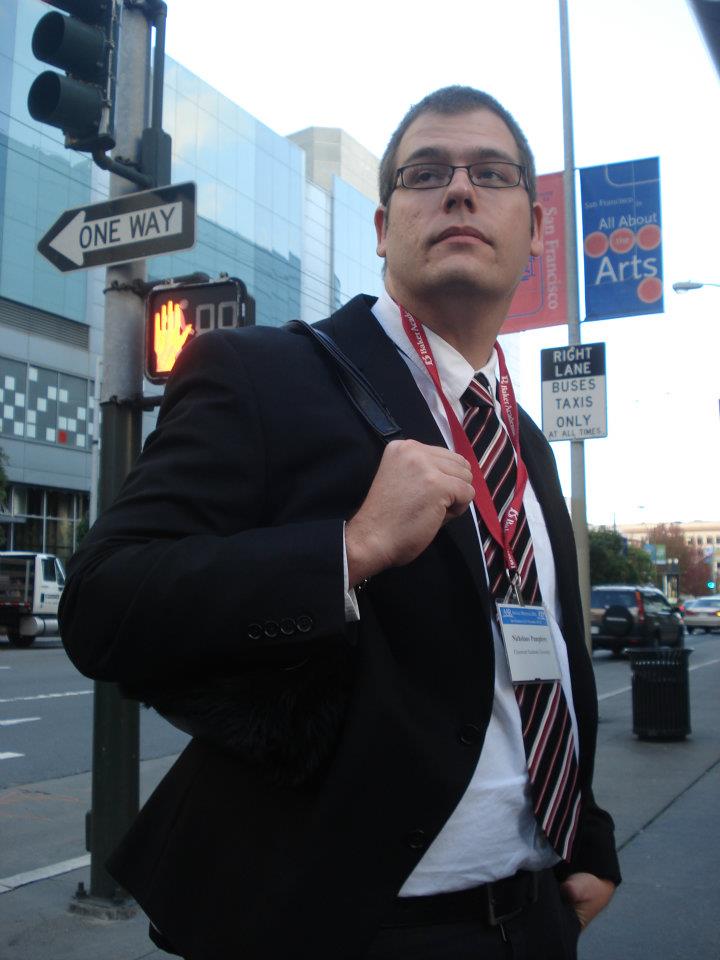
The Legacy of Original Intentions: The Non Violence of Wonder Woman by Nick Pumphrey

What would a superhero comic be without Pow, wham!, Zap, and even a Boom! (insert your own campy sound bites from Batman).  Oddly enough, when psychologist William Marston created the character of Wonder Woman, he did not intend for her to be a violent character.  When villains shot their mere bullets, she simply would deflect them with her indestructible bracelets.  Instead of stooping to the level of her attackers, she would wield the lasso of truth, capture her foes, and force them to admit their malevolent deeds.  Meanwhile, creator William Marston was actually developing the first polygraph using changes in blood pressure as exemplified in Wonder Woman’s lasso.  Wonder Woman was not the first female superhero; however, she was the first non-violent one.  While other writers like Siegel and Shuster (Superman’s creators) were using their religion as inspiration, Marston drew on the women of his life as example.  He intended to have a peaceful, warrior woman, who was more than equal on grounds of “sex,” and could stop the tyranny created by war and hatred (i.e. men) without having to embrace it.  He wanted an example for young girls to idolize and a way for boys to embrace feminine power.   Continue reading “The Legacy of Original Intentions: The Non Violence of Wonder Woman by Nick Pumphrey”

ON NOT GETTING WHAT WE WANT AND LEARNING TO BE GRATEFUL FOR WHAT WE HAVE BY CAROL P. CHRIST

Many women’s dreams have not been realized. How do we come to terms with this thealogically?

Although I am as neurotic as the next person, I am also really wonderful—intelligent, emotionally available, beautiful (if I do say so myself), sweet, caring, and bold. I love to dance, swim, and think about the meaning of life. I passionately wanted to find someone with whom to share my life. I did everything I could to make that happen—including years of therapy and even giving up my job and moving half way around the world when I felt I had exhausted the possibilities at home.

For much of my adult life I have asked myself: What is wrong with me? Why can’t I find what everybody else has? Even though I knew that there were a lot of other really great women in my generation in my position and even though I knew that many of my friends were with men I wouldn’t chose to be with, I still asked: What is wrong with me? Continue reading “ON NOT GETTING WHAT WE WANT AND LEARNING TO BE GRATEFUL FOR WHAT WE HAVE BY CAROL P. CHRIST”

Feminism In Theology By Andrew Tripp

At the outset, I need to name and own my identities as a large white male. I have privilege and voice that makes me hesitant to even write to the audience of this blog. While I consider myself a feminist, I have met some who have told me that as a man I cannot be a feminist. Such folks have told me that I lack the existential knowledge of the systemic pressure put on women, and at best I can be an ally.  With that said, if it was not for feminism in theology, I do not know if I could be a theologian.

When I first began attending church as an adult, I went because I hungered for community, for authentic relationships. My tradition has more female clergy than male clergy, and like many churches, the mothers of the church often have been the true leaders. The church I grew up in had a female board president, a female pastor, and I grew up assuming female leadership was part of religious life. For me, religion was about community and I was far more certain of my salvation through community and relationships than with any kind of doctrinal stance. Then I came to seminary, and saw just how different my experience had been from most folks. Classmates were part of traditions that might ordain women, but wouldn’t provide them with the opportunity for prestigious positions. Professors made blatantly sexist comments, and this was in a “liberal” school. Continue reading “Feminism In Theology By Andrew Tripp”

On Being in the Moment By Ivy Helman

Time.  We mark years, months, days, hours, minutes and seconds. We mark seasons.  We mark life events.  We live our lives in time: both circular and linear.  Time began before we did and time will continue after we cannot experience it any further.   Some say we repeat time with rebirth.  Others suggest that we only have one lifetime of which we should make the most.  Still others suggest there is existence outside of time with concepts like infinity and eternal life.  We sure do write, discuss and ponder time a lot, but do we ever really experience it?  Meaning: what would it be like to live in the moment, to be aware of and completely conscience within an instance of time, not thinking of the past, not worrying about the future, but being fully present in the here and now?

Sci-fi geek that I am, I often recall the Star Trek: The Next Generation movie entitled Insurrection when Captain Picard and Anij discuss experiencing a moment of time.  Anij explains to Captain Picard, “You stop reviewing what happened yesterday. Stop planning for tomorrow. Let me ask you a question. Have you ever experienced a perfect moment in time?”  A few lines of dialogue later, she picks up the topic again by describing what being present is like. ”We’ve discovered that a single moment in time can be a universe in itself. Full of powerful forces. Most people aren’t aware enough of the now to even notice.”  The visual effects show water stopping and a butterfly’s slow flight if I remember correctly.  Captain Picard is obviously caught up in these moments of time as well as being mesmerized by Anij herself.  The power of both the moments of time and Anij herself is palpable. Continue reading “On Being in the Moment By Ivy Helman”

Peace Begins at Home by Gina Messina-Dysert

I began my career in the field of social services as a woman’s advocate for rape and domestic violence survivors.  The motto for an organization I was employed with early on was “peace begins at home,” a significant point that must be acknowledged. While much attention around women’s involvement in peacebuilding efforts have been focused at the macro level, there has been little consideration of women’s efforts towards peace at the micro level.  Certainly, women’s involvement in formal peacebuilding processes at the larger public level is crucial.  This being said, we must not undermine the leadership roles that women play in their homes, their families, and their religious and immediate communities, and how those roles can have an incredible impact on greater society.

I would like to start off by defining “peace.”  It is a word that we all use quite frequently and often with different meanings.  Some would claim that peace equates the cessation of conflict.  However, within our world conflict is inevitable; daily life is riddled with internal, interpersonal, intergroup, and international conflict. Thus, when defining peace, we must understand it as being able to deal creatively with inevitable conflict.  According to Jean Zaru, “It is the process of working to resolve conflicts in such a way that both sides win, with increased harmony as the outcome of the conflict and its resolution.  Peace is based on respect, cooperation, and well being.  Peace is the presence of social justice” (Occupied with Non-Violence, p. 81-2).

Zaru’s comments here are important in that she acknowledges a clear relationship between peace and justice.  In the words of Pope Paul VI, “if you want peace, work for justice.”  Because peace is not only the absence of war, but also the absence of poverty and disease, the access to clean water, the freedom from slavery; peace is the affirmation of the full humanity of every person. Peace is salaam, peace is shalom, peace is the well being of all.  Thus, there are many elements that come together in the word peace.  It is not simply government initiatives, it is not a patchwork solution to the conflicts of the world, nor is it submission or silent acceptance, rather we must understand peace as justice. Continue reading “Peace Begins at Home by Gina Messina-Dysert”

Waking up Muslim on 9/11 by Jameelah Medina

I have often stated that I went to sleep as an African American woman on September 10, 2011 and woke up Muslim on 9/11. It may seem odd to say this since I am a third-generation Muslim; however, my reason for doing so is that my life as an American Muslim now has two main eras: 1) pre-9/11 and 2) post-9/11.

In the pre-9/11 era of my life, I felt more black than Muslim because my color was a point of conflict and controversy throughout my life. I grew up in two areas as a child—an urban area with majority Latinos/as and then in a very rural area with majority whites. In both areas, being black was not so popular. I was called “mayate,”which is a bug but also the Mexican term for “nigger.” I was also called, “tar baby,” “nigger,” “African booty scratcher,” and a host of other hurtful names as a young black child.

In the post-9/11 era of my life, the main part of my identity that people focus on is my religion instead of my color. On 9/11, I went from being a nigger to being a “towel head,” from being a tar baby to being a “terrorist,” and from being the stereotype of an unruly and angry, loudmouthed black woman to being the stereotypically seen-but-not heard, oppressed Muslim woman in need of saving. As a Muslim, I suddenly was a potential threat and un-American, while as a Muslim woman I was also pitied and looked down on as misfortunate for being in a religion that oppresses me. In my life, white privilege and white monoculturalism have turned into Christian privilege and Christian monoculturalism. Continue reading “Waking up Muslim on 9/11 by Jameelah Medina”

My First Experience at a Women-Only Conference by Grace Yia-Hei Kao

“This ain’t your daddy’s conference!”

I knew that I was going to be attending a totally different type of conference than I had ever been to before when I received the following instructions on additional items to pack: (1) my own mug with which to drink coffee or tea (“we will go green in this conference as much as possible”), (2) 3 oz. of water “from a source of nature near your home” to be offered during “opening worship,” and (3) a small, modest, pre-owned, homemade, or inexpensive “earth-honoring gift for exchange.”

Continue reading “My First Experience at a Women-Only Conference by Grace Yia-Hei Kao”