Remembering Rosemary Part 2 by Janice L. Poss and Theresa A. Yugar

Editor’s Note: A more formal memorial to Catholic Feminist Theologian Rosemary Radford Ruether was posted here at Feminism and Religion at the time of her passing. Now we are delighted to share these memories of her by two scholars, Theresa A Yugar and Janice L. Poss, who knew her well, especially in her last months. Therese’s reflection is below and Janice’s will appear tomorrow. As Janice notes in her post, “More than any deep theological concept, doctrinal exegesis, or other hyper-scholarly thought, she taught me simply by being who she was – a woman – and she gave me the ultimate gift, the gift of herself.” Through these posts, Theresa and Janice pass on some of Rosemary’s wise and caring gifts to our FAR readers. Part 1 was posted yesterday. You can read it here.

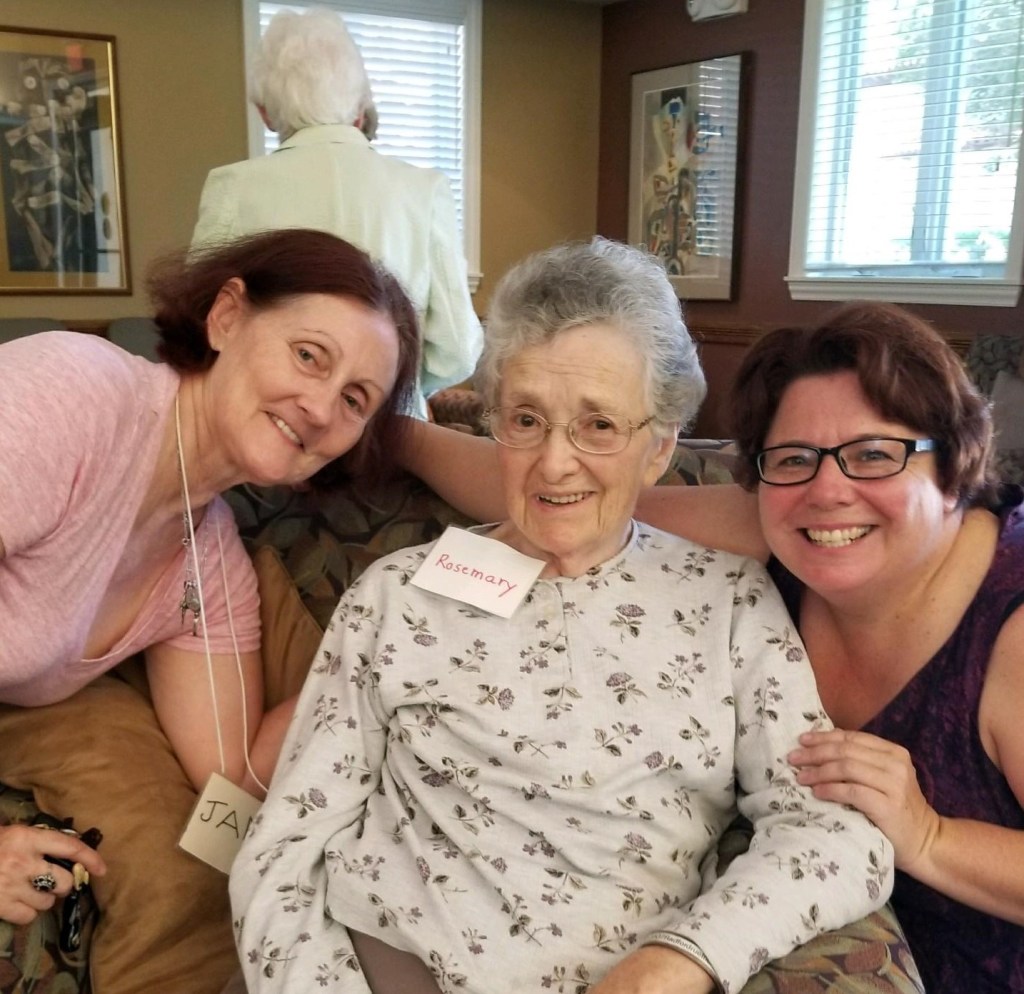
Janice, Theresa with Rosemary

Almost five years ago, Rosemary Radford Ruether suffered a devastating stroke that left her partially paralyzed and no longer able to speak or write, activities that were integral to her life as a writer, teacher, activist, and scholar. During her difficult last years Janice and I learned new ways of engaging her that were academically stimulating and fulfilling for her. We became advocates for her during her disability as she had been an advocate for us. Thus, out of pain grew blessings.

Janice and I dedicate and share with you these two short reflections that reflect our struggle to find our way without her. We know there will be many more reflections composed and shared by others whom she mentored, influenced and touched. Now—in the midst of our grief and sadness at her loss—we offer our personal memories of how she enriched our lives every day until she passed from our midst at 2pm, on Saturday, May 21, 2022.

Continue reading “Remembering Rosemary Part 2 by Janice L. Poss and Theresa A. Yugar”

Remembering Rosemary Part 1 by Janice L. Poss and Theresa A. Yugar

Editor’s Note: A more formal memorial to Catholic Feminist Theologian Rosemary Radford Ruether was posted here at Feminism and Religion at the time of her passing. Now we are delighted to share these memories of her by two scholars, Theresa A Yugar and Janice L. Poss, who knew her well, especially in her last months. Therese’s reflection was posted yesterday and Janice’s is below. As Janice notes in her post, “More than any deep theological concept, doctrinal exegesis, or other hyper-scholarly thought, she taught me simply by being who she was – a woman – and she gave me the ultimate gift, the gift of herself.” Through these posts, Theresa and Janice pass on some of Rosemary’s wise and caring gifts to our FAR readers.

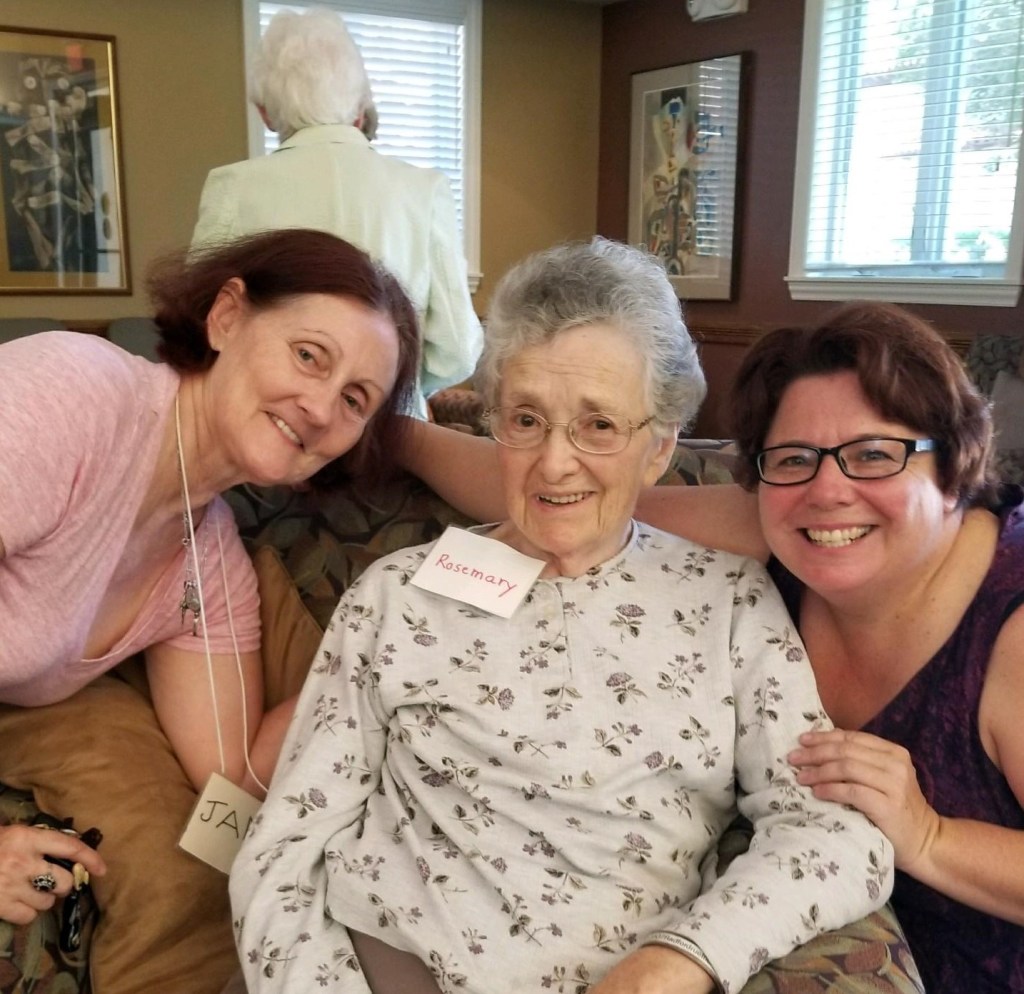
Janice L. Poss, Rosemary and Theresa A. Yuger

She’s gone, but not forgotten. She is there, presence felt. The Spirit, as they say, works in mysterious ways. I knew about Rosemary for several years after attending two presentations  on feminist topics that she gave at Loyola Marymount University in 2005 and 2008. In 2006, I also recall hearing about her while organizing the first Roman Catholic Women Priests (RCWP) Mass in Los Angeles. Once I entered Claremont Graduate University as a Ph.D. student I heard quite a bit about her because my colleague and friend, Theresa Yugar, mentored me through orientation until she graduated. Occasionally I would see Theresa and Rosemary at Pilgrim Place when I attended Women Church Services. Although Rosemary was still teaching one class a semester, I could never attend because I was working full-time.

Continue reading “Remembering Rosemary Part 1 by Janice L. Poss and Theresa A. Yugar”

The Legacy of Carol P. Christ: Weaving and Spinning Women: Witches and Pagans by Max Dashu A Review

Moderator’s Note: This was originally posted on September 19, 2016

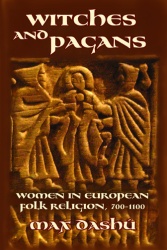
Max Dashu’s  Witches and Pagans: Women in European Folk Religion 700-1000 challenges the assumption that Europe was fully Christianized within a few short centuries as traditional historians tell us. Most of us were taught not only that Europe became Christian very rapidly, but also that Europeans were more than willing to adopt a new religion that was “superior” to “paganism” in every way. Careful readers of Dashu’s important new work will be challenged to revise their views. When the full 15 volumes of the projected series are in print, historians may be forced to hang their heads in shame. This of course assumes that scholars will read Dashu’s work. More likely they will ignore or dismiss it, but sooner or later–I dare to hope–the truth will out.

witches-and-pagans-cover

History has been written by the victors—in the case of Europe by elite Christian men. These men may have wanted to believe that their views were widely held, but Dashu suggests that they were not. Combing artistic and archaeological records, Dashu finds (to give one example) that images of Mother Earth nursing a snake are far from uncommon and can even be found as illustrations in Christian documents and on Christian monuments. Clerics rage against people—particularly women–who continue to visit holy wells and sacred trees and to practice divination and healing rituals invoking pagan powers. To paraphrase Shakespeare: “Methinks the cleric doth protest too much.” Were these things not happening and happening often, there would have been no need to condemn them.  Using these clues, Dashu provides intriguing new readings of the Poetic Edda and Norse sagas.

Continue reading “The Legacy of Carol P. Christ: Weaving and Spinning Women: Witches and Pagans by Max Dashu A Review”

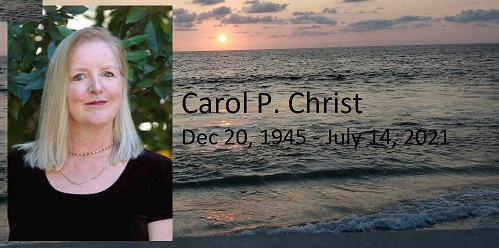
Inspired by Carol P. Christ: Patriarchy Rules the Supreme Court by Janet Maika’i Rudolph

Along with the words of Justices Sotomayer, Breyer and Kagan.

The Supreme Court ruling overturning Roe was expected, but there was nothing that could prepare me (nor likely anyone else) for the devastation of the actual decision. My gut is reeling. I thought it would be useful to survey the landscape through the lens of patriarchy. Thanks to Carol Christ for having always written insightful comments about the roles of patriarchy. This is inspired by her work.

The dissenting judges were quite eloquent, so I will work off their words.

  • “Whatever the exact scope of the coming laws, one result of today’s decision is certain: the curtailment of women’s rights, and of their status as free and equal citizens.”
  • “After today, young women will come of age with fewer rights than their mothers and grandmothers had. The majority accomplishes that result without so much as considering how women have relied on the right to choose or what it means to take that right away. The majority’s refusal even to consider the life-altering consequences of reversing Roe and Casey is a stunning indictment of its decision.”

My Commentary: Through the eyes of patriarchy here is no need to consider life-altering consequences because it only recognizes two roles for women: madonna or whore. We are never seen as full humans with civil and independent rights. Patriarchy doesn’t just hate the sexual freedom of women, it has spent millennia trying to quash it, make it into something dirty, control it. It’s a love/hate relationship with sex. Rape is really OK (look how hard it is to prosecute). Pedophilia OK too (look at the church). But a woman making her own sexual, reproductive choices . . . a bridge too far. Patriarchy will always force us to pay a price for having sex, for being alluring, for being female.

Continue reading “Inspired by Carol P. Christ: Patriarchy Rules the Supreme Court by Janet Maika’i Rudolph”

A Poem for Our Abortion Rights by Marie Cartier

Fecundity: the ability to produce an abundance of new growth, but also the ability to produce new ideas

And now in the hour of our discontent, we are asked to worry about

fecundity. I suppose we can call it that—have we made enough babies yet?

As a people. A people ruled by patriarchy. No small thing. “A social system in which males dominate and hold primary power.”

Oh my god—am I sick of it? Anyone with a brain is sick of it…I want to think.

But they have brains, right? The afore mentioned patriarchs? Who are

creating this new social system?

A meme goes out on social media—I’m not pro-murder I’m pro-Ellen, thirteen years old and pregnant by her father

I’m pro-Margaret, with five kids and I cannot to afford to feed another

I’m pro-Eliza, pregnant with a baby known to have serious birth defects

I’m pro– you get the idea.

Continue reading “A Poem for Our Abortion Rights by Marie Cartier”

In Memoriam: Rosemary Radford Ruether by Elizabeth Ann Bartlett

Yet another of my great feminist and spiritual teachers has died.  Rosemary Radford Ruether, ecofeminist Catholic theologian, died on May 21st.  Her work challenged my thinking and gave me new understandings and perspectives. She was a prolific writer, authoring hundreds of articles and 36 books, and was the quintessential scholar and historian of world religions and ecofeminist thought and theologies. A scholar of the scholastics, she examined the three strains of Western thought: the Hebraic tradition; Platonic-Gnostic; and Pauline-Augustinian in all their complexities to develop an understanding of the nature of Western thought and its implications for the domination of women, nature, and colonized others. As she described her own approach, she drew out the contradictions and complexities in these theologies, careful “to see both negative and positive aspects . . . and to be skeptical of exclusivist views on either side.”[i] Her thought and writing was ever-expanding, and always striving “to see the dominant system of patriarchy, including its racism, classism, and colonialism, in critical perspective,” and to put herself “in places where in solidarity with its victims, I can see it from its underside.”[ii]To this end, she brought together the ecofeminist theologies of women from around the globe, particularly the global south.[iii] Her thought also grew to include critiques of militarism and corporate globalization.  Needless to say, I cannot begin to encompass all of her contributions here. So I will focus on the ways her thought has most deeply influenced and inspired my own, as well as my students’.

Continue reading “In Memoriam: Rosemary Radford Ruether by Elizabeth Ann Bartlett”

From the Archives: Artio, Celtic Goddess of Wild Life, Transformation and Abundance by Judith Shaw

This blog was originally posted August 26, 2015. You can read the original comments here.

Artio, Celtic Goddess of Wild Life, Transformation, and Abundance, is one of the more obscure goddesses in the Celtic pantheon.  She is often shown with baskets of plenty and surrounded by animals.  Artio is frequently depicted as a bear. Her name comes from the old Celtic word for bear, arth(e), which the Romans Latinized to artos.

Artio arrived in western Europe with the Helvetii a Celtic tribe who migrated to Switzerland around 450 BC.  They worshiped Her as the “She-Bear”.

But Her origins could be even older than that.  Some feel that the bear is the oldest European deity as bones and skulls of bears have been found lovingly arranged on niches found in caves across Europe.  In 1840 in Ireland, during the restoration of Armagh Cathedral, ancient, small stone carvings of bears were found.

Continue reading “From the Archives: Artio, Celtic Goddess of Wild Life, Transformation and Abundance by Judith Shaw”

I’m Not “Fit” to Judge Another Woman’s “Fit”ness by Liz Cooledge Jenkins

In recent conversations around abortion rights—spurred by a leaked draft of a Supreme Court decision that would overturn Roe v. Wade—everyone has opinions. The financially comfortable, often-white, often-evangelical women in my circles have opinions. And these opinions often involve the lives and choices of materially poor women and women of color.

            In her recent book The Trouble with White Women: A Counterhistory of Feminism, Rutgers University professor Kyla Schuller profiles seven pairs of feminist activists over the last two hundred years. Each pair includes one woman who operated from a framework of white feminism—a framework that, according to Schuller, “consistently…wins more rights and opportunities for white women through further dispossessing the most marginalized.” And each pair includes a woman who embodied intersectional feminism—a feminism that “expose[s] sexism to be a powerful structure of systemic inequality and attempt[s] to untangle its deep threads with other forms of domination, while also building new practices of care, coalition, faith, and solidarity.”[1] This is not just history but a live tension in the present day.

Continue reading “I’m Not “Fit” to Judge Another Woman’s “Fit”ness by Liz Cooledge Jenkins”

photo essay, part 2: bans off our bodies rally by Marie Cartier

photos from bans off our bodies rally, long beach ca may 14, 2022

all photos by: marie cartier

BIO: Marie Cartier is a teacher, poet, writer, healer, artist, and scholar. She holds a BA in Communications from the University of New Hampshire; an MA in English/Poetry from Colorado State University; an MFA in Theatre Arts (Playwriting) from UCLA; an MFA in Film and TV (Screenwriting) from UCLA; an MFA in Visual Art (Painting/Sculpture) from Claremont Graduate University; and a Ph.D. in Religion with an emphasis on Women and Religion from Claremont Graduate University.

Moderator’s note: This is the 2nd of the two part series. Part 1 was posted yesterday.

Continue reading “photo essay, part 2: bans off our bodies rally by Marie Cartier”

photo essay, part 1: bans off our bodies rally by Marie Cartier

photos from bans off our bodies rally, long beach ca may 14, 2022

all photos by: marie cartier

BIO: Marie Cartier is a teacher, poet, writer, healer, artist, and scholar. She holds a BA in Communications from the University of New Hampshire; an MA in English/Poetry from Colorado State University; an MFA in Theatre Arts (Playwriting) from UCLA; an MFA in Film and TV (Screenwriting) from UCLA; an MFA in Visual Art (Painting/Sculpture) from Claremont Graduate University; and a Ph.D. in Religion with an emphasis on Women and Religion from Claremont Graduate University.

moderator’s note: There are so many powerful photos that they will be posted in two parts, today and tomorrow.

Continue reading “photo essay, part 1: bans off our bodies rally by Marie Cartier”