Martha, Mary—and Maeve by Elizabeth Cunningham

Today is the eve of Mary Magdalen’s Feast Day, July 22. I like to celebrate with Maeve, my BIFF (best imaginary friend forever) the Celtic Mary Magdalen and narrator of The Maeve Chronicles. Below is an excerpt (edited for brevity) from The Passion of Mary Magdalen. Maeve (who against her better judgment is married to Jesus) is camped out with her beloved and his growing entourage at the house of the Bethany family, Mary, Martha, and Lazarus. The huge crowd of motley guests is enough to give a good hostess hives. The scene opens as Maeve returns from an outing with her mother-in-law aka the BVM.

When we walked into the courtyard of Martha’s house, the air was as charged as the moment before a thunderclap when the wind has stilled and everything holds its breath. Martha stood, confronting Jesus in the center of a seated crowd. Her chest was heaving, and she was clearly struggling to control herself. On the ground in front of her was a platter she must have dropped (or hurled?). Bread, olive paste, cheese, and grapes lay scattered among bits of broken crockery. Mary B, sitting nearest Jesus, (yes, you could say at his feet) was the first to unfreeze. She got on her knees and started gathering up the shards, but Martha paid no attention. Continue reading “Martha, Mary—and Maeve by Elizabeth Cunningham”

The Language of Flowers by Barbara Ardinger

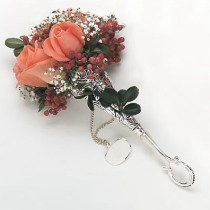
Instead of sending a billet-doux to your honey, present a tussie-mussie, a small bouquet wrapped in a lace doily or a fancier holder. Say you have a friend having a birthday and he already has too many neckties and she already has too many kitchen gadgets. Give them flowers or potted plants. The white camellia signifies “unpretending excellence.” Ivy, “with its clinging habit, is a feminine symbol” (sic., p. 53). The lily means purity. The peony symbolizes abundance. The primrose is a token of affection and respect. Get the idea? Your friends will be delighted by the flowery language.

William Shakespeare, The Winter’s Tale
A fancy tussie-mussie

     Here’s flowers for you:
Hot lavender, mints, savory, marjoram,
The marigold, that goes to bed wi’ the sun,
And with him rises weeping: these are flowers
Of middle summer….
          —William Shakespeare, The Winter’s Tale Continue reading “The Language of Flowers by Barbara Ardinger”

The Danger of the Patriarchal Domination Mindset: Can We Do Anything About It? by Thea Iberall

The Danger of the Patriarchal Domination Mindset: Can We Do Anything About It? By Thea Iberall The Swallow and the Nightingale

At the confluence of misogyny, prejudice, homophobia, religious intolerance, environmental destruction, and violence is the patriarchy. We all know this and talk about it here from our own perspectives. I come as a scientist and writer. I have a love of history and science as well as a skill at simplifying complicated things. I abhor what some people are doing to our planet and the arrogance with which they do it. Unfortunately, because we want the stuff they are manufacturing, because there are too many of us, and because we are letting them do it, they do it with our blessings. I want to help change this situation with a novel I’ve been working on for almost 15 years.

In the year 2000, I sat in a dinghy in the caldera of the active underwater volcano at Santorini helping my geologist sister count the bubbles coming from below us. The experiment was part of my father’s research into the origins of life. I had had the seed for a novel thirteen years earlier when I heard Mimi Fariña sing The Swallow Song, talking with her about her deceased husband Richard Fariña and how lost his music has become. I began developing ideas, learning about the nightingale connection and discovering a 12th century Sufi master’s epic allegory about god. Sitting in that dinghy, everything coalesced: the story of how western civilization went off course. My book of contextual poems, The Sanctuary of Artemis, explores the roots of Western patriarchal culture and tells some of it. The novel would have a backdrop of a world collapsing as ornithologist Dr. Deborah Wright is unwittingly guided by the Sufi to figure out why the Capistrano swallows are dying. It would include an underlying history of an egalitarian world lost when this volcano erupted in 1628 BC. Richard Farina’s song would be playing throughout the pages.  Continue reading “The Danger of the Patriarchal Domination Mindset: Can We Do Anything About It? by Thea Iberall”

Cosplay and Choice by Sara Frykenberg

Sara FrykenbergCosplay is often a deliberate, interpretive and self-chosen performance of gender and power.  Like drag performers, cosplayers put on a show of the characters they represent; and in my experience, they often do so within diverse, supportive and principally, inclusive communities. 

This week my husband sent me a great blog post he found about cosplay and one woman’s determination that she would no longer tolerate being demeaned, objectified or trivialized because of what she chooses to wear.  Blogger Megan Marie’s post, entitled “What would you do if you weren’t afraid,” inspires me.  She points out and refuses the trappings of rape culture: victim blaming, assumed male control over female sexuality and shame; and claims her right to be who she is.  I, as fellow (what is the female equivalent for fellow???) cosplayer, was also moved by her defense of this creative art.  I have been cosplaying a long time, but I have been too afraid to speak much about this or to directly protest the rejection of these fantasy images within some feminist communities.  So to answer Megan Marie’s question* in her own words, “What would you do if you weren’t afraid? My answer.  I’d write this blog.”

Coplay = costume + play!  It is the recreation of popular characters from video games, comic books, anime, scifi series, fantasy literature or the like.  Cosplayers do this for the fun of it, the craft involved, to express one’s fandom and sometimes, professionally, usually within an arena where fans can enjoy one another’s recreations.  The attempt to embody these characters involves a great deal of work and artistic expression.  Many conventions, like Fanime Con in San Jose, CA, host panels in which fans can learn cosplay skills, such as armor construction, wig making and costume design.  I have cosplayed the following characters: Sailor Star Healer, Eudial and Sailor Iron Mouse from the anime Sailor Moon, Misa

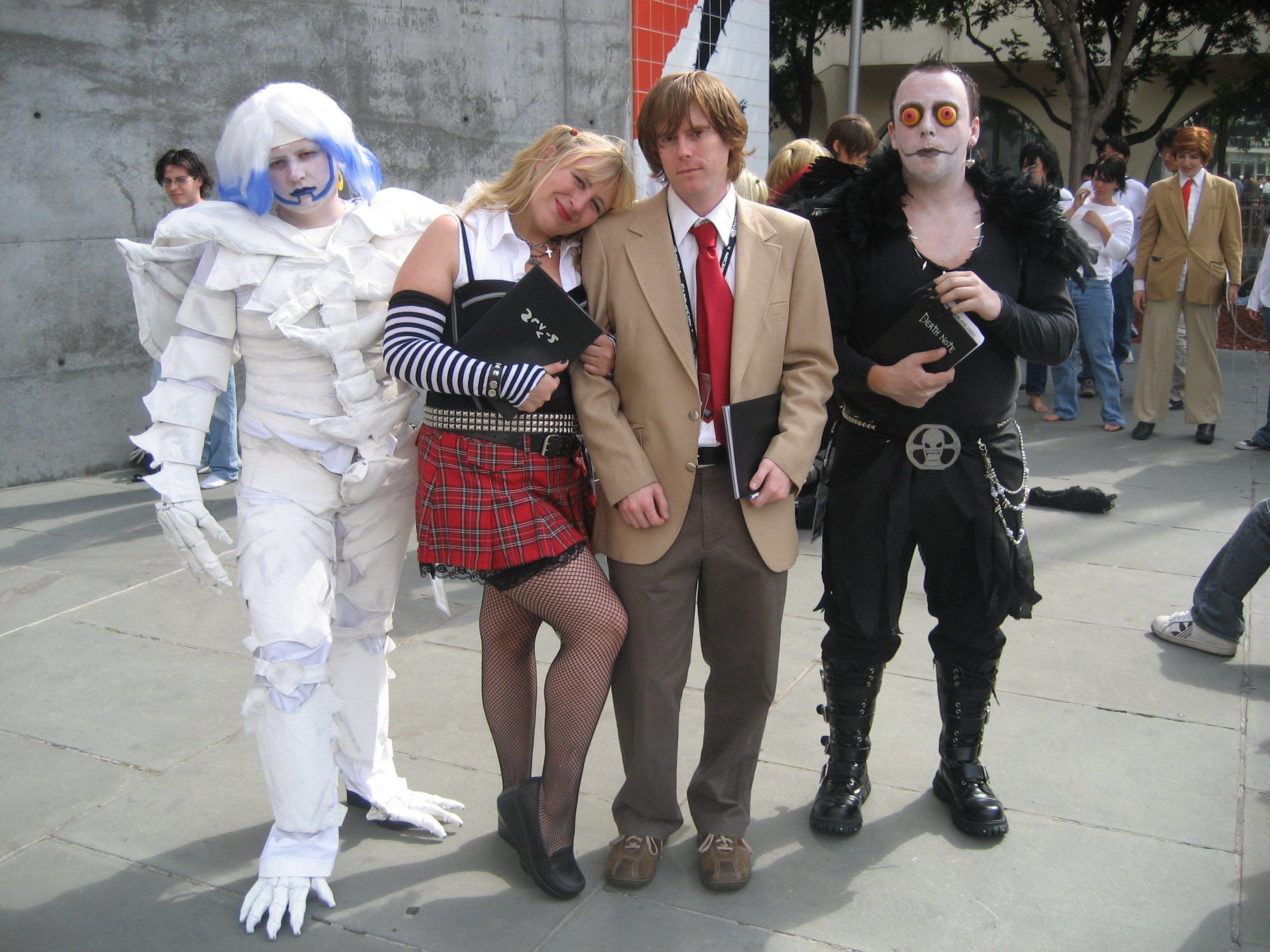
Death Note Cosplay: Misa and Light are in the center, flanked by their respective "Shinigami," or the death gods they are working with
Death Note Cosplay: Misa and Light are in the center, flanked by their respective “Shinigami,” or the death gods they are working with

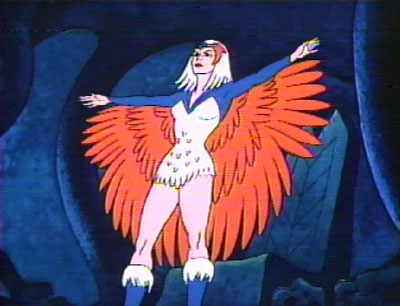
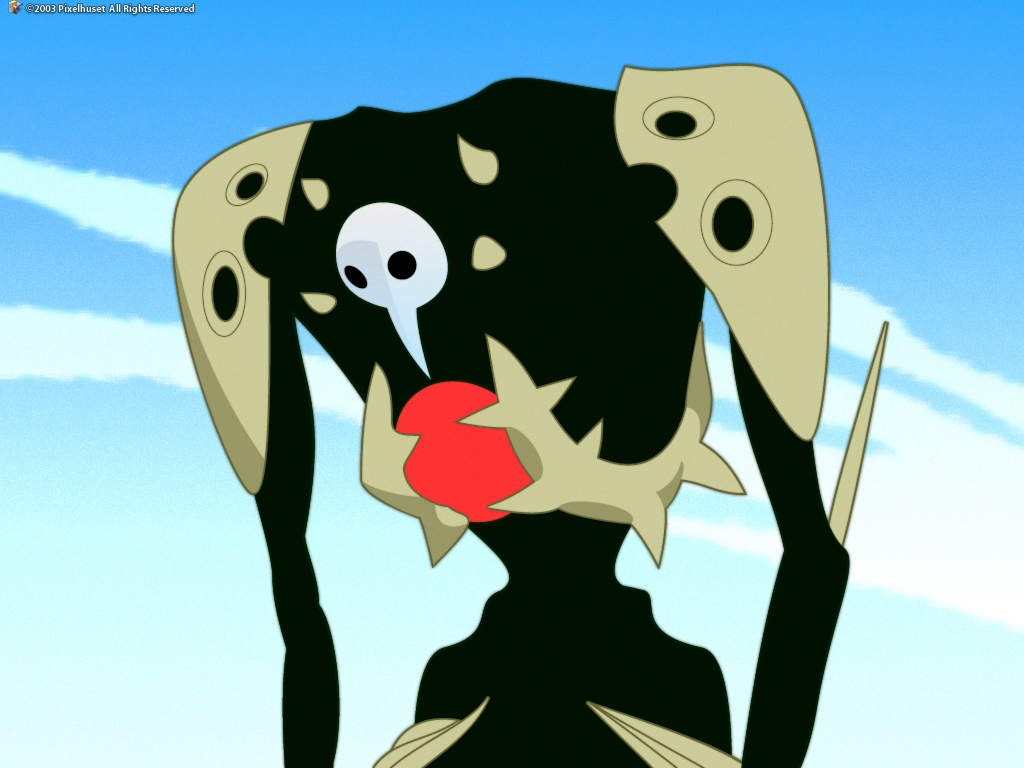
from the manga Death Note, the Sorceress from He-man, a Star Fleet officer from Star Trek: The Original Series, and most recently, a giant “Angel,” Sachiel from Neon Genesis Evangelion.

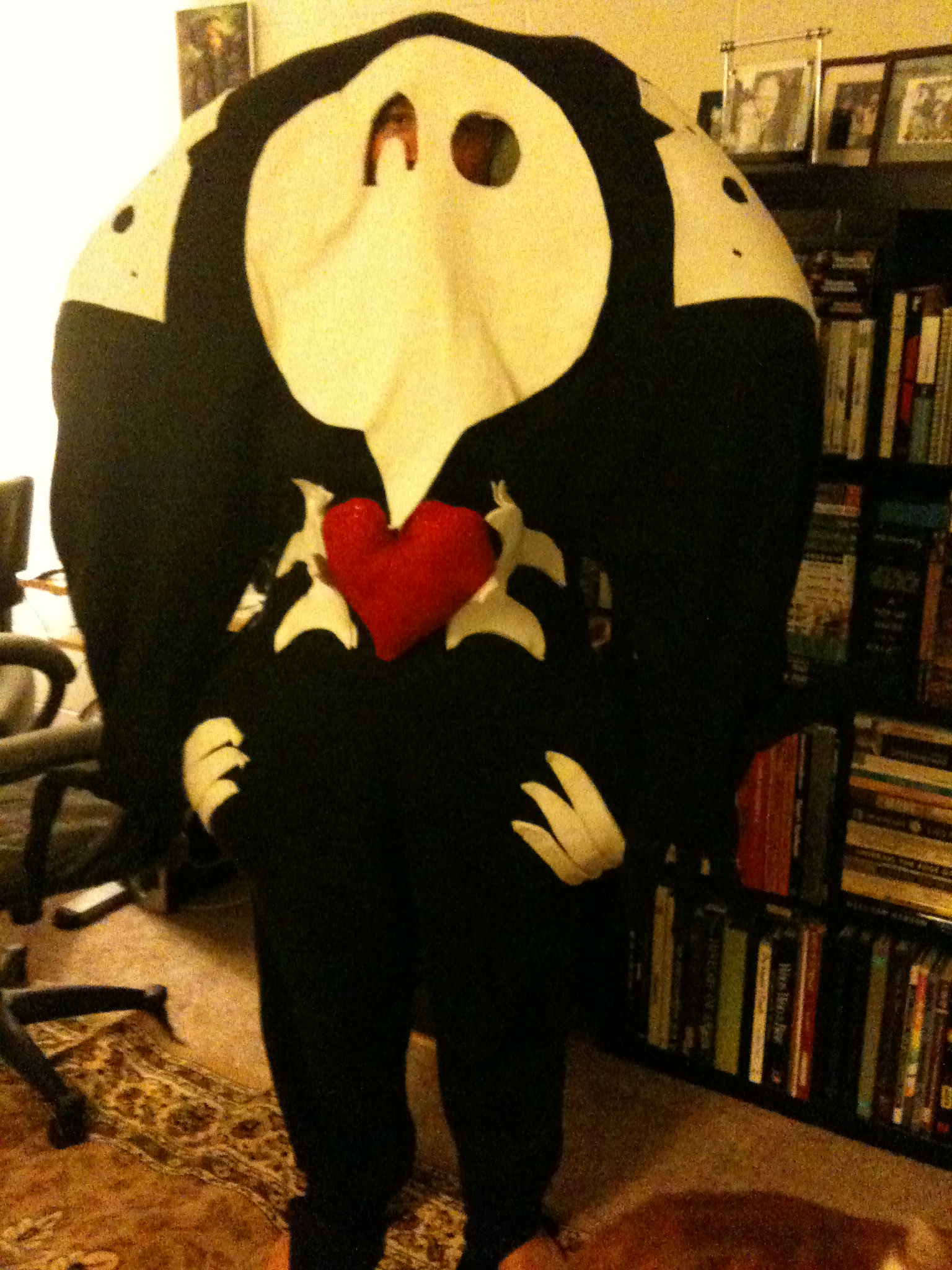
Sachiel from Neon Genesis Evangelion: I am trying on my almost finished costume here!

I am currently planning a to make a Metroid out of an umbrella and to cosplay Nyan-kitty at the May conference that my husband (who will be playing Tac-nyan), my sister and many of my friends attend.

So, why the feminist-anxiety?  Continue reading “Cosplay and Choice by Sara Frykenberg”

Fanpire by Tanya Erzen

A girl treats the Twilight series as a holy book, emulates the behavior of the vampire family at its center, and makes a pilgrimage to Forks, WA, the setting of the books.  This could just be a run-of-the-mill Twilight fan.  After all, Twilight, a young adult romance between the exceptionally clumsy 16-year old human Bella Swan, and a vampire named Edward Cullen who has been seventeen since 1918, is beloved by millions of women and girls.   Thirteen million copies of the books have been sold in the United States; 116 million copies, worldwide, with translations into thirty-seven languages. The film adaptations are some of the highest-grossing movies of all time. Continue reading “Fanpire by Tanya Erzen”

The Dignified Life of Magdalene Rose: A Pro-Life Story? by Michele Stopera Freyhauf

As I enter this world, I know that I am so very blessed. My life will be one of worth.  As hard as people fought to see me take my first breath, they will fight for my life to be one of dignity and worth.  I am protected in a world that is pro-life – or so I thought.

My mother was raped, but the law did not recognize this violent act as rape because she became pregnant with me.  The law only recognizes legitimate rape as one that does not result in pregnancy.  I entered the world amidst controversy.  I was named Magdalene Rose. Magdalene because of the shroud of controversy that surrounded her – the false accusations of prostitution, the stigma that history assigned to her, and the hope of those who have tried to reclaim her as the first witness to the resurrection, a faithful disciple, and devoted minister.  Rose was chosen for the flower that can bloom even in the face of adversity; one that can push through the snow to reach the sun and spread its petals.

My mother is a single mom  She does the best she can – trying to keep us clothed and fed.  She works so much and I stay many nights with my grandmother or a neighbor.  She seems so tired, so worried, but yet always has a smile to share with me.  I am her blessing, a miracle born out of darkness.

We go to church every Sunday, but strangely, no one will sit by us.  We have to sit in the back.  I wonder why.  Certainly our clothes are a little worn – we rely on hand-me-downs and the thrift shop.  My mother dresses me in the finest dresses she can find, I feel so special. In God’s house, we are shunned.  People refuse to shake our hand even during the sign of peace.  This is the place where we should be welcomed.  This is where they proclaim the Gospel and teachings of Jesus.  Yet, the only sign of Jesus that seems to exist in this community is symbolized on the cross.

Continue reading “The Dignified Life of Magdalene Rose: A Pro-Life Story? by Michele Stopera Freyhauf”

THE INTERPRETER; or An Introduction to Hermeneutics by Daniel Cohen

 He showed us that every text contains two messages, one formed by the ink and the other by the spaces left between the inked letters, the material included and that which was excluded, and that the message was never complete if only the first text was read.

(Hermeneutics: The art or science of interpretation, especially of scripture. Oxford English Dictionary)

It was all the interpreter’s fault.

He came to our city looking for employment. It was soon clear that he had a wide knowledge of many languages, and most of our merchants began to employ him in their dealings with foreign traders. We saw him speeding from one to another, in those sandals of his with the odd widening at the heels, often pausing to tell one merchant of a recent purchase of interest by another. It seemed that trade prospered with his coming. Our merchants became wealthier and busier than they had ever been. Continue reading “THE INTERPRETER; or An Introduction to Hermeneutics by Daniel Cohen”

The Original Art by Elise M. Edwards

Storytelling is the original art as the desire to communicate is a common thread of all the other arts. I started reflecting on the stories – through various mediums–that have shaped me, and I wanted to use my post today to honor the herstories, the narratives of the women that have been meaningful to me.

On Tuesday night, I attended a gathering of storytellers.  I sat with two of my friends and listened to professionals and amateurs alike share stories.  The stories they told presented a range of narratives from Danish folktales to improvised children’s stories.  I was both horrified and enchanted by the content of their works.  While one story was a particularly violent tale of retribution and “justice,” another seemed to offer lessons about cooperation.

I thought about sharing a story of my own, but I didn’t feel prepared.  By the end of the evening, I was aware of the irony of my reluctance to share.  I was afraid I was not a good enough storyteller, yet I’d spent a good part of the previous two weeks traveling and catching up with old and new friends, which certainly involved animated retellings of the events going on in my life. Continue reading “The Original Art by Elise M. Edwards”

A Feline Petit Prince by Barbara Ardinger

I am tamed by cats. I live with them. Note that I do not say that I “own” cats. Cats are their own beings, as are the dogs and fish and gerbils and parrots and other critters that may live with us. Do farmers and ranchers really own their chickens and cows? I don’t think so. They’re our kin. We’re all the children of the Goddess, of our blessed Mother Earth.

I wrote recently about one of my all-time favorite books, Le Petit Prince, by Antoine de Saint-Exupéry, a book I first read in my high school French I class. Le Petit Prince is said to be a children’s tale, a sort of fairy tale of the desert. Actually, it’s “about” many things: the value of childhood innocence, the incomprehensibility of serious adults (in his voyage from Asteroid B-612 to earth, the prince visits a king, a businessman, a drunk, and a lamplighter), the follies and the lessons of love. In the Sahara Desert, the Little Prince meets a golden desert fox that tells him that we see better with our hearts than with our eyes. The fox also asks the Little Prince to “tame” him, that is, to allow them to become familiar and friendly with each other.

I am tamed by cats. I live with them. Note that I do not say that I “own” cats. Cats are their own beings, as are the dogs and fish and gerbils and parrots and other critters that may live with us. Do farmers and ranchers really own their chickens and cows? I don’t think so. They’re our kin. Continue reading “A Feline Petit Prince by Barbara Ardinger”

Soror Mystica: New Myth for a Changing Earth by Gael Belden

Once, when my life collapsed around me, as life is wont to do at times, I began creating clay images, placing them near the headwaters of watersheds around the United States. I called this project 100 Clay Buddha’s and it seemed at the time an incantation and a prayer for water, for the planet.  Later, I came to understand that I was also re-figuring my life, image by image, waterway by waterway.

I was also working at the time with particular koans, myths, and fairy tales because they speak not only to the personal, but to the collective –to the ways things have been over time. The hero’s journey monomyth, although genderless in its most distilled terms, seemed, though its imagery, to speak mostly to the theme of the outer quest (slaying dragons, returning from battle, and whatnot). I felt as a woman, however, my journey had to do with a descent into the Great Below and with that a dying into something new. Continue reading “Soror Mystica: New Myth for a Changing Earth by Gael Belden”