Each month, I delight in writing about a revolutionary woman. Whether she is from history or mythology, sharing the stories of my Holy Women Icons with a folk feminist twist is one of my favorite things to do as a feminist, artist, scholar, and clergywoman. Yet, no matter how much research I’ve done, or how many times I’ve taught about an icon, new discoveries are made, revelations within my own heart and mind cracked open, so that there is sometimes the need to revisit a particular holy woman afresh. Such is the case this month with Guanyin. Though I wrote about her nearly two years ago, published a book including her story, and have taught a course with one session focused on her compassion and mercy, I realized that much about her has gone unsaid. Namely, she is an icon for queers, pacifists, and vegans. Before explaining why, let’s have a quick review…
Guanyin is the Buddhist Goddess of Mercy and Compassion. In the Lotus Sutras, she originates from a bodhisattva named Avalokitesyara. Avalokitesyara is identified as male in the Lotus Sutras. Overtime, however, Avalokitesyara transitions from being identified as a male to becoming Guanyin, most often portrayed in feminine terms and referred to as “she.” Many scholars assert that Guanyin is androgynous and can take on the form of any sentient being. And this is how I’ve always written about Guanyin, as the divinely androgynous one who is most often portrayed in feminine form. Continue reading “Guanyin Revisited: Queer, Pacifist, Vegan Icon by Angela Yarber”
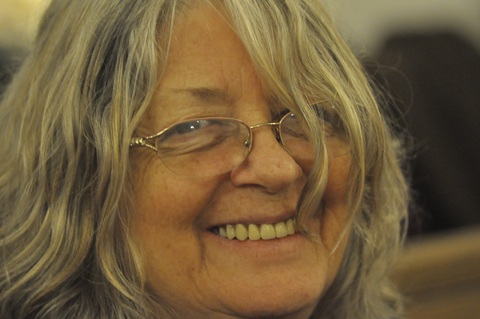
Many of the young women I meet tell me that they think feminism is not what they are about, that they prefer to work for the good of all. I understand that and certainly we can all choose where we wish to place our focus. However, it does make me wonder how effective we can be with our focus placed on so broad a scope. Certainly, we want equal rights for all and some call that “feminism” these days but is it?
In my 73 years, I have lived through quite a few years of women working for equal rights. I have seen many successes as well as the failures. I am incredibly proud of those successes. When I was in the early stages of my career and had just entered management, I was able to implement leadership methods, which now have become models for employers such as team building and servant leadership. Then however, there were no names for them. I led my teams based simply on how I wished my employers to treat me. Continue reading “It is a Matter of Focus by Deanne Quarrie”
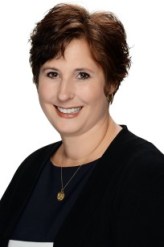
Last week, Supreme Court Justice Ruth Bader Ginsburg was in the news again, but not for reasons you would expect. She, along with Rabbi Lauren Holtzblatt, penned a feminist essay about the Exodus title “The Heroic and Visionary Women of Passover.” Finding this story was exciting, especially because I am so drawn to the Exodus story (the intrigue and curiosity of which caused me to return to school and study, as one of my main areas of focus, Hebrew Scriptures – along with Archaeology and Ancient Near Eastern History). Now women’s roles in this story are being elevated thanks to Justice Ruth Bader Ginsburg and Rabbi Holtzblatt.
Before I discuss the message and the importance this message brings, I think it is important to know an important fact about Justice Ginsburg. Ginsburg is not observant, but does embrace her Jewish identity. When her mother died, she was excluded from the mourner’s minyan because she was a woman; an event in Judaism that is meant to comfort the mourner, brings a sense of community, and is considered obligatory – a means of honoring our mother/father. This important event left an impression and sent a loud message that inspired and influenced her career path – she did not count – she had no voice – she had no authority to speak. No wonder her life and career focuses so much on women’s rights and equality.
As many of us know, the story of Exodus is focused on two things 1) Moses and 2) liberation from the bonds of servitude and enslavement; women are rarely discussed. In the essay co-authored by Ginsberg, women are described as playing a crucial role in defying the orders of Pharaoh and helping to bring light to a world in darkness. In the Exodus event, God had partners – five brave women are the first among them, according to Ginsburg and Holtzblatt. These women are: Continue reading “Passover and the Exodus: A Feminist Reflection on Action, Hope, and Legacy by Michele Stopera Freyhauf”
We find our versions of home in these communities and it is within these spaces where our home not only begins to define who we are but we, as a reflection of that space, begin to outwardly redefine the spaces we exist in. If we slowly begin, through our experiences to shape our homes based on privilege and power without self-reflection and acknowledgment of others, then we are no better than those oppressive forces we say we’re against.
This post is a response to a recent blog entry titled “Who is Gender Queer?” on this site from Carol Christ. The post can be read by clicking here.I want to thank my friend, advocate, and upcoming scholar Martha Ovadia for reasons only she knows! Stay brave, speak up, be heard! _________________________________________
It is terrifying to know that something is wrong but not be able to speak truth to power.
It is even more terrifying to know something is wrong, be able to speak to it, and then silence those voices that do not have that same privilege, power, or position.
The struggle that many of us in positions of privilege and power face is not just that of being ostracizing and essentializing forces—it is that we, as allies, members of communities, or even those dedicated to a cause, can ourselves participate in the oppression we are fighting against and can do harm.
It’s taken me a long time to not only be comfortable with who I identify as, but also how I go about fighting and defining my life based on said identity and experience. However, the one thing that I have the ability to do is choose that identity more freely than others. Unlike Leelah Alcorn, Ash Haffner, Aniya Knee Parker, or Yaz’min Shancez pictured above, I did not have to face the types of oppressions they did, to which they sadly lost their lives, as a result of the fact that we exist in a society that can’t deal with the inability to leave things undefined or to allow people to define who they are on their own terms.
It is vital that although my lived experiences could never meet nor match the same types of oppression that these brave individuals had to face, I, as a white, cisgendered gay male, do not become part of their oppression through my own position and privilege.
As a man who exists in the world of feminism and within various women’s communities, I walk a daily tightrope of privilege and power to insure that I do not silence those that I consider allies, friends, mentors, or colleagues. As a man who exists in the world of the LGBTQ community, I walk an additional tightrope to additionally not take away from or diminish the experiences of those members of our community that do not have the same type of lived experiences as myself. Even within minority communities, there are positions of hierarchy and within these hierarchies of knowledge, identity, or power, comes a responsibility to insure that the oppressed do not become the oppressors.
We find our versions of home in these communities and it is within these spaces where our home not only begins to define who we are but we, as a reflection of that space, begin to outwardly redefine the spaces we exist in. If we slowly begin to shape our homes based on privilege and power without self-reflection and acknowledgment of others, then we are no better than those oppressive forces we say we’re against.
I can’t speak for what identity feels like –I can only speak for what essentializing does, and what it does is reflected in the deaths of Lelah, Ash, and the many others who die nameless. It is our responsibility, as allies, members of communities, and those fighting to end sexist, patriarchal, and, even now, homonormative oppression, to make sure that no more deaths occur on our watch or that truth is spoken to power even when power is masquerading around as truth.
John Erickson is a Ph.D. Candidate in American Religious History at Claremont Graduate University. He holds a MA in Women’s Studies in Religion; an MA in Applied Women’s Studies; and a BA in Women’s Literature and Women’s Studies. He is a Non-Fiction Reviewer for Lambda Literary, the leader in LGBT reviews, author interviews, opinions and news since 1989 and the Co-Chair of the Queer Studies in Religion section of the American Academy of Religion’s Western Region, the only regional section of the American Academy of Religion that is dedicated to the exploration of queer studies in religion and other relevant fields in the nation and the President of the University of Wisconsin Oshkosh’s LGBTQA+ Alumni Association. When he is not working on his dissertation, he can be found at West Hollywood City Hall where he is the Community Events Technician and works on policies and special events relating to women, gender, sexuality, and human rights issues that are sponsored or co-sponsored by the City of West Hollywood. He is the author of the blog From Wisconsin, with Love and can be followed on Twitter @JErickson85
Over the past two days, I have been considering the challenges and competing perspectives on Carol Christ’s post, “Who is Gender Queer?” I’d like to weigh in with some thoughts on normativity, naming, and the divine image.
I do not identify as genderqueer. But, like Carol describes in her post, I have often felt misfit or misnamed. As we all do, I internalized categories of masculine and feminine in childhood and somehow felt myself to be “masculine” in my physicality, my dark eyebrows (which people – frequently strangers – felt regularly inclined to describe, critique, and even molest in bathrooms, checkout lines, and salons), my hairy legs (which seemed hairier than my girlfriends’ legs in grade school), my interests, even the way I thought. My sense of my sexual self felt somehow masculine because I never experienced my body passively. I climbed and jumped and ran more than my female classmates, and I had much smaller breasts than the women in my family. The real proof for me, though, was that I never had a period on a 28-day cycle. I grew up thinking I was defective and generally not a very good female. All of this, of course, I now know merely reflects the onslaught of normative messages I unwittingly accepted in my formation about the experience, presentation, and performance of physical sex and gender. Continue reading “Normativity, Naming, and the Divine Image by Natalie Weaver”
Theories about sex differences have been used to keep women in the home and to justify male domination. Because of this, many feminists run as fast as they can from any discussion of them. Last week while thinking again about this question, I realized that the debate about essentialism often turns a flawed syllogism that goes like this:
• If there are sex differences,
• then, biology is destiny.
In fact the conclusion does not follow from the premise. The syllogism assumes that there if there are sex differences they must inevitably determine behavior.
What if there are sex differences, but we have a choice as individuals and societies as to how to negotiate them? This suggests another possible syllogism:
• If there are sex differences,
• we can choose how to respond to them as individuals and societies,
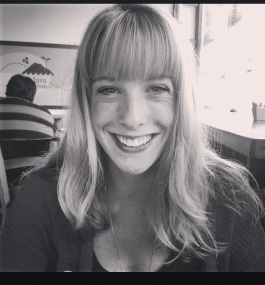
When Kate Kelly faced excommunication from the Church of Jesus Christ of Latter-Day Saints in June 2014, much of the world took notice. The D.C.-based human rights lawyer garnered wide-spread attention for founding Ordain Women, a movement to push for advocacy of female ordination in her Mormon faith. A ripple of press from The New York Times to The Huffington Post chronicled Kelly’s waves of activism and its subsequent consequences: excommunication in absentia on June 23 by her former church leaders in Virginia.
I wish the analysis that accompanies this quote had been mine, but maybe I should be glad that it comes from an insightful young man who goes by the name liamcdg. He argues that the real beef the New York police have with Bill de Blasio is his challenge to their definition of masculinity as dominance, or shall we say white male dominance.
As noted by liamcdg, in the NYPD version of reality, parents should teach children to comply “to comply with New York City police officers even if they think it’s unjust.” In terms of competing definitions of masculinity, the NYPD version is that men in power should be respected simply in virtue of their position, even if they are acting or appearing to act unjustly. In other words we should respect the powerful because they are powerful.
To be empathetic is to be able to put yourself in another person’s place, and in its literal meaning, to feel the feelings of another. In the recent public conversations about race and the police, both Obama and de Blasio have invited white Americans to put themselves in the place of a black man stopped by the police for little or no reason and to ask themselves how they would feel in that situation.
In so doing, liamcdg asserts, Obama and de Blasio were not only trying to explain the feelings of those on the other side of the racial divide, but they were also redefining masculinity. We all know that according to traditional stereotypes, the realm of feeling is the realm of women. And of course we also know that real men don’t cry. Yet what is happening to black men is enough to make anyone who feels their feelings want to cry.
The conflicts between de Blasio and the police and between Obama and a large segment of the older white male voting public may have as much to do with the challenge to white male privilege as it has to do with any particular event or issue. White male privilege involves a complex interconnection of race and sex. It is about the power that comes or is expected to come to one simply by virtue of being born into a white male body.
Forty years ago, inspired by the feminist movement, men began to speak about redefining masculinity. This was easier said than done. It is so easy to accuse men who criticize male power as domination of being “sissies,” “girls,” or “gay.” Even men who might want to discuss the subject may be afraid of being labeled.
I say the fact that the NYPD is turning its back on de Blasio is one measure of how far we have come. I suggest that the NYPD recognizes that a different definition of masculinity and male power is being born right before their eyes. And it is this that they cannot bear to see.
We have been taught that feeling and feeling the feelings of others belongs in the feminine realm. What if it doesn’t? What if in the end male power and female power are much the same? And what if they both begin with empathy?
What if Freud got it wrong? What if males do not have to differentiate themselves from their mothers by becoming “not like” women and girls? What if masculinity and femininity are not polar opposites? What if all any of us has to do is to learn to embody the qualities of those who nurture us?
We are beginning to glimpse a different world. Any thoughts on how to bring the NYPD and other older white males into a new world along with us?
My friends make my life difficult. They make me see what I could not see before. Kecia Ali, Aisha Geissinger, Karen Ruffle and Kathleen Self taught me how to read for gender in the classical texts I use for my academic work. It’s a way of doing close readings by paying attention to the way gender shows up in the text. Aisha sat with me one afternoon and walked me through my own sources pointing out references to gender in the sources. She showed me how the sources I was reading used gender to express social norms. She kept asking me, “What work is gender doing in the text?”
Don’t laugh you been-reading-gender-forever-and-a-day people! Okay laugh. I was a bit slow to pick up this gender thing at first, but I caught up okay. Now I cannot unsee it. I see it everywhere. For instance, I was heading to the stairs at work after a long day and was brain tired. I saw this sign at the stairs:
I nearly kept walking past the stairs thinking for a second that it meant they were for people that society designates as having “male” bodies only. I actually thought that. Then I started laughing at myself. I took a picture and posted it on social media with a story complaining how my friends have absolutely ruined me! Continue reading “Reading “Women” by Laury Silvers”
Abstract from the Study: The low proportion of women within the subject areas of Theology and Religious Studies has long been observed, and is increasingly recognised as a serious problem for staff and students. In this new study, Mathew Guest, Sonya Sharma and Robert Song chart patterns of gender imbalance among staff and students across UK Theology and Religious Studies departments, exploring why such patterns remain so persistent. Drawing on interviews with Theology and Religious Studies academics across the country, the report examines the professional life of female university staff, and makes recommendations for how universities might address the inequalities of opportunity and practice that emerge.
While this report focused on UK institutions, it is an important study for this field of study and did garner feedback outside of the U.K. Some of the findings that may be of interest:
Females outnumber males at the undergraduate level in theology and religious studies (60/40). When moving to the taught post-graduate level, the proportion of female students drop to 42%, and at the post-graduate research level (Ph.D. program) another drop to 33%.
Women make up 29% of academic staff in the field of theology and religious studies. 37% amount early career academics and lecturers, 34% senior lecturers, and only 16% amount professors.
Comparing the field of theology and religious studies to other disciplines across the humanities, social sciences, and natural sciences reflect the same trajectory of gradual female withdrawal in tandem with academic progression. The drop-out rate seems to be more dramatic in theology and religious studies, especially between the undergraduate and taught postgraduate levels.
Structural factors influencing this pattern include the tendency of theology and religious studies departments to recruit postgraduates from international contexts in which a form of Christianity that favors the authority of men is prominent.
Interviews with academics in the field reveal additional factors which include entrenched connections to Christianity and Christian churches, the gendered style of academic engagement in some of the sub-discipllines, and the up-hill struggle to develop the confidence to succeed in a male-dominated environment.
Generic issues include poor allowance for childcare and family responsibilities as well as bullying.
Advisors have a profound effect as well as interaction with the faculty.
Often, women are pressured to perform better than their male counterparts in order to stand out from the other female candidates.
Gender stereotypes that work against “women’s entrance and mobility” in academic jobs, especially those related to leadership positions.
Collegiality focused on “male sociability”whereby women’s ideas are suppressed or they find themselves on the margins within their departments.
Being the lone voice or scapegoat in the department for “women’s issues.”
Studying stereotypical topics and migrating away from traditional “male” disciplines.



 Last week, Supreme Court
 ![Ruth_Bader_Ginsburg_official_portrait[1]](https://feminismandreligion.com/wp-content/uploads/2015/03/ruth_bader_ginsburg_official_portrait1.jpg?w=181&h=235) from the
from the 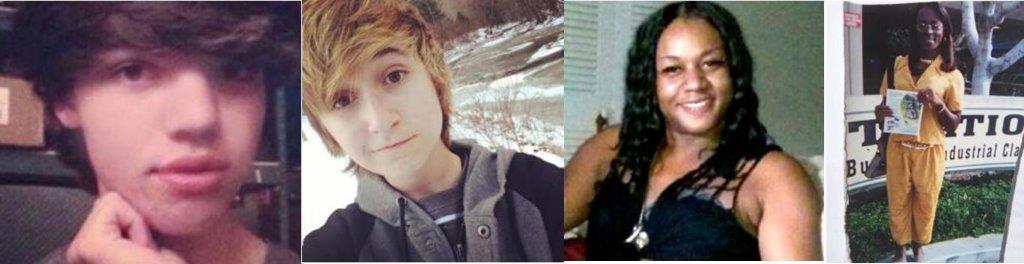
 Over the past two days, I have been considering the challenges and competing perspectives on Carol Christ’s post,
 When Kate Kelly faced excommunication from the Church of Jesus Christ of Latter-Day Saints in June 2014, much of the world took notice. The D.C.-based human rights lawyer garnered wide-spread attention for founding
  My friends make my life difficult. They make me see what I could not see before. Kecia Ali, Aisha Geissinger, Karen Ruffle and Kathleen Self taught me how to read for gender in the classical texts I use for my academic work. It’s a way of doing close readings by paying attention to the way gender shows up in the text. Aisha sat with me one afternoon and walked me through my own sources pointing out references to gender in the sources. She showed me how the sources I was reading used gender to express social norms. She kept asking me, “What work is gender doing in the text?”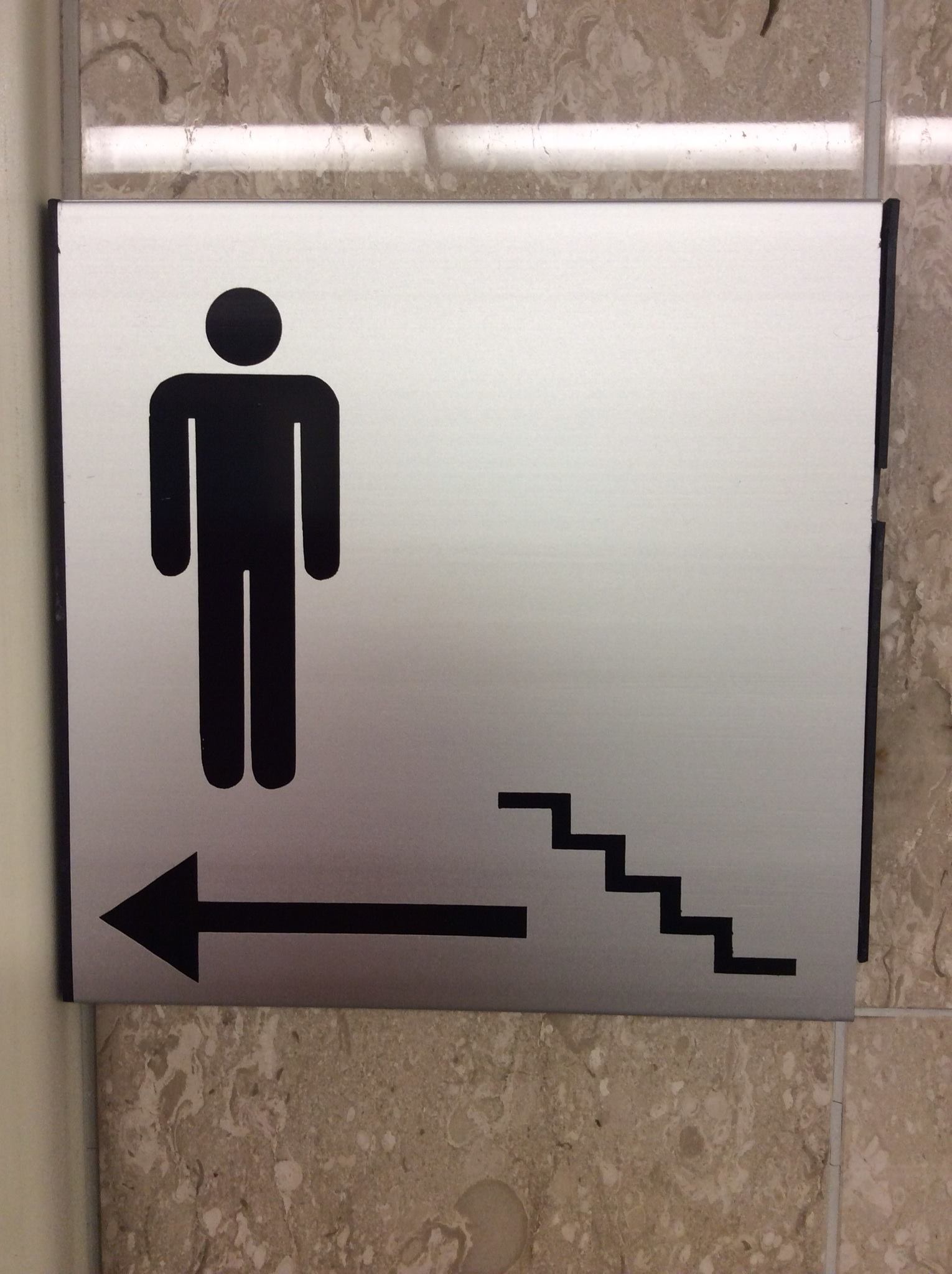
 Feminism and Religion