Reading “Women” by Laury Silvers

My friends make my life difficult. They make me see what I could not see before. Kecia Ali, Aisha Geissinger, Karen Ruffle and Kathleen Self taught me how to read for gender in the classical texts I use for my academic work. It’s a way of doing close readings by paying attention to the way gender shows up in the text. Aisha sat with me one afternoon and walked me through my own sources pointing out references to gender in the sources. She showed me how the sources I was reading used gender to express social norms. She kept asking me, “What work is gender doing in the text?”

Don’t laugh you been-reading-gender-forever-and-a-day people! Okay laugh. I was a bit slow to pick up this gender thing at first, but I caught up okay. Now I cannot unsee it. I see it everywhere. For instance, I was heading to the stairs at work after a long day and was brain tired. I saw this sign at the stairs:

I nearly kept walking past the stairs thinking for a second that it meant they were for people that society designates as having “male” bodies only. I actually thought that. Then I started laughing at myself. I took a picture and posted it on social media with a story complaining how my friends have absolutely ruined me! Continue reading “Reading “Women” by Laury Silvers”

Reviewing Gender and Career Progression in Theology and Religious Studies by Michele Stopera Freyhauf

IMG_4764 copy

Abstract from the Study:  The low proportion of women within the subject areas of Theology and Religious Studies has long been observed, and is increasingly recognised as a serious problem for staff and students. In this new study, Mathew Guest, Sonya Sharma and Robert Song chart patterns of gender imbalance among staff and students across UK Theology and Religious Studies departments, exploring why such patterns remain so persistent. Drawing on interviews with Theology and Religious Studies academics across the country, the report examines the professional life of female university staff, and makes recommendations for how universities might address the inequalities of opportunity and practice that emerge.

The Report can be found at this link: http://trs.ac.uk/wp-content/uploads/2013/11/Gender-in-TRS-Project-Report-Final.pdf

While this report focused on UK institutions, it is an important study for this field of study and did garner feedback outside of the U.K.  Some of the findings that may be of interest:

  • Females outnumber males at the undergraduate level in theology and religious studies (60/40).  When moving to the taught post-graduate level, the proportion of female students drop to 42%, and at the post-graduate research level (Ph.D. program) another drop to 33%.
  • Women make up 29% of academic staff in the field of theology and religious studies.  37% amount early career academics and lecturers, 34% senior lecturers, and only 16% amount professors.
  • Comparing the field of theology and religious studies to other disciplines across the humanities, social sciences, and natural sciences reflect the same trajectory of gradual female withdrawal in tandem with academic progression.  The drop-out rate seems to be more dramatic in theology and religious studies, especially between the undergraduate and taught postgraduate levels.
  • Structural factors influencing this pattern include the tendency of theology and religious studies departments to recruit postgraduates from international contexts in which a form of Christianity that favors the authority of men is prominent.
  • Interviews with academics in the field reveal additional factors which include entrenched connections to Christianity and Christian churches, the gendered style of academic engagement in some of the sub-discipllines, and the up-hill struggle to develop the confidence to succeed in a male-dominated environment.
  • Generic issues include poor allowance for childcare and family responsibilities as well as bullying.
  • Advisors have a profound effect as well as interaction with the faculty.
  • Often, women are pressured to perform better than their male counterparts in order to stand out from the other female candidates.
  • Gender stereotypes that work against “women’s entrance and mobility” in academic jobs, especially those related to leadership positions.
  • Collegiality focused on “male sociability”whereby women’s ideas are suppressed or they find themselves on the margins within their departments.
  • Being the lone voice or scapegoat in the department for “women’s issues.”
  • Studying stereotypical topics and migrating away from traditional “male” disciplines.

Continue reading “Reviewing Gender and Career Progression in Theology and Religious Studies by Michele Stopera Freyhauf”

Woman – The Essential Other by Natalie Weaver

Natalie Weaver editedI am writing from Oxford, England, where I am privileged to be staying this summer while attending an institute on the theme of “Otherness” in medieval Judaism.  Our readings have focused on a variety of topics, including: the development of Christian anti-Jewish polemics; the development of Jewish anti-Christian polemics; the development of medieval Christian visual representations of Jews; and the European medieval expulsions of Jews.  The well-planned program, sponsored by the National Endowment for the Humanities, has been illuminating for all – speakers and participants alike, I think.  It has also been, at least for me, an occasion of intellectual sadness.  It is not that I am surprised by how ugly polemics, pictures, and history can be.  It is that I feel myself coming to a deeper appreciation of the dangerous power dynamics in religion, driven by political and economic aims, that strike me as the underlying cause of practical conflict, yet cloaked as principally theological tensions.

If it were not manifestly obvious that procurement and retention of resources, goods, and position drive personal/familial commitments and tribalistic frameworks for meaning and ultimacy, one of the clues – at least for me – has been the repetition of charges and accusations across polemical perspectives.  And, what is more, one unmistakable commonality in the charges and indictments seems to be the accusation of effeminacy.  This accusation need not be directly stated, such as, “Your people think like women,” or the like.  It comes across in the overlap, speaking specifically concerning Christian writings, between discussions of women and discussions of Jews.  The phenomenon, though, is not unilaterally Christian.  Continue reading “Woman – The Essential Other by Natalie Weaver”

Feminist Questions by Marcia W. Mount Shoop

Marcia headshot“Do sports depend on gender stereotypes that prop up particular expressions of masculinity?”

This question is just one of the defining quandaries of my new book, Touchdowns for Jesus and Other Signs of Apocalypse: Lifting the Veil on Big-Time Sports, just released from Cascade Books (an imprint of Wipf & Stock) a few days ago. The quote above comes from my chapter on gender entitled “Man Up.”

My proximity to the world of football as the wife of a coach, who has coached for well over twenty years in both the National Football League (NFL) and Division I College, has long been a curiosity, and sometimes a demerit against me, among my feminist friends and colleagues. In fact, as I share in the introduction of the book, one of my professors in Divinity school (a prominent feminist theologian who shall remain nameless) expressed her disappointment in no uncertain terms when I shared the news that John and I were engaged while I was one of her students. She said, to my great consternation, that she was “very disappointed.” Her next sentence was something to the effect of what a waste this was—she had thought I was headed toward great things, and now, instead, my life was going to be consumed by football. Continue reading “Feminist Questions by Marcia W. Mount Shoop”

Women at the Secular Student Alliance Conference by Kile Jones

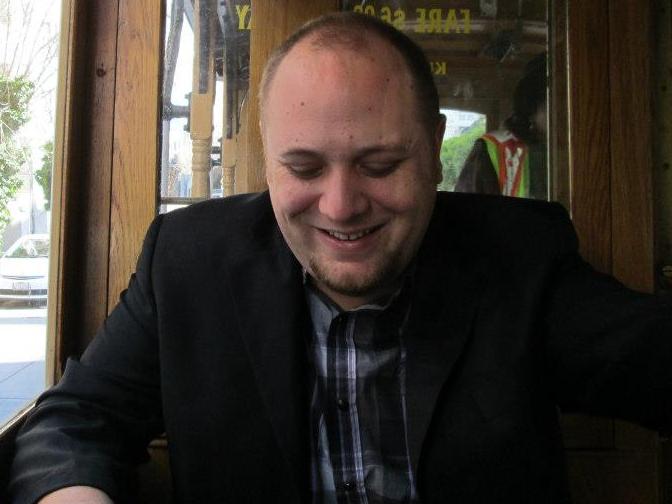
KileA few days ago I had the pleasure of giving a talk at the Secular Student Alliance Conference on how non-believing persons can work with Churches.  Amidst the chaos of conferences–managing your time, deciding which talks to attend, and making sure you have enough water (it was a Burning Ring of Fire outside in Tempe, AZ)–I got to meet some pretty incredible secular women.

One of them was Heina Dadabhoy.

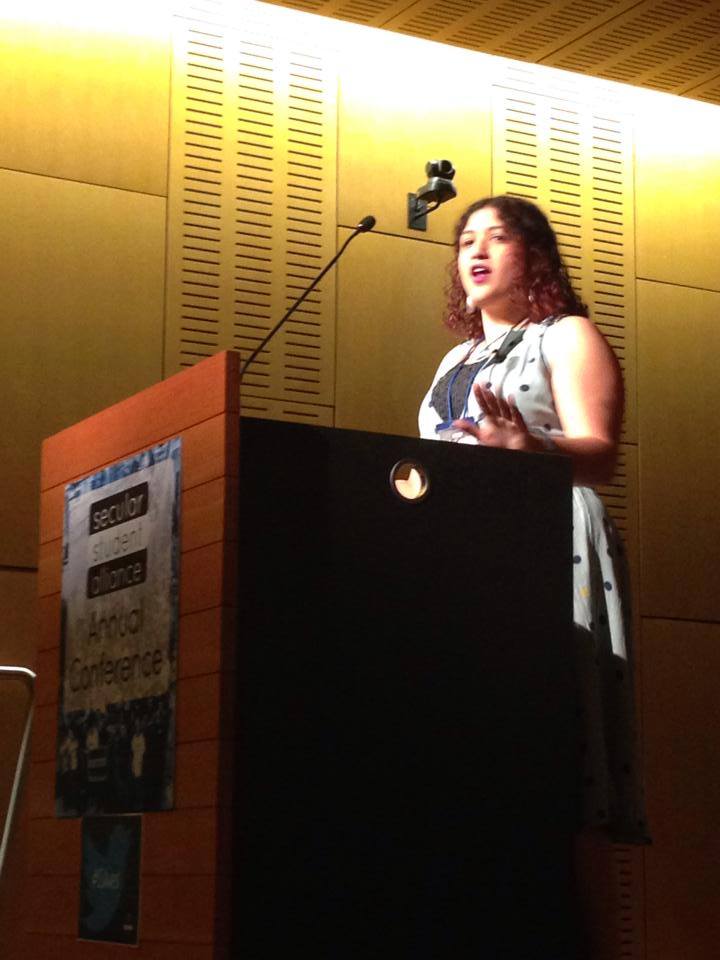
Heina speaking at SSA
Heina speaking at SSA.

Former Muslim, blogger at Freethought Blogs, and overall bad-ass, Heina spoke about ways in which secular groups can create a more welcoming environment for ex-Muslims and Muslims beginning to doubt.  Her talk, “Of Murtids and Muslims,” (a “murtid” is a public apostate) was not only about her experiences coming out as a secular humanist, but considered some of the absurd questions people ask her (and other ex-Muslims) about leaving Islam.  “So did your parents try to honor kill you?”  “Have you gone through FGM?”  It was disturbingly humorous.

What I considered to be Heina’s main point, was that we should respect each others’ individual differences and not generalize and caricature all Muslims with the depictions of some.  “Just because you read Ayaan Hirsi Ali’s book,” Heina notes, “does not make you an expert on Islam.”  Heina made sure to emphasize the radical diversity that exists in Islam.  She also spoke of the some of the issues that people go through when they leave Islam: How do I create a new identity when my old one was intricately tied up in my Muslim community, family, and culture?  How do I navigate popular culture when I have missed a bunch of it?  How do I find myself in this new secular world?  Heina’s answers were refreshingly honest and insightful.

P.S. Aisha (one of Muhammed’s wives) should not simply be reduced to the young person Muhammed married; she was also a war leader, influential Muslim thinker, and someone who contributed greatly to early Islam.  This is, of course, Heina’s insight.

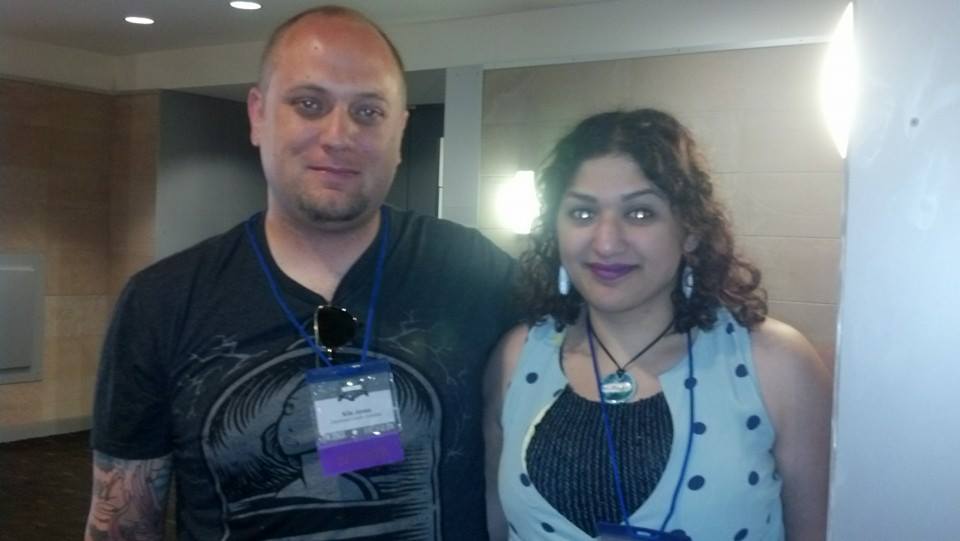
Me and Heina at SSA
Me and Heina at SSA

Another awesome secular woman I met, was Sarah Morehead.

Sarah. Photo from Apostacon.

Sarah is a former evangelical Southern Baptist, Executive Director of the “Recovering From Religion” project, and another overall bad-ass.  She spoke on how to start up a Recovering From Religion group on your campus.  Here is a blurb about Recovering From Religion,

“If you are one of the many people who have determined that religion no longer has a place in their life, but are still dealing with the after-effects in some way or another, Recovering From Religion (RR) may be just the right spot for you. Many people come to a point that they no longer accept the supernatural explanations for the world around them, or they realize just how much conflict religious belief creates. It can be difficult to leave religion because family and culture put so much pressure on us to stay and pretend to believe the unbelievable. If this is you, we want to help you find your way out. Don’t let people convince you that you just didn’t have ‘enough’ faith, or that you just haven’t found the “right” religion.”

Sarah and I chatted (and often laughed) about our old experiences as conservative Christians.  We discussed some of the funny language (Christian-eze) we used to use, the various levels of guilt and shame that were cast upon us, and how science helps explain some of the interesting displays of piety often seen at Pentecostal services.  Sarah’s jovial and welcoming demeanor was calming, and as an Executive Director for a project aimed at helping people “recover” from religion, I cannot think of a better person for the job.

Lyz.  Photo by SSA.
Lyz. Photo by SSA.

The last woman I have in mind is Lyz Liddell.

Lyz is the Director of Campus Organizing for the Secular Student Alliance.  I have an interview I did with her a while back, on this very blog!  Besides running around with her headset on, standing on chairs for announcements, and generally keeping the world of SSA from not crumbling into oblivion, Lyz is a great motivation and example.  If you are ever interested in starting a SSA group on your campus, talk to her.

To all those who attended this years SSA West, or who are involved with helping secular students: Unite!

Kile Jones holds a Bachelors of Theology (B.Th.) from Faith Seminary, a Masters of Theological Studies (M.T.S.) and a Masters of Sacred Theology (S.T.M.) from Boston University, and is a current Ph.D. in Religion student at Claremont Lincoln University.  He also holds a Certificate in Science and Religion from the Boston Theological Institute.  Mr. Jones has been published in Zygon: Journal of Religion and Science, Philosophy Now, Free Inquiry, World Futures, Human Affairs, and the Secular Web.  He is the Founder/Editor-in-Chief of Claremont Journal of Religion (www.claremontjournal.com), and is the Founder/Director of Interview an Atheist at Church Day (interviewatheists.wordpress.com).

#YesAllWomen, the Darwin Debate, and the God Complex by John Erickson

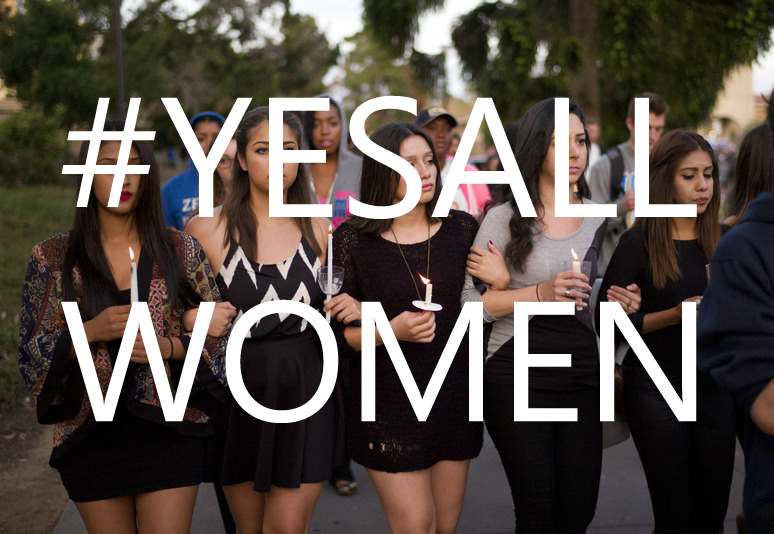
#YesAllWomen proved that although not all men commit horrible crimes against women, the men that often get the headlines and create the most controversy are the ones that need to be watched out for.

John EricksonThe one thing I typically will choose to do on the rare occasion that I’m able to sit down and relax is to watch a documentary.  While some people may go to the gym, read a book, or hang with friends, I typically choose to stay in, nestle up on my couch, and learn.  While on my last bout of relaxation, I chose to watch the HBO documentary Questioning Darwin. Although it offers very little new insight into the evolution vs. creationism debate, it does offer an interesting new way to look at the recent social media hashtag war feminists, allies, and supporters found themselves in over the #YesAllWomen movement that took the world by storm.

yesallwomen

Now, before I discuss #YesAllWomen, I have to admit that I did not enter into the safe space women created for themselves to tell tales of the horrible things they have and have had to face on a daily basis.  I firmly believe that men should not have entered into the digital space Continue reading “#YesAllWomen, the Darwin Debate, and the God Complex by John Erickson”

Supporting Gender Equality in the Church Results in Excommunication by Gina Messina-Dysert

Gina Messina-Dysert profileIt is unnerving to think that excommunication is still a real threat in the 21st century. Within both the Catholic and Mormon Churches members continue to be bullied into submission with such threats. Today, speaking out against gender injustice seems to be a sure way for one to end up expelled from her or his community. Kate Kelly, a human rights attorney and Mormon feminist, has become the most recent in a long line to be rebuked for speaking out about gender discrimination and is waiting to learn her fate following a trial by LDS Church leaders. Continue reading “Supporting Gender Equality in the Church Results in Excommunication by Gina Messina-Dysert”

Redefining Spirituality, One Church for All by Andreea Nica

Andreea Nica, pentecostalismAs a former lover of Christ and ex-Pentecostalist, I had countless visions and dreams that one day I would be a spiritual leader. While growing up in the charismatic church, it was even prophesied that one day I would become one.

Nearly ten years after leaving the church, I carried a distrust in religion’s relationship with women and its barrier to free thought. My work as a freelance journalist led me to discover a spiritual women’s retreat held in North Bend, Washington. Inspired to experience a non-religious, spiritual gathering, I registered for the retreat held by Center for Spiritual Living (CSL) in Seattle.

CSL is described as a:

“Trans-denominational, inter-generational, not-your-usual church, that was started in 1921. A safe place for ‘the rest of us’ who are looking to connect with God/Higher Power/Universal Presence, but don’t really fit in with any one religion.”

The spiritual center’s core teaching philosophy derives from “Science of Mind” or Religious Science, a New Thought spiritual, philosophical, and metaphysical movement founded by practical mystic Ernest Holmes. The spiritual principles rely on the laws of physical science in establishing its core beliefs. Continue reading “Redefining Spirituality, One Church for All by Andreea Nica”

Meditating on Woman by Oxana Poberejnaia

oxanaI decided to run a little experiment and to explore the notion “woman” from inside meditation. I practice Anapanasati Meditation, or mindfulness of breath. I learnt it from Theravada teachers. However, through my Buddhist career I have studied in various Buddhist centres and from various schools. The latest one with which I went on retreats is the Western Chan Fellowship (Chan is one of the Chinese schools of Buddhism, from which Japanese Zen developed).

BodhidharmaYoshitoshi1887 Anapanasati meditation involves mindfully staying with your breath and following it as it goes in and out of your body. It is supposed to both quieten the mind and to lead to more clear vision, or insight. In Chan tradition there is also a practice of asking one simple question in meditation, for instance: “What is this?” or “Who am I?” Sometimes exploration of other topics from within the mind which has been quietened and made clearer by meditation is also practiced.

Continue reading “Meditating on Woman by Oxana Poberejnaia”

Gray is the New Black by Jamila Sumra

1-jamilasumra 043 I am 47 and I have gray hair.  I decided to stop coloring my h​air some months ago. A decision that was and should be a personal one, set me up, like a badly dressed starlet in the pages of a fashion magazine, for commentary from everyone.

This includes my mother  and assorted sisters in law, cousins and stepson, friends and even salespeople.

Perfect strangers.

I was prepared for my mother’s reaction who is in her late 60s and starts getting restless when a minuscule amount of hair roots begin to show their natural colour every couple of weeks. Who still has her eyebrows threaded in that ultra thin style that was (thankfully) only fashionable in the 1970s.  Obviously then, when I first announced to her that I was going to abandon the hair dye, she wasn’t thrilled.

Imagine being confronted with a powerful and disturbing image illuminating the vagaries of time beside a daughter, your child, with a head of gray hair, when your own is burgundy brown.

Or at least that is what it says on the box.

A stranger, a woman in hijab, stopped me in a supermarket aisle and told me I was ‘brave’.

“I wear the hijab and I wouldn’t ever stop coloring my hair,” she further stated.

A gorgeous friend, always perfectly manicured, expressed confusion, “but why, baby?”

One of my cousins, to whom I sent a selfie, text back, aghast, “Ya Allah!”

In Cape Town, a fashion conscious young woman who works for my mother in law caught me alone one day and approached me warily.

“Can I ask you a personal question?” she asked.

“Yes”

“Is your hair natural or did you pay to get it done?” she continued.

“It’s all natural”

Continue reading “Gray is the New Black by Jamila Sumra”