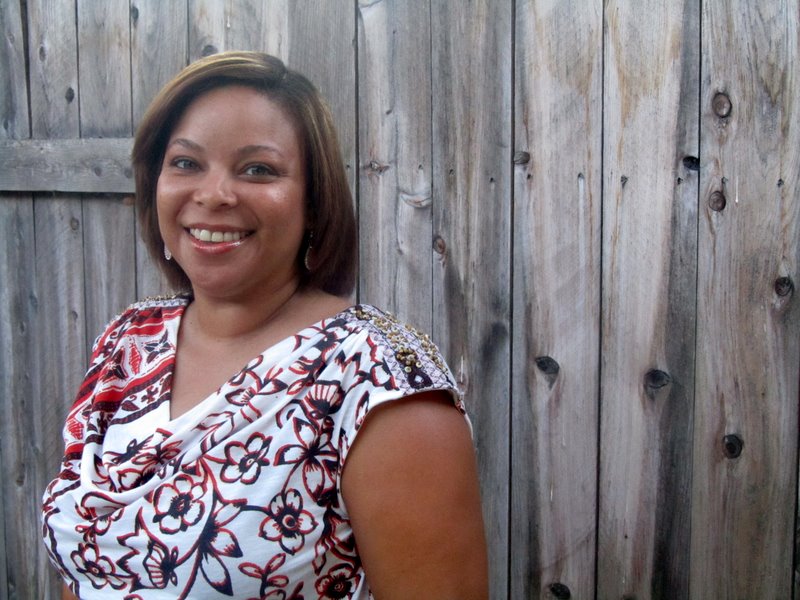
Hoy, Canto de Mujer Que Se Libera – Un Canto de Ada María Isasi-Díaz, By Michele Stopera Freyhauf

“Yo soy mujer en busca de igualdad, no aguantar abuso ni maldad. Yo soy mujer y tengo dignidad, y pronto la justicia serd una realidad.  Mujer, tù eres mujer, porque supiste ver, la realidad de tu poder. Hoy canto al Dios del Pueblo en mi guitarra, un canto de mujer que se libera” – From “Mujeristas: A Name of Our Own!” – Ada María Isasi-Díaz [i]

Translation:  I am woman searching for equality; I will not put up with abuse and wickedness.  I am a woman and I have dignity, and justice will soon be a reality.  Woman, you are woman, because you have known how to recognize the fact that you are powerful.  Today I sing to the God of my people with my guitar, I sing a song of a woman who liberates herself.

Labels, names, and categories can evoke prejudice and oppression.  Ada Maria Isasi-Díaz, the founder of Mujerista Theology, wrote:

To be able to name oneself is one of the most powerful abilities a person can have.  A name is not just a word by which one is identified.  A name provides the conceptual framework and the mental constructs that are used in thinking, understanding and relating to a person. [ii]

These words relate to U. S. Hispanic women, who, according to Isasi-Díaz, struggle against ethnic prejudice, sexism, and in many cases classism [and who] have been at a loss as to what they should be called.[iii]  In finding that common name, lyrics from three different songs inspired Isasi-Díaz who developed the term “Mujerista Theology,” replacing Hispanic women’s liberation theology:

“Yo soy mujer en busca de igualdad, no aguantar abuso ni maldad. Yo soy mujer y tengo dignidad, y pronto la justicia serd una realidad.  Mujer, tù eres mujer, porque supiste ver, la realidad de tu poder. Hoy canto al Dios del Pueblo en mi guitarra, un canto de mujer que se libera” [iv]

For Isasi-Díaz, mujerista unifies Hispanic women and embodies strength.  Mujeristas are those:
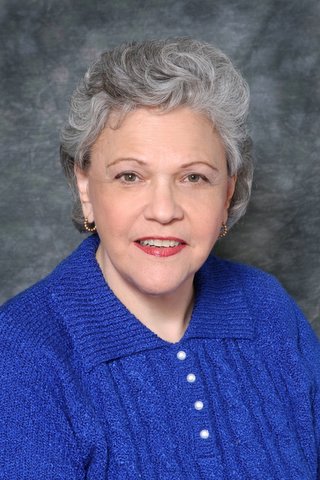
Ada Maria Isasi-Díaz
Picture From Drew University’s website
  • Who desire a society and a world where there is no oppression.
  • Who struggle for a society in which differences and diversity are valued.
  • Who know that our world has limits and that we have to live simply so others can simply live.
  • Who understand that material richness is not a limitless right but it carries a “social mortgage” that we have to pay to the poor of the world.
  • Who savor the struggle for justice, which, after all, is one of the main reasons for living.
  • Who try no matter what to know, maintain, and promote our Latina culture.
  • Who know that a “glorified” self-abnegation is many times the source of our oppression.
  • Who know women are made in the image of God and, as such, value ourselves.
  • Who know we are called to birth new women and men, a strong Latino people.
  • Who recognize that we have to be source of hope and of a reconciling love.
  • Who love ourselves so we can love God and our neighbor.[v] 

For Isasi-Díaz, Mujerista Theology is defined as:

“a process of enablement for Latina Women, insisting on the development of a strong sense of moral agency, and clarifying the importance and value of who they are, what they think, and what they do….mujerista theology [also] seems to impact mainline theologies, the theologies which support what is normative in church, and, to a large degree, in society.”[vi]


Continue reading “Hoy, Canto de Mujer Que Se Libera – Un Canto de Ada María Isasi-Díaz, By Michele Stopera Freyhauf”

AN ALTAR WITHOUT GOD? A “PLACE” FOR THE SACRED by Sara Frykenberg

The altar was not for particular spirits, but honored all the ‘spirits’ we brought with us to share: the spirits of the women and men in our stories, the memories imbedded in the items we gathered together and the spirit of every person present in the class that day.

Last week my students and I created a non-religious altar to conclude our class, Women, Religion and Spirituality.  We read about different feminist spiritual traditions in which women created altars to honor their ancestors, spirits or deities; and I thought it might be fun to practice our own form of literal physical creation.  I asked students to bring in inspiring items, pictures of people who’d helped them to grow or anything that honored what they considered sacred in their lives.  I also asked them to bring food to share, as no altar seems complete without food of some kind.  However, asking my students to participate in a course ritual, I also felt it was important to respect their very different beliefs… which resultantly, left me wondering how we would create an altar without God.

My religious experience taught me that altars were a place to surrender gifts in return for a greater gift of God’s blessing or love.  The church I attended as a child did have a literal, physical altar; but this raised table was only used monthly to present the communion bread and grape juice before it was passed through the pews.  Otherwise, I came to understand, one’s heart was the altar and we needed to present our sacrifices there.  Financial gifts needed to come from the heart, then put into the offering plate.  Gifts of time or action had to start in the heart, even when required by the youth group or spiritual authority; and resistance to giving these gifts also required sacrifice.  My resistance or lack of desire to sacrifice required that I leave my unwillingness at the altar so that I might become appropriately grateful.

At some point I started leaving too much at the altar; and like Abraham’s Daughter I said enough is enough.  I recognized myself in the sisters and brothers lying under the sacrificial sword, and I took back my heart.  My heart, I realized, hadn’t been the altar; it had been the offering and sacrifice. Continue reading “AN ALTAR WITHOUT GOD? A “PLACE” FOR THE SACRED by Sara Frykenberg”

Abuse of Power in the Catholic Church: Undoing Almost Fifty Years of Progress – Part I, by Michele Stopera Freyhauf

“Now the Vatican says that nuns are too interested in “the social Gospel” (which is the Gospel), when they should be more interested in Gospel teachings about abortion and contraception (which do not exist).  Nuns were quick to respond to the AIDS crisis, and to the spiritual needs of gay people—which earned them an earlier rebuke from Rome. They were active in the civil rights movement.  They ran soup kitchens.” —  Roman Catholic Women Priests (via Facebook)

I once had a conversation with my New Testament Professor about the issue of women ordination.  He was optimistic and thought there might be a possibility that change was in the air – that was six years ago.  The basis for his statement had to do with language.  Of the journals and articles read, he felt the language used was more inclusive and that once people adjust to this discrete change in gender inclusive language, change for women in the Church can come.

He was right about change coming.  The result was not equality and ordination for women, but an attempt to silence and force these women back into their habits and cloisters. Continue reading “Abuse of Power in the Catholic Church: Undoing Almost Fifty Years of Progress – Part I, by Michele Stopera Freyhauf”

The Inquisition of Today and U.S. Women Religious by Ivone Gebara

Statement from Ivone Gebara, writer, philosopher and theologian from Brazil on the Vatican action against U.S. religious women. 

Translated from Portuguese. Reprinted with permission. 

Once again, we watch dumbfounded as the Congregation for the Doctrine of the Faith directs a “doctrinal assessment of” or a “calling attention to” or the “punishment of” those who, according to the CDF, break away from the proper observance of Catholic doctrine. Only this time, the CDF is not pointing an accusatory finger at a person, but rather at an institution that brings together and represents more than 55,000 women religious in the United States- namely, the Leadership Conference of Women Religious, known by its acronym LCWR.

Throughout their long history, these women religious developed and continue to develop a broad educational mission which advances the dignity of many people and groups both within and beyond the United States. Most of these women belong to diverse national and international congregations.

In addition to their Christian and humanistic formation, they are intellectuals and professionals in various fields of knowledge. They are writers, philosophers, biologists, sociologists, lawyers and theologians. They have broad backgrounds and their expertise is recognized nationally and internationally. They also are educators, catechists and human rights activists. In many situations, they set their lives at the service of those affected by injustice or set themselves in opposition to the grave actions taken by the government of the United States. Continue reading “The Inquisition of Today and U.S. Women Religious by Ivone Gebara”

My Feminist Perspective of Authority – Part 2 by Elise M. Edwards

My understanding of authority differs from that of the academy in that I have defined for myself a sense of ultimate purpose that those in power in the institution do not have authority to deny. It also differs because I believe my authority is conditioned in particular ways. Yet I think that ultimately my conception of authority fits the paradigm of mentorship that the academy establishes, even though I may be more guarded about my work and my choice of mentors. My “her-story” gives me the courage to proceed, even as I protect myself and my work.

In a previous post, I discussed insights on power and authority from a student’s perspective that I shared at a workshop on Living Texts: Celebrating Feminist Perspective and Theo/alogy, Authority, and the Sacred in the Academy. The workshop was a gathering where women scholars in religion discussed the challenges and promises of our voices in the academy. The dialogue was so inspiring to me that I decided tocontinue it here. Today, I reflect on these two questions:

  • Does my understanding of authority differ from that of the academy?
  • How do you situate my “her-story” in light of a largely patriarchal perception of authority in the academy?

Previously, I asserted that there is a critical distinction between power and authority. Authority is a personal characteristic based on a relationship of trust between me and a text, a person, or their work. Power, on the other hand, is operative with or without trust. Therefore, the people who have authority in my academic work are those whose supportive words provide direction and assistance, and whose criticism I take seriously.

My understanding of authority differs from that of the academy in that I have defined for myself a sense of ultimate purpose that those in power in the institution do not have authority to deny. Continue reading “My Feminist Perspective of Authority – Part 2 by Elise M. Edwards”

At the Intersection of Gender, Religion, and Race by Jameelah X. Medina

Since 9/11, many Muslim women in the USA are in a similar predicament as what African American and Chicana women found themselves in decades ago during the Black Power and Chicano Power Movements. African American and Chicana women stood along side African American and Chicano men to fight against oppression and injustices against them by the power structure and the people in positions of power. In both movements, women’s issues were relegated to the sidelines; they were only visible in the periphery of decision-making. Both African American women and Chicanas decided that they had to stand up for themselves and call it like they saw it—they were being oppressed and marginalized in mainstream society because of their race and ethnicity and also within their racial group because of gender.  Continue reading “At the Intersection of Gender, Religion, and Race by Jameelah X. Medina”

Presumed Guilty by the Sin of Silence: U.S. Nuns, Network, and The Congregation for the Doctrine of the Faith by Cynthia Garrity-Bond

In 1965, the Council document Perfectae Caritatis, Decree on the Adaptation and Renewal of Religious Life, encouraged women religious to situate themselves and their vocations in the social milieu to which they belonged.  Each religious community adjusted rules and customs to accommodate the needs and demands of particular ministerial vocations. For those communities that embraced Perfectae Caritatis entered into a complete paradigm shift in thinking that changed forever how they understood themselves and their chosen vocations. I recall vividly the morning, when, in 1968, Sister Mary DePatzie entered our classroom clad in a shorter habit and dress revealing the startling fact she 1) indeed had brilliant, beautiful red hair; and 2) rather shapely legs even in her sensible shoes.  Continue reading “Presumed Guilty by the Sin of Silence: U.S. Nuns, Network, and The Congregation for the Doctrine of the Faith by Cynthia Garrity-Bond”

Feminists Be Silent! Making a Stand in Solidarity with our LGBT Friends Against Bullying and Harassment By Michele Stopera Freyhauf

“A Day of Silence” occurs tomorrow, April 20th.  Created in 1996, University of Virginia students wanted to raise awareness of the bullying and harassment of issues that LGBT students faced on campus.  Since then, A Day of Silence makes a statement against those who have tried to silence LGBT teens and young adults in school through harassment, bias, abuse, and bullying. Participating students, led by GLSEN, will hand out cards that read the following:

“Please understand my reasons for not speaking today. I am participating in the Day of Silence, a national youth movement protesting the silence faced by lesbian, gay, bisexual and transgender people and their allies in schools. My deliberate silence echoes that silence, which is caused by harassment, prejudice, and discrimination. I believe that ending the silence is the first step toward fighting these injustices. Think about the voices you are not hearing today. What are you going to do to end the silence?”

Family Picture (wikipedi.com)
Family Picture from wikipedia.com

The issue of bullying LGBT teens resonated with the world when Tyler Clementi took his life in 2010 after his roommate secretly transmitted via webcam Tyler’s sexual encounter with someone of the same sex. Tyler’s suicide brought national attention to the issue of bullying and harassment that LGBT people face.  To my chagrin, while writing this article, another victim fell.  Kenneth Weishuhn, Jr., a 14-year-old gay teen, committed suicide because of the intolerable harassment and bullying he dealt with at school.

To really understand the magnitude of this issue, I wanted to examine the statistics surrounding bullying. The numbers are staggering. However, when adding the LGBT component to that same teen, the numbers escalate.  Continue reading “Feminists Be Silent! Making a Stand in Solidarity with our LGBT Friends Against Bullying and Harassment By Michele Stopera Freyhauf”

A MEDITATION ON A MIDRASH: “ABRAHAM’S DAUGHTER” BY ARCADE FIRE by Sara Frykenberg

The wages of the sin of sacrificing our children is their death, whether the sacrifice is to some supposed higher order, to absolute obedience or to appear to be the “good Christians” we are “supposed to be”…

Maybe its because I enjoyed the books more, or because of my sister’s all too expectation-garnering reviews or even, because I’d seen this theme before, in an amazing yet gruesome Japanese movie, Battle Royal, I left the theater unsatisfied after watching The Hunger Games. I did however, LOVE the song that played at the end of the movie, which I downloaded before we left the theater.  I listened to it in the car on the way home.  I listened to it the next day, the day after that and for days after that… I listened and listened, and I found surprise, power, anger, sorrow and a channel for grieving that I had needed in the Midrash “Abraham’s Daughter” by Arcade Fire. 

Abraham took Isaac’s hand and led him to the lonesome hill

While his daughter hid and watched, she dare not breathe

She was so still.

I discovered the practice and potential power of Midrash from my teachers in graduate school.  The idea of an “extra-biblical” story that might help to expound upon Biblical passages that are all too often unexplained or unsatisfactory to (my) feminist consciousness was very appealing to me—and it is still appealing to me.  But I have to admit that the feminist Midrash I read in my classes seemed too positive and did not resonate with me.  The pieces were too much like a tender hug or a mother hen covering my wounds with her wings.  I wanted to hear a story of Bible that could help me make sense of the violence I’d discovered in my childhood religion.  I needed a story of Bible that honored my violent struggle to counter the abuse within it and within me.

Like Isaac, I was too intimate with my abuser: unable to avoid walking hand and hand with him when pushed to do so.  Asked to create a prayer or Midrash for a class once, I wrote about the way I would turn the radio in my car up when I started to hear ‘God’ speak to me.  I didn’t know how to listen and tune out the abusive maxims that played over and over again in my head (maxims that surfaced every time I even thought about the divine).  Continue reading “A MEDITATION ON A MIDRASH: “ABRAHAM’S DAUGHTER” BY ARCADE FIRE by Sara Frykenberg”

Do Man-Made Laws Trump the Authority of Jesus? Reflecting on the Meaning of Humility, Priestly Service, and the Issue of Women’s Ordination by Michele Stopera Freyhauf

Maundy Thursday – the imitation of Jesus’ act of service and submission is re-created.  Controversy surrounds the “disciples” – must they be all men?  Are women allowed?  Who steps into Jesus’ role?  Men, women, or both?  Why, when it comes to imitating the act of  humility and priestly service (rooted in our baptismal call), does a distinction of gender need to made at all?

As I progressed towards the intersection, I looked up to witness a grand procession of men dressed in white albs with stoles that often contained subtle hints of gold, worn in a manner to distinguish their role as priests and deacons.  They moved slowly down the sidewalk entering the Cathedral to begin their celebration of the Chrism Mass – a celebration of priesthood and priestly service within the Diocese where all priests and deacons gather to celebrate and re-affirm their commitment to ministry and service to the Church.  It is also during this Mass that the oils used in sacramental celebrations, used by each church, are blessed by the Bishop.

As I continued to watch, I could not help but search the processional line for those with a hair color other than gray.  I wanted to see  how many young priests were in that processional line.  What I found was no surprise –  an aging group of men with the sporadic appearance of younger priests.   The numbers stood as a staunch reminder that we, as a Church, may be faced with a severe shortage of priests in the future.  Something already known and planned for by the Diocese in its campaign to consolidate and close parishes.

Another sad observation was put on public display  –  the absolute absence of women. Continue reading “Do Man-Made Laws Trump the Authority of Jesus? Reflecting on the Meaning of Humility, Priestly Service, and the Issue of Women’s Ordination by Michele Stopera Freyhauf”