Tlachtga, Forgotten Celtic Goddess – by Judith Shaw

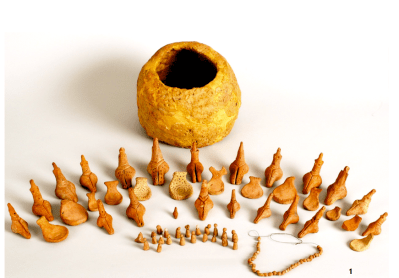
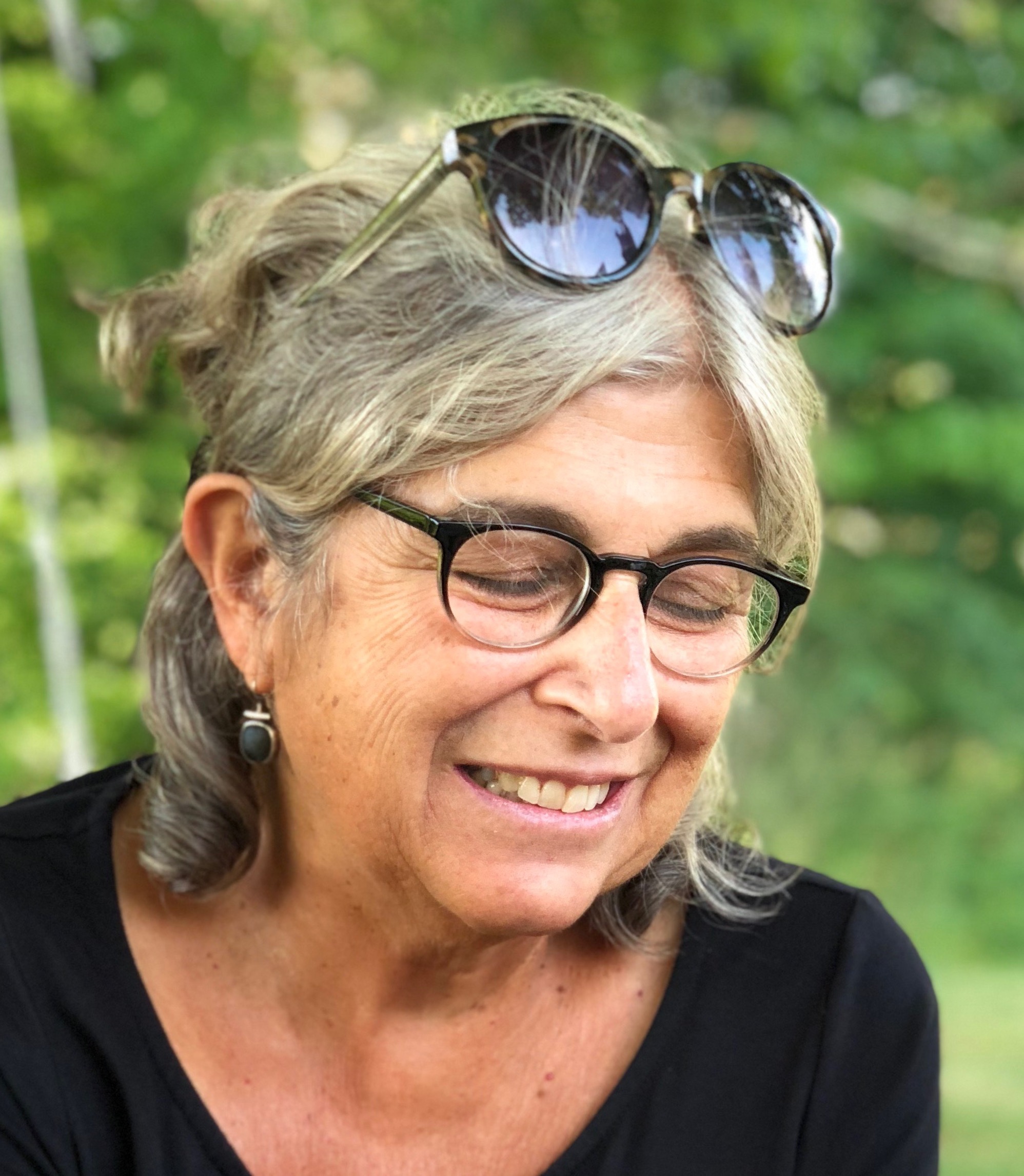
judith shaw photoI am the Sun – bringer of the warming light of day. I am Lightning –  bringer of fire to Earth. I am Tlachtga who flew through the sky together with my father Mog Ruith in our glowing wheel. I am destruction and creation. I illuminate the darkness and point to the pathway of light that resides in each of you. Over time I made my final resting place at the Hill of Tlachtga, where the great fire ritual of Samhain is practiced, reminding the folk of the promise of Sun’s return at the end of the time of darkness and dreaming.  

  Continue reading “Tlachtga, Forgotten Celtic Goddess – by Judith Shaw”

The Pomegranate by Sara Wright

It is mid November and shiny crimson Pomegranates catch the discerning eye in food markets; even Walmart carries them!

Why do these beautiful and very ancient fruits appear during this dark time of the year?

One answer to this question is that in the northern hemisphere the fruit of this deciduous shrub ripens anywhere from September to February. The reverse is true in the southern hemisphere when the fruits ripen during March, April and May. It is important to remember that in the southern hemisphere the seasons are reversed, so in both northern and southern parts of the globe these fruits appear in the fall, during the darkest months of the year.

Pomegranates are native from Iran to northern India and have been cultivated throughout the Middle East, Asia and the Mediterranean region for millennia. (Today they are also grown in California and Arizona, so they no longer need to be imported). The shrub was domesticated as early as the 5th millennium BC. Pomegranates were the first trees to be domesticated in the Mediterranean.

Continue reading “The Pomegranate by Sara Wright”

 Persephone Rises by Sara Wright

While researching Minoan Crete I learned that each autumn young girls once gathered blue violet saffron crocus to leave as an offering for the Wild Crocus Goddess as they prepared for adolescent female initiation rites. I was intrigued by the reference to autumn because I associate flowers more with spring than any other season. From other sources I discovered that in Minoan Crete young girls also gathered bright yellow crocus to celebrate the Great Goddess and the return of the growing season and that yellow was the color associated with the Great Goddess because of the golden color of the dye made from the precious saffron crocus. Later in Greece during the Lesser Mysteries, flowers, especially yellow crocus were also picked to celebrate Persephone’s return from the Underworld. I was particularly delighted by the reference to Persephone picking bright yellow crocus because my relationship with this goddess has been a somber one; I have always associated her with death. And yellow is a joyous color that I associate with early spring.

 I felt a wild sense of hope as a volcanic fire erupted inside me when I first imagined Persephone picking spring flowers because of my uncomfortable relationship with this mythical figure and also because I love flowers. Continue reading ” Persephone Rises by Sara Wright”

ERA—Equal Rights for Women—in the US: Has Our Time Finally Come? by Carol P. Christ

On August 26, 1970, I borrowed an old VW bug from my mentor and summer employer Michael Novak to drive from Oyster Bay, Long Island to New York City to take part in the Women’s Strike for Equality march down Fifth Avenue. Some 50,000 women attended the march and another 50,000 took part in sister actions around the United States. The march celebrated the 50th anniversary of the passage of the Women’s Suffrage Amendment that gave women the right to vote. The ERA was on our minds, but it was not the only issue on the feminist agenda. We believed that all the walls created by patriachy would come tumbling down, and soon! Continue reading “ERA—Equal Rights for Women—in the US: Has Our Time Finally Come? by Carol P. Christ”

Teaching After the Getty Fire by Sara Frykenberg

This is the third year in a row that I will be writing about wildfires in California and their impact on me and my community.

This year, I don’t have any poetry.
This year, I’m not afraid.
This year, I’m angry. I am very angry. And again, I am awash in the (not so?) mundane concerns that surface in the wake of devastation. I am continually struck by this: the strangeness of the everyday next to the blackened hillside, the restricted access, and soot covered floors—the persistence and tremendous regularity, even normality of the everyday. Continue reading “Teaching After the Getty Fire by Sara Frykenberg”

Mini-Reunion by Esther Nelson

A couple of weekends ago, Nancy, one of my classmates from nursing school, organized what she called a “mini-reunion” at her home in New Jersey.  Seven of us gathered together to well, reunite.  Our graduating class (Muhlenberg Hospital School of Nursing, Plainfield, N.J.) was small.  We started out with forty students—all women.  Only twenty of us made it to the finish line.  One of our fellow graduates, Marcia, died a few years ago.  Two or three of the initial forty students dropped out due to health problems, but were able to graduate a year later with the following year’s class.  Some students were asked to leave the program because they could not cut it academically or clinically.  Others decided they didn’t “belong” in nursing and quit.

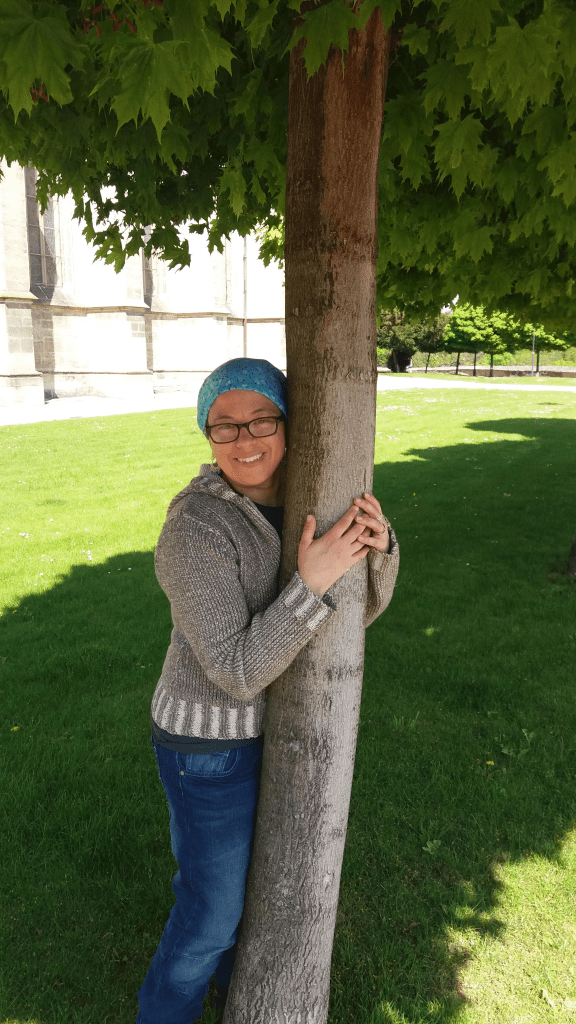
These are the nurses that gathered for the “mini-reunion.”  Starting at the left: Lois, May, Esther, Carol Lee, Nancy, Chris, and Joyce. Continue reading “Mini-Reunion by Esther Nelson”

Firebird’s Song by Sara Wright

In response to Carol Christ’s latest post

She came on the wings of the Owl
flew out of the crack of our imagining,
swooped low over the underground forest
hooing, hooing, hooing
screeching and clacking –
Haunting the night with her song.

I almost didn’t recognize her
inside the feathery brown cape with bars.

On Starry nights while the white moon sleeps
the cloak falls away and behold!
She steps out
in all her Firebird splendor.
Burning, crimson, gold, she crackles — turns blue
white light torching
the fire turned star.
Beaming second sight
she rises out of Earthen ashes Continue reading “Firebird’s Song by Sara Wright”

Endings, Beginnings, and Dreamings by Carol P. Christ

my dream home in Molivos

Fifteen years ago, I bought my dream home in Molivos, Lesbos, one of the most stunning villages in the world. Over the next two years I renovated a listed Neoclassical house that had been neglected for over thirty years, restoring it to its original beauty. One of my friends who visited exclaimed that it looked like a movie set. Someone else said that the final result was “more Greek than Greek.” I thought this would be my forever home. But, as I have discussed in an earlier blog, I came to feel isolated in a small village.

Two years ago, I followed my heart to Crete, renting a lovely apartment in Heraklion, followed by a house near the sea. Then back to Lesbos, travel to the US and Canada, and Crete again after Christmas. I would have been happy to move back to the apartment I had rented the previous year, but this time I would bring my little dog. The apartment under my friend’s house outside Heraklion seemed like a good compromise, but the drive to Heraklion proved treacherous and parking difficult. Continue reading “Endings, Beginnings, and Dreamings by Carol P. Christ”

Vayera and Women’s Agency by Ivy Helman

imageThis week’s Torah parshah is Vayera (Genesis 18:1– 22:24).  The parshah contains the the destruction of Sodom and Gomorrah, the questionable hospitality of Lot, the incestual sexual relationships between a drunken Lot and his daughters, the revelation of Sarah’s pregnancy, the birth of Issac, the expulsion of Hagar and Ishmael from Abraham’s family, and the legendary story of the binding of Isaac.  Needless to say, there is much that can be said, but today I want to focus on the women from Lot’s and Abraham’s families.

Women figure prominently in Lot’s family.  In the parshah, we first meet Lot as host. Two male visitors (angels) come to stay at Lot’s house.  When some of the male inhabitants of Sodom learn of this, they come to Lot’s door wanting to harass and sexually assault the guests.  To protect his guests, Lot offers his unmarried daughters to the men instead. Later in the text, we learn that Lot can safely leave Sodom because he is righteous (although what may have spared his life more is the fact that Abraham is his uncle). Continue reading “Vayera and Women’s Agency by Ivy Helman”

The Fierce Initiation of Menopause by Mary Sharratt

Modern Western culture despises aging. Aging women are held in particular contempt. Menopause is meant to be something embarrassing and uncomfortable. The pharma industry peddles hormones and other drugs meant to mask our symptoms. Few women see menopause as something to even talk about, let alone celebrate. But some women are reclaiming the dignity and transformation of menopause as a passage to power. Author and herbalist Susun Weed portrays menopause as a spiritual awakening. She likens the fierce waves of heat traveling upward to our brains to the Eastern concept of a Kundalini awakening that ultimately leads to enlightenment and spiritual liberation. Whether or not you agree with this, you will not make it through menopause without some kind of radical change taking place inside you.

I’ve experienced menopause as an initiation by fire. Having chosen not to have children, menopause has proved the most intense and radical embodied experience and transformation I’ve undergone since menarche and puberty. When a hot flash seizes me, I can no longer continue my train of monkey-mind thinking or be an efficient worker bee of global capitalism. All my old ingrained thought patterns are interrupted and come to a halt as I’m forced to focus on the embodied experience of burning up from within. What if this internal fire is literally burning through old ways of thinking and being that no longer serve me? Maybe we’re supposed to be rattled and disturbed so we can change. It’s even called The Change. So many tired old patterns are falling away from me, because I can’t keep up with them anymore. There’s this profound deepening. A sense of what truly matters.

I resist change so much. I long to remain in the comfortable old rut of the familiar, but menopause makes that impossible. It’s a take-no-prisoners wake up call to the reality of passing time and impermanence. It forces me to reexamine my values, where I truly want to spend the remaining time I have on earth. I’ve always been spiritual, but menopause has deepened my commitment to daily spiritual practice. It’s also taught me to embrace my own fierceness. To say what I mean and mean what I say. Menopausal women might find themselves losing the superficial prettiness of youth. We can no longer pass as objectified eye candy in male-stream culture. With our wrinkles and gray hair, we become something scary but also powerful. Crones and witches. We truly do become wise women if we answer the spiritual call of menopause. If we resist the lure of male-stream medicine to brainwash us into reframing this profound transformation and path of power into a disease that must be treated with hormones and face lifts. While some women benefit from hormone therapy and allopathic medicine, I’m against the generic medicalization of the natural processes in women’s lives.

Pregnant women give birth to new souls. Menopausal women give birth to their wiser selves. Like motherhood, menopause sidelines us on the relentless march towards capitalist achievement and forces us to reexamine our true priorities. We live in a 24/7 culture that expects us to be switched on and working at maximum efficiency every day of the year, as if the cycles of the seasons, sun, and moon didn’t exist. Menopause is an invitation to live in harmony with the tides and seasons of our lives. To claim our time and attention and take our lives back.

If older women truly knew how fierce and powerful we were, we could change the world.

Readers might also want to check out my essay: “Life Begins at 42: Saint Hildegard’s Guide to Becoming a Midlife Powerfrau.” 


Mary Sharratt is on a mission to write women back into history. Her most recent novel Ecstasy is about the composer Alma Schindler Mahler. If you enjoyed this article, sign up for Mary’s newsletter or visit her website.