

 Sita, as many know, is the tragic heroine of the Ramayana who gets discarded by her husband Rama because he doubted she had remained chaste while in his arch enemy Ravana’s captivity. Moreover, she is the “ideal Indian woman” in popular imagination because she remains loyal to Rama no matter how unfair his treatment of her. But there is another female character in the epic who meets perhaps a far more violent fate.
Unlike Sita, however, Shurpanakha gets little sympathy from the readers because she does not stick to her socially assigned roles. I would like to talk about Shurpanakha and how she comes to symbolize all women who transgress societal boundaries, while also stressing the fact that although she is often presented as Sita’s opposite, the two share far more in common as women; both Sita and Shurpanakha deserve our compassion and empathy.
In the traditional Sanskrit text, Valmiki describes Shurpanakha as “maddened with desire” when she first beholds Rama’s beauty. The poet then goes into a rather lengthy description of what she is not by comparing her “unsightly” presence with Rama’s exemplary beauty, thereby affirming the fact that she does not deserve to be visible because of the physicality of her body. Upon his enquiring, Shurpanakha tells Rama that she, who roams the forest alone and according to her own will, is the sister of Ravana (who later kidnaps Sita), and she makes it a point to add that she is more powerful than all her brothers. She then declares her undying love for Rama and asks him to be her husband, after which the two of them could seek adventure amid the forest together. Continue reading “Women First, Rivals Later by Vibha Shetiya”

 ntly released papal letter
 One of my morning practices is
  For several weeks now, I’ve been going through and disposing of stuff that has accumulated in my house over the past three or four decades. One of the more interesting finds was the following letter, written by my husband, when we lived in Saudi Arabia from 2000 – 2004:
 It seems that Pope Francis has finally read Margaret Farley’s
  I am Carol Patrice Christ, born in Pasadena, California, daughter of Janet Claire Bergman, born in El Paso, Texas in 1919, daughter of Lena Marie Searing, born in Lyons, Michigan in 1891, daughter of Dora Sophia Bahlke, born in Lyons, Michigan in 1858, daughter of Maria Sophia Catherina Hundt, born in Parum, Mecklenburg in 1827, daughter of Catherina Sophia Elisabeth Schoppenhauer, born in Pogress, Mecklenburg in 1798, daughter of Anna Sophia Seehasse, born in Zulow, Mecklenburg in 1756
  I knew I’d paint her from the moment we discovered that we would spend three months of our
  Recently, a friend of mine sent me a journal article entitled,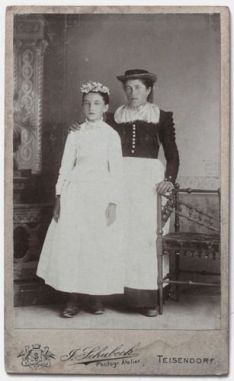
 Feminism and Religion