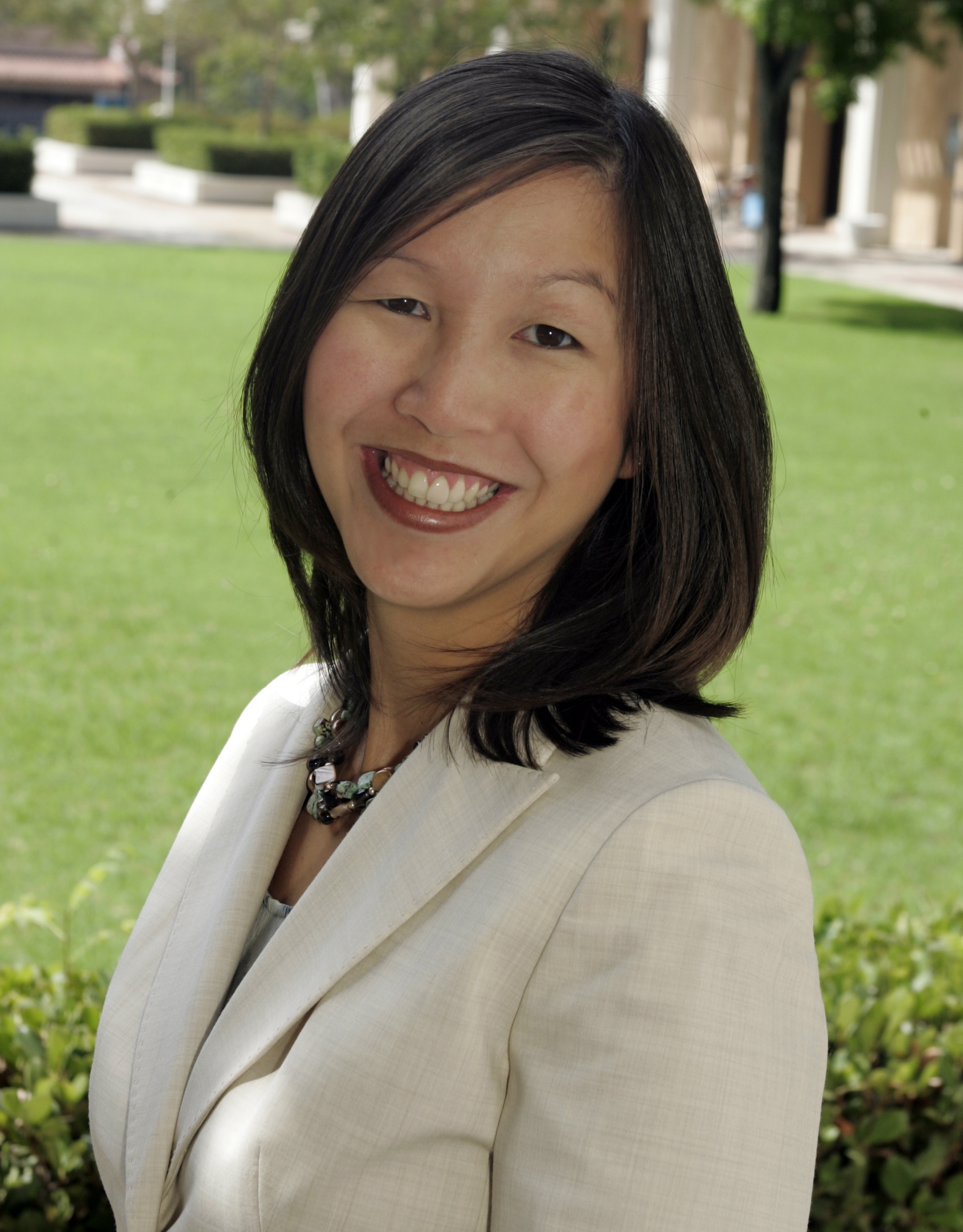
The Dark Half: Reflections on the Winter Solstice By Xochitl Alvizo

Photo by Chris Pinkham

I’m a Capricorn. People seem not to be surprised when they find out. I’m also the oldest of three siblings and a keeper of people’s secrets. Stories and secrets – my family’s included – I hear them all, take them all in. Sometimes someone will share something with me that involves another and afterward say, Now, don’t you go telling so and so that I said this. And of course I always reply, I don’t tell no one nothin’. And it’s true, I don’t tell – I simply take it in. I listen and I take it all in. The stories shared, stories of joy and of love, excitement and disappointment, of hurt feelings and misunderstandings, all of them inform me. They all cause me to reflect and consider the fragility of us all, the precariousness of life. We affect each other so much, from the smallest moment to the largest system, all of it makes such a difference to us.

Tonight we celebrate the Winter Solstice – it marks the boundary of darkness and light – it is the shortest day and longest night of the year.  Continue reading “The Dark Half: Reflections on the Winter Solstice By Xochitl Alvizo”

Dr. Seuss, Multiple Hats, and Advocacy: Reading Broadly By Corinna Guerrero

The ten students in my fall 2011 class at ABSW, Reading OT Biblical Characters, are currently being instructed to read broadly. I tell them to develop their sensibilities as a reader so that they have a greater capacity to serve the needs of their communities. I challenge them with a question like-How do you liberate a biblical character that is not in a biblical story because they/he/she are/is never directly mentioned, given voice, or described? Or,what is the value of investigating the tensions between the story and the discourse exhibited through minor and major biblical characters? I ask them these questions because half of the students are advocating on behalf of a group that is socially, politically, economically, and/or spiritually underserved. The other half is training to develop themselves as scholars and educators of biblical literature. In the class room, regardless of path, everyone is required to be both scholar and servant.

Each student is asked to develop her or his final project with an ideal audience in mind. To whom do you see yourself presenting this semester-long project? The larger question behind that is whom do you serve? Continue reading “Dr. Seuss, Multiple Hats, and Advocacy: Reading Broadly By Corinna Guerrero”

Advent 2011 By Barbara Marian

We know that the whole creation has been groaning as in the pains of childbirth right up to the present time.

Romans 8:22   (NIV)

Advent 2011

Ancestral midwives kneel in shadows

bringing aid and comfort

witness giving

to the pains and crying out and pushing,

Sister-mothers,

prepare the way,

For birthing

in a gushing

mess with cries of gratitude and joy,

As water holy turned

to blood in breaking open paths and sacks

that spill out life

and milk and bread

from deepest springs of hope ferocious. Continue reading “Advent 2011 By Barbara Marian”

God’s Vessel . . . Plays for the Denver Broncos By John Erickson

I have to admit, I am the last person that really cares about football.  However, when every blog, tweet, and Facebook post I read are stating that God is back and He has chosen Tim Tebow as his chosen vessel, I take notice.

For those who may not know, Tim Tebow is the quarterback of the Denver Broncos.  Before, he was the starting quarterback for the University of Florida and was the first sophomore to ever win the Heisman Trophy (the MVP award for college football).  In recent weeks Tim Tebow has led his team to countless victories against innumerable odds while making sure to “Tebow” after every achievement. Continue reading “God’s Vessel . . . Plays for the Denver Broncos By John Erickson”

Well-Behaved Women Seldom Make History, But Obedient Ones are Rewarded in Heaven: An Examination of the Re-Invention of the Bengali Tradition of Sati By Michele Stopera Freyhauf

Well-Behaved Women Seldom Make History is a book authored by Laurel Thatcher Ulrich.  This has become a well-known phrase used by most feminists to imply a meaning of disobedience or stance against the patriarchal structure of society.  Often in error, the credit of the invention of this phrase is attributed Eleanor Roosevelt and Marilyn Monroe.  Their image, and especially the image of Monroe, will often appear with the slogan on merchandise as a means of marketing and raising revenue.  Ironically, reinvention or reuse is prevalent in history when it comes to tradition or ritual for the same reason – monetary gain.  This practice is common and the benefit of reinventing or reinterpreting an old tradition is an automatic connection to the past giving continuity, which, according to Eric Hobsbaum, instills strong “binding social practice,” (p. 10) including loyalty and duty in the members of the group.  This is especially effective in manipulating the poor and uneducated who usually display strict obedience and blind acceptance of tradition. The Bengali reinvented tradition of satî is an example of this. Continue reading “Well-Behaved Women Seldom Make History, But Obedient Ones are Rewarded in Heaven: An Examination of the Re-Invention of the Bengali Tradition of Sati By Michele Stopera Freyhauf”

The Paradoxical Perception of Midwifery in American Culture By Stacia Guzzo

This past Sunday night, midwife Robin Lim was named CNN Hero of the Year at a formal award ceremony in Los Angeles, California. The award, which was given after eleven weeks of public voting on CNN.com, came with $250,000 to support Lim’s quest to provide quality prenatal, labor, birth, and postpartum care for the poor and underserved in Indonesia.  She accepted the award amidst a standing ovation, and closed her words of acceptance by simply saying: “Every mother counts. And health care is a human right.”

The recognition of Lim—or Ibu (“Mother”) Robin, as she is called by those whom she serves— is well-deserved.  An American woman, Lim provides midwifery care at the Bumi Sehat clinics which she helped to establish. Each year, she helps thousands of Indonesian women get care and attention during their pregnancies and the births of their children.  She began her work in 1994, seeing pregnant women and children under five for free out of her home. As her reputation spread, supporters of Lim, along with local business and community leaders, helped to advance her cause. Today, the village-based Bumi Sehat clinics are located in both Bali and Aceh. They provide free prenatal and birthing care as well as breastfeeding support to any woman who needs it, regardless of her ability to afford it.  Ibu Robin’s words to CNN reflect that her commitment to her cause is an altruistic one: “”Every baby’s first breath on Earth could be one of peace and love. Every mother should be healthy and strong. Every birth could be safe and loving.” Continue reading “The Paradoxical Perception of Midwifery in American Culture By Stacia Guzzo”

Getting Tenure, Part I: It Took a Village by Grace Yia-Hei Kao

 “[T]he many sacrifices made for my career have not been borne by me alone….Here are some of the ‘villagers’ to whom I owe a debt of gratitude.”

On December 1, 2011, the full professors at Claremont School of Theology unanimously recommended two of my colleagues and me for tenure. Provided that the Board of Trustees approves their recommendation and two extremes never come to pass (either “financial exigency” compels my institution to start laying off people willy-nilly or I do something professionally or morally egregious enough to be dismissed “for cause”), I now have a job for life! :)  Continue reading “Getting Tenure, Part I: It Took a Village by Grace Yia-Hei Kao”

Conversation on Leadership Continues…By Xochitl Alvizo

In a recent post on leadership I proposed that facilitating open dialogue is a central aspect of leadership. That if we are to move into new horizons – that is, feminist horizons of mutual communal empowerment and liberation – we must be willing to both risk and dialogue, and a leader is one who helps facilitate those practices.

Dialogue and the practice of making room for one another’s voices and contributions do not come easily to us however. Humans have a tendency to stifle and squelch one another especially if we sense that our privileges and comforts, our truths and our convictions, are being challenged or threatened. And so the breakdown in dialogue can result in the literal prevention of change and possibility – the possibility and actuality of entering into a more divine reality and way of relating. A leader then must be someone who can recognize and be aware of change-stifling powers, be willing to name and resist them, and help facilitate the creation of a literal time/place space for open participation and dialogue. This new open space has the potential and literally becomes the womb from which something new may be birthed…it is a fluid, messy, mysterious place, and not one necessarily easy to exists within, but absolutely necessary if seek to contribute toward a more just and beautiful existence. Open dialogue is a necessary part of helping create this new womb space where differences (of perspective, voices, people) can come together to interact and spark with one another in order to morph and change and thus birth something new together. Continue reading “Conversation on Leadership Continues…By Xochitl Alvizo”

KARAI KASANG: Rebirthing the Non-Patriarchal Image of God in Kachin Culture by Zau Sam

This  post is written in conjunction with the Feminist Ethics Course Dialogue project sponsored by Claremont School of Theology in the Claremont Lincoln University Consortium,  Claremont Graduate University, and directed by Grace Yia-Hei Kao.

Zau Sam is a first year MA student in Feminist Studies with interests in process theology, ecotheology, feminist and ecofeminist theologies.  He is ethnically Kachin (Jinghpaw) and from Myanmar (Burma). Zau is a minister at Yangon Kachin Baptist Church (in Myanmar) and Academic Dean of the Church-based Bible School there.  

Throughout our Feminist Ethics class, I have been thinking about Mary Daly’s concept of “Goddess” in her Gyn/Ecology: The Metaethics of Radical Feminism.  I don’t believe that there is any sound theological argument that the term “God” itself represents patriarchy. Theologically speaking, if we study the Bible systematically, particularly Genesis 1:27, it is unquestionable that God is associated with both feminine and masculine imagery.  God is imaged as both mother and father. In contrast to this nature, Mary Daly does not merely seek to erase masculine imagery from the term “God,” but the word “God” itself.  However, “Goddess” without the masculine imagery can no longer be the Perfect Goddess, just as “God” without the image of the feminine also remains imperfect.

Continue reading “KARAI KASANG: Rebirthing the Non-Patriarchal Image of God in Kachin Culture by Zau Sam”

Women, Religion and Consumption By Amy Levin

While my last post focused on the similarities between the social and collective experience (perhaps qua Durkheim?) of the occupy movement and the feminist movement in religion, I’d like to continue thinking about themes by taking a different path towards the more direct relationship between religion, women, and capitalism. There are two contemporary studies that are just as useful as they are fascinating on this triadic dynamic: Bethany Moreton’s To Serve God and Wal-Mart: The Making of Christian Free-Enterprise, and Kathryn Lofton’s Oprah: The Gospel of an Icon. Both of these authors pay attention to the nuanced ways in which patriarchy, capitalism, and religion can reinforce each other, and that women are at once victims and creative agents of these processes.

Though Wal-Mart currently stands as world’s largest multi-national corporation, it began in the mind of Sam Walton in a small Ozark town of the Sunbelt. Bethany Moreton’s book calls attention to the particular rural, Southern, agrarian, and Christian family values that helped construct the spirit of free enterprise so representative of Wal-Mart, and women had a particular role to play in the rise of this capital, helping to negotiate and construct Wal-Mart as an icon of good Christian family values. Conflating the store and the family served to bolster both the virtuous ideals of Wal-Mart culture, as well as calm anxieties of men who were threatened by female workers and the potential emasculation of working in the service economy. In this gendered economy, women – mainly white, middle-class, middle- aged mothers – helped structure a unique dynamic in the Wal-Mart industry, helping to restore Protestant family ideals in the workplace. While women held the majority of jobs, chain managers received decision-making power and sturdy salaries. Moreover, through an ethos of service and virtuous buying, women produced a “. . .victory of sanctifying capitalism and consumption under Christianity.” Wal-Mart acted as an agent of mass consumption by making mass service work an honorable endeavor.   Continue reading “Women, Religion and Consumption By Amy Levin”