Lately I’ve been rereading and refreshing myself with important books of the Great Goddess. Three books at a time! I would switch off, chapter by chapter, among When God Was a Woman by Merlin Stone, When the Drummers Were Women by Layne Redmond, and one that had remained overlooked on my shelf, Sanctuaries of the Goddess, The Sacred Landscapes and Objects, by Peg Streep (1994.) I’ve been immersed in the knowledge of 30,000 years of honoring and worship of women’s bodies and the Great Goddess. When I got to Chapter 7 of Peg Streep’s well-researched book, “The Goddess at the Peak: Crete,” I was blown away with the evidence we still have, in art, architecture, religion and culture, of a highly advanced society, full of life and joy, where women were central to all life. With my mind, my heart, my intuition and my sense of past lives, I’ve attempted to place myself there, before any influence of patriarchy.
Continue reading “Ancient Her-Story by Annelinde Metzner”Category: Goddess
From the Archives: The Found Goddesses of Good Eats by Barbara Ardinger
This was originally posted on August 1, 2013. We usually do Carol Christ’s legacy posts on Mondays. Given the closeness of Lughnasadh, it felt appropriate to share the work of one of our other long-time writers today. Carol’s legacy posts will be back next week.

Lughnasadh (pronounced LOON-us-uh) or Lammas—is the first of the three traditional harvest festivals of the traditional Celtic calendar that most pagans follow today. And what naturally follows harvest? Feasting, fairs, and festivals. To help us celebrate the season, here are two Found Goddesses of good eating. The term “found goddesses” was created in 1987 by Morgan Grey and Julia Penelope, authors of a hilarious book titled Found Goddesses. After reading this book and having never met a pun I didn’t instantly love and being of a naturally satirical state of mind, I started Finding—i.e., inventing—my own goddesses shortly before the turn of the century. After I found a hundred of them, they were published in 2003 in my book, Finding New Goddesses.
Continue reading “From the Archives: The Found Goddesses of Good Eats by Barbara Ardinger”Celebrating Lammas in Troubled Times by Nan Lundeen

credit: Ron DeKett
Lammas, that Celtic Earth-based spiritual tradition, has long been dear to me. Having grown up on an Iowa farm in the 1950s, I am accustomed to living close to the rhythms of the land. Gratitude for Earth’s first fruits comes naturally. The tradition calls for ritually baking a loaf from the first-harvested grain of the season, usually corn, and blessing it. It is a harvest festival and a time of gratitude and joy.
Continue reading “Celebrating Lammas in Troubled Times by Nan Lundeen”Embracing the Dark Goddess – Empowering Paradigm Shifts, Part 2 by Judith Shaw
The Dark Goddesses, with qualities that are mysterious, magical, chaotic, destructive, violent and transformational bring a wholistic understanding of ourselves and of nature. They are wild and untamed. Today I finish up my initial dive into the Dark Goddesses which began yesterday with the publication of Part 1. Look for a more detailed look at these goddesses and more in the coming months.

Dark goddesses are wild, free, and sexual – Lilith, Erishkigal and Medb
Lilith and Erishkigal
Long before the rise of civilization, people lived together in very different ways and Goddess was understood as the force that encompasses all life – the light and the dark. It’s very interesting that two of the world’s oldest dark goddesses – Lilith and Erishkigal – are found in the creation story of Sumer, considered as the world’s first civilization.
Embracing the Dark Goddess – Empowering Paradigm Shifts, Part 1 by Judith Shaw
I always approach the Dark Goddesses with trepidation, preferring to focus on the bright, life affirming aspects of the Goddess. Yet now I find that the difficult break-downs and violent conditions of these days are calling me to explore the terrifying aspects of the ones called “Dark Goddesses.”
But who are the Dark Goddesses and why are they called dark? That question is one of controversy within the Goddess community. Carol Christ has written that the Dark Goddess only exists as a projection of patriarchal values onto the Goddess, turning the Goddess into a force of war and terror, in particular the War Goddesses found in various cultures. Christ views war as an abnormal desire for the Goddess. Whereas others view the Dark Goddess as a part of the one Great Goddess, who encompasses all.

Legacy of Carol P. Christ: TWO TORTOISES IN THE WEB OF LIFE
This was originally posted on March 14, 2014
The Gods made only one creature like them—man. Greek TV documentary
The sight of a reptile or an amphibian usually provokes, at the very least, a feeling of repulsion in most people. Natural History of Lesbos
In the past days and weeks thetwo tortoises with whom I share my garden have woken up from a long winter’s sleep. Henry, testudo marginata, has been up for a while now. More than a month ago when I was cutting back and weeding in the area of the garden where he had been sleeping, Henry roused himself to sit in the sun near me for a few hours each day before creeping back under a shrub. At first I thought I had disturbed him, but when he came back out day after day while I worked, I began to wonder if he was coming out to say hello.
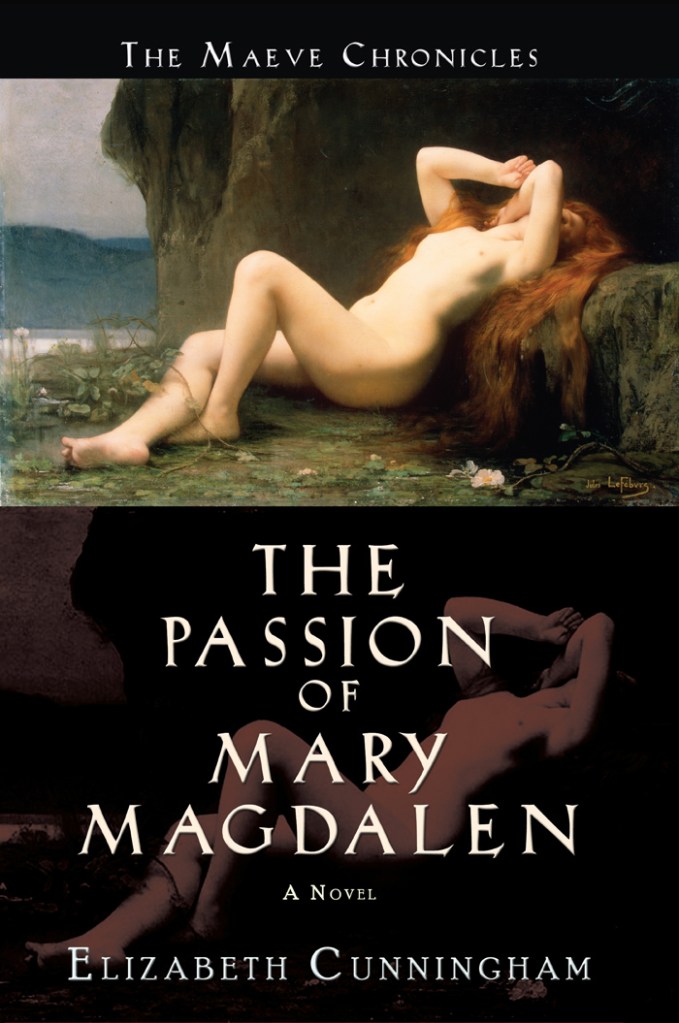
Continue reading “Legacy of Carol P. Christ: TWO TORTOISES IN THE WEB OF LIFE”How Mary Magdalen Came into My Life: an excerpt, edited for brevity, from My Life as a Prayer: A Multifaith Memoir by Elizabeth Cunningham

(Author’s note: Mary Magdalen, or Magdalene, comes to people in many ways. To me, she came as an unconventional, fictional character. I worked hard to get the first century setting of her story as accurate as possible. Otherwise, I make no claim to historicity. I respect all the ways in which others know her.)
When I finished writing my novel Return of the Goddess in 1990, I thought I had nothing more to say. Yet, I sensed there was something—someone—missing.
An artist friend suggested I take up drawing or painting for a time—visual art being a form in which I had no experience, skill, and best of all, no ambition. I dabbled in paint and charcoal but soon reverted to magic markers, my childhood medium.
One day a line drawing in brown marker took shape. An ample woman sat naked at a kitchen table having a cup of coffee. The round clock on the wall read a little after three in the afternoon. (The same time of day I was born.) She told me her name was Madge.
Continue reading “How Mary Magdalen Came into My Life: an excerpt, edited for brevity, from My Life as a Prayer: A Multifaith Memoir by Elizabeth Cunningham”From the Archives: Artemis As Artemisia: Ancient Female Spirituality & Modern Medicine by Stuart Dean
This was originally posted on November 29, 2015

The 2015 Nobel Prize for Medicine was awarded in part to a Chinese woman (Tu) for her identification and isolation to treat malaria of a chemical known as Artemisinin. The name of that chemical derives from the fact that it is found in varying amounts in the ‘family’ (technically, genus) of plants known as Artemisia. The name of that family derives from its association with the goddess Artemis.
Because Tu’s work began in China in the 1960s it is understandable that even if she knew this about Artemisia (a term I use to refer to any one plant or all of the plants of that family) it would not have been a ‘careerbuilder’ for her to point it out to those for whom she was working. It was bad enough that she was a woman. At that place and time, however, if she had said or done something that could be associated with Western culture her name might not even be known today.
Continue reading “From the Archives: Artemis As Artemisia: Ancient Female Spirituality & Modern Medicine by Stuart Dean”
Legacy of Carol P. Christ: “God is Not a Man, God Is Not a White Man”
This was originally posted February 1, 2016
“The pictures that line the halls speak volumes about the history of racism and sexism and they shape the future in powerful ways.”–Simon Timm
The author of these words recently posted a short video on Youtube entitled “Mirror Mirror on the Wall: The Legacies of Sexism and White Supremacy at Yale Divinity School.”* The video begins with a catchy little ditty with the words, “God is not a man, God is not a white man.” It tracks paintings and photographs of professors and other luminaries in the field of theology on the walls of the Yale Divinity School. By Timm’s count: 99 white males, 6 women, and 3 blacks. The single black woman is counted in both categories.
Continue reading “Legacy of Carol P. Christ: “God is Not a Man, God Is Not a White Man””Legacy of Carol P. Christ: Sophia, Goddess, and Feminist Spirituality: Imagining the Future
This was originally posted on September 17, 2018

Though represented by its detractors as an incursion of paganism into
Christianity, and presented as an integrally and intrinsically Christian phenomenon by its supporters, the truth about the Re-Imagining Conference and movement is that it was a product of a wider feminist awakening. The critique of patriarchal religions that emerged in the academy and in churches and synagogues in the late 1960s and early 1970s was part of the emerging feminist uprising. The feminist movement placed a question mark over all patriarchal texts and traditions, secular and religious, and as such was beholden to none.
In the spring of 1971, Roman Catholic Christian Mary Daly published “After the Death of God the Father” in the liberal Catholic magazine Commonweal. She asserted that the God whose death was touted in the “Death of God” movement was an idol fashioned in the image of male power and authority. She called for “the becoming of new symbols” to express the new becoming of women. In the summer of 1971, a group of nuns from Alverno College convened the first Conference of Women Theologians. Besides sparking dialogue about the role of women in religions, the conference endorsed my call to form a women’s group at the fall meetings of the American Academy of Religion, up until then a gathering of several thousand male scholars of religion, with only a handful of women scholars in attendance. At winter solstice, Z Budapest launched the Susan B. Anthony Coven #1 in Los Angeles publishing a Manifesto calling on women to return to the ancient religion of the Goddess.
Continue reading “Legacy of Carol P. Christ: Sophia, Goddess, and Feminist Spirituality: Imagining the Future”