


“Freud once asserted that mortals are not made to keep secrets;
what they would like to conceal oozes from all their pores.”
Psychoanalyst Theodore Reik[1]
It’s remarkable how much female imagery there is in the Bible hidden within its wording. The more I delve into its passages, the more that I have found these hidden/not so hidden sacred feminine images, even deities. I have begun a project of digging in and rooting out these little gems. When people think about the sacred feminine or female deities in the Bible the most well known is the Shekinah. The Shekinah is a lovely presence. The word means “dwelling” and usually represents “god’s divine presence” or a place where the divine resides.
The problem is that the Shekinah as a feminine essence of the divine is never stated explicitly, it is an interpretation of how the word is used. I love the concept of the Shekinah but as an essence that upholds the entire weight of the feminine divine in the bible, I find it unsatisfying by itself. Luckily for me, Goddess Shekinah has lots of company. Sometimes they are indeed hiding in plain sight. Sometimes they hide in the translations. The passage I am presenting today has some of both going on. The following is the King James Version of Genesis 49:25. Jacob has been giving blessings to each of his sons and this is part of the blessing he gives to Joseph: Continue reading “Yes, There are Goddesses in the Bible by Janet Maika’i Rudolph”

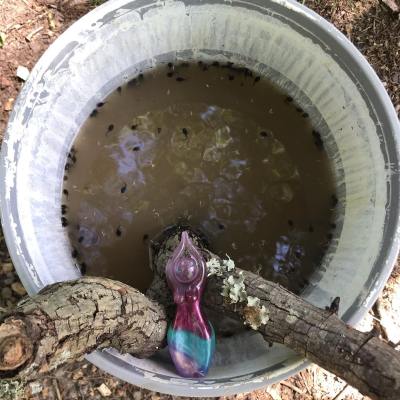

 The reason and the importance of ritual in all world religions and spiritual paths, is the achievement of a more awakened consciousness, to touch on all of the physical senses in such a way as to awaken one to a higher level of spiritual awareness. Think, for example, of the movements of the ministers on TV. Everything moves in a certain order, and if this order is not followed, people are unsettled.
 You might be asking yourself, “Is Karen losing her mind?” Last post she’s asking us “
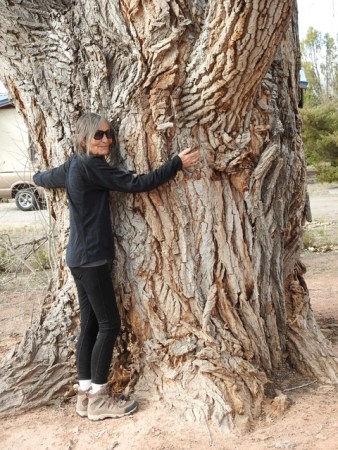 Canadian Geese have been on my mind a lot lately. This past winter I have missed the skeins of geese that fly back and forth up and down the river appearing every single morning like clockwork. In Abiquiu when winter turned to spring I noted that the geese were behaving in much the same way the Sandhill cranes did before they migrated, splitting into pairs or groups of three and flying erratically. I was puzzled. I didn’t recall witnessing such behavior before this year. I wondered about migration patterns. Were the geese shifting their flight patterns too? Or perhaps the small groups I saw were staying year round? Some days it almost seemed as if these water birds were confused by something.
 Feminist spirituality is often disparaged in academic feminist and progressive communities. Many of the strongest critics are Marxists, but there is a general agreement that religion is the opiate of the people, a false belief system that diverts energy from the difficult work of creating justice in this world. This view is rooted in the habit of thought known as classical dualism in which spirit and nature, spirit and body, and this world and the next are viewed as antithetical. From this, it would seem to follow, feminist spirituality focuses attention on an imagined spiritual world as opposed to the material world in which real people live and interact with each other. Nothing could be farther from the truth.

