 ‘Tis the season to be…?
For me, this has not been a season to be jolly. I teach at a university, and again, I’m in the midst of the most hectic time of year of grading and exams and wrapping up projects due at the end of the calendar year. There have been moments of joy and rest. But I’ve been more reflective and sorrowful. This year, my heart and mind and soul have been opened up in new ways and I feel more urgency and need for social change. I’ve been experiencing “conscientization” during the time of year many Christians refer to as Advent.
I was introduced to the concept of conscientization in the work of Christian feminist and womanist ethicists like Beverly Wildung Harrison and Stacey Floyd-Thomas. Other feminist and liberationist thinkers had already convinced me of the vital role that critical thinking, consciousness-raising, and action occupy in ethical reflection and social change. In a chapter on “Feminist Liberative Ethics” in a textbook on liberative approaches to ethics, Michelle Tooley explains the meaning of conscientization:
“Activists speak of conscientization as waking up to the injustice in the world—or seeing it for the first time. It is not that the injustice is beginning; it is that you encounter oppression, injustice, violence yourself or you see it in a person or situation. You may have seen the same situation many times before, but for some reason you begin to connect the event with a deeper recognition that the injustice is wrong.”
(p. 185, Ethics: A Liberative Approach, Miguel A. De La Torre, Editor)
I was conscientized the night I heard that a grand jury did not indict Darren Wilson for killing Mike Brown, an unarmed black man. I was horrified to learn that this police officer doesn’t even have to stand trial for his violent and deadly act. Now it wasn’t like before grand jury’s decision I thought that black lives were given equal value in the US justice system. After all, for months I have been researching and preparing a paper called “When the Law does not Secure Justice or Peace” about artistic and religious responses to the dishonoring of black male personhood. I have been mourning the loss of Trayvon Martin and others as I write. But this decision left me sobbing in a hotel room as I watch the events unfold in Ferguson, Missouri. I gained a deeper social awareness about the depths to which the demonization and disregard of the lives of black women, men and children are entrenched in American life and the institutions within it.
I gained deeper self-awareness too. One reason the tragedy of the grand jury’s decision became so palpable to me is that just hours prior, I witnessed former president Jimmy Carter address the American Academy of Religion. He spoke passionately about the proliferation of violence, mistreatment of women, climate change, and other social concerns. To put it plainly, I was floored to see a white man in his 90s who was raised in Georgia and was a Southern Baptist until his 70s state without any qualms that people in power intentionally misinterpret religious texts to support the domination of women and nonwhites because those they do not want to lose their privilege. Yet he also called himself, like Archbishop Desmond Tutu, a “prisoner of hope.” He believes that things will change, and draws from his Christian convictions to sustain hope and motivate his work to fight injustice.
I was electrified by his words. I, too, had hope. In the days prior, I had gotten a break from my daily life, connected with friends, and conversed with like minds. I had been thinking about art and love. I had learned strategies for de-centering dominant narratives in the classroom and I was hopeful that I could use them to make a difference in my students’ lives. But mere hours later, while watching the news, the self-awareness I came to is that my hope is more fragile than I wish it to be. Futility consumed my hope.
A few weeks later, I can assert that my faith in God is not shaken, but my hope in humanity’s goodness has as much stability as a house of cards. In my present state of mind, I’m grateful that we are at a point in the church year that provides me with an opportunity to mourn the brokenness of our world. Christmas is approaching, but that doesn’t mean I have to sing merry carols. Advent is a season when Christians reflect on why the world needs God’s miraculous action and what it means to wait for light to emerge in the darkness. In the church calendar, it is a time when Christians re-enact and re-experience the anticipation of Jesus’ coming. Advent songs have a different character than Christmas carols. Many of them have a haunting tone or an eerie, sad, or mysterious sound. The lyrics of these songs place exhortations to “Rejoice!” next to pleas of “O come, o come, Emmanuel!” Emmanuel, also spelled Immanuel, means “God with us.” Christians draw this name from the Hebrew prophecies in Isaiah that are cited in the Gospel of Matthew’s account of Jesus’ birth. Matthew describes Jesus’ birth as the fulfillment of prophecy.
My conscientization allows me to hear these prophecies anew. They are familiar to me, as they are repeated often this time of year in Christian settings, but I hear them in new ways. I hear Isaiah 9:6 quite differently: For to us a child is born, to us a son is given, and the government will be on his shoulders. And he will be called Wonderful Counselor, Mighty God, Everlasting Father, Prince of Peace.
“The government will be upon his shoulders” likely means that this child will have authority. But as I hear those words this year, I imagine the Prince of Peace in the choke-hold of a law enforcement officer. I think of a little baby who are welcomed into the world with joy but who grows up only to be killed at a young age by threatened authorities and crowds of supporters. This is the story Christians tell about the God who is with us, the God who is also fully human. And this is the story we tell about Michael Brown, Eric Garner, Tamir Rice, Alesia Thomas, Aiyana Stanley-Jones and far too many others.
This Advent, I’m making a real effort to hold hope and despair together. I don’t want to become hopeless. I don’t want to think that my work in the classroom, in my church, in my community, on this site and in the printed page have no meaning. Hope is what sustains us to work for justice. I want to believe in that transformation of hearts and minds and souls is possible and immanent even when it emerges through sorrow and struggle. Suffering, sorrow, and killing without consequences must not be acceptable. With my new eyes, I see just how terrible they are.
Elise M. Edwards, PhD is a Lecturer in Christian Ethics at Baylor University and a graduate of Claremont Graduate University. She is also a registered architect in the State of Florida. Her interdisciplinary work examines issues of civic engagement and how beliefs and commitments are expressed publicly. As a black feminist, she primarily focuses on cultural expressions by, for, and about women and marginalized communities. Follow her on twitter, google+ or academia.edu.


 In 2013, I wrote an article about the then latest reality TV scandal featuring A&E’s Duck Dynasty’s Phil Robertson and his rampant foot-in-mouth disease that caused him to express, in the pages of GQ, his true distaste for the LGBT community and specifically for the sexual proclivities of gay men.

 Written two weeks ago on December 5, 2014, but offered still as some food for thought:
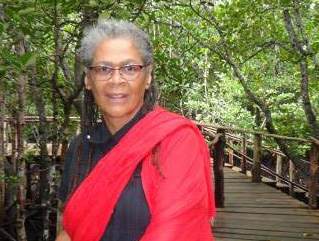 I was born the year the Supreme Court of the United States of America began to hear Brown v. Board of Education of Topeka; a case that ought to be known to all as a matter of US history.
 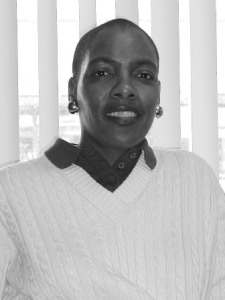 Just as crises can reveal the strengths of our infrastructure, so too can they reveal the weaknesses. At the same time, a crisis can disclose the enormity as well as the limitations of our humanity. Even as the current Ebola crisis may have shown forth the strong points of the U.S. healthcare infrastructure, it clearly exposed some of its vulnerabilities.
 Feminism and Religion