Exploring Muslimness in the Aftermath of September 11, 2001 by Stephanie Arel

In my last post, I addressed the deeply personal accounts of Haroon Moghul’s self- and religious exploration in his memoir How to be a Muslim: An American Story. This post will broaden that reading to consider an October 2017 interview with Moghul at the 9/11 Memorial & Museum in New York City.

The interview echoes themes relevant to current global crises which implicate religion including how religious rhetoric circulates to support extremist violence and Islamophobia. Exploring how the events of 9/11 intertwine with such crises adds depth to understanding Moghul’s individual experience.

Continue reading “Exploring Muslimness in the Aftermath of September 11, 2001 by Stephanie Arel”

Psychology and Religion Collide in the Journey of an American Muslim by Stephanie Arel

After the horrific events of September 11, 2001, Haroon Moghul, the undergraduate leader at New York University’s Islamic Center, was called upon to be a representative voice for Muslims in America even as he negotiated his own relationship with Islam. He recounts his religious journey, alongside personal encounters with suicide and bipolar disorder, in his recently published memoir: How to be a Muslim: An American Story. Recognized by Ausuma Zehanat Khan in The Washington Post as “an extraordinary gift,” the memoir offers, what Khan calls, “an authentic portrait of a vastly misunderstood American community.”

The vulnerability and honesty exemplified in Moghul’s writing actualizes a pathway for understanding his experience of Muslim life in the United States post 9/11. His personal perspective and sensitivity foster an empathic response. Emma Green of The Atlantic recognizes his focus on a more intimate encounter with religion, pinpointing how Moghul’s narrative represents “writing about Islam that’s not about terrorism or war.” Continue reading “Psychology and Religion Collide in the Journey of an American Muslim by Stephanie Arel”

My Connection to Bengali Vaishnavism by Nazia Islam

Last summer I began a deep inquiry of Gaudiya/Bengali Vaishnava culture. That inquiry had its origins in a dream I had two years prior where Radha and Krishna appeared in the form of miniature clay figurines. Krishna went missing and Radha asked me to help find him like how she implores her sakhis/friends in much Vaishnava literature. Seeing deities in that manner, as I know in some aspects of Bengali culture, is a big deal. It usually signifies some spiritual connection to those deities. I wrote the dream down because of how vividly I saw it but brushed off as anything significant to me personally though the dream sparked my inquiry.

I had gotten some great information from an academic I met at the American Academy of Religion conference in 2015 who recommended I start with an ethnographic study, The Place of Devotion (Open source by UC Press), published that year by scholar Sukanya Sarbadhikary on the diversity of Bengali Vaishnavism. That was my start of my spiritual-academic journey of understanding Bengali Vaishnavism, but it has taken a while for me, through a lot of counseling, to get mentally and emotionally stable before I could start processing and analyzing all the information I’ve been collecting on this topic. I’m not going to divulge on the details about this in depth, but I can say it is connected to the politics of religious purity found across South Asian Muslim and Hindu communities which is exacerbated by non-Muslims and Hindus who can’t comprehend, for lack of a better word, folk religion or religious syncretism apart from the framework of dual religious identity through intermarriages and the term “multiple religious belonging.” But even those terms are not readily ascribed to non-white bodies.

Continue reading “My Connection to Bengali Vaishnavism by Nazia Islam”

Who Does Islamic(s) Feminism(s) Belong To? by Vanessa Rivera de la Fuente

Who does Islamic(s) feminism(s) belong to?

The answer to this question seems obvious: Islamic feminism belongs to all Muslim women who wish to adhere to it, and feminism is for everybody, as bell hooks said.

In reality however, it is not so easy. Even the most well crafted theories must be implemented by human beings who have been socialized under the Patriarchy’s rules and practices. Lived experience reminds us that feminisms of all kinds are marked by dynamics of power, internalized misogyny, lack of intersectionality, egos, and personal interests.

In this situation I wonder: Are feminisms, and Islamic Feminisms in particular, truly for everyone?

Continue reading “Who Does Islamic(s) Feminism(s) Belong To? by Vanessa Rivera de la Fuente”

Talking Gender and Islam at the Grassroots by Vanessa Rivera de la Fuente

In my current trajectory linked to community development —  via both activism and my professional field —  I’ve learned that popular education is a very useful practice and methodology to decentralize all types of knowledge. Since I embraced Islam, part of my activity has focused on creating spaces for the production, discussion, and appropriation of religious knowledge for women at the grassroots. Religion is not separated from the daily life of believers, therefore, each of them carries knowledge that has been deliberately obliterated by hegemony.

The feminist hermeneutic of Islam is a paradigm that aims to provide Muslim women with skills and concepts that allow them to boost their agencies in their respective contexts, encouraging a transformation in the understanding of religious phenomena and its trajectory towards gender justice.  For this transformation to be possible, knowledge must be accessible in language, methodology and location.

Paulo Freire’s pedagogy of liberation is a tool I consider to be critical and necessary for feminism, including Islamic feminism, at a time when debates about decolonization are very fashionable in academia. Freire’s methodology is democratizing because it allows, on one hand, to transfer knowledge from privileged circles to the margins and, on the other, to make visible the experiential knowledge produced in the periphery — to include them in the spectrum of what we understand and as such subvert, in this way, the dynamics of power, representation and discourses.

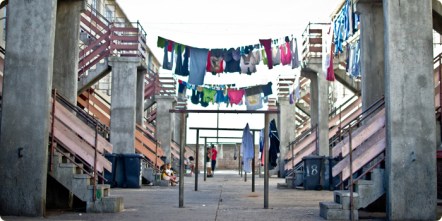
During my time in South Africa, I have engaged with popular education on topics related to Islam and Gender with Muslim women from the Cape Flats. These women have different backgrounds, races, life trajectories, and religious journeys. They exist in the geographic, cultural and epistemological margins of the social reality of Cape Town. Their experiences as Muslims do not appear in academic journals, nor are they even “noticed” by their highly androcentric communities of belonging.

For the past 7 months, I have met with them on a regular basis to talk about Gender and Islam. “Talk” is a methodological definition that means that we are placed in equal and interchangeable positions of teacher-student during our dialog — assuming than rather than learning something new, we are facilitating for each other a way to communicate things we already know. Muslim women of the Cape Flats know, indeed. But they have been told that they do not know by a system of privilege formed for the ulemas, for academia, or for the Islamic institutions. Continue reading “Talking Gender and Islam at the Grassroots by Vanessa Rivera de la Fuente”

Rape, Community and Healing by Vanessa Rivera de la Fuente

During my last months in Cape Town I have been facilitating a series of workshops on Rape, Gender Justice and Culture of Consent. I am blissful for the opportunity to teach and learn with a group of people with whom we have navigated in the approach of Rape and Sexual Assault in their different perspectives, from the socio-political to the intimate tenets.

This has been an exciting journey of healing and soul blooming. I have realized the critical role that Cape Town has played in pushing me towards empowerment and thriving, enhancing my taking back ownership of my body and all the experiences happening through it.

This journey started few years ago when I decided to come out of the closet as a rape survivor. I wrote about it on Feminism and Religion. This was the first step of my breakthrough. Little by little I became confident and shameless about saying: “Yes, I was raped”.

Continue reading “Rape, Community and Healing by Vanessa Rivera de la Fuente”

A Healing Home of Dreams by Joyce Zonana

I had few expectations before my visit in the winter of 1999 to Cairo’s Rav Moshe Synagogue, also called the “Rambam.” I only knew it to be an obscure synagogue and yeshiva associated with the renowned twelfth-century theologian, sage, and physician, Moses Maimonides.
I left Egypt as an infant with my parents in 1951. Now I was finally back, hoping to experience the place that had shaped my family. Accompanied by a Muslim Egyptian friend, I walked the streets my parents had walked, attended services in the elegant downtown synagogue where they’d been married, tasted the familiar foods of my childhood, listened with delight to the melodious sounds of Egyptian Arabic. But seeking the Rambam was little more than a whim, sparked by a few lines in a Guide to Jewish Travel in Egypt. “Not on any tourist itinerary,” the brief blurb stated about the derelict synagogue in ‘Haret al Yahud, the city’s medieval Jewish quarter, far from where my parents had lived. Still, I had to go.

Continue reading “A Healing Home of Dreams by Joyce Zonana”

Anti-Muslim Demonstrations Demand Our Response by Katey Zeh

kamesh-vedula-208292

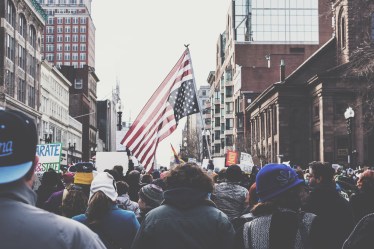
On June 10th anti-Muslim demonstrations were held in 28 cities across the United States, including one a few miles down the road from me at the North Carolina Capitol grounds in Raleigh. Organized by ACT for America, identified by the Southern Poverty Law Center as the largest Anti-Muslim hate group in the country, these “anti-Sharia” gatherings were advertised with propagandist messaging like “If you stand for human rights, please join us to march against Sharia” and “Sharia is incompatible with our Constitution and our American values.”

It’s no coincidence that these anti-Muslim demonstrations were organized during LGBTQ Pride month, specifically the weekend before the one year mark of the massacre at the Pulse nightclub in Orlando that left forty-nine people dead and fifty-three others wounded, nearly all of whom were young members of the Latinx community. The shooter Omar Mateen had pledged allegiance to the Islamic State before opening fire at the gay club. Scott Pressler, one of the major organizers of the anti-Muslim gatherings, claims that the Orlando massacre was a wake-up call that led him to do two things: to come out as a gay man, and to join ACT for America “to fight for my community, my country.”

ACT for America operates under the guise of human rights and women’s liberation to justify its anti-Muslim, white Supremacist agenda. The organization’s founder, Brigitte Gabriel, cited acts of violence against women including female genital mutilation and honor killings as the basis of organizing these anti-sharia demonstrations. She criticized U.S. feminists, claiming (falsely) that they have we have been silent on these issues. In an interview Scott Pressler also tried to appeal to feminists in joining his anti-Muslim crusade when he said, “ We [the LGBTQ community] are under attack simply because of our sexuality. Just like women, just for being born a female you are already under attack, and I think that’s demonstrative of how extreme radical Islam really is.”

Continue reading “Anti-Muslim Demonstrations Demand Our Response by Katey Zeh”

Shariah is not a Law by Esther Nelson

I will never forget the day Nasr Abu Zaid (1943-2010), an Islamic Studies scholar and teacher extraordinaire, told me, “Shariah is not a law.”  In spite of his assertion, many people—both Muslims and non-Muslims—are convinced that Shariah is synonymous with archaic legal rulings that are at odds with democracy and modernity.


What is Shariah, then, if not a law?  When we see or hear the word Shariah, the word “Law” almost always follows.  Shariah literally means a path—a well-trodden path such as animals use on their way to a watering hole.  Shariah, then, can be understood as something that when embraced has potential to give life and sustenance.


Muslims believe that the Qur’an was revealed to Prophet Muhammad by the angel Gabriel circa 600 C.E.  That revelation—Muslims believe it to be God’s actual speech—took place over a period of approximately twenty-one years. The Qur’an contains Shariah (path) in the form of information, narrative, and poetry.  Since Shariah is essentially a path that leads to life, the critical question centers on how Shariah can be appropriated, leading us to the water that sustains.

Continue reading “Shariah is not a Law by Esther Nelson”

What Could ‘Masculinity’ Mean in 2017? by Meghana Bahar

PART II of II – see PART I here

Last year, the leader of the (un)Free World was elected by ‘right choice’, much to the collective dismay of liberal leftists, a huge proportion of people of colour, progressive educationists, environmental conservationists, human rights defenders, religious reformists, and a large fragment of the developing world in the south of the globe. Today, Donald Trump has brought the world to the brink of World War III. ­­­Amidst accusations of undeclared tax returns and unabashed grabbing of female genitalia, the term ‘toxic masculinity’ is thrown about in a variety of media platforms. Many critiques lament how “inflammatory” the term is, one that is not quite “hopeful” for men, whilst the criticisms by media oligarchs reflect a hatred towards femininity.

Entitlement, sexism and narcissism can no longer be virtues of a millennial masculinity – we have lost so much already to corporate greed, warlords and racist bigots. Traditional, armorial masculinity is breaking our homes and our planet. At the ecological scale, the lungs of the earth mother are clogged. Wisdom-keepers decry the daily rape and plunder of their lands. The planet’s heart valves bleed toxins that can no longer sustain flora, fauna, fungi. Continue reading “What Could ‘Masculinity’ Mean in 2017? by Meghana Bahar”