A Healing Home of Dreams by Joyce Zonana

I had few expectations before my visit in the winter of 1999 to Cairo’s Rav Moshe Synagogue, also called the “Rambam.” I only knew it to be an obscure synagogue and yeshiva associated with the renowned twelfth-century theologian, sage, and physician, Moses Maimonides.
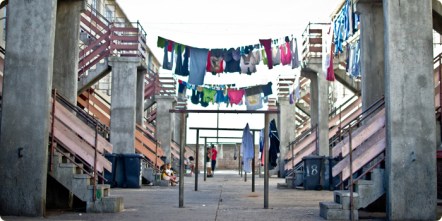
I left Egypt as an infant with my parents in 1951. Now I was finally back, hoping to experience the place that had shaped my family. Accompanied by a Muslim Egyptian friend, I walked the streets my parents had walked, attended services in the elegant downtown synagogue where they’d been married, tasted the familiar foods of my childhood, listened with delight to the melodious sounds of Egyptian Arabic. But seeking the Rambam was little more than a whim, sparked by a few lines in a Guide to Jewish Travel in Egypt. “Not on any tourist itinerary,” the brief blurb stated about the derelict synagogue in ‘Haret al Yahud, the city’s medieval Jewish quarter, far from where my parents had lived. Still, I had to go.

Continue reading “A Healing Home of Dreams by Joyce Zonana”

Anti-Muslim Demonstrations Demand Our Response by Katey Zeh

kamesh-vedula-208292

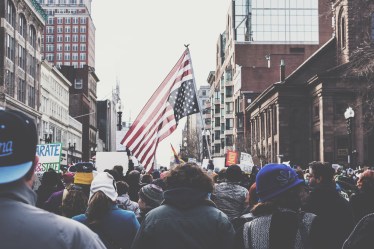
On June 10th anti-Muslim demonstrations were held in 28 cities across the United States, including one a few miles down the road from me at the North Carolina Capitol grounds in Raleigh. Organized by ACT for America, identified by the Southern Poverty Law Center as the largest Anti-Muslim hate group in the country, these “anti-Sharia” gatherings were advertised with propagandist messaging like “If you stand for human rights, please join us to march against Sharia” and “Sharia is incompatible with our Constitution and our American values.”

It’s no coincidence that these anti-Muslim demonstrations were organized during LGBTQ Pride month, specifically the weekend before the one year mark of the massacre at the Pulse nightclub in Orlando that left forty-nine people dead and fifty-three others wounded, nearly all of whom were young members of the Latinx community. The shooter Omar Mateen had pledged allegiance to the Islamic State before opening fire at the gay club. Scott Pressler, one of the major organizers of the anti-Muslim gatherings, claims that the Orlando massacre was a wake-up call that led him to do two things: to come out as a gay man, and to join ACT for America “to fight for my community, my country.”

ACT for America operates under the guise of human rights and women’s liberation to justify its anti-Muslim, white Supremacist agenda. The organization’s founder, Brigitte Gabriel, cited acts of violence against women including female genital mutilation and honor killings as the basis of organizing these anti-sharia demonstrations. She criticized U.S. feminists, claiming (falsely) that they have we have been silent on these issues. In an interview Scott Pressler also tried to appeal to feminists in joining his anti-Muslim crusade when he said, “ We [the LGBTQ community] are under attack simply because of our sexuality. Just like women, just for being born a female you are already under attack, and I think that’s demonstrative of how extreme radical Islam really is.”

Continue reading “Anti-Muslim Demonstrations Demand Our Response by Katey Zeh”

Shariah is not a Law by Esther Nelson

I will never forget the day Nasr Abu Zaid (1943-2010), an Islamic Studies scholar and teacher extraordinaire, told me, “Shariah is not a law.”  In spite of his assertion, many people—both Muslims and non-Muslims—are convinced that Shariah is synonymous with archaic legal rulings that are at odds with democracy and modernity.


What is Shariah, then, if not a law?  When we see or hear the word Shariah, the word “Law” almost always follows.  Shariah literally means a path—a well-trodden path such as animals use on their way to a watering hole.  Shariah, then, can be understood as something that when embraced has potential to give life and sustenance.


Muslims believe that the Qur’an was revealed to Prophet Muhammad by the angel Gabriel circa 600 C.E.  That revelation—Muslims believe it to be God’s actual speech—took place over a period of approximately twenty-one years. The Qur’an contains Shariah (path) in the form of information, narrative, and poetry.  Since Shariah is essentially a path that leads to life, the critical question centers on how Shariah can be appropriated, leading us to the water that sustains.

Continue reading “Shariah is not a Law by Esther Nelson”

What Could ‘Masculinity’ Mean in 2017? by Meghana Bahar

PART II of II – see PART I here

Last year, the leader of the (un)Free World was elected by ‘right choice’, much to the collective dismay of liberal leftists, a huge proportion of people of colour, progressive educationists, environmental conservationists, human rights defenders, religious reformists, and a large fragment of the developing world in the south of the globe. Today, Donald Trump has brought the world to the brink of World War III. ­­­Amidst accusations of undeclared tax returns and unabashed grabbing of female genitalia, the term ‘toxic masculinity’ is thrown about in a variety of media platforms. Many critiques lament how “inflammatory” the term is, one that is not quite “hopeful” for men, whilst the criticisms by media oligarchs reflect a hatred towards femininity.

Entitlement, sexism and narcissism can no longer be virtues of a millennial masculinity – we have lost so much already to corporate greed, warlords and racist bigots. Traditional, armorial masculinity is breaking our homes and our planet. At the ecological scale, the lungs of the earth mother are clogged. Wisdom-keepers decry the daily rape and plunder of their lands. The planet’s heart valves bleed toxins that can no longer sustain flora, fauna, fungi. Continue reading “What Could ‘Masculinity’ Mean in 2017? by Meghana Bahar”

What Could ‘Masculinity’ Mean in 2017? by Meghana Bahar

There have been so many times
I have seen a man wanting to weep
but instead,
Beat his heart until it was unconscious.

— ‘Masculine’, Nayyirah Waheed


PART I of II

There have been many times when I have wondered whether the world has reached a peak in a broken kind of masculinity.

The notion that there is only one kind of masculinity deserving pedestalisation, or even just one kind of masculinity, has long been discarded in the enclaves I have access to as a grassroots activist and scholar. These are not secret societies that are password-protected. They are protected, of course, by communities that uphold principles of freedom, dignity, equality and justice. But anyone is welcome.

It remains to be seen whether everyone will come.

Six years ago, news broke out that sixty-six teenaged boys had been sent to a government-authorised “anti-gay” boot camp in the state of Terengganu, a rather conservative Islamic province in eastern Malaysia. Their offence? They were considered ‘effeminate’ by their custodian-teachers. The boys were sent to a week-long counselling camp to ‘correct’ their behaviour. Continue reading “What Could ‘Masculinity’ Mean in 2017? by Meghana Bahar”

Earth-Spirituality in the Qur’an and Green Muslims by Elisabeth Schilling

green pathThere is some very helpful guidance in the Qur’an for how we should and should not treat the earth. In my exploration of Qur’anic verses on the environment, I have found a great deal of Earth-love that I want to share.

The first idea is that the earth is not ours to trash and misuse recklessly or indulgently. Sura 2:284 says, “Whatever is in the heavens and in the earth belongs to God.” This sentiment is found throughout the scriptures. Individual wealth and the practice of financial profit and salary as reward has given us the illusion that, if we’ve earned the cash, we can do with it whatever we like. We can buy anything we want, show it off, hoard it, and then trash it. How often do we quell our suffering or attachments through consumerism as if there were no consequences? But we need to begin to shift to the perspective of honoring the earth as not something we are entitled to or even deserve. If we are supposed to be stewards of the earth, then fine. But it seems that selfishness and personal gain have distracted us, making us neglect our duty. The idea that the earth is a bestowed gift is embedded into the Qur’anic “golden rule”: “You who believe, give charitably from the good things you have acquired and that We have produced for you from the earth. Do not seek to give bad things that you yourself would only accept with your eyes closed” (2:267). Yes, we work the land to produce food, but not everything is within our jurisdiction. Continue reading “Earth-Spirituality in the Qur’an and Green Muslims by Elisabeth Schilling”

We the People by Joyce Zonana

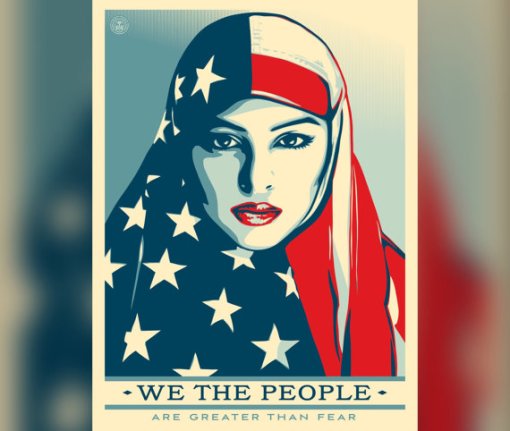
jz-headshotDuring the January 21st Women’s March in New York City, I was inspired and delighted by so many of the signs women and men had crafted to express their opposition to the current disastrous regime in the United States: “Grab America Back,” “Support Your Mom,” “Sad!,” “Miss Uterus Strikes Back.”  But one image stood out, mesmerizing me:  that of a woman proudly wearing an American flag as hijab, with a message below—“We The People Are Greater Than Fear.”  For several blocks as we made our way up Fifth Avenue, I walked beside a woman carrying that sign, and it became, for me, the most powerful symbol of the resistance we must all wage during the dark time ahead.
il_570xn-1174082361_2sxw
Poster by Shepard Fairey
images-1
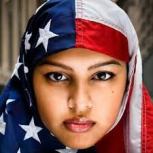
Munira Ahmed photo by Ridwan Adhami

The image, based on a photograph of Munira Ahmed by Ridwan Adhami, was created for the Women’s March by graphic artist Shepard Fairey (who also designed the iconic image of Barack Obama, “Hope”).  It offers a striking visual challenge to a long-held orthodoxy, now brought to the fore by Donald Trump and his gang:  that Western-style liberal democracy (epitomized by the United States) is incompatible with Islam.  And, perhaps even more specifically, that Islam is incompatible with feminism.

Many Western women—including feminists—are still bound by the Orientalist worldview that encumbered our liberal feminist foremothers.   Continue reading “We the People by Joyce Zonana”

Latin Identities and Muslim Malinches by Vanessa Rivera de la Fuente and Sumayah Soler

scdqgosrseo_vjrs3uaz-biiyjq

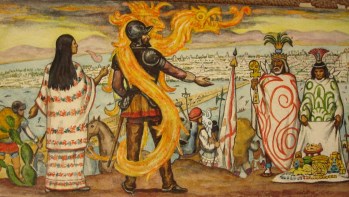
The myth says that Malinche, an Aztec princess, betrayed her people, her culture and faith, for the love and the desire to be loved and accepted by the foreign Spanish conquer, colonialist and exploiter. Her name, said with contempt, is used in Latin America to point those who sacrifice their identity and tradition in order to please foreigners over their own people and family.

Latin America has experienced in recent years an increase in the presence of Islam on the continent. As Muslims, we support and promote freedom of conscience that leads to our brothers and sisters to embrace Islam as their spiritual journey, as we did ourselves. However, we also know, because we have lived and learned from other latin muslims, that converting to Islam for Latinamericans means assuming the position of Malinche; this means to undertake a violent process of detachment and alienation of everything that identifies them as Latin, to prove their love and desire to be recognized as part of Islam. Continue reading “Latin Identities and Muslim Malinches by Vanessa Rivera de la Fuente and Sumayah Soler”

Progressive Islam: A Critical View from Latin Muslim Feminists by Vanessa Rivera de la Fuente & Eren Cervantes-Altamirano

Progressive Islam(s) in the West, particularly in Canada and the US, have been defined as movements that primarily encompass Islamic feminism(s), LGBTQI affirming movements, anti-Conservative theologies, feminist theologies, women-centered liturgies, etc. From within this umbrella, we have seen calls to embrace women-led prayers, women-only spaces, LGBTIQ inclusive and affirming mosques and practices like ijtihad, which are said to be useful in breaking away from Conservative understandings of Islam. All in all, Progressive movements often depict themselves as “reformers” within a paradigm that is usually conceived to be dominated by Orthodox theologies and attitudes mainly driven by Saudi Arabia and Iran.

However, to what degree are Progressive movements truly inclusive? Are they as “radical” as they have been made out to be? Are Progressive spaces any safer for women and trans-women? Are Progressives free of misogyny and violence? Continue reading “Progressive Islam: A Critical View from Latin Muslim Feminists by Vanessa Rivera de la Fuente & Eren Cervantes-Altamirano”

The Fringe is Our Stronghold by Oxana Poberejnaia

oxanaRecently I have come across several stories of women’s fringe spiritual movements or practices. This made me think about the role of outsiders’ or minority views in religions and society.

Patriarchy pushes women and their issues to the margins of society and religion. It seems that there women sometimes invent their own spiritual practices. These allow women to stand their own ground in religious matters, to preserve self-respect and to keep the hope of the highest spiritual attainment.

Quite often these beliefs and practices seem shocking in their bizarreness and their stubbornness not to accept orthodox norms.

Continue reading “The Fringe is Our Stronghold by Oxana Poberejnaia”