Nature: The Best Muslim and My Favorite Muse by Jameelah X. Medina

Jameelah MedinaNow that spring is upon us, it started me thinking about the beach. I love the ocean. Like me, lots of people get that back-to-the-peaceful-womb feeling when looking at the ocean. As I thought about the ocean, I realized I saw it as having a very strong feminine energy. She is like our distant relative. I mean, we are mostly water and when we cry it’s salty, when we sweat it’s salty, and we both (ocean and human) are alive, and we are both Muslims (in the sense of submission to Allah), so we are connected.

Allah says that there is nothing Allah did NOT create from water; I think this water connection is what so many of us feel when we are at the foot of the ocean. We feel closeness to Allah because we are in our element, or better said, we are in a space so close to something that shares the same chemical elements as us perhaps. The earth is one big organism within which we all play a part, though we think we are completely independent. Khalil Gibran has a quote that says something like if we love, our love neither comes from us nor belongs to us; if we are happy, our happiness is not in us, but in life itself; if we feel pain, our pain is not in our wounds, but in all of nature. I believe this. If we are still enough and just tune into that faculty beyond the most recognized, we can also feel it. Continue reading “Nature: The Best Muslim and My Favorite Muse by Jameelah X. Medina”

Enemy of (H)Islam by Vanessa Rivera de la Fuente

Vanessa Rivera de la Fuente. Misogyny in IslamSo, again, you, the most holy and enlightened man of the mosque have pointed your finger at me to declare, noisy and hysterical, that I am an “Enemy of Islam.” Then you, who preaches and recites best, have gone out there slandering me, “eating my flesh,” devotedly.

“Enemy of Islam.” Well, which Islam? Is there one unique Islam? Why is your Islam, THE Islam? There are so many ways to be Muslim, or, didn’t you know?

You seem to follow the principle “you believe like me or you believe against me,” especially when the discussion is about women. In your narrow view, I am an enemy of Islam because I’m a feminist, radical, progressive woman. I am engaged in interfaith dialogue and in political struggle against discrimination instead of “being at home serving [my] husband as a good Muslimah.” Continue reading “Enemy of (H)Islam by Vanessa Rivera de la Fuente”

The Difficult Truth: “Terrorists” are also Human by Hanadi Riyad

Hanadi Riyad cropped

This past month Jordan has witnessed a lot of grief, as well as a certain shift in politics and popular opinion regarding Da’esh and the government’s position towards it. On 3 Feb, Da’esh released a video of the immolation of the Jordanian air force pilot Muath al-Kasasbeh.

The ensuing shock, grief, and outrage have only just started to ebb. Immediately after the video release, government officials started issuing statements promising “revenge,” appealing to a largely tribal society where values of revenge and “honor” are defining traits. In a matter of a few hours, a mostly male mass hysteria took hold and demands for “revenge” dominated the streets and the local media.

Chants and slogans about the Jordanian people being “all men” could be heard and seen everywhere including on social media. The only “emotion” present was rage, the only masculine emotion. Hardly any women were present in any of the rallies on that day or after. On social media, Da’esh combatants were called “women” for trying to intimidate the Jordanian forces so as not to have to confront them as “men” would and, conversely, “monsters” and “animals.” Some statements called for the killing of Da’esh “women and children” as well.

Continue reading “The Difficult Truth: “Terrorists” are also Human by Hanadi Riyad”

Poppaea & Paul: Was This About A Female Challenge To Male Privilege? by Stuart Dean

Poppaea Sabina as portrayed on a Roman coin minted 62-65 CE.


As suggested in my first post on Poppaea it is likely she knew one or more of the women Paul refers to in Romans. Of particular interest is the woman Paul refers to as his ‘mother’ (Romans 16:13).  If Poppaea knew her she surely knew about Paul.  If that was the case, then it seems all but certain Poppaea was among those members of the imperial household to whom Paul refers at Philippians 4:22.  Corroboration of that may have been in the source(s) of an anecdote Saint John Chrysostom tells, attributing Paul’s incarceration and execution to Nero’s anger at his interaction with a woman with whom Nero was erotically involved.

Though it is difficult to place much reliance on Chrysostom’s anecdote without more knowledge about his source(s), in the aggregate the evidence for Poppaea knowing about or even meeting with Paul is relatively strong, especially when compared to the sort of evidentiary problems with which ancient historians regularly grapple.  Furthermore, it is easy to spot the issue Poppaea would have focused on (that precisely because it relates to sexuality could have led in antiquity to the sort of distortion or misunderstanding of her motivation in meeting with Paul) that may underlie Chrysostom’s anecdote: circumcision.  The problem with understanding that issue today, however, ironically relates to modern perceptions of no relevance whatsoever to the ancient evidence. Continue reading “Poppaea & Paul: Was This About A Female Challenge To Male Privilege? by Stuart Dean”

Being Scared: Fear and Authenticity by Ivy Helman

meblogMy partner is a lawyer who works with asylum seekers and other immigrants here in the Czech Republic (ČR). She’s amazing at her job and I’m constantly in awe of her passion and commitment along with her righteous anger at systematic injustices. In fact just last week, her workplace, together with a consortium of other immigration organizations in the ČR, helped organize a demonstration in the center of Prague to protest the Czech Republic’s refusal to admit Syrian children and their families into the country. She invited me to attend the event with her. I went.

It was my first time attending a public demonstration in Europe. It was moving to see many of her co-workers there and inspiring to listen to the passionate speeches against xenophobia, Islamophobia, racism, the plight of the Roma people as well as the need to come together and welcome diversity. In addition, there were signs in Czech, German and English saying “No One is Illegal,” “End Xenophobia,” “Do Syrian Children Have to Wait for their (Nicholas) Winton?” “I want to have a Syrian Friend!” and “Refugees Welcome!” I wanted to hold each one of those signs! Continue reading “Being Scared: Fear and Authenticity by Ivy Helman”

ISIS and Authority by Kecia Ali

Kecia Ali Bio pic officeLast week, Graeme Wood caused quite a stir with his article “What ISIS Really Wants.” It focused on the apocalyptic religious vision of the group and contended that ISIS was, as a scholar quoted in the article put it, “smack in the middle of the medieval tradition,” including on the things most shock and repulse observers, such as slavery.

Though Wood grants that most Muslims do not support ISIS, and acknowledges in passing the role of interpretation in formulating its doctrines, the overall impression conveyed by the article was that Muslims who deny that ISIS is a fair representation of Islam are either apologists or simply do not really know anything about Islam. Others have offered rebuttals of many of the points in the article, and Bernard Haykel, the scholar quoted, has offered a more nuanced articulation of his views. More than one commentator has pointed out that by treating ISIS as a legitimate representative of the Islamic tradition, seriously religious and dedicated to the texts “shared by all Sunni Muslims,” it fosters an unholy convergence of interests between extremist Muslims and Islamophobes. Continue reading “ISIS and Authority by Kecia Ali”

Patriotism and Religion: Speaking Complexly about Complex Issues by Carol P. Christ

carol p. christ photo michael bakasFormer Mayor of New York Rudy Giulaini recently questioned the American President’s patriotism when he asked if Obama had been “brought up the way you were brought up and I was brought up, through love of this country.” When Chris Hayes discussed the furor surrounding Guiliani’s statement on MSNBC with James Peterson of Lehigh University, I would say that they both missed the point. Their defense of the President was to insist that he is a dyed in the wool patriot. Should anyone be a dyed in the wool patriot these days? What does and should patriotism mean? These were questions not asked.

Asked to clarify his comments, Giulani opined that Obama speaks from the perspective of “socialism” and “perhaps anti-colonialism” rather than good old American patriotism. Again Hayes and Peterson dropped the ball. They were quick to agree that the American Colonialists should be considered anti-colonialist given that they rebelled against the colonial power of England. What they failed to say was that the American Colonialists were colonialists too. Though they threw England out, they had no compunction in asserting their right to take the land, the resources, and the very lives of earlier inhabitants of what became the American land.

I heard Giuliani’s statement in a different way. When Giuliani spoke of being brought up to love his country, I heard echoes of my own childhood. Like many Americans, Giuliani included, I was taught to love my country right or wrong. Indeed I was taught that my country was never wrong. From the perspective of my current understanding of the world, I now feel that the way I was brought up to love my country was itself wrong.

The American nation has been wrong on many things. First we must consider the idea our forebears held that the American land was theirs for the taking. No matter what degree of relation immigrant Americans had to the Native Americans, they all were taught that the Indians were barbarians who had no right to the land being claimed by civilized Europeans. Next we can ask why slavery was not outlawed and women were denied the vote at the time of the founding of the American nation. If we look at the truth of the matter, there are many reasons not to feel as proud of our country as “we” were taught to do.

And then of course there are the many wars—from the Pequot War to the Iraq and Afghanistan wars. How many, if any of them were just wars? And how many of them should rightly give us reason to temper any patriotism we have with the double eye that sees both the good and the bad that our nation has done?

If Chris Hayes had been interviewing me, I would not have been so quick to defend patriotism and the American nation. Rather I would have asked what patriotism means and whether anyone should defend any nation right or wrong. This would not have extricated Obama from Giuliani’s criticism, but it might have instigated deeper and more complex questioning of Giuliani’s premise.

In recent programs on MSNBC Lawrence O’Donnell opened a complex discussion of religion in general and Islam in particular, following Obama’s (now controversial) assertion that the terrorism of the Islamic State is not “the real” Islam and his statement that Christians were also guilty of atrocities during the crusades.

It was clear to me that the context of Obama’s statements is the feeling of many Americans that “Islam” is to blame for the terrorist activities of jihadists acting in its name, along with the conclusion they draw from this that “Islam” is a violent religion while “Christianity” is not. Obama was trying to make two related points: not all Muslims are violent jihadists; and Christianity is not all good and Islam is not all bad. Obama was immediately attacked for comparing Christianity and Islam for both having violent histories.

O’Donnell (unlike Hayes) resisted any knee-jerk temptation he might have had to defend Obama in any simple way from his critics. Rather O’Donnell (revealing the power of Roman Catholic theological education), began a more complex conversation about what constitutes “the real” Islam and “the real” Christianity.

Not one to mince words, O’Donnell asserted that Catholicism “was once the most murderous force on the face of the earth.” I was more interested in the statement of Asra Q. Nomani, the author of Standing Alone: An American Woman’s Struggle for the Soul of Islam, that the President was wrong to say that Islamic State is beyond the pale of Islam. Rather, she asserted, Islamic State represents, “a very serious interpretation of Islam in the world that is wreaking havoc on all of us.” Though Normani does not agree with Islamic State’s interpretation of Islam, she argues that well-meaning scholars, journalists, and politicans, along with progressive Muslims, are simply burying their heads in the sand if they refuse to recognize that the Islamic State’s understanding of Islam is rooted in Islamic texts and in Islamic history.

This discussion of what is or is not “the real “Islam” and “the real” Christianity reminds me of debates feminists were having a few decades ago about whether or not “the real” Christianity or Judaism are sexist or not. Along with Mary Daly, Rosemary Radford Ruether, Judith Plaskow, and others, I engaged in this debate for a period of time.

In the end, I came to see that the question of what constitutes “the real” Judaism or Christianity is a moot point. Whatever good or bad exists in the past of any group is subject to interpretation by actors and groups of actors in the present: they are the ones who will determine which texts and which history they will consider normative and which parts they will transform or discard. From this perspective we can see that both jihadists and progressive Muslims are engaged in interpretation of Islam in the present, and that they are struggling with each other about which interpretation of Islam will be brought into the future.

It is not easy to initiate complex discussions of complex issues, but these are the very discussions we most need to have—about patriotism and about religion. It is clear that these discussions are related. Guiliani criticized Obama’s patriotism in part because Obama dared to criticize Christianity. Many people on both sides of the discussions about religion and politics are are convinced that their country is right because their God is on their country’s side.

I commend Lawrence O’Donnell and Asra Normani for showing us that complex discussions of religion are possible in public spaces, even when the political stakes are high. I hope this discussion will continue, and that a more complex discussion of patriotism and love of country can be initiated as well. No religion and no country is all good nor is any religion or country all bad. Blind faith in religion or country, on the other hand, is never a good thing.

Carol leads the life-transforming Goddess Pilgrimage to Crete (facebook and twitter)–space available on the spring and fall 2015 tours.  Carol’s books include She Who Changes and and Rebirth of the Goddess; with Judith Plaskow, the widely-used anthologies Womanspirit Rising and Weaving the Visions; and forthcoming next year, Goddess and God in the World: Conversations in Embodied Theology. Photo of Carol by Michael Bakas.



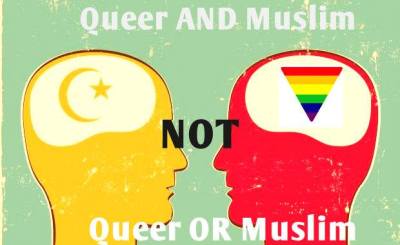
Queer in Islam and a Theology of Dissent by Vanessa Rivera de la Fuente

Vanessa Rivera de la Fuente. Queer and IslamMost of the time, when we talk about being “Queer in Islam,” we identify the term with a hermeneutics developed by or on behalf of LGTBQI Muslims in order to allow their inclusion in religious spaces and recognize their agency in matters of faith.

Is not my intention to appropriate the voice of LGTBQI Muslims in this issue, just to share my reflections about a topic that deserves a larger and deeper treatment. Continue reading “Queer in Islam and a Theology of Dissent by Vanessa Rivera de la Fuente”

Must Pluralism Be Noisy? by Esther Nelson

esther-nelson

On January 14, 2015, Duke University (North Carolina) announced that it would start broadcasting the Muslim call to prayer (adhan) from the bell tower of its campus chapel every Friday at 1:00 p.m.  This “moderately amplified” adhan would be sung both in Arabic and in English.

On January 15, 2015, Duke University reversed its decision.  The three-minute adhan would not be “moderately amplified” in the chapel’s bell tower every Friday after all, but would continue to take place in the quadrangle in front of the chapel and from there, students would proceed inside the chapel for their worship service–as they have been doing for some time.  Michael Schoenfeld, vice president for public affairs and government relations at Duke, said, “What began as something that was meant to be unifying [the call to prayer from the chapel’s bell tower] was turning into something that was the opposite.”  The university received hundreds of calls and emails–“many of which were quite vitriolic.”

Continue reading “Must Pluralism Be Noisy? by Esther Nelson”

“Dear Terrorist: Keep Up the Good Work” Said NO ONE by Valentina Khan

Valentina KhanHow much longer do I as a Muslim American female, have to deal with the “gang-buster,” terrorizing, “Satan” worshipers high-jacking my faith for the sake of trying to supposedly ‘preserve’ it? Who are these wackos and why do they seem to represent my faith in mainstream media? Where did they all come from? Which terrorist schools have they all graduated from and what truly is their agenda?

I don’t know how else to say it- I’m so disgusted and fed up by the heinous acts of the terrorist mentality coming from what appear to be Muslim males– who really knows? ISIS, for example, with their masked individuals carrying out barbaric crimes could actually be another race or religion for all I know. Regardless, as a female, I want nothing to do with them. As an American, I want to go to war with them. As a Westerner, I want to hide in my Orange County bubble and only watch Bravo TV- just to get dumb and numb to the problems- and turn a deaf ear and blind eye to world events on the news.

However, as a Muslim my heart aches. My body trembles and my mind is terribly puzzled. How can all these awful events happening around the world come from people who claim to be Muslim, as I am? Didn’t they grow up reading the Prophet’s Last Sermon, as I did? Did they miss something? Did I miss something? Why are murder, beheading, and stoning things to be prideful about on social media? Why are they playing God and taking the lives of others in the name of a higher power? Why are they casting judgment on cultures and people when really they should start healthy dialogues in order to resolve differences of ideologies from one socio-cultural context to the next? Unfortunately, lunatic terrorists with apparently nothing positive going on their lives feel that their suicidal guerrilla warfare style of killing to avenge their faith is the ticket to authentic belief and entrance into heaven! Continue reading ““Dear Terrorist: Keep Up the Good Work” Said NO ONE by Valentina Khan”