How Women Construct And Are Formed By Spirit: She Who Is Everywhere In Women’s Voices, part 2 By D’vorah Grenn, PhD

part 1 was posted yesterday

 How God is Constructed

During my doctoral research, I worked in the field with a Lemba co-
Researcher who remains a good friend, Dr. L. Rudo Mathivha of Johannesburg and the Northern Province.  When we sat with the women in the village of Hamangilasi, we asked Hanna Motenda, one of the interpreters and a retired schoolteacher, about the women’s concept of God. Throughout the interviews, the women’s conversations both in this village and elsewhere reflected God imaged as male.
I also asked whether the women imagine God as an external force, living in Nature or in Heaven, or as something living within themselves.

Hanna Motenda: Ourselves. God is in us.  They say God is everywhere. 
Even in Nature, when we look at anything, we see God.  Quoting others, she
added, “God is like the wind, He’s everywhere and wherever I am, He’s
there.”

Continue reading “How Women Construct And Are Formed By Spirit: She Who Is Everywhere In Women’s Voices, part 2 By D’vorah Grenn, PhD”

How Women Construct And Are Formed By Spirit: She Who Is Everywhere In Women’s Voices, part 1 By D’vorah Grenn, PhD

I dedicate this article, an excerpt from my dissertation to Rita Rosalind Kolb Grenn, Hanna Eule, Verena La Mar Grenn & their mothers,
Franziska Silberstein, Kaye Schuman and Regina Possony,
and to the Kolb, Berlstein, Bernstein, Mathivha, Sabath, Gruenbaum,
Silberstein, Lawler and Scott female ancestors.

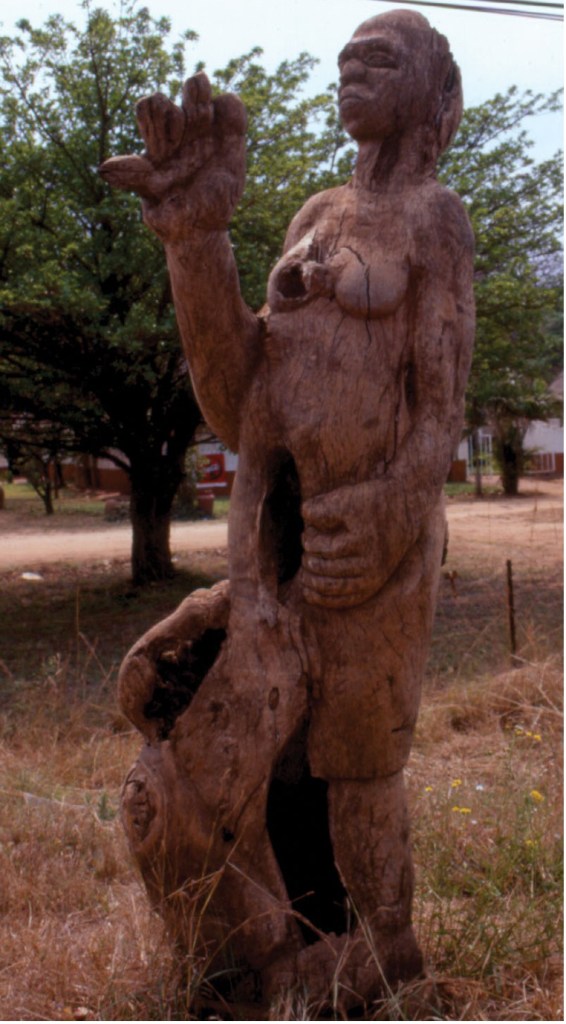
Creator woman by Raphalalani

“She is Creator of the Universe, and of Mankind…She is Creator Woman”
– Meshack Raphalalani, Venda artist describing his sculpture, 2001

The Shekhinah1 is considered an alternative way of thinking about God in the orthodox community… not the major way of thinking about God…
but not heresy at all.  It’s right there in the tradition.
– Blu Greenberg, co-founder, Jewish Orthodox Feminist Alliance, interview, 2001

He created me in his image so he’s inside, within me.
– Hanna Motenda, Lemba translator at Hamangilasi village, 2001

Continue reading “How Women Construct And Are Formed By Spirit: She Who Is Everywhere In Women’s Voices, part 1 By D’vorah Grenn, PhD”

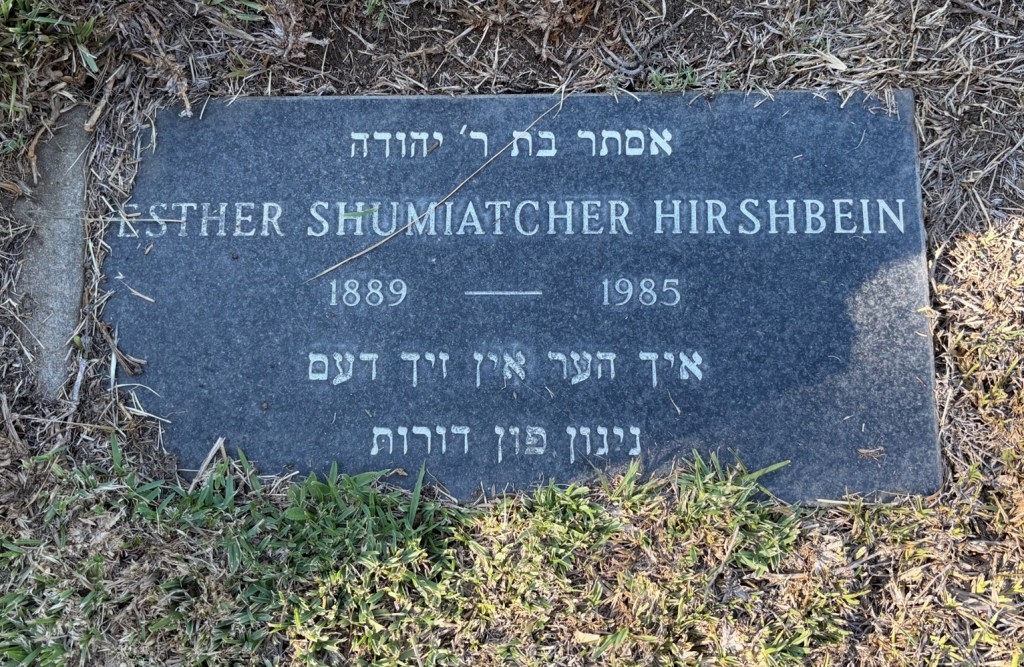
Keyvermestn by Janet Madden

in memory of Esther Shumiatcher-Hirschbein

1.
On a sunny Elul afternoon
I kneel at your grave
a sprig of rue in my pocket.
I recite a tkhine for visiting the graveyard
and imagine that you know this ritual–
stretching string to calculate
the space your body inhabits.
The unspooling wick rests gentle
on rough-cut grass, touching
the edges of mortality,
its twists separating and connecting worlds:
the dead and the living
the past and the now
mine and yours,
a woman I never met,
a writer dead these 40 years.

Continue reading “Keyvermestn by Janet Madden”

On Korach and Power-Over

This month’s blog will explore Korach, Numbers 16:1-18:32.  It was the Torah portion for June 28, 2025.  The portion contains a rebellion from a segment of the Israelite people, led by Korach, who insisted on the holiness of the entirety of the Israelites (16:3) and their fitness to give offerings in the Tent of Meeting, which challenges the establishment of the Aaronic high priesthood.  The protest is met by the divine with earth-splitting rage and divinely-sanctioned disease.  Over 15,000 Israelites are recorded to have died on account of this “blasphemous” rebellion against the divine and the divine’s proclamation of the chosen status of Aaron and his descendants (17:14).  From a feminist point of view, this incident in Korach reads as an exercise of power-over and sadly bolsters images of the divine that go counter to a liberating presence, dwelling among the entire community.

Continue reading “On Korach and Power-Over”

From the Archives: “Be the Donkey: On Parshah Balak” by Ivy Helman

Author’s note: This post was originally published on this website on July, 10, 2022. This year, Balak was read in synagogues yesterday.

The Torah portion for July 16, 2022 is Balak (Numbers 22:2 -25:9).  Some of what happens in Balak is familiar: idolatry, divinely-sanctioned death penalties, and a plague.  But, did you know that this parshah has a talking female donkey who stands up to abusive behavior?  Perhaps not.  That talking donkey and the larger story of Balak’s attempt to curse the Israelites raises questions about gender, how we treat animals, choices, free will, violence, courage, and having one’s eyes open to what is really happening around one’s self. All of which is what we will be looking at today.

Balak begins with this story about Balaam.  The Moabite king, Balak, wishes to curse the Israelites because he is worried about their size and their impact on the land and its current inhabitants (22:3-4).  He sends representatives to bring  Balaam, a powerful man whose curses and blessings have tangible effects on their recipients (22:6), to him.  Balaam meets with those representatives and tells them to wait; he has to talk to the deity in order to know what to do.  The deity commands Balaam to stay put and to not curse the Israelites, for they are blessed (22:12). Indeed, a first in quite a while. 

Continue reading “From the Archives: “Be the Donkey: On Parshah Balak” by Ivy Helman”

Miriam Is For the Girls by Zoe Carlin

The Book of Exodus is a well-known scripture, and it is one that many Jews, Christians, and even people who are non-religious are very familiar with. Growing up, our family continued to tell this story year after year during Passover. It was one of many classic Torah readings shown to us in our temple. So, one of the key figures in this story is Miriam, Moses’ older sister. Most remember that she helped her mother deliver Moses in secret at the Nile River when he was an infant due to the Pharaoh setting an order to kill every Hebrew son because of concerns of the population growing too much (Exodus 11:5-6). She also assisted in leading the Israelites across the Red Sea when Moses opened it up for the Hebrews to cross (Exodus 14:21-22). An article titled “Miriam: Midrash and Aggadah” shares a deeper analysis of the roles that Miriam upheld as a sister, a daughter, and a woman during this time. It has also informed my understanding of Miriam’s story.

Continue reading “Miriam Is For the Girls by Zoe Carlin”

From the Archives: To Nurse at the Same Breasts: Muslim-Jewish Kinship in Literature and Life by Joyce Zonana

It is tempting to read these recurring images of milk twins in Arab-Jewish literature as no more than a symbol, albeit a powerful one, of the profoundly intimate “brother- (and sister-)hood” of Jews and Muslims in the  pre-partition culture of the Middle East and North Africa.

But the image of “milk twins” is much more than a metaphor or a symbol: it represents a reality. For it seems that many Jewish and Muslim women, living side by side as they did, had in fact regularly nursed one another’s children.

Moderator’s Note: We received the devastating news yesterday that Joyce has died. (She was born on July 16, 1949, and passed on June 11, 2025 during the full moon.) She wrote bravely of her diagnosis of glioblastoma multiforma from Feb 2022. She survived far longer than her diagnosis would suggest. Joyce is a long time contributor to FAR, writing many brilliant pieces along the way. We’ve been so lucky to have been a platform for her writings. We are posting this one today in honor of her. It was originally posted on Jan. 20, 2022 and has special poignance given the situation happening now in the Muslim/Jewish world.

Joyce Zonana. headshotTobie Nathan’s panoramic novel about Jews and Muslims (and Christians) in early twentieth-century Egypt, A Land Like You, revolves around one central image: two infants—one Jewish, one Muslim; one male, one female—peacefully nursing at the breasts of a young Muslim woman, Oum Jinane (“Mother Paradise”).
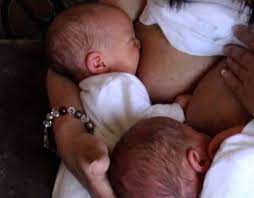
After the birth of her long-desired daughter Masreya (“The Egyptian Woman”), Jinane travels from her poor Muslim neighborhood to a poor Jewish neighborhood to help another young mother whose long-desired infant son is languishing because she has no milk.  “It’s a miracle, a great miracle,” the Jewish boy’s relatives declare:

images

Never had any neighborhood in Cairo been so excited by a baby’s nursing. Until bedtime, the child nursed three more times at the breasts of abundance. He took hold of one nipple, little Masreya  another, and the two children’s hands sometimes touched. You would have thought they were two lovers entering Paradise as they held each other’s hands.

Continue reading “From the Archives: To Nurse at the Same Breasts: Muslim-Jewish Kinship in Literature and Life by Joyce Zonana”

On Bechukotai and the Valuing of Females

Bechukotai, Leviticus 26:3-27:34, was read in synagogues around the world on May 24, 2025.  As I have mentioned in past blogs, my timing is somewhat off in my attempt to finish my (eco)feminist commentary on all 54 of the parshot.  Bechukotai discusses the consequences of both following and ignoring the commandments.  For those of you who have been following along with these commentaries, you could probably already tell me how this parshah is going to go.  If you have guessed follow the rules and live and eat well in the land or don’t and be exiled, sick, starving, and so on, then you have guessed correctly.  As this is the case, this thinking betrays a certain logic, common to the ancient world and its understanding of flourishing or lack thereof.  I have written about this numerous times on this site (see here for what is perhaps my most thorough explanation).  Yet, Bechutokai also makes some rather interesting comments about women, and that will be my focus for today’s post.

Continue reading “On Bechukotai and the Valuing of Females”

Kedoshim: On Women, Patriarchy, and Respect.

The Torah portion for today’s blog is Kedoshim (Leviticus 19:1-20:27), which was read by Jewish communities yesterday, May 10, 2025.  Among scholars, it is part of what is often referred to as the Holiness Code, Leviticus 17-26 (Note 1).  Kedoshim covers all manner of topics: from what fabric to wear to how to treat one’s neighbor and from keeping Shabbat to when one can eat the fruit of newly planted trees.  These, what I will call prescriptions, all fall under the general reasoning that one does these things so that one can be holy like the deity is holy.  In a way, the Holiness Code then is an apt name for this section.  But, what can we take from this parshah from a (eco)feminist point of view?  To answer this question, I will be using the methodology I have laid out in a previous blog and ask three questions.

Continue reading “Kedoshim: On Women, Patriarchy, and Respect.”

An Omer Calendar of Biblical Women by Jill Hammer

Jill as the prophetess Huldah

Right before Passover every year, my wife and I visit a botanical garden to look at the spring flowers: daffodils, tulips, cherry and apple blossoms, magnolia.   One year, in 2004 or so, we were on our way there when I had an idea. I grabbed a pen and started scribbling long lists of biblical women.

“What are you doing?” my wife asked.

“Making an Omer Calendar,” I said. 

Since biblical times, there is a Jewish practice of counting the forty-nine days between the holiday of Passover (the barley harvest and festival of freedom) and the holiday of Shavuot (the first fruits festival and the season of receiving Torah).  These forty-nine days were the time of the barley and wheat harvest and were a fraught time for biblical farmers.  According to the Talmud, each day of the Omer must be counted along with a blessing.  One must count consecutively each day (usually in the evening) and one loses the right to say the blessing if one misses a full day of the count.  The Omer is often understood as a time of semi-mourning because of plagues said to occur during this time, but it is also a joyful season when nature’s abundance is at the forefront.  This seven-week period embodies both fear that the harvest will be damaged and gratitude for the harvest.

Continue reading “An Omer Calendar of Biblical Women by Jill Hammer”