Tzav: Holiness, the Situation in Ukraine, and Eating Animals by Ivy Helman

The parshah for this upcoming Shabbat is Tzav (Leviticus 6:1-8:36).  It details the investiture of Aaron and his sons into the priesthood and lays out the basics of various offerings (mostly, although not exclusively, animal sacrifices) and the rules regarding the eating of them.  As I’ve mentioned before on this site, I would like to complete at least one commentary on each parshah of the Torah.  Yet, there are only so many times that one can question the establishment of the temple, condemn animal sacrifice, and denounce the absence of women.  Yet, as we approach another Torah portion this week, Tzav , this is more or less what we have.  So, what do we do?

Tzav starts, as parshot from the book of Leviticus often do, with descriptions of various laws.  Here, the laws focus on various offerings including the grain, sin, peace, thanksgiving, and burnt.  Only the male members of Aaron’s family can eat the offerings.  Consumption of the offering increases the holiness of the consumer as long as the eating of the animals falls into the guidelines outlined within the text.  

The parshah ends with an explanation of how to consecrate Aaron and his sons.  The process lasts a total of seven days.  It includes residing at the entrance to the tent for the duration, offering various animals as sacrifices, eating copious amounts of said animals, the donning of specific ritual clothing, and multiple anointings of the men and the altar (often with blood).   

Continue reading “Tzav: Holiness, the Situation in Ukraine, and Eating Animals by Ivy Helman”

The Patriarchy of Ki Tisa and a Call to Reimagine Divinity by Ivy Helman.

This week’s Torah portion is Ki Tisa, Exodus 30:11-34:35.  Its events revolve around the theme of creation, destruction, and recreation.  From a feminist perspective, it is quite clear that this cyclical process is a result of a patriarchal understanding of the divine as jealous, distant, and rage-filled.  

Ki Tisa begins soon after the Israelites have been delivered from Egyptain slavery.  This delivery creates a new people devoted to this divine liberator.  Yet, Ki Tisa starts with both that deity and their leader, Moses, nowhere to be found. So, what do the Israelites do being in such a vulnerable spot?  They create a golden calf in order to have a spiritual connection to something.  

Continue reading “The Patriarchy of Ki Tisa and a Call to Reimagine Divinity by Ivy Helman.”

To Nurse at the Same Breasts: Muslim-Jewish Kinship in Literature and Life by Joyce Zonana

It is tempting to read these recurring images of milk twins in Arab-Jewish literature as no more than a symbol, albeit a powerful one, of the profoundly intimate “brother- (and sister-)hood” of Jews and Muslims in the  pre-partition culture of the Middle East and North Africa.

But the image of “milk twins” is much more than a metaphor or a symbol: it represents a reality. For it seems that many Jewish and Muslim women, living side by side as they did, had in fact regularly nursed one another’s children.

Joyce Zonana. headshotTobie Nathan’s panoramic novel about Jews and Muslims (and Christians) in early twentieth-century Egypt, A Land Like You, revolves around one central image: two infants—one Jewish, one Muslim; one male, one female—peacefully nursing at the breasts of a young Muslim woman, Oum Jinane (“Mother Paradise”).
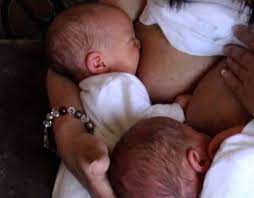
After the birth of her long-desired daughter Masreya (“The Egyptian Woman”), Jinane travels from her poor Muslim neighborhood to a poor Jewish neighborhood to help another young mother whose long-desired infant son is languishing because she has no milk.  “It’s a miracle, a great miracle,” the Jewish boy’s relatives declare:

images

Never had any neighborhood in Cairo been so excited by a baby’s nursing. Until bedtime, the child nursed three more times at the breasts of abundance. He took hold of one nipple, little Masreya  another, and the two children’s hands sometimes touched. You would have thought they were two lovers entering Paradise as they held each other’s hands.

Continue reading “To Nurse at the Same Breasts: Muslim-Jewish Kinship in Literature and Life by Joyce Zonana”

Of an Anniversary, a Methodology and the Parshah Yitro by Ivy Helman.

This month’s blog post marks my 10-year anniversary writing for feminismandreligion.com (FAR) and my 122nd post.  I would just like to take a moment to acknowledge this milestone and thank the community for both its dialogue with me and support over these years.  I look forward to writing for FAR for years to come.

Speaking of dialogue and support, this post is structured in the form of an answer to Barbara Ardinger’s question on my last post.  She asked in what language I read Torah.  I found that intriguing.  To me, what I do is obvious.  Yet, for the reader, I have never explicitly walked through the steps of how I create these Torah commentaries.  In this walk-through, the reader is getting a rather unedited look into my process.

Continue reading “Of an Anniversary, a Methodology and the Parshah Yitro by Ivy Helman.”

Vayechi’s Take on Fertility, Women and Theodicy by Ivy Helman.

This week’s Torah portion is Vayechi, or Genesis 47:28-50:26.  It is the last part of the Joseph saga (For my thoughts on two other parshot relating to Joseph, see Mikeitz and Vayigash).  While there is much that could be said, there are three aspects of the parshah which I would like to concentrate on for this post: blessings being associated with fertility; verses 50:19-20’s troubling theodicy; and its women.

Let us begin with the last topic: women.  Women are mentioned four times in Vayechi.  Jacob recalls the burial of Rachel in verse 48:7.  Joseph’s beauty is such that women often look at him (49:22). The blessing that Jacob gives to Joseph includes the blessings of both mother and father (49:25-26).  At present, I will focus my commentary on Jacob’s request for burial, the fourth mention of women in this parshah.

Continue reading “Vayechi’s Take on Fertility, Women and Theodicy by Ivy Helman.”

The Treasures of Vayishlach by Ivy Helman

The Torah portion to be read this Shabbat is Vayishlach (Genesis 32:4-36:43).  It contains the reunion between Jacob and Esau, the twice-renaming of Jacob to Israel, events relating to Dinah, the mass murder of all of the male inhabitants of Shechem, the birth of Benjamin, the death of Rachel in childbirth, the death from old-age of Isaac, and a long list of the descendants of Esau.  Like every blog, there is too much material on which to comment.  Therefore, I will focus on three examples.  Each of these examples in their own way turns expectations or aspects of the Torah on their heads.   

First, we have the way in which Jacob wholeheartedly avoids war.  This is despite the fact that, in the Torah, war is demanded, normalized, or doled out as a form of punishment.  Rarely does fear factored into the Torah’s discussions of war, yet this parshah starts with Jacob’s fears about war: his brother Esau is going to start a war with him.  To avert this war, Jacob sends, in advance of their meeting, large quantities of gifts, mainly in the form of animals.  In addition, as he approaches his brother, he prostrates himself on the ground seven times.  

Continue reading “The Treasures of Vayishlach by Ivy Helman”

Ha’azinu and Models of the Divine by Ivy Helman.

This week’s Torah parshah, as you can tell from the title, is Ha’azinu, or Deuteronomy 32:1-52.  This is Moses’ final speech to the Israelites before he ascends Mount Nebo to die.  It is traditionally associated with Yom Kippur and read somewhere very close to it (when exactly depends on the year).  The reasons for this association should become obvious as we continue.  

In the parshah, Moses describes how, even in the Promised Land, the Israelites will continue to be idolatrous, thus disobeying their deity and bringing divine wrath upon themselves.  From what I have already discussed in past blogs about the history of the Torah’s composition, clearly the exiled Israelites in Babylonian sought reasons for that exile; in traditional Isrealite fashion, they made sense of their current circumstances by reasoning whose disobedience was to blame.   

Continue reading “Ha’azinu and Models of the Divine by Ivy Helman.”

Rosh Hashanah and the Goddess – redux – by Joyce Zonana

On our table, the crimson pomegranate seeds my mother had carefully separated from the skin glistened like jewels illumined from within; a pale green jam made from the grated flesh of a gourd, scented with rosewater and studded with thin slivers of blanched almonds, shone with a numinous, interior light. Bowls of black-eyed peas simmered with cinnamon and tomatoes were arrayed beside a delicately-flavored leek omelet, breaded and fried brains, roasted beets, fresh dates, apples, and—best of all—a previously untasted new fruit of the season: usually fresh fig or persimmon or prickly pear.

Joyce Zonana

When I was growing up in my Egyptian Jewish immigrant home, each of the High Holidays was imbued with sacredness, thanks largely to my mother’s efforts to create a meaningful gathering of family and friends. Around a long table, covered with an embroidered white cloth and set with sparkling silver and delicately fluted china, she served at each season the festive meal that made manifest for us the presence of the Divine.

My father, an Orthodox Jewish man, followed the tenets of his faith, praying each morning and attending synagogue each week. But it was my mother who brought to life the seasonal festivals that also characterize Judaism. As a child, I longed to pray with my father and I envied my brother and male cousins who studied and recited the ancient Hebrew; I resented having to polish silver and set the table. But today I’m grateful for my mother’s quiet teachings.

Passover had special meaning for us because our family’s departure from Egypt seemed a reenactment of the ancient Exodus. But Rosh Hashanah, that holy day without explanatory narrative, seemed even purer in its celebration of abundance and blessing, renewal and return.  Each year, I looked forward to the new moon in Tishrei that coincided with the arrival of autumn in New York and the beginning of the school year.

Continue reading “Rosh Hashanah and the Goddess – redux – by Joyce Zonana”

Shofetim: The Divine Feminine, Magic, and the Role of Gender by Ivy Helman.

This post is dedicated to Carol P. Christ. I knew her first as my professor and then my friend for over 15 years. May her memory be a blessing.

This week’s Torah portion is Shofetim (also spelled Shoftim), or Deutoronomy 16:18-21:9.  I have written about this parshah before.   In that post from August of 2018, I reflect on how the patriarchal elements of the portion should not detract from its larger concern for justice, compassion, and peace. Yet, there is more to the parshah.  In fact, I have recently begun exploring Judaism’s connection to all things magical, and interestingly enough, this parshah fits right into my recent inquiries.   Let me share with you some of what I have learned as it relates to this parshah.  

Where Shofetim and magic meet is idolatry.  There are three instances in Shofetim where idolatry is condemned, punished by stoning to death.  All three of these prohibitions involve polytheism, either directly worshiping other deities or participating in practices associated with the worship of those deities.  What are they?

Continue reading “Shofetim: The Divine Feminine, Magic, and the Role of Gender by Ivy Helman.”

On Devarim: From a Feminist Perspective Problematic, but not Irredeemable by Ivy Helman

This week’s Torah portion is Devarim (Deuteronomy 1:1-3:22).  In it, the Isrealites are preparing to enter the Promised Land, as the last of the sinful generation have died.  Most of the parshah consists of Moses recalling the divinely sanctioned wars they undertook and the mass murder they committed in order to possess the land.   

Needless to say, this emphasis on war is difficult from a feminist perspective. Starhawk argues, in “Why We Need Women’s Actions and Feminist Voices for Peace,” that, “Patriarchy finds its ultimate expression in war.” In other words, a parshah ripe with war is ripe with patriarchy.

Yet, it is more problematic than that. The deity is understood to be a warrior as are the Israelites. Verses 1:30 reads, “The L-rd, your G-d, Who goes before you… will fight for you, just as G-d did for you in Egypt before your very eyes.” In addition, this warrior mentality requires the Israelites to fight as well. G-d hardens the hearts of Sihon which requires the Israelites to fight (1:27). Thus, war and mass murder become divinely sanctioned methods which G-d and the Israelites use to further the sacred promise of the Land.

Continue reading “On Devarim: From a Feminist Perspective Problematic, but not Irredeemable by Ivy Helman”