This post was originally published on July 6, 2011. Xochitl’s very first FAR post!
I love art. I especially love women’s art – women such as Frida Kahlo, Cathy Ashworth, Sudie Rakusin, and Alma Lopez. To me, their art is a reflection of women’s strength, creativity, and beauty. Frida Kahlo, for example, expressed so many aspects of herself and her experience through her art. In it one can glimpse her passionate love for Diego Rivera, her continuous physical pain, her search for meaning, and the unending hopefulness she maintained throughout it all. Frida Kahlo’s art, like her person, was vibrant and full of life, colorful and yet broken. She expressed the wide spectrum of her experience not in words only but in color and images, texture, paint and print. As she put it, “I paint my own reality” – her own reality is what she knew and it is what she painted.
From the evening of the 14th through the day and night of the 15th of August, thousands of pilgrims ascended the Holy Rock of Petra to honor the Panagia—She Who Is All Holy.
There is “something really beautiful”* in being among them.
Six of us set out from Molivos at 7:30 on the 14th to meet in the square of Petra to ascend to the church. Petra was already full of so many pilgrims that police had forbidden traffic in the main square and were directing cars into a nearly full parking lot in a field. When we got out of the car, the two others who came with me and I had a perfect view of the steady stream of pilgrims climbing the rock, which was already lit up in the twilight.
I am less concerned with the legitimacy or morality of public breast-feeding . . . rather I am asking what contributes to this strange binary of, on the one hand, social acceptability of near-porn-like images of breast used in advertising, i.e. Victoria Secret, while on the other hand, internal conflicts some feel when viewing a baby/child feeding at the breast?
Beyond the “war on women” initiated by the Republican party on women’s reproductive rights, the issue of women’s breast, or more specifically, the nursing breast, has been making itself know in the media. The recent Time magazine cover of Jamie Lynne Grumet breast-feeding her three-year-old son produced a flood of controversy centering on “attachment parenting,” which promotes, among other things, breast-feeding beyond infancy. Parent magazine recently profiled two military mothers breastfeeding in public while in uniform. For some, this perceived breach in social decorum is akin to urinating and defecating openly while wearing your uniform. Responding to the outcry, Air Force spokesperson Captain Rose Richeson states, “Airmen (sic) should be mindful of their dress and appearance and present a professional image at all times while in uniform.” In other words, it is suggested nursing military mothers pump and bottle-feed their babies when wearing their uniform in public spaces. And finally, Hadley Barrows of Minnesota was asked to leave the library by a security guard because her nursing in public was a form of “indecent exposure.” In this post I am less concerned with the legitimacy or morality of public nursing (although I have no issue with it), instead I am asking what contributes to this strange binary of, on the one hand, social acceptability of near-porn-like images of breast used in advertising, i.e. Victoria Secret, while on the other hand, internal conflicts some feel when viewing a baby/child feeding at the breast? Drawing from the work of Margaret Miles and her text, A Complex Delight: The Secularization of the Breast, 1350-1750, social attitudes and the public display of women’s breast can best be understood when the breast is viewed as a coded symbol that informs, through artistic representation, complex patterns of discourse.
While I celebrate the rise in status of Hildegard to official saint and soon to be Doctor of the Church, I cannot help but be suspicious of the Vatican’s motivations. One only has to take in the last two months behavior of the CDF, sanctioned by Pope Benedict, to see the real intentions of this papacy—the continued subjugation of all women to clerical authority.
The past month or so has been a very busy time for the Congregation for the Doctrine of Faith or CDF and their examination of women. First they (and this includes Pope Benedict XVI) decided American nuns are guilty of the sin of silence by not speaking out on abortion & homosexuality. Their “radical feminist” ideology of standing with the poor and disenfranchised, while good, is not good enough for the CDF. The firestorm of solidarity coming from both laity and religious surely caught the Vatican off guard. Right? Well, not quite. This past week the CDF began its investigation of the Girl Scouts for their purported association with the likes of Planned Parenthood and Oxfam. While both address the needs of the poor, it is the latter and its troubling advocacy for safe sex via condom use that initiated the inquiry. Keep in mine that in 2010 Pope Benedict retracted from his earlier position and bane on condoms, seeing instead their use as a “lesser evil” in the fight against HIV/AIDS. The CDF angst is that the message of condom use might be too much sex-talk for impressionable young women. And now the real conundrum, Pope Benedict officially declared Hildegard von Bingen a saint and will soon declare her the fourth female Doctor of the Church along with Catherine of Sienna, Theresa of Avila & Teresa of Lisieux. News articles credited the pope as feminist-friendly and minded by his endorsement of Hildegard. It is stated that Pope Benedict turned to the writings of the 12th century visionary with her sharp critique of clergy and the church during her own 12th century milieu as a contemporary diagnosis for the sins of its priest in the global sex scandal. So what is it that attracts Pope Benedict to Hildegard?
“[T]he Old European sacred images and symbols were never totally uprooted; these persistent features in human history were too deeply implanted in the psyche. They could have disappeared only with the total extermination of the female population.” Marija Gimbutas, The Language of the Goddess, 318.
August 15 is known to Greek Christians as the date of the Koimisi, “Falling Asleep” or Dormition of the Panagia, She Who Is All Holy. December 25 is a minor holiday in the Orthodox tradition, while Easter and August 15 are major festivals. The mysteries of Easter and August 15 concern the relation of life and death. In Orthodox theology, both Easter and August 15 teach that death is overcome: Jesus dies and is resurrected; Mary falls asleep and is assumed into heaven. These mysteries contain the promise that death is not the final end of human life. Yet this may not be the meaning of the rituals for many of those who participate in them.
The recent #metoo movement, along with young women entering Congress, has pointed to an important question. Why, in this 21st Century, are these achievements remarkable? Why has it taken so long for women to be recognized as capable for these positions? One possible reason is the Christian mythology around women. However, to recreate the way women are viewed, we must re-imagine the women who have been standard-bearers for two thousand years.
There are three classic prototypes of Mary Icons, their collective messages point toward a new contemporary kind of trinity. Perhaps the concept of Mary is still undeveloped, as our society has changed her message is still provocative and meaningful. It has been through contemplating her image, and painting icons of her that I have come to realize a deeper mystical message. Her popular iconography may have the keys to how we are to care for creation and one another in the world.
Mary Icon of the Panagia
Mary looks directly at the viewer, beckoning us towards poised stillness and constant prayer with palms extended outward in total surrender to what she receives. She contains the Creator of the Universe in her womb.
Mary Icons of the Theotokos
She is the feminine energy which tenderly nurtures Jesus to become a teacher, rabbi, master and lord. She is the icon which reminds us to love one another, to love life, and to love creation.
Mary Icons of the Hodegitria
Mary becomes a mystical location where we can be taught to give ourselves to God and one another. There, held by the church tradition, we like Mary are called to release to the world what we most love and cherish.
This piece was written in response to Gina Messina’s recent Feminism and Religion piece “Who is God?”
Dear Mary,
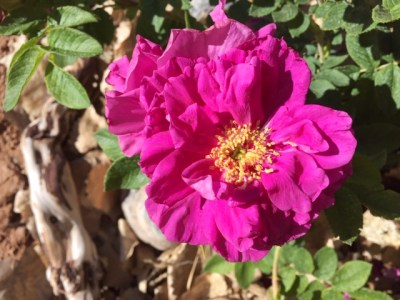
When I responded to a post on feminism and religion this morning I wrote that you were my first goddess. As a child I knew little beyond that you were the “Mother of God,” and I found your presence immensely comforting, even seeking you out in secret, entering your rose garden in a local monastery. I needed you so.
Early in adolescence I learned that your life was one of purity, sacrifice, and loss. Your purity left me bereft. How could a young Victorian girl be “good enough” to serve such a figure? I was fierce and passionate – a thorny red rose – with an empty hole in my heart.
Sadly, I released you and chose your sister the whore, the Black Goddess in disguise… but I didn’t know that then; I only knew that the “black” woman succumbed to her flesh as I did, covered herself in shame…What lies Patriarchy tells…
In October I had the opportunity to travel to the Louvre Museum on a free day I had from a conference I was attending in Leuven, Belgium. I went predisposed to consider images of the Madonna as I had been thinking about her representations in art for some time. In my own painting, I have been developing a version of the Annunciation that depicts Mary as a teenage girl reading a pregnancy test. Her fear and consternation, coupled by the shock of the event of learning of her pregnancy strikes me as a more accessible telling of the true vulnerability and risk of the unwed child Mary than classic depictions of Mary as a reclining queenly figure quietly receiving the angel’s message. I likewise had been working on a wood burnt figure of a Black Madonna as a study in both icon making and also understanding the tradition of Black Madonnas found throughout Eastern Europe.
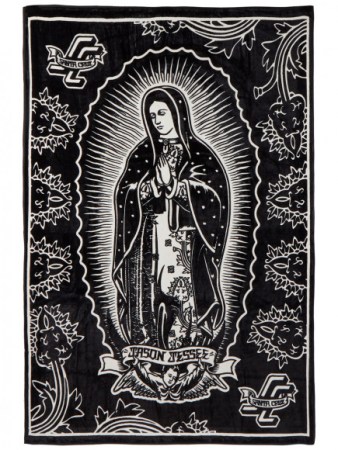
I am deeply aware that representing this figure is a culturally laden task because the Madonna speaks both to some of the deepest spiritual needs and inclinations of many faithful Christians world over, just as she is almost shorthand for division among Christian communities. Her presentation is tremendously political as it is received by fans and critics simultaneously as at once championing women (and the divine within women) and also condemning real women whose maternity and bodies can never be as morally or physically pristine as Mary’s. Mary’s skin, clothing, age, gesturing, posture, gaze, and more speak volumes about the social location of her patrons and creators as well as the manner in which the viewer is being invited to receive her.









 Feminism and Religion