Ramadan Mubarak! (Have a Blessed Ramadan)—After Covid by Jamilah Ali

It is Ramadan again for the Muslim ummah (community). May I refer you to my previous FAR article in 2020,  to reference Ramadan, because this is a bit of a sequel. I am only one example of how the positive and negative pressures of the times are impacting our psyches. I consider, how can I fast voluntarily while Palestinians are literally starving? This is a paradox I’m sure shared by many this year in the world-wide diaspora of Islam. I send prayers in addition to donations for food, of course.

For the faithful, Ramadan is a month-long celebration of the Holy Quran. Our Quran as revealed is from the Creator. We believe in the Bible and Torah as well, but they are much older than the Quran, and we acknowledge are from God but we believe corrupted by people.  This is why we call Christians and Jews “the People of the Book”. For us, the Quran is a special divine universal message which beckons every Muslims heart when recited. Instead of Christ for Christians, the Quran is our manifestation of Divinity. Muhammad and Jesus born 600 years apart, are both Messengers of Allah, but not divine.

Continue reading “Ramadan Mubarak! (Have a Blessed Ramadan)—After Covid by Jamilah Ali”

From the Archives: Earth-Spirituality in the Qur’an and Green Muslims by Elisabeth S.

This was originally posted on March 14, 2017

There is some very helpful guidance in the Qur’an for how we should and should not treat the earth. In my exploration of Qur’anic verses on the environment, I have found a great deal of Earth-love that I want to share.

The first idea is that the earth is not ours to trash and misuse recklessly or indulgently. Sura 2:284 says, “Whatever is in the heavens and in the earth belongs to God.” This sentiment is found throughout the scriptures. Individual wealth and the practice of financial profit and salary as reward has given us the illusion that, if we’ve earned the cash, we can do with it whatever we like. We can buy anything we want, show it off, hoard it, and then trash it. How often do we quell our suffering or attachments through consumerism as if there were no consequences? But we need to begin to shift to the perspective of honoring the earth as not something we are entitled to or even deserve. If we are supposed to be stewards of the earth, then fine. But it seems that selfishness and personal gain have distracted us, making us neglect our duty. The idea that the earth is a bestowed gift is embedded into the Qur’anic “golden rule”: “You who believe, give charitably from the good things you have acquired and that We have produced for you from the earth. Do not seek to give bad things that you yourself would only accept with your eyes closed” (2:267). Yes, we work the land to produce food, but not everything is within our jurisdiction.

Continue reading “From the Archives: Earth-Spirituality in the Qur’an and Green Muslims by Elisabeth S.”

The Wings of the Butterfly by Vanessa Rivera de la Fuente

0e324b7dc38871515f6637945ede9a65


Shhhhh… good women are quiet.
My mother was a beautiful woman, she never complained.

Denial is a silent violence that aims to make invisible a trauma maybe evident or not, to make it acceptable as normal and allow the victims of this trauma to be exploited from a system of oppression or people in power. Denial is that voice sugarcoated with correctness that asks us to shut up and sit down on our own pain so as to not disturb anyone. Is a silence that yells loudly, because sooner or later it will speak through the different ways we hurt ourselves and others.

It is not a mystery that women all over the world are subjected to a variety of violence and oppression. Women and girls are hijacked, raped, assaulted, murdered, their experiences mocked or banalized and their bodies thrown around like trash. People get outraged asking how this is possible? Well, this is possible because when a girl is born, she is “bestowed” the foundational denial that will allow the normalization of this violence and belittling during all her life: The denial that she is a human being. Continue reading “The Wings of the Butterfly by Vanessa Rivera de la Fuente”

Rape, Community and Healing by Vanessa Rivera de la Fuente

During my last months in Cape Town I have been facilitating a series of workshops on Rape, Gender Justice and Culture of Consent. I am blissful for the opportunity to teach and learn with a group of people with whom we have navigated in the approach of Rape and Sexual Assault in their different perspectives, from the socio-political to the intimate tenets.

This has been an exciting journey of healing and soul blooming. I have realized the critical role that Cape Town has played in pushing me towards empowerment and thriving, enhancing my taking back ownership of my body and all the experiences happening through it.

This journey started few years ago when I decided to come out of the closet as a rape survivor. I wrote about it on Feminism and Religion. This was the first step of my breakthrough. Little by little I became confident and shameless about saying: “Yes, I was raped”.

Continue reading “Rape, Community and Healing by Vanessa Rivera de la Fuente”

Shariah is not a Law by Esther Nelson

I will never forget the day Nasr Abu Zaid (1943-2010), an Islamic Studies scholar and teacher extraordinaire, told me, “Shariah is not a law.”  In spite of his assertion, many people—both Muslims and non-Muslims—are convinced that Shariah is synonymous with archaic legal rulings that are at odds with democracy and modernity.


What is Shariah, then, if not a law?  When we see or hear the word Shariah, the word “Law” almost always follows.  Shariah literally means a path—a well-trodden path such as animals use on their way to a watering hole.  Shariah, then, can be understood as something that when embraced has potential to give life and sustenance.


Muslims believe that the Qur’an was revealed to Prophet Muhammad by the angel Gabriel circa 600 C.E.  That revelation—Muslims believe it to be God’s actual speech—took place over a period of approximately twenty-one years. The Qur’an contains Shariah (path) in the form of information, narrative, and poetry.  Since Shariah is essentially a path that leads to life, the critical question centers on how Shariah can be appropriated, leading us to the water that sustains.

Continue reading “Shariah is not a Law by Esther Nelson”

Earth-Spirituality in the Qur’an and Green Muslims by Elisabeth Schilling

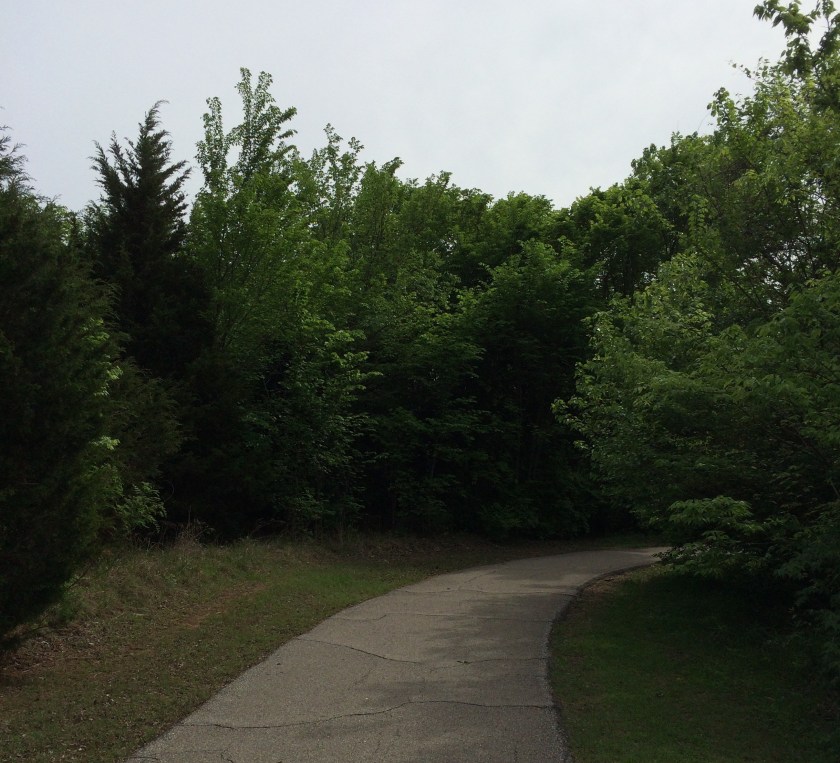
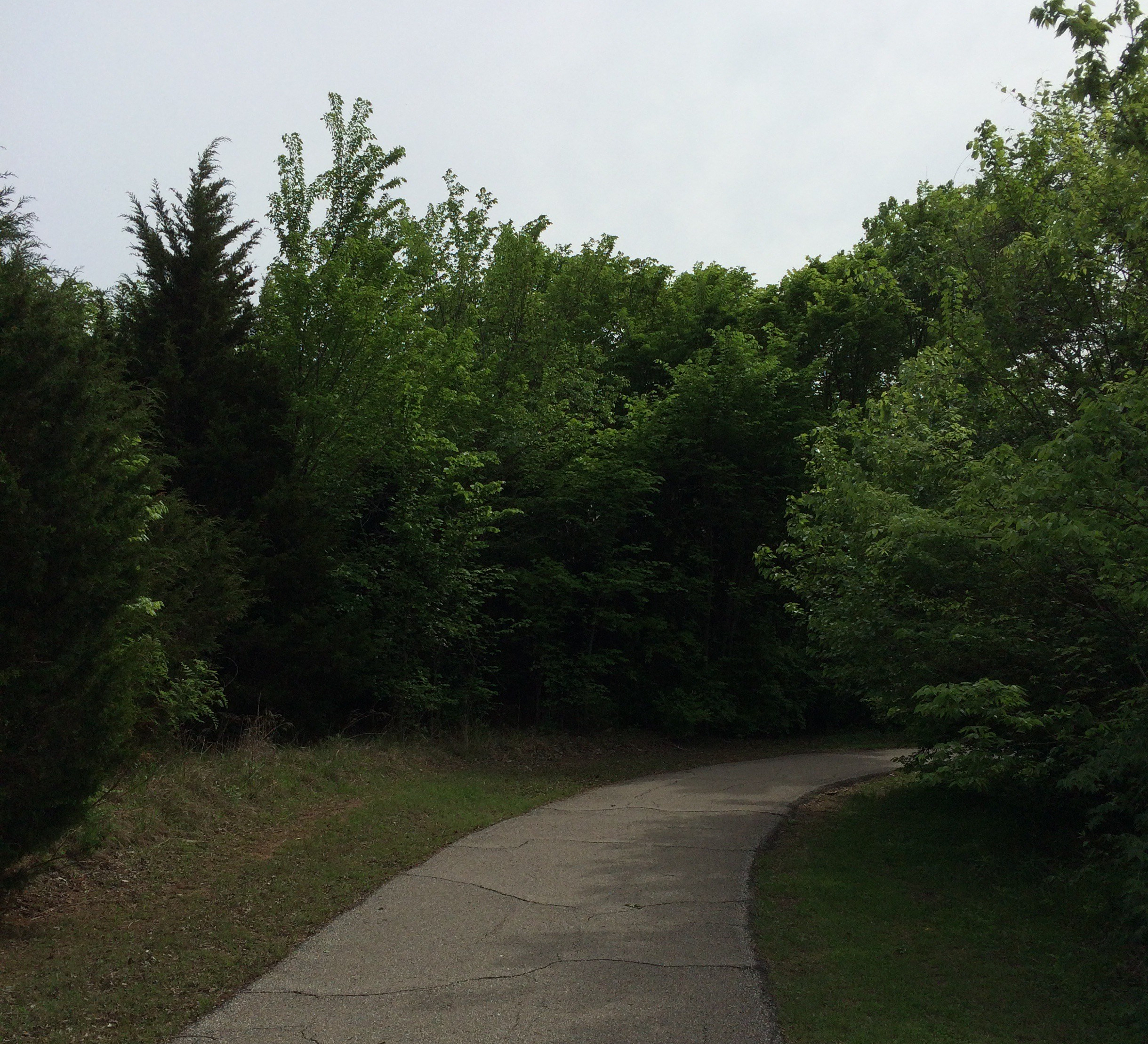
green pathThere is some very helpful guidance in the Qur’an for how we should and should not treat the earth. In my exploration of Qur’anic verses on the environment, I have found a great deal of Earth-love that I want to share.

The first idea is that the earth is not ours to trash and misuse recklessly or indulgently. Sura 2:284 says, “Whatever is in the heavens and in the earth belongs to God.” This sentiment is found throughout the scriptures. Individual wealth and the practice of financial profit and salary as reward has given us the illusion that, if we’ve earned the cash, we can do with it whatever we like. We can buy anything we want, show it off, hoard it, and then trash it. How often do we quell our suffering or attachments through consumerism as if there were no consequences? But we need to begin to shift to the perspective of honoring the earth as not something we are entitled to or even deserve. If we are supposed to be stewards of the earth, then fine. But it seems that selfishness and personal gain have distracted us, making us neglect our duty. The idea that the earth is a bestowed gift is embedded into the Qur’anic “golden rule”: “You who believe, give charitably from the good things you have acquired and that We have produced for you from the earth. Do not seek to give bad things that you yourself would only accept with your eyes closed” (2:267). Yes, we work the land to produce food, but not everything is within our jurisdiction. Continue reading “Earth-Spirituality in the Qur’an and Green Muslims by Elisabeth Schilling”

Offering My First Khutba: On Imaan & The Divine Presence by Vanessa Rivera de la Fuente

Vanessa Rivera First KhutbaFor the last 6 weeks, I’ve been living in Cape Town, South Africa. This has been a blessed opportunity to grow, to gain more knowledge, and to reach outcomes that are beneficial both for my work as an activist and for my life as individual. One of the challenges I took up, on Friday, July 24th, was to offer my first Khutba ever: the text of which I share with you:

Invocation

I thank God for this day. I praise Allah for the paths I had to walk that led me to its light and the present day. I ask the protection of the Divine that lives in the essence of everything. and I invite my female ancestors to walk with me in this journey.

On Imaan and The Divine Presence

Allah speaks about Imaan (Faith) in the Holy Qur’an in Surat number 2 verses 1 to 5, which some scholars call “The verses of faith and belief.” I like especially ayat 2 that says:

“That is the book. There is NO DOUBT in it, a guidance to those who are truly conscious.” Another translation says, “Sure, without doubt, a guidance for those who are God-fearing.”

Let’s think a moment about this:

1.- Allah tells us that the Holy Qur’an is, without doubt, surely, with complete certainty, a guide. There Is No Doubt, that we can put our faith and trust in it, and we won’t be deceived. That’s a beautiful aspect of Faith. We can trust in the promise of Allah that the Qur’an is… without doubt… a guide, a path of spiritual growth and happiness in this world and in the hereafter.

2.- A guide to whom? Allah says in the Qur’an “For those who are truly conscious and God-fearing.” Reflect on this. What kind of Imaan is that? Being “truly conscious” is being aware, and this is to be awakened, alert, attentive,and  in possession of knowledge with our senses and reasoning functioning properly. Then, this is not a blind Faith, but a conscious Faith, an Imaan over which we have direct and personal accountability. Then, the Qur’an is certainly a guide to those who are God-fearing, meaning those who are aware and accountable for their faith; for those who have come to certainty after an effort of conscious reflection, because, as God says in the Qur’an: “Truly in that there are signs for a folk who reflect” (45:13). There is no Imaan without a personal Jihad in matters of belief. Continue reading “Offering My First Khutba: On Imaan & The Divine Presence by Vanessa Rivera de la Fuente”

Reconstructions of the Past: Hafsa bint Sirin (“Introduction”) by Laury Silvers

silvers-bio-pic-frblog - Version 2This blog and those to follow will be taken from an academic talk I gave on the life of the early pious worshipper, scholar of Qur’an, Hadith, and their legal meanings, Hafsa bint Sirin (d. ca. 100/800). I used some of the material for the talk in my chapter on early pious, mystic, and Sufi women in the Cambridge Companion to Sufism, but most of what I will share with you here and in the future has never been published. Whenever I sat down to write this material up for a journal, I realized I would not be able to expand the piece in the way I wanted in keeping with a properly skeptical historical attitude. I would need to hem and haw in all those places I just want to be bold and write what I think, without concession.

I want to tell her story as I have imagined it. Granted, what I have imagined is rooted in what can be known about the historical circumstances of her life and the lives of other women in that time and place. But I want to be honest about my agenda. My feminist agenda. In telling Hafsa’s story, I want to address and produce my own counter narrative to those stories told about pious and Sufi women over the years that hold up women’s silence and seclusion as the height of women’s piety. Continue reading “Reconstructions of the Past: Hafsa bint Sirin (“Introduction”) by Laury Silvers”

Nature: The Best Muslim and My Favorite Muse by Jameelah X. Medina

Jameelah MedinaNow that spring is upon us, it started me thinking about the beach. I love the ocean. Like me, lots of people get that back-to-the-peaceful-womb feeling when looking at the ocean. As I thought about the ocean, I realized I saw it as having a very strong feminine energy. She is like our distant relative. I mean, we are mostly water and when we cry it’s salty, when we sweat it’s salty, and we both (ocean and human) are alive, and we are both Muslims (in the sense of submission to Allah), so we are connected.

Allah says that there is nothing Allah did NOT create from water; I think this water connection is what so many of us feel when we are at the foot of the ocean. We feel closeness to Allah because we are in our element, or better said, we are in a space so close to something that shares the same chemical elements as us perhaps. The earth is one big organism within which we all play a part, though we think we are completely independent. Khalil Gibran has a quote that says something like if we love, our love neither comes from us nor belongs to us; if we are happy, our happiness is not in us, but in life itself; if we feel pain, our pain is not in our wounds, but in all of nature. I believe this. If we are still enough and just tune into that faculty beyond the most recognized, we can also feel it. Continue reading “Nature: The Best Muslim and My Favorite Muse by Jameelah X. Medina”

Queer in Islam and a Theology of Dissent by Vanessa Rivera de la Fuente

Vanessa Rivera de la Fuente. Queer and IslamMost of the time, when we talk about being “Queer in Islam,” we identify the term with a hermeneutics developed by or on behalf of LGTBQI Muslims in order to allow their inclusion in religious spaces and recognize their agency in matters of faith.

Is not my intention to appropriate the voice of LGTBQI Muslims in this issue, just to share my reflections about a topic that deserves a larger and deeper treatment. Continue reading “Queer in Islam and a Theology of Dissent by Vanessa Rivera de la Fuente”