
Snow tide
recedes,
shrinking waves
expose papery
oak leaves,
thick tree roots,
pine needles,
fallen lichens,
rich humus
in the making…
Mycelial networks
curl tips and tendrils
embrace decay.
Continue reading “Starflower by Sara Wright”
Exploring the F-word in religion at the intersection of scholarship, activism, and community.

Snow tide
recedes,
shrinking waves
expose papery
oak leaves,
thick tree roots,
pine needles,
fallen lichens,
rich humus
in the making…
Mycelial networks
curl tips and tendrils
embrace decay.
Continue reading “Starflower by Sara Wright”When I first wrote this post in 2014, I said the news was getting me down. A terrorist gang in Nigeria had kidnapped, raped, and “married” two hundred schoolgirls. Kids were even then taking guns to school. What’s better as I rewrite this in March 2022? Not much. The pandemic and idiots still refusing to be vaccinated. Putin’s invasion of a former soviet satellite country. (I think Putin thinks he’s the tsar and wants to rebuilt “his” empire.) Road rage, hate crimes, kids still taking guns to school. I think we can all agree that the news is still awful. The following is what I wrote in 2014.
A couple Saturdays ago, I heard an enormous noise of cawing and shrieking and wings flapping outside my window. It went on for several minutes, so I finally set my book aside (I was trying to ignore Eyewitless News), got up, and looked out into the courtyard. Two huge, noisy crows were chasing a smaller bird. I think it might have been a scrub jay. I have no idea what the jay’s crime had been in the crows’ eyes, but they were chasing it back and forth and up and down until one of them finally speared it with its beak. The jay fell. The crows landed on the roof of the building across the courtyard and strutted back and forth for several minutes. One of them went down for a closer look at the fallen jay. Then they flew away.
Continue reading “From the Archives: A Tiny Life by Barbara Ardinger”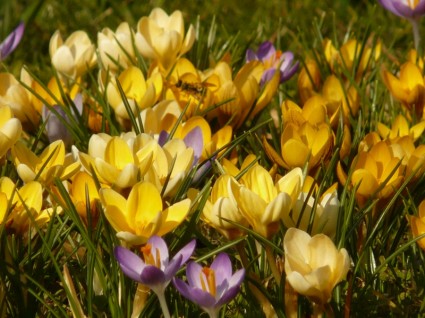
While researching Minoan Crete I learned that each autumn young girls once gathered blue violet saffron crocus to leave as an offering for the Wild Crocus Goddess as they prepared for adolescent female initiation rites. I was intrigued by the reference to autumn because I associate flowers more with spring than any other season. From other sources I discovered that in Minoan Crete young girls also gathered bright yellow crocus to celebrate the Great Goddess and the return of the growing season and that yellow was the color associated with the Great Goddess because of the golden color of the dye made from the precious saffron crocus. Later in Greece during the Lesser Mysteries, flowers, especially yellow crocus were also picked to celebrate Persephone’s return from the Underworld. I was particularly delighted by the reference to Persephone picking bright yellow crocus because my relationship with this goddess has been a somber one; I have always associated her with death. And yellow is a joyous color that I associate with early spring.
I felt a wild sense of hope as a volcanic fire erupted inside me when I first imagined Persephone picking spring flowers because of my uncomfortable relationship with this mythical figure and also because I love flowers.
Continue reading “Persephone Rises, Part 1 by Sara Wright”
The story of Sedna is yet another rendition of the Handmaid’s Tale. This one comes from the Arctic and the Inuit people. During this time when it seems as if patriarchy has a stranglehold on so many of us, I offer this Indigenous version of the story to remind feminists that tapping into mythical patterns strengthens us in ways that are impossible to articulate beyond stating that we can access that power when we align ourselves with it. As in all oral traditions there are many versions of the story but the roots of the myth are the same.
In one version of the story a young man comes to sleep with an entire family during a blizzard. By morning he is gone without having revealed his identity, but the father discovers large dog tracks in the snow and realizes his family has been deceived. The young man who slept with the family was a wild dog.
Continue reading “Sedna’s Tale by Sara Wright”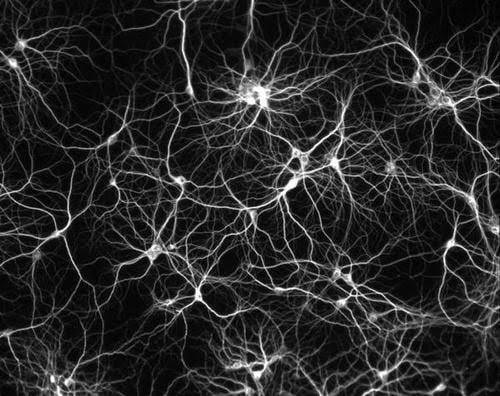
For those of us who are dedicated to feminism and to the sanctity of nature here is one more way to understand the earth as our goddess. Her mysterious veil is the source of all life. Immanence is sacred.
The last winter I spent in New Mexico I walked to the river every morning in the pre-dawn hour. No matter how much the wind would howl later on, at this time of the day nothing stirred besides the birds. Because I traveled the same path every morning circling round one wetland listening to river songs I would find myself slipping into a light trance as my feet hit the hard unforgiving ground. Every bush, cottonwood, russian olive, juniper was familiar, each was a friend. Although this wetland had been trimmed and paths mowed (parching open ground), the majority of trees, plants and grasses had been left intact and the river was nearby. During these light trance states I sensed that the ground beneath my feet was pulsing with some kind of light; that the earth was trying to communicate with me.
At that time I didn’t know that I was walking over of miles of mycelium, because I didn’t know whether these networks extended throughout the desert although I assumed they did. But I felt or sensed something. I knew from trying to garden in NM that the surface of most of the ground seemed quite barren except for the piles of decaying cottonwood bark that I used as mulch, so where was the rest of the mycelium?
Continue reading “Mycelial Madness by Sara Wright”Moderator’s note: This marvelous FAR site has been running for 10 years and has had more than 3,600 posts in that time. There are so many treasures that have been posted in this decade that they tend to get lost in the archives. We have created this column so that we can all revisit some of these gems. Today’s blogpost was originally posted October 18, 2020. You can visit the original post here to see the comments.

I have a vivid childhood memory of being sick with the stomach flu and standing in the doorway of my parents’ bedroom looking for my mother. Her care for sick children was tender and thorough. She would bring us ginger ale and toast with jelly. When she had time, she read us stories. I can remember her steering me, heavy with fever, back to a bed that she had magically smoothed and cooled. But that day my mother lay in her own bed in an old nightgown, not stirring. She had the flu, too, and could not get up to care for the rest of us. It was a shocking and sobering moment.
As I grew older, I transferred my need for comfort, reliability, and continuity from my mother to the earth, the sure turning of the seasons, beloved trees, waters, and rocks. As a young mother, I looked forward to sharing my own childhood joys with my children, among them jumping into autumn leaf piles. The first time my children leaped into a leaf pile, they came up covered with the ticks that have now made my region the epicenter of Lyme and other tick-borne diseases. Nor was I able to share with my children the joy of drinking water straight from a stream.
Continue reading “From the Archives: Child of the Earth by Elizabeth Cunningham”, elders are people who have illuminated my path, inspired me to see my own potential. To open my eyes, all my senses, even those I did not know I had. Elders show bravery and model for us how to be strong.
What is an Elder?
The word elder comes from an Old English word which also meant ancestor or chief. A lot can change in a thousand years and many of us no longer honor older people or seek out them out for advice.
In my experience, elders are people who have illuminated my path, inspired me to see my own potential. To open my eyes, all my senses, even those I did not know I had. Elders show bravery and model for us how to be strong.
My first wise woman teachings came from my family. My mother, and her mother, taught me to be myself, to love being outdoors and the importance of having a garden. Feeling the joy of flowers, cooking with fresh herbs, planting a tree to honor the dead. These are a few ancient traditions of my ancestors that have survived even in a modernized and urban setting.
Continue reading “The Blessing of the Elders by Rachel Thomas”As I rediscover my connection with the earth, my eco-consciousness inspires me to transform. As I go back to nature, I re-awaken my ancient cellular memories of living in harmony with the earth. I feel called to dance barefoot, play drums, make offerings, bathe in moonlight, harvest with my own hands. As I move forward on a path which is both new and old, it is my beloved elders who have shown me how to find my way.
What is an Elder?
The word elder comes from an Old English word which also meant ancestor or chief. A lot can change in a thousand years and many of us no longer honor older people or seek out them out for advice.
In my experience, elders are people who have illuminated my path, inspired me to see my own potential. To open my eyes, all my senses, even those I did not know I had. Elders show bravery and model for us how to be strong.
My first wise woman teachings came from my family. My mother, and her mother, taught me to be myself, to love being outdoors and the importance of having a garden. Feeling the joy of flowers, cooking with fresh herbs, planting a tree to honor the dead. These are a few ancient traditions of my ancestors that have survived even in a modernized and urban setting.
Continue reading “The Blessing of the Elders by Rachel Thomas”
Seal – ever curious – stands up in the water gazing about with her dark, soulful eyes before diving again into the enigmatic, mysterious sea. Seal initiates us into wonder by her extraordinary presence filled with playfulness, adaptability and deep emotions.
Continue reading “Seal – a Soulful Clown by Judith Shaw”
The Old Woman still lives in the Forest as she once did in fairy tales. She can present her dark side to those who are uninitiated (mirror mirror on the wall…) but she also offers gifts to those that visit her wild untrammeled places… After a week spent in a forest where a river snakes her way through thousands of acres and beavers act as transformers I wrote this poem because even with the astonishing autumn crimson, orange, and gold I was drawn repeatedly to the mirror reflections of trees, leaves, clouds and sky in the still pools. When I untangled the why I wrote this poem realizing that what caught me was the importance of having an accurate reflection from another, person, or aspect of nature in which to see the world and self as whole. Accurate reflections are intimately tied to relationships of all kinds.
Mirror Reflections
Relationship needs honest
Reflection – S/he knows a
Broken mirror won’t do.
Water is made of magic
above and below
Sky blue, slate gray,
piercing orange
flames fly through
thin air –shafts of light
slice wavy ripples
embrace the river’s flow,
Sand hill cranes
and geese soar overhead…
When I think about the burning trees I think about women because we are so closely related through myth and story as well as sharing DNA. What is happening to these trees once happened to us… I note that women who normally are not keyed into trees in general seem to be deeply moved by the burning of these ‘elders’. Is that because we feel the threat to the Tree of Life and all that entails manifesting as uncontrolled fire?
The Burning Times
I gaze out my window into the swamp maples that ‘normally’ would have caught fire by the end of September. Not crimson red but bittersweet orange. I note a brownish tinge on the edges of dying leaves. Some have let go, fluttering to the ground. I must find a way to emulate them. Yesterday in the woods I am straining to see brilliance that isn’t there except for an occasional flicker. I don’t realize until I get home that this lack of color is literally depressing a life force that I have identified with my entire life. Accepting these seasonal disruptions is so hard for me – so much harder than I ever imagined.
Continue reading “Sequoias by Sara Wright” Feminism and Religion