Pride: Honoring the Immigrants and the Helpers by Laury Silvers

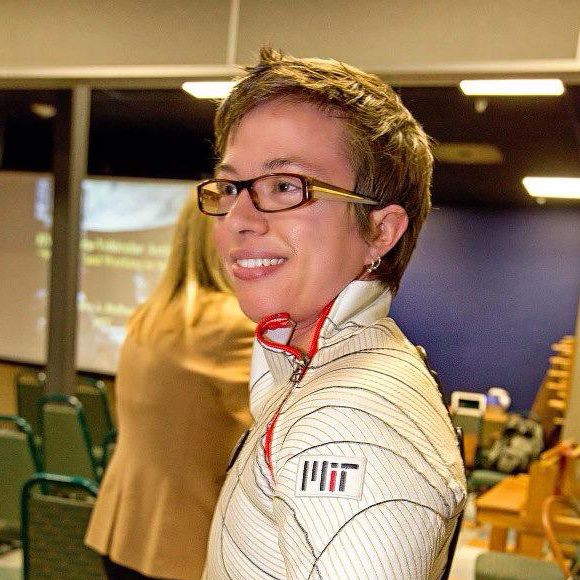
578543_102588929933471_2064577910_nIt is World Pride in Toronto this year. The city is filled with people from everywhere celebrating the gorgeous spectrum of humanity and the right of all human beings to live with dignity.  In honor of World Pride and happy coincidence of the beginning of Ramadan, I would like to share one of the earliest sermons I gave at Toronto Unity Mosque reflecting on the struggles of our LGBTQ refugee congregants. I share this to honor those refugees, as well as our other congregants whose journey is no less significant, and also to honor my friends and co-founders of the Toronto Unity Mosque, El-Farouk Khaki and Troy Jackson, as well as Adnan Hussein who was with us from the early days.

Continue reading “Pride: Honoring the Immigrants and the Helpers by Laury Silvers”

Monkey See…by amina wadud

amina 2014 - cropped

When I was a little girl the Washington D.C. Zoo did not have that extra security fence between gawking spectators and the cages of certain animals.  My mother used to climb up onto the cage and hand peanuts to the monkeys.  I don’t know, maybe that was the beginning of my lifelong love of monkeys.  When I moved to Malaysia as Assistant Professor at the International Islamic University I was driving down a main roadway and along the side of the road I saw a monkey scurrying along much like we see squirrels in the US.  A new phase in my life began.  How many ways to repeat my mother’s antics?  Could I possibly top that? This introduction might seem silly but I just have to share one of the most sublime experiences of my life and for that I need to give you a feeling for just how much I love monkeys.

When monkeys are in the wild they are not always amenable to such antics as we humans can do or imagine.  I think that’s probably part of survival, don’t you?  Anyway, in Malaysia, even though they were as plentiful as squirrels and just as accessible, like squirrels they are not at our beck and call either.  We were pretty much limited to the evenings at a local park when they would come down from the trees and let us feed them. Like children do with Canadian geese at Merritt Lake Park here in Oakland, or any where they roam.  Once we climbed up more than 1000 stair-steps to the top of the Batu Caves a Hindu temple and tourist spot, to see the sights and feed the monkeys.  That time one wily monkey snatched the whole bag of food from my daughter’s hand while she wasn’t looking and that was the end of it.  No way to go back to the car and run back with more!  Continue reading “Monkey See…by amina wadud”

Transforming the Church from Within or Without? by Xochitl Alvizo

“Power belongs to those who stay to write the report!” stated Jeanne Audrey Powers during her presentation at the Religion and the Feminist Movement conference at Harvard Divinity School back in 2002. Though the statement sounds a little funny, it does raise a good question about how one participates in creating change. Where does the power for change and transformation lie? Is it in the writing of reports; is it from within institutions; from without? This question seems to be of particular relevance to those of us who have feminist visions and commitments and also remain involved in Christian churches – churches of a tradition with deeply embedded patriarchal habits and practices.

Recently, this concern was raised in a class for which I am a TA. We were talking about the fact that some feminist theologians develop feminist systematic theologies; by definition a cohesive theological system done from a feminist perspective. In part, the motivation is to reclaim the systematic way of doing theology and have it stand alongside other widely recognized theologies – but do so in a feminist way. Additionally, the traditional systematic format gives it validity and may serve to temper the prevailing habit of teaching feminist theologies as so-called ‘contextual’ theologies (as if other theologies are not also contextual, but that’s a topic for another post). A critique of this development, of course, is that by writing systematic theologies feminists are simply reinforcing patriarchal forms and patterns of academentia instead of expanding and creating new ones. Continue reading “Transforming the Church from Within or Without? by Xochitl Alvizo”

When Networking Feels Like My Soul is Dying by Melody Stanford

Melody

A few months ago I sat down to eat with Dr. Kwok Pui Lan. We were meeting because I had voiced some personal struggles during our class, and she offered to have a meal with me. 

I was nervous, mesmerized by her accessibility – by her – for all the many things she has accomplished.

Over plates of chicken and rice, we sat, chewing. Professor and student. She smiled, and waited for me to start speaking. I told her in spurts that I was struggling through my semester at seminary and didn’t know what gave me hope anymore. I didn’t know why I was doing this. I asked what gave her hope.

“Well,” she said, “thirty years ago, there was no such thing as Asian feminist theology. My friends and I got together, and we started it.” She said, between bites of chicken. “You just started it?” “Yes,” she replied. She and her friends sat around, over glasses of wine, and talked.

And those nights of friendship became a global conversation.

Continue reading “When Networking Feels Like My Soul is Dying by Melody Stanford”

The Great Commandment for Women: Love and Care for Yourself as You Love and Care for Others by Carol P. Christ

carol-christA rabbi known as Jesus of Nazareth taught that you should  “love God with all your heart and your neighbor as yourself.”  Charles Hartshorne, philosopher of relationship and a twentieth century advocate of the “two great commandments,” added that it should be understood that this means that God wants you to love yourself too.

I quote Hartshorne’s midrash on the great teaching often because, sadly, too many women—and some men too–have been taught to love their neighbors at the expense of themselves, to care for others, but not to care as much for themselves.  Continue reading “The Great Commandment for Women: Love and Care for Yourself as You Love and Care for Others by Carol P. Christ”

Water, Activism, and Thirsting for Change by Xochitl Alvizo

XA yellowMike Wilson’s persistent replacement of water sources in the desert for those who may be dying of thirst is part of his affirmation that we are all inextricably connected…the affirmation that our individual well-being cannot be separated from our collective well-being.

I carry two water bottles with me at all times, one for water and one for change – quarters, nickels, dimes, and pennies, as well as the occasional dollar bill. I carry the first bottle because, here in the U.S., I have the luxury of accessing potable drinking water, from which I am able to refill my reusable water bottle, almost everywhere I go. I don’t go anywhere without it. Even at a friend’s house or out to eat at a restaurant, when offered a glass of drinking water I simply pull out my water bottle and if needed refill it from the tap. No need to wash an extra cup. I especially find it necessary to have my water bottle with me when I am at conferences or business meetings where the default is to provide people with brand new single-use disposable water bottles that more often than not end up in the trash can instead of the recycling bin – which is often not even available. I carry my water bottle with me at all times.

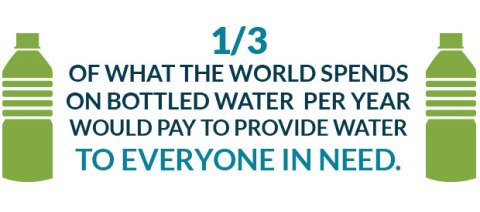
Sadly (and, criminally, really), people in the U.S., 90% of whom have access to perfectly good drinking water from their tap, are the top consumers of store bought bottled water – and unnecessarily so. The great irony is that 40% of bottled water comes directly from public water supplies – from the city’s public works for which tax-payers are already paying. Meanwhile, in many parts of the world people are literally dying of thirst and access to fresh drinking water continues to be a growing crisis. Single-use bottled water makes me angry, for unless water is being bottled in order to be transported to people in places that have no access to it, buying bottled water is unnecessary, indulgent, and willfully uninformed.blue planet, water crisis, Mike Wilson Continue reading “Water, Activism, and Thirsting for Change by Xochitl Alvizo”

An Ethics of Anger by Ivy Helman

me bio-suitSometimes I feel angry.  I would say that more often I’m upset, disappointed, annoyed or just plain frustrated.  These are easier emotions for me to handle because I tend to shy away from confrontation and conflict.  Of course, when they come up I can deal with them but I’d rather put time and energy into fruitful communication before difficult conflicts erupt.  Nevertheless, this doesn’t always work and other people handle situations and communication differently than I do.  So how does one approach anger?  The anger inside one’s self?  Another’s  anger?  What about when two individuals are angry with each other?  I would like to spend a little bit of time treating each one of these scenarios separately and then conclude with a few general remarks about the importance of empathic feelings of anger over the situations of others.

First of all, everyone handles anger differently.  I’m not sure that there is only one correct way to approach it.  Personally, I use anger as a reflective tool.  Why am I angry?  What happened or didn’t happen to provoke my anger?  Is my anger an appropriate response to the situation in which I find myself?  Are there some concrete actions I can do to right the situation?  These questions allow space for me to not only explore my feelings and ground myself, but more importantly they give me some space between what made me angry and whatever action or inaction I take toward that feeling of anger. Continue reading “An Ethics of Anger by Ivy Helman”

Forgiveness (is a two-way street) by amina wadud

Amina Wadud 2 I am Muslim, by choice, practice and vocation

I don’t know why this came to me as the discussion I want to have in blog form today, but here you go–

Imam al-Ghazzali (d. 1111) said that Allah (God) only stops forgiving when the believer stops asking for forgiveness.  This is the crux of the Islamic view of divine forgiveness.  Start with the fact that we have NO FALL story, because despite mis-conduct in the Garden, Adam and Eve ASKED for and were granted forgiveness.  Thus, they leave without the mark of some eternal “original sin.”  They live as we all do, here on earth, not as some punishment but because that is where they were intended to live in the first place.  The creation story in Islam describes human creation as per a primordial conversation between the Creator and the unseen creatures known as angels, when God says, “Indeed, I will create ON THE EARTH a khalifah (moral agent, vice-regent of God).”

Thus, the relationship between divine forgiveness and human sin or error is fixed in a dialectic where sin and error might be part and parcel of the human being but likewise forgiveness is part and parcel of the Divine Creator.  In fact, the language used is telling.  Taubah, which is also translated as forgiveness, means “returning to the original place/station.”  Our original place is at one with the Creator, and we are in that station in harmony with all of creation ~ a sort of cosmic bliss.  When we err, we fall away from our true nature and the nature of the entire universe so must return to realign ourselves with this cosmic harmony… and everything will be alright. Continue reading “Forgiveness (is a two-way street) by amina wadud”

Be-pistemology by Marcia Mount Shoop

Marcia headshotEpistemology—the study or theory of the nature and the ground of knowledge, particularly with respect to the limits and validity of knowledges and the sources of knowledge.

Beingthe qualities and characteristics that constitute conscious existence; a living thing. 

I look outside the open window of my temporary apartment and read and re-read the sign that beckons drivers to notice this unspectacular place.   “Welcome Home” it says in black Times New Roman font on a plain white background.  As if saying it so simply, makes it true.

It doesn’t feel much like home to me right now.  And thankfully it doesn’t really need to.  Soon I will move into a new house.  Then I will take the next step in working to make a home in this new place where my family and I have moved.  For my husband, kids, and me, the knowledge that the apartment is temporary helps us deal with the strangeness of it.  We know it’s not for long.  And knowing that helps us behave in certain ways and cultivate particular expectations.   This mode of operations allows us to bide our time.  We have done just enough settling in to feel ok here—unpacked a suitcase, stocked the refrigerator.  But we won’t hang pictures; we won’t be too intentional about meeting the neighbors.  Being cordial is enough.  After all, this isn’t really home.  My nine-year-old daughter has actually made a rule that no one is allowed to call this apartment “home.” Continue reading “Be-pistemology by Marcia Mount Shoop”

Adventures in Churchgoing by Elise M. Edwards

Elise EdwardsI am often greeted by warm smiles and handshakes–and sometimes even hugs–from churchgoers around me.  But I wonder if the friendly people would be so welcoming if they knew that I identify as feminist.

It’s hard being a feminist and visiting a new church.  I’ve recently moved to Texas from California and I’m looking for a church to attend.  There are many things I love about church: corporate worship, talks with people of faith, gatherings where friendships are built, and opportunities to serve and to learn. I also love to sing, and my not-ready-for-primetime voice would love to join a choir with and contribute to other people’s worship experience.

In my past, I’ve been a member (or regular attender) of churches where I felt welcomed and affirmed. Yet, I always feel defensive when I seek out new places to worship.  I question whether a church will be affirming to women and girls as whole selves – as embodied, thinking, feeling beings.  I mentally prepare myself to hear male imagery and language for God and I pray themes of male headship vs. female servanthood are not expressed.  I feel like an investigator seeking out clues to determine our compatibility.  It’s no wonder that I’ve recently heard several people compare visiting churches to dating.

Continue reading “Adventures in Churchgoing by Elise M. Edwards”