
How do you feel about me now?
I was talking to an old friend the other day, and when I asked how he was, he said, “I’m getting by.” “Getting by? Not tearing it up, not taking ‘em down, and taking names?” I joked. “No,” he replied too dryly, “not at my age.”
“Well, how old are you now?” I inquired playfully. “Eighty-three,” he said. “Oh,” I paused. “And, I tell you, Nat,” he continued, “I don’t know about these last twenty years. I just don’t know what happened to me. Never imagined my life would turn out like this…” he spoke, trailing off.
His talk prompted me to wonder about the girl I once was, the woman I used to be, the mother I had imagined in myself at the outset, the scholar I prepared, the indefatigable friend I was to my peers as a teenager, the filial duty I felt in my youth, the honor I ascribed to my vocation as an educator, the family I tried to create. I have changed too, I realized. These last twenty years have been markedly transformational for me as well. As I considered, I saw in all of the things I tried to do how my spirit and my faith walked alongside my life unfolding as companion and guide and interlocutor.
At each step along the way, my faith both informed and framed the meaning of my choices and my disposition toward the outcomes of my efforts. For a long time, there was a harmony and an alignment between my meaning, my disposition, and my experience of living purposefully. But then, sure as rain, the wheel turned, and I began to lose clarity on that alignment. The idealism I had brought to each of my roles and endeavors was tested and tried as a matter of course. But, in some instances, the trial was egregious.
I concluded that some disappointments run so deep they change who we are. Some wounds are structural enough that they scar the tissue permanently and alter the curvature of our spines. Some blows are so devastating that our speech transforms and our thinking must be rewired to survive. Whether they are inflicted by the self or by others, whether by accident or intent or illness, injury has a common thread – it calls the Spirit to awaken and challenges it with the question: “How do you feel about me now?” Continue reading “How do you feel about me now? by Natalie Weaver”


 This post explores issues I present in an essay which will be published in the Journal of Theology and Sexuality. In that piece, I consider the term “identity.” I claim that identity and the categories it delineates often present dilemmas when it comes to gender, sex, and sexuality. This is especially the case when considering biological and social data related to sexual fluidity in women. While in the paper I argue that “identity” serves in many ways to stultify, I recognize that we can also interpret the eschewing of identity as something reserved for the privileged – who can afford to discard identity. Marginalized groups, on the other hand, are often at the mercy of identity – it is hoisted as a marker, one that cannot be displaced or removed.
 Over the past few months, a precious person has come closer into my family’s life in such a way that their presence in my home, among my loved ones, has come to feel natural and easy. This is someone I love, someone who adores my children and appreciates my partner of 18 years and whose sweet spirit and vibrant laughter have added joy and mirth to our family home.
 My partner and I are getting married in a little over a month. She, a lawyer, and I, a professor, live in the Czech Republic. Technically, we aren’t getting married because the Czech Republic doesn’t have marriage equality. Our relationship will not be recognized in the U.S. For that, we need to be married in a state or nation that has marriage equality. Germany might soon. Other options would be a number of EU countries or the United States, but that doesn’t affect our status in the Czech Republic. Finally, our marriage will also not be recognized by some in Jewish circles as well since the
  Recently when I was feeling low and a little devoid of hope, a friend of mine paid me a fabulous compliment: “Things will get better. You’re a very strong person.” I know it was a real compliment and not an underhanded cutting remark. You may be surprised as to why I am referring at all to the latter. After all, it’s straight forward – having strength and fortitude are admirable qualities and how could one possibly even think otherwise. But you may be equally surprised to know that there are very special circumstances under which the word “strong” gets to acquire extended meanings of: “devoid of feelings,” “someone who needs zero support,” “a social insult.”
 I have recently watched one of these real life entertainment documentaries. This one was on plastic surgery. A woman went under the knife to enlarge her breasts. The female presenter, wearing sterile white, peeped into the operation theatre and, facing the camera, said excitedly: “This operation might be life-changing!”
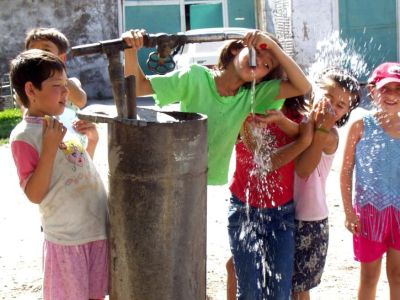 I thought: “Yes, precisely.”
  ke me, today (and most days lately) it is difficult to be positive in a world that seems so full of hate. In fact, I struggled with a topic to write about because, in all honesty, it is hard to see the greener grass from where I sit – with all of the hatred spilling out in neighborhoods, churches, schools, and college campuses – even between family and friends. As I scrolled through Facebook, I came across a video and was struck by its message – we must be relentless in our kindness otherwise evil will win.
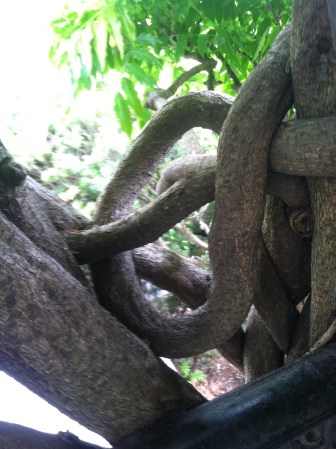 Isaac Luria, a Jewish mystic in the city of Sfat, told this tale of creation in the seventeenth century. It caught the Jewish imagination and has been wildly popular as a Jewish creation myth ever since. It captures our longing for wholeness and our experience of brokenness. It also offers a parallel with the Big Bang (a hot seed of light that expands into the universe as we know it) that many find quite compelling. I have loved this story for a long time. To me, it is reminiscent of the story of birth: an empty space that becomes full, then leaks out into the world as a new being. Yet as a feminist who is also committed to sustainability, as more news of our planet’s scorching rolls in, I find this myth is beginning to crack.
 Feminism and Religion