My Problem with the “Proverbs 31 Woman” by Elise M. Edwards

elise-edwardsIn my home, in my journals and notebooks, and in my office, I display proverbs and quotes of all kinds around me to inspire me to live meaningfully. Proverbs and fables from around the world are stacked on my bookshelves and bedside tables. I love reading what is called “wisdom literature” in the Christian Scriptures. But when I get to those final lines of the Book of Proverbs in the Bible, Proverbs 31 sets me on edge.

Proverbs 31 is a poem that begins with sayings of King Lemuel described as “an inspired utterance his mother taught him.” Lemuel’s mother instructs him to not spend his strength on women, to refrain from drinking and to defend the rights of the poor and needy. Verses 10-31, the ones I’ve heard most often read in church settings, follow that advice. They are an acrostic poem of verses that begin with the successive letters of the Hebrew alphabet to describe a noble wife. Instead of reciting the entire A-Z list (A is for adoring, B is for busy, C is for caring, D is for dutiful…), Christians will frequently read aloud only the verses selected below.

Epilogue: The Wife of Noble Character

10 A wife of noble character who can find?
She is worth far more than rubies.
11 Her husband has full confidence in her
and lacks nothing of value.
12 She brings him good, not harm,
all the days of her life.

25 She is clothed with strength and dignity;
she can laugh at the days to come.
26 She speaks with wisdom,
and faithful instruction is on her tongue.
27 She watches over the affairs of her household
and does not eat the bread of idleness.
28 Her children arise and call her blessed;
her husband also, and he praises her:
29 “Many women do noble things,
but you surpass them all.”
30 Charm is deceptive, and beauty is fleeting;
but a woman who fears the Lord is to be praised.
31 Honor her for all that her hands have done,
and let her works bring her praise at the city gate.

I’ll admit it–the woman described here does sound honorable and praiseworthy.   My problem with this poem has more to do with the way I’ve heard it used than its content. In all but one setting, I’ve heard these verses proclaimed as a model for the ideal woman or as a guide to virtuous living for young women.

My first concern about that is a common feminist criticism: Not all women aspire to be wives and mothers. Some of the poem’s statements could apply to all women, like verse 21: “She opens her arms to the poor and extends her hands to the needy.” But others are specific to marital domestic life, like verse 28 (above) and verse 15: “She gets up while it is still night; she provides food for her family.” Women without husbands and children cannot meet all Proverbs 31’s standards. And while family is of primary importance to many women, it is not the only area of a woman’s life that can provide her value and meaning.

I am also concerned that defining Proverbs 31 as a standard of womanhood communicates the idea that it is about women only. While there are references to tasks that have been traditionally gendered (women cook and sew, men take leadership roles outside the home), many of the qualities extolled here are commendable for adults of all genders. Strength, dignity, wisdom, and care are not gender-specific virtues. So why haven’t I heard this proverb set as an example for men, too?

My third concern about making this a guide to womanhood is that it seems to reinforce a standard of perfection. The Proverbs 31 woman is certainly industrious—no one can call her idle! But she also sounds exhausted. By my count, this woman does 23 things surpassingly, including buying fields, planting vineyards, making clothes and selling them. I’m concerned that when emphasizing the Proverbs 31 woman tells Christian women that they are not good, are not lovable, or are not enough until they meet this standard. For me, the message of the Christian gospel is about God’s radical, all-encompassing love for humanity in the face of our imperfection. While I do know some women with a healthy self-image, many are painfully aware that they do not meet some standard set for them. They could stand to be told more often that they are loved simply because they exist, not for what they do.

When I heard Proverbs 31 read at my Aunt Ruby’s funeral , I began to see something more meaningful in these words than an impossible standard for women to attain. The preacher quoted “She is worth far more than rubies” noting my beloved aunt’s name and her character. However, the message he preached that day wasn’t to set a standard of a good wife. It was to honor a woman who had lived a noble life. She was strong, dignified and wise. Her family knew she was blessed and that they were blessed by having her in their lives. She worshiped God and communicated her love of the Lord to successive generations.

When I heard Proverbs 31 spoken about my aunt, I began to find resolution to my concerns. In that setting, the poem was an affirmation of a life lived well, not an exhortation to perfection. Honoring someone is primarily about demonstrating love or respect to that person, not a list of qualities or accomplishments. Certainly, the person we admire may have qualities we seek to adopt to our own lives, but following their model involves more creativity and agency than reducing a poem like Proverbs 31 into a list of standards allows. Integrating those qualities into our own lives requires adapting their traits to our own circumstances and even rejecting some of our model’s qualities that don’t fit the unique vision of our lives that we (or God) have. While I admire the Proverbs 31 woman’s work ethic, I strive for a life with regular periods of rest and renewal.

Elise M. Edwards, PhD is a Lecturer in Christian Ethics at Baylor University and a graduate of Claremont Graduate University. She is also a registered architect in the State of Florida. Her interdisciplinary work examines issues of civic engagement and how beliefs and commitments are expressed publicly. As a black feminist, she primarily focuses on cultural expressions by, for, and about women and marginalized communities. Follow her on twitter, google+ or academia.edu.

So You’re Going to the AAR/SBL Annual Meeting by Kecia Ali

Kecia Ali Bio pic officeTen thousand people descend on San Diego this weekend for the American Academy of Religion and Society of Biblical Literature joint Annual Meeting. We will present papers, interview and be interviewed, shop for books, and network busily. Many will feel overwhelmed, lost, and/or hungry – convention center food somehow always manages to be lousy and expensive.
I have attended nearly every AAR Annual Meeting since 1999. I have presented papers, spoken on panels, responded to sessions, led tables at pre-conference workshops, and presided at business meetings. I have served on program unit steering committees and chaired a Section. I have gone to editorial board breakfasts and AAR committee meetings.  I have had coffee with editors with whom I’ve gone on to publish books. I have served as a mentor at the Women’s Mentoring Lunch. Though I never used the Employment Center as a job candidate, I have put in cubicle time as part of two search committees.

In other words, I know something about the Annual Meeting. Continue reading “So You’re Going to the AAR/SBL Annual Meeting by Kecia Ali”

Feminist Bookstores and the Disappearance of Sacred Space by Marie Cartier

MarieCartierforKCETa-thumb-300x448-72405In my book Baby, You Are my Religion: Women, Gay Bars, and Theology Before Stonewall I talked about the importance of the gay women’s bar (and gay men’s bar) as sacred space for pre-Stonewall homosexuals—how the community space of the gay bar was the only public space for pre-Stonewall homosexuals and how it galvanized and concretized a community that had no other way of connecting. It was “home.”

I was so fortunate to do two readings and signings for People Called Women, the feminist bookstore from Toledo, Ohio — and Ohio’s only feminist bookstore — when they brought their “traveling bookstore” which goes to feminist events (they also have their mortar and brick store in Ohio J which I was thrilled to visit) to Michigan Womyn’s Music Festival last week. I was thrilled that we were able to sell out of all the copies of my book that People Called Women brought “to the land” (Michfest). I was thrilled that so many women showed up to our event, told stories about early bar life, cried, shared hugs and created community — and bought books. It felt radical and “old school” feminist. It felt like something I have missed – that connection with a feminist bookstore–for Los Angeles lost our women’s bookstore in 1999 —15 years ago.

people called women- front of store
Marie Cartier w/ Gina Mercurio, owner of People Called Women, Photo by: Megan Morris

For many of us who came of age post-Stonewall in the mid 70s, 80s and late 90s, the gay women’s bookstores—or rather feminist bookstores — were these sacred “home” spaces. They were our “alternate church,” as I so label the pre-Stonewall bars.

I “came out” as a lesbian and as a feminist — in 1979. One of the first places I visited was New Words Bookstore in Cambridge, MA. New Words really did feel like that—“new words,” like parting the curtain onto a brand new world where I had access to language that finally made sense—a new way of communicating—that is what feminism felt like — like being able to talk and be heard and understood for the very first time. Continue reading “Feminist Bookstores and the Disappearance of Sacred Space by Marie Cartier”

Ask me No Questions by amina wadud

amina 2014 - cropped

In some alternate universe I would have complete control of what becomes part of discourse about me and about my work.  In THIS universe, I just try to set some minimal standards even when it might sometimes not seem generous to the persons who send requests to interview me.  Must be some alignment of the stars that I’ve been inundated with requests of late, so I will share some of the “types” of request to ask you–my community at Feminism and Religion blog-sphere–what you make of these, or how better to respond? I seriously contend that all people deserve dignity even when this might clash with the dignity of another human being at times.

First, there are the curiosity seekers from the world of fast pace media sensationalism, perhaps in order to keep up with the latest, hippest media hype they rush in with their requests.  While they often include the deadline they are up against, they simultaneously ignore that I might be up against my own deadlines, or just LIVING my life.  I’m clear from way back…the kind of work I do is not well suited for the 30 second sound bites, one second for each of the 30+ years I’ve spent to develop coherent reconstruction of Islamic thought and practice, away from the dominant patriarchal paradigm developed during its classical period and maintained until today.  By the time I explain even that previous sentence my 30 seconds are up!

Next would be sincere but slightly naive students of modern Islamic thought, Islamic reform or Islamic feminism. At one end they define the parameters of their research problem or their term paper (also on deadline) and then they ask me for references, despite particular interests that may be slightly outside my area of expertise.  I usually think and sometimes reply: I am not a reference librarian.  At the other end are graduate students who have more detailed inquiry to make and thus send along complex questions each one, in my mind, deserving a mini-dissertation in order to do justice with.  I have to temper my desire to assist them with a realistic assessment of how long I can be at their disposal. It is not uncommon to answer one set of questions only to be sent another set. Continue reading “Ask me No Questions by amina wadud”

Happy International Women’s Day, Men and Women of the World by Oxana Poberejnaia

oxanaI am writing this on International Women’s Day. I know from living in three different countries what different faces this day can have. And I can see how these different perceptions are informed by each country’s history and political situation. This is a Buddhist principle of dependent co-arising: nothing exists in separation from anything else, all phenomena arise in dependence on everything else.

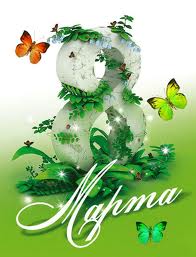
8 Marta - 8 March Russian card
8 Marta – 8 March Russian card

For instance, the Soviet 8th March was a public holiday and culturally it was a day to celebrate femininity, and – separately but connected – awakening of nature in spring. In the US, International Women’s Day was next to non-existing when I lived there in mid-1990s, apart from for hardcore Communists and Socialists, who celebrated it as a milestone on the road to Socialist equality. In the UK nowadays, International Women’s Day takes on a shape of a women-only day, a statement of women’s independence and very often celebration of same-sex love between women.

Continue reading “Happy International Women’s Day, Men and Women of the World by Oxana Poberejnaia”

Women, Religion, and Whiskey by Phil Conner

Women, Religion, and WhiskeyAt some point in most of my days, I will center myself down with a glass of whiskey.  It is not the effects of the wonderful spirit that draw me to it so much as the myriad of flavors contained therein.  A good whiskey is like a good person; it will unfold with layers over time.  A good whiskey is always the same, always reminding you of why you loved it in the first place, but always fresh, exciting, and nuanced.  The experience of whiskey is a deeply spiritual one for me, and one that helps inform the way I move in the world.  Despite the fact that many whiskey-lovers experience whiskey in similar ways, whiskey brings with it negative binaries, especially in the United States.  Chief among these binary stereotypes are the two myths I despise the most: whiskey is a man’s drink and whiskey is antithetical to religion.  As someone who tends bar for a living, I see these myths perpetuated all too often.  “I don’t want that fruity drink; do I look like a chick to you?”  “Of course I want another drink.  What am I?  A Christian?”  Statements like these motivated me to start writing about whiskey in the first place, and Fred Minnick’s recent book, Whiskey Women: The Untold Story of How Women Saved Bourbon, Scotch, and Irish Whiskey, and the increasingly progressive whiskey-blogging community have helped me gain the courage to spread the gospel of the history and meaning of whiskey especially as it relates to women and religion. Continue reading “Women, Religion, and Whiskey by Phil Conner”

An Epic Woman: A Feminist Eulogy by Molly

editMollyNov 083There were some things about my grandmother that I didn’t find out until after she died. For example, in 1974, she co-organized a “Women’s Exchange”  in Fresno, California with the theme: Stop the World…We Want to Get On. How much I would have liked to talk to her about that! While I didn’t know about the fair, I do know that she was successful with her vision of getting on this brightly spinning world. My grandma was a woman who was hiking in the Channel Islands one month before receiving a diagnosis of aggressive pancreatic cancer. She was incredible.

After reading Grace Yia-Hei Kao’s recent post about giving a eulogy at her grandmother’s funeral, my thoughts turned to my grandmother’s memorial services this past spring. What, if any, are the components of a feminist eulogy? Grace wonders. In reading this, I reflected on the components of the services I prepared and participated in for my grandmother and I believe they fit the bill. In a pleasingly feminist move in itself, I was asked by my extended family to serve as the priestess at my grandmother’s “committal” service (in which her ashes were interred in the above-ground burial chamber that received my grandfather’s body in 1989).

It was deeply important to me to have multiple voices represented during the small, family-only, service and I enlisted all the grandchildren present, as well as her step-grandchildren, in an adapted responsive reading based on Walt Whitman’s “Song of the Open Road”. I chose it precisely because it spoke to the irrepressible, adventuresome spirit of my grandmother. It was a lot of pressure to be responsible for the family ceremony for the interment of her ashes. I wanted it to be perfect. I wanted it to be what she deserved. I wanted it to “speak” to every person there. I wanted it to be worthy of her. I hope it was enoughContinue reading “An Epic Woman: A Feminist Eulogy by Molly”

No More Of This in Academe! by Grace Yia-Hei Kao

Last week, social media was ablaze over a September 18 Pittsburg Post-Gazette column entitled “Death of An Adjunct” by Daniel Kovalik that had the following teaser: “Margaret Mary Vojtko, an adjunct professor of French for 25 years, died underpaid and underappreciated at age 83.”  Inside Higher Ed reports that the column went viral as “adjuncts across the country reported seeing something tragically familiar in her story.”  The Chronicle of Higher Education likewise covered the story with this tagline: “An Adjunct’s Death Becomes a Rallying Cry for Many In Academe.”

This tragedy involves all sorts of issues with which readers of this blog are concerned: power, structural injustice, job insecurity, underemployment, unions, healthcare, and Catholic values (the last of these since Margaret worked at a Catholic institution), to name a few.

Continue reading “No More Of This in Academe! by Grace Yia-Hei Kao”

Cultural conditions and Spiritual Subtleties by Oxana Poberejnaia

oxanaI am very grateful to Carol P. Christ and other contributors for their insightful comments and thoughtful questions to my post “Blindness of the Gals”. As I promised to Carol, here is my post that starts answering some of the issues raised in the comments.

I cannot say that it was giving birth to my daughter that first made me question my blindness to patriarchy in religion and culture. Rather, it was a gradual process of educating myself by reading works by feminist thinkers, and learning about the brave women and men who have been fighting and are still fighting for women’s rights.

Continue reading “Cultural conditions and Spiritual Subtleties by Oxana Poberejnaia”

To Dust and Ashes by Natalie Weaver

Natalie WeaverThis year marks the fifth anniversary of the publication of Mama, PhD: Women Write About Motherhood and Academic Life, edited by Caroline Grant and Elrena Evans.  I contributed a chapter.  A few days ago, I was contacted by the editors and asked for an update.  “What had changed for me in five years?” they asked.  As I tried to respond to their questions, I was surprised by the gravity in my heart.  When I wrote about motherhood and life as a professional theologian five years earlier, I was a new mother, applying for my third-year review, and trying to navigate my nascent roles as both mom and scholar/educator.  I felt overwhelmed to be sure, but I was overtly grateful to have such a rich and full array of choices about how I lived my life.  Here, a few years later, I am applying for full-professorship.  I am a more seasoned mother with two healthy children.  I chair two departments at my school, and I am generally more established in the many things I juggle simultaneously.  Had I given it any consideration, I would have anticipated a more cheerful five-year check-in. Continue reading “To Dust and Ashes by Natalie Weaver”