Loving Venus, a poem by Marie Cartier

Dedicated to Carol Christ, 1945-2021, who taught so many of us how to love the Goddess


She is called “Nude Woman” and currently lives
in her natural museum house in Vienna.
Nude woman. She is art, but she is not in an art museum.
And there are questions:
why was she originally painted red? Why are her breasts so large?
Why is her stomach so large?
Why does she fit in a human hand?
What was her purpose?
Was it to entice men, or to comfort women?
Historians disagree.
Is her hair woven? Or is it a hat?
Why does she have no eyes? No feet? Why is she there?

Continue reading “Loving Venus, a poem by Marie Cartier”

Of Women and Wildflowers by Sara Wright

Women and plants have been in relationship since the dawn of humankind. Women were the Seed keepers. Women created agriculture. Women learned what herbs to use for healing. Women noticed wildflowers, loved them, grew them and painted them, created poems about them. Some women and plants still share a deep bond, and as an herbalist I am one of these women. My relationship with wildflowers stretches back to the first word I ever spoke – “cups” for the wild buttercups I loved and gathered as a toddler.  

Recently, I joined a wildflower identification site online because wild flowers are so dear to my heart. Every spring I am drawn into the forest glades to meet my diminutive friends that burst unbidden, unfurling from moisture laden rotting leaves. So many are fragrant!

 With the summer solstice on the horizon and abnormally high temperatures, we are living a withering drought, and my intrepid little wildflowers are fading, their annual cycle completed earlier than usual. Even in a good year this wildflower season is never long enough for me.

Continue reading “Of Women and Wildflowers by Sara Wright”

The Pear Tree by Sara Wright

She was more
 than a sapling,
 so robust.
 One summer she
 bowed
her tear shaped body,
offering
a hundred sweet pears
to any creature
that sought her gifts.
Did the deer remember?
 Fruit that fermented became
fertilizer for hungry plants.

When they
girded her slender trunk
that winter
 I felt betrayed
by the herd of graceful creatures
I fed…

She was dead.
Her sweet cambium
stripped away
 under rough bark.
 Unable to carry
nitrogen, water, nutrients
from trunk to twig

Continue reading “The Pear Tree by Sara Wright”

Lessons From the Mother Tree by Sara Wright

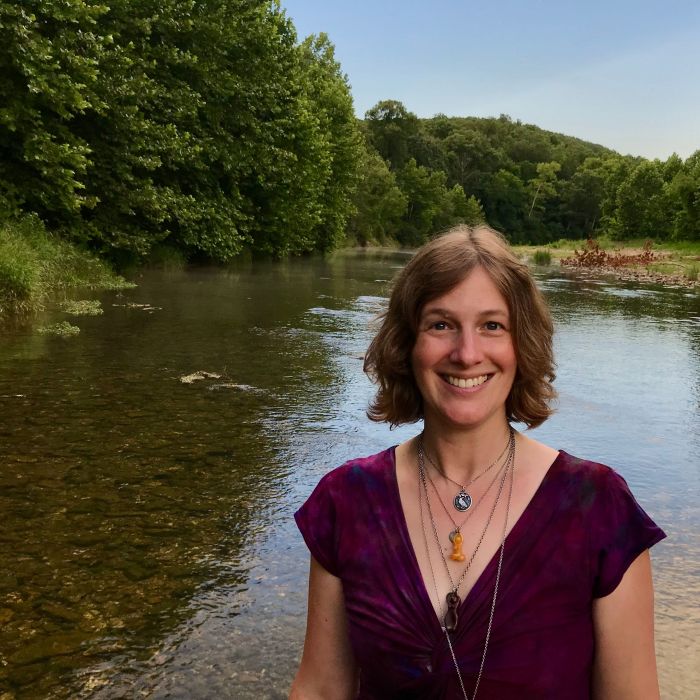
Picture of Sara Wright standing outside in nature

Last night I was reading Forest Scientist Susanne Simard’s new book “Finding the Mother Tree”. She was writing about how uncanny it was that her personal life has paralleled that of trees, the forests, the plants, the fungi, the mycorrhiza (underground networks), she has been studying for more than thirty years. This weaving of Nature’s ways through human lives has also been my life experience, although I am a naturalist and not a scientist. (I capitalize the word “nature” to accord her the Sovereignty that is missing because most humans see Nature as a “resource” to be used – not a Living Being). I take note of the fact that so many of these tree advocates are women.

I observe and listen to Nature by paying close attention to weather patterns, to flourishing or withering leaves, bowed or broken trees, to wind, to parched ground, to birds, to animals, to water, to fire, water, earth and air, and by being emotionally present to whatever is happening in my own backyard while scanning earth and sky for ‘signs’ of what’s to come. I receive the answers I need if not through a bird sighting, a porcupine, a clump of moss, a dying tree, then through dreams. For months now I have been threatened by the immanent loss of our forests by way of dreaming.

Continue reading “Lessons From the Mother Tree by Sara Wright”

“Finding The Mother Tree” by Sara Wright


Susan Simard received her PhD in Forest Science and is a research scientist who works primarily in the field. Part of her dissertation was published in the prestigious journal Nature. Currently she is a professor in the department of Forest and Conservation Sciences at the University of British Columbia where she is the director of The Mother Tree Project. She is designing forest renewal practices, investigating the ecological resilience of forests, and studying the importance of mycorrhizal networks during this time of climate change.

Susan’s research over the past 30 plus years has changed how many scientists perceive the relationship between trees, plants, and the soil. Her intuitive ideas about the importance of underground mycorrhizal networks inspired a whole new line of research that has overturned longstanding misconceptions about forest ecosystems as a whole. Mycorrhizae are symbiotic relationships that form between fungi and plants. The fungi colonize the root systems of plants providing water and nutrients while the plant provides the fungus with carbohydrates. The formation of these networks is context dependent.

Continue reading ““Finding The Mother Tree” by Sara Wright”

Every Bird in the Mountains: Wisdom for this Climate Moment by Tallessyn Zawn Grenfell-Lee

I found a bird’s nest the other day. A perfect, round little nest, with five pale blue speckled eggs. I’ve been working for several years to figure out how to support the birds who share our yard, with bird feeders, leaf litter and better soil for caterpillars and worms to feed the baby birds, yellow LED outdoor lights, and native plantings to attract more insects and pollinators. I knew that songbird populations are struggling, but lately I’ve learned even more about their truly worrying decline, and how we can all create ‘homegrown natural parks’ to help. It’s been a deep source of joy and hope, through the long pandemic, to see the tufted titmice, dapper chickadees, and bright red cardinals at our feeders, and the soft gray juncos hopping about on the ground. When we moved here a few years ago, a bird’s nest appeared right above the floodlight on our deck, and we got to see and hear the wee fledglings that spring, as if they were welcoming us to our common home. We loved those baby birds, and I’ve often wondered whether they are now among the visitors that seem drawn to the window feeder whenever we start to play music.

Continue reading “Every Bird in the Mountains: Wisdom for this Climate Moment by Tallessyn Zawn Grenfell-Lee”

C.G. Jung and the Heroine’s Journey by Sally Abbott


I was intrigued by the discussions of Jung and Jungian motifs, such as the sacred marriage, that sprang up in response to Mary Sharratt’s wonderful post “The Via Feminina:  Revisioning the Heroine’s Journey,” partly based on Maureen Murdock’s book. Carol Christ pointed out the problematical nature of the whole notion of the sacred marriage, relying as it does on our stereotypes of the masculine and feminine.

Sara Wright reported that her sense of the dangers of Jungian thought led her to change her profession; she had once been a Jungian analyst. Barbara McHugh put forward a well-thought out and articulate version of the Heroine’s Journey, corrected for sexist thought.

Continue reading “C.G. Jung and the Heroine’s Journey by Sally Abbott”

Embracing Darkness by Mary Sharratt


I have long struggled with winter. I grew in Minnesota where winters were long and brutally cold. I remember hauling myself through hip-deep snowdrifts on my walk to elementary school and that was in the suburbs! The North of England, where I lived for nearly twenty years, has a much milder climate. But being so far north, I was plunged into infernal darkness from Halloween to Candlemas. It started getting dark at 3:30 in the afternoon and by 4:00 it was pitch dark. Remember those horror movies where it’s dark ALL THE TIME?? That’s Lancashire in midwinter. I felt I was trapped inside some brooding gothic novel.  

Now that I’ve moved to the Silver Coast of Portugal, I get a lot more daylight in winter, but also storm winds and torrential rain. My Welsh pony was not impressed and her companion, a Lusitano gelding who came up from Southern Portugal, was so grumpy that he looked like he wanted to jump on the next horse trailer back to the Alentejo!

Yet no matter where I’ve lived geographically, I have always faced the same struggle. I find I just can’t get as much done in winter as I do in the summer. Winter’s short days and long nights seem to drain my energy and drive. While summer is expansive with so many sun-filled hours to fill, in winter everything seems to shrink to the size of a single candleflame. Every year I fought tooth and nail against that contraction. But winter always won.

This winter, curled up by the fireplace on a stormy night, I plunged into Katherine May’s highly recommended book, Wintering: The Power of Rest and Retreat in Difficult Times. In her book, she refers to winter not just as a season in the year, but any fallow or difficult period in our life when we must withdraw, lick our wounds, and replenish ourselves. Our personal winter might be an illness, a relationship break-up, the death of a loved one, a feeling of spiritual dryness, or a time of burnout when we just have to stop and rest.

In Nature, darkness and winter are absolutely necessary for life’s regeneration. May adds that our personal winters, though we would never seek them out, are likewise regenerating and ultimately healing if we can be present with them, as scary and painful as they seem, without seeing them as some personal failure we brought upon ourselves for not being strong enough to resist the natural cycles of death, dissolution, and fallowness.

We live in a culture deep in denial about winter and wintering, where we’re supposed to be “on” all the time, as if we existed in a perpetual summer, full of summer’s buzz, energy, and busy-ness. But if we try to doggedly maintain this level of intense activity during winter when all the elements, as well as our internal rhythms, are telling us to slow down and rest, we get ill, we get burn out, we get depressed.

“Plants and animals don’t fight the winter,” May reminds us. “They don’t pretend it’s not happening and attempt to carry on living the same lives they lived in summer. . . . They adapt.” She adds that once we stop fighting the winter, it can be a most blessed season of reflection and recuperation. In an age when even getting enough sleep and rest feels like a radical act, May teaches us to invite the winter in.

Artwork by Jessica Boehman

May’s book taught me the importance of welcoming the most wintery aspects of my own psyche, all the shadowy stuff I like to repress. Winter is a time of welcoming the shadows. No part of myself needs to be left out in the cold. Anger, doubt, sadness, and uncertainty are not flaws that need to be “fixed.” Just stay present with them in compassionate awareness.

Those of us in the Northern Hemisphere finds ourselves nearly at the threshold of the Spring Equinox. Yet we are still deep in the collective winter of the Covid pandemic, a winter that’s dragged on for over a year. All of us are hitting the pandemic wall. How much more of this can we take? It’s not so easy to rest and regenerate if you’re a mother working remotely while simultaneously trying to homeschool your kids. The pandemic has hit women and girls especially hard, as they carry the brunt of domestic tasks. Girls’ schoolwork is suffering as they take on more and more housework during lockdown. Family violence rates are soaring across the world. In this pandemic winter we meet not only our personal shadows, but the horrors that were lurking in the collective that we can no longer afford to ignore.

If we go through a personal or a collective winter, we need a refuge. A mature spirituality that meets us where we are, that’s robust enough to carry us through the Dark Night of the Soul. Spiritual bypassing and trite tropes like “everything happens for a reason” have no place here. A good litmus test for mature spirituality is to see how spiritual spokespeople from this tradition have responded to the pandemic. Unfortunately, I’ve heard several variations of “God/dess is punishing us for climate change.” While climate change is real and undoubtedly the biggest crisis we face today, I don’t think this punitive imagining of the divine is a helpful or enlightening paradigm for anyone. Life under Covid is hard enough without being told we’re being punished for our sins.

Mature spirituality gives us the courage us look deep into the darkness without flinching. Without seeing it as evil or as punishment but as the deep, compelling, beautiful mystery that surrounds the divine. The fertile darkness. May we all find rest and regeneration here.


Mary Sharratt is on a mission to write women back into history. Her acclaimed novel Illuminations, drawn from the dramatic life of Hildegard von Bingen, is published by Mariner. Her new novel Revelationsabout the globe-trotting mystic and rabble-rouser, Margery Kempe, will be published in April 2021. Visit her website.


Toadwise: A Tale for a Life Lover – Part II by Sara Wright

Read Part I here

In the Americas I found more recent Indigenous mythology on the Toad as Goddess. Tlaltecuhtli is a Pre–Columbian (1200–1519) goddess belonging to the Mexica. Although Tlaltecuhtli’s name is masculine modern scholars interpret this toad figure as female because she is squatting giving birth. Some see her as crouching under the earth, mouth open waiting to devour the dead. Since the Aztec culture was a warring male dominated Patriarchal one I think it’s perfectly reasonable to assume that the Earth Goddess/Toad was seen as masculine to the Mexica.

In Mesoamerica we find Toad widely represented in art, often with feline or other non-naturalistic attributes, including jaguar claws and fangs. These images can be regarded as versions of Tlaltecuhtli. In contemporary Mexico, as in Guatemala, and throughout South America toads play a role in myth, sorcery, shamanism, and in curing/healing. Continue reading “Toadwise: A Tale for a Life Lover – Part II by Sara Wright”

Breathe with me by Trelawney Grenfell-Muir


Breathe with me.

I know. I know. I understand.
Breathe with me anyway.
It hurts. It’s scary. It’s horrible. It’s relentless. I know.
Just breathe.
Every time we breathe out, our bodies release things we do not want.
So breathe it out. All of it. Let it go.
Deep breath. However you prefer—mouth, nose—just breathe.
What do you need to let go?

For me right now, there’s rage.
All the people refusing the masks, refusing the vaccine, even friends of mine who have watched me suffer with post-COVID syndrome for almost a year, still blaming me somehow for my illness.
Breathe. Let it out. Don’t have to carry it anymore.
There’s fear, too — friends, family, fighting COVID, or taking dangerous, unnecessary risks.
Long, slow breaths. Release. Into the loving matrix of Creation-Life-Love. I can’t hold this anymore. I release it.

There’s grief. Loss. Suffering. Isolation. Pain. Oh, breathe, let the tears flow, let the breaths and the tears just be what they are.
Stress. So much stress. We’re all frayed, so far beyond our limits. Breathe it out. Breathe it out again. Deep breaths – make noise if you want. Moan.
She cradles us in breath, the Divine Womb. She is the Source of our breath, and She is always cradling us, always breathing with us.
Breathe again. Close your eyes. Let your Holy Spirit bathe you in its healing power.
But it doesn’t fix anything, doesn’t DO anything!
I know. But it is enough. Just let it be. Be breath breathing itself.
What if you deserve to let go?
What if you deserve to be cradled in healing Love?
What if you deserve just to be?

Breathe. It sometimes feels so nice. Breath in, breath out.
Your body is letting go of anything you do not want.
You can release it now. Breathe it out. It’s ok.
Anywhere you want to feel your breath is ok. Wherever you want it to go, just breathe it there, and then release.
There’s no way to do this wrong. It’s your breath. It’s your breathing. A gift your body has, a magical, powerful, simple, holy gift. Breathe however feels good and right to you.
No rush. Take your time. As long as you want. As often as you want.
What if you deserve compassion?
What if you deserve to be bathed in healing Love?
What if you deserve to rest in your breath?
Breathe, darling. Close your eyes if you like. With every breath, you are holy.

In my Methodist tradition, which focuses heavily on the Holy Spirit, we sing a breathing hymn I love. Here is my rewritten version:

Breathe on me, Breath of Love,
fill me with Life anew,
restore my soul with ev’ry breath,
to do what Love wouldst do.

Breathe on me, Breath of Love,
so shall I rest, secure,
cradled in Love’s bright healing peace,
and held in compassion pure.

Breathe on me, Breath of Love,
till I am wholly thine,
till body, spirit, all of me,
glows with thy Fire divine.

Breathe on me, Breath of Love,
until my heart is free,
and I perceive my ev’ry breath
is thine Eternity.

—Edwin Hatch (1878), revised.

Our world is so frayed right now. We are all at the end of our rope. We feel the same way most new mothers feel in capitalist patriarchies, in which motherhood means financial strain (or poverty), isolation, anxiety, constant demands, an inability to meet basic physical and mental health needs, and no escape from continuous, relentless emotional and physical labor. Women are expected to embrace this level of self-sacrificial stress in motherhood, as part of our female slave role in capitalist patriarchy, which defines our unpaid, unvalued labor as a natural extension of our biological sex. The burden on women is higher than ever these days, with women and even girls taking the lion’s share of extra household duties so that boys and men can continue in their education and careers. Women are suffering 100% of job losses as well.

In times like these, I keep turning to my faith for comfort and strength. In my tradition, the Holy Spirit is the Divine Breath, the Source of Life, which animates all living things and all Creation as sacred. It comes originally from the Hebrew “ruach,” a feminine noun. So when I take time just to breathe, that is sacred time, allowing my true, divine self to feel its divinity (as Methodism’s founder John Wesley might say). I do not take breathing for granted. After my COVID experience, how could I ever take it for granted again? So, for me, breathing time is holy — “set apart” as a communion, a Eucharist of Grace: life-giving, healing, restorative, and liberative. Almost every night for the past eleven months, I have spent time lying in bed just breathing: feeling the breath of the trees behind me in the woods, allowing their wellness to enter me, breathing out to them whatever I want to let go. In breathing this way, I am able to understand bodily that my breath is Goddess. Goddess who is ever birthing Love and Liberation. The Divine Source of All, who is every justice, every healing, every restoration. My breath is fair economies and safe respected female bodies; it is just relationships and female thriving. This is my breath. This is the Source of the Healing that rebirths every death into Life. This is Goddess.

So, breathe with me, sisters. And brothers. She is here, and we are the ones who breathe her. What if we deserve to be bathed in Healing Love? She knows. She understands.

Just breathe.


Trelawney Grenfell-Muir teaches courses about Sex, Dating, Marriage, and Work in the Religion and Theological Studies Department at Merrimack College and about Cross Cultural Conflict in the Department of Conflict Resolution, Human Security, and Global Governance at the University of Massachusetts, Boston. A Senior Discussant at the Religion and the Practices of Peace Initiative at Harvard University, she holds an M.Div. from the Boston University School of Theology with a concentration in Religion and Conflict, and a Ph.D. in Conflict Studies and Religion with the University Professors Program at Boston University. She currently writes articles, book chapters, and liturgical resources about feminist, nature-based Christianity.