From the Archives: “The Importance of Religion for Ecofeminism,” by Ivy Helman.

Author’s note: Originally published on January 8, 2017, this post still speaks to me 6 years-to-the-day later. Now, when I teach ecofeminism, I dedicate a week to religion as we cannot deny the way in which Western patriarchy and religion have coexisted and often fed off each other. The only distinction I would add to this original post is that not all religions are equal when it comes to patriarchy and its misdeeds. Christianity has had more power and influence than others. However, Christianity is not the only religion to hold patriarchal views. That needs to change. May the New Year bring more of that needed change.

“Why is religion important to ecofeminism?” A student, in the Master’s course I teach at Charles University, asked this as we began the class session dedicated to the topic. Given the overwhelming presence of atheism in the Czech Republic, I wasn’t too surprised by the inquiry.  Nonetheless, the idea has been at the back of my mind ever since: what does religion have to do with ending patriarchy and bolstering the health of the planet? While I may take the connection as obvious, it is clearly not for many feminists out there. Here is how I understand it.

Continue reading “From the Archives: “The Importance of Religion for Ecofeminism,” by Ivy Helman.”

Is Sin An Antiquated Concept? by Rev. Dr. Karen Tate

I believe many could and would characterize abuse and exploitation as varying degrees of sin, from gossip and verbal intimidation on one end of the spectrum to murder, rape or thievery on the other. Yet, while we’ve normalized some acts that we recognize fall into the categories of abuse and exploitation, if you asked someone if society has normalized sin, I suspect most people would say “of course not.” I believe that cognitive disconnect is proof we’ve become numb and acculturated to many forms of abuse. The concept of sin, and what constitutes sin along with redemption, purification and penance are not on the minds of people today as they once were, despite the rampant abuse and exploitation, aka sin. We accept it like we’ve come to believe greed is good when it once was one of the Seven Deadly Sins. I think prosperity gospels too need to be evaluated for the anti-Jesus message these teachings perpetuate that does little to advance an evolved and compassionate humanity. 

Continue reading “Is Sin An Antiquated Concept? by Rev. Dr. Karen Tate”

Radical Joy by Beth Bartlett

On Christmas mornings my brother, sister, and I had to wait patiently upstairs until we heard the music playing. Then, at last, the trumpets and voices singing “Joy to the world!” beckoned us down to the living room, with presents piled high under the brightly lit Christmas tree and stockings filled to the brim hung by the roaring fire.  As a child, I experienced Christmas as a most magical and wonderful time of year, but it wasn’t just about getting presents. Strangers greeted each other with good cheer, wishing each other a “Merry Christmas.” Children visited the homes of the elderly and housebound, brought them cookies and sang carols.  People were different – kinder, friendlier, more open-hearted, more forgiving. These are the true gifts invoked by the Christmas season, and I often wondered why we couldn’t continue these all year. I still do. 

Continue reading “Radical Joy by Beth Bartlett”

What are you looking forward to in 2023?

Someone I care a lot about asked me on New Year’s Eve, “What are you looking forward to in 2023?” This question was the follow up to another question, which was, “What are you grateful for from 2022?” 

I was able to come up with many gratitudes for 2022 even as it was a tough year. I lost my mom on February 3. I lost my mother-in-law on October 25. These losses of the mothers in my life have generated an untethered sensation in my spirit. My center of gravity feels gone, dissolved, undone. I am a pastor, so I walked through more and more and more loss in my community. There were many deaths, all of them with their own unique load of grief. 

Continue reading “What are you looking forward to in 2023?”

Toward an Alternative Ecclesiology by Xochitl Alvizo 

I mentioned in a recent post that I would share a little more about my current research, as one of the aspects of my life I gained more clarity in during my recent process of regrounding was in the area of my research.

Two things stood out to me as I reflected on my work and scholarship: my concern for individual human dignity drives my work—it is an underlying thread in how I think and theologize. The second is that I want to make a major contribution to the theology of the church—I know I want to write a feminist ecclesiology. These two things are obviously related. I have witnessed enough of the ways that not only Christianity harms people, but how the church specifically is a conduit for the damages Christianity causes. At the same time, Christianity remains a living tradition, a shared story and language, and a community to which many are committed. So just as people are harmed by church, some are also nurtured and held by it. While it is true, then, that church indeed harms people and violates their dignity, often also justifying that violation on theological grounds, it need not do so and has other possibilities before it.

Thus, I want to contribute to a theology of church that is a grounded and liberating alternative to the problematic one to which people most often default or inherit. A queer, feminist, anti-racist, and decolonial ecclesiology.    

Continue reading “Toward an Alternative Ecclesiology by Xochitl Alvizo “

When Betrayal Makes Sense by Sara Wright

 When I was a young woman, a divorced mother of two, working as a waitress I became obsessed by a window hanging in a local store. This cluster of grapes was fashioned out of thick, uneven hunks of stained glass that the artist had retrieved from bombed cathedrals in Europe. The grapes shimmered – ecclesiastical purple with limed green leaves. Although I could hardly afford to, I paid an outrageous $50.00 for this piece and hung it above my bedroom window. I never regretted the choice. Whenever I looked at the stained glass, I had the strange sense that there was a message hidden there. I ignored it.

After my brother’s death two years later (my youngest son was two) I lost most of myself, but held on to my love for plants tending to them with deep affection and attention.

My first word was ‘fower’ for flower so my relationship with plants stretched back to babyhood. I believed the flowers plants and trees that lived around my grandmother’s house were my close friends.

Continue reading “When Betrayal Makes Sense by Sara Wright”

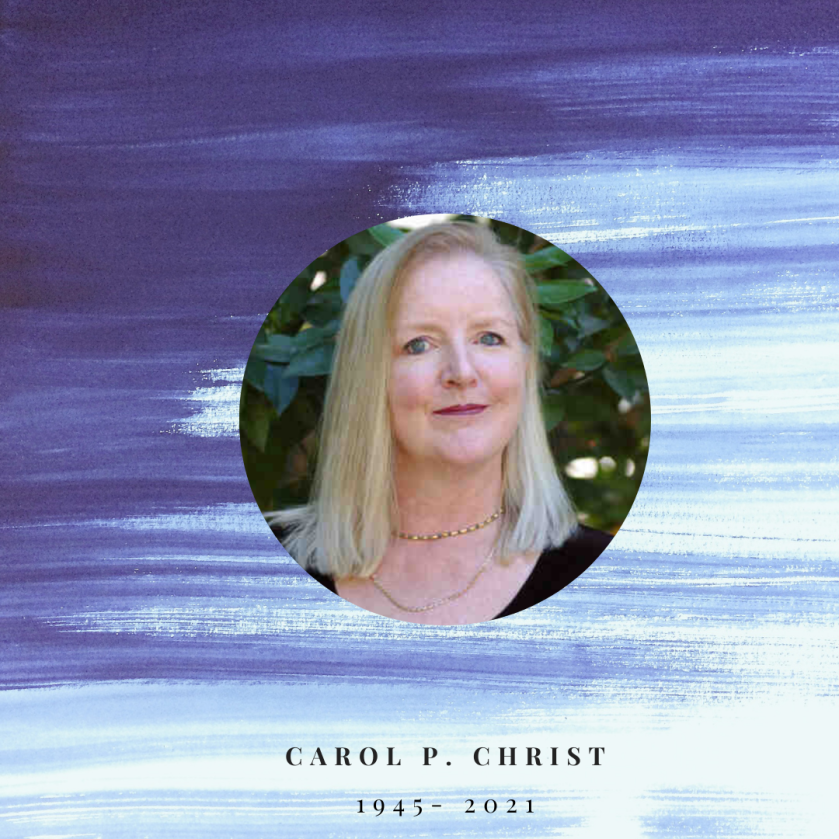
Legacy of Carol P. Christ: ERA—Equal Rights for Women—in the US: Has Our Time Finally Come?

This was originally posted on Nov 18, 2019

On August 26, 1970, I borrowed an old VW bug from my mentor and summer employer Michael Novak to drive from Oyster Bay, Long Island to New York City to take part in the Women’s Strike for Equality march down Fifth Avenue. Some 50,000 women attended the march and another 50,000 took part in sister actions around the United States. The march celebrated the 50th anniversary of the passage of the Women’s Suffrage Amendment that gave women the right to vote. The ERA was on our minds, but it was not the only issue on the feminist agenda. We believed that all the walls created by patriarchy would come tumbling down, and soon!

Continue reading “Legacy of Carol P. Christ: ERA—Equal Rights for Women—in the US: Has Our Time Finally Come?”

From the Archives: New Year and Sustainable Resolution by Sara Frykenberg

This was originally posted on January 3, 2017

I am writing this blog on New Year’s Day, so Happy New Year! Today I say these words as both a statement of hope and as invocation. Happy New Year: may it be! My twin told me that our horoscope said that 2017 would be a party: we should throw our energies into anything and everything we want to see happen in our worlds because it can and will happen this year—may it be! Because it certainly doesn’t feel like a time for flourishing. I echo the introductory sentiments of Kate’s blog last Friday:

I am fried. These last two years proved personally & professionally exhausting. And yet, another year looms ahead unavoidably — another incredibly demanding year which will require more than I can fathom I actually have to give at this moment.”

Yes Kate. Oh my god/dess yes. This is exactly how I feel… and sitting down to write this blog this morning, I felt overcome with a wave of anxiety and stress, focused on all the things I have to do, the lack of time I have to do them, and the lack of energy I feel. Lurking beneath this stress is real pain and fear. What should we expect this year, in light of what’s already happening, in light of the hate already ignited? I think I have been locked in this pain and this fear.

Continue reading “From the Archives: New Year and Sustainable Resolution by Sara Frykenberg”

Crawl Across the Sacred Circle and Take My Hand by Caryn MacGrandle

On Winter Solstice, I hosted a Return of the Sun event at the local healing arts center where I do my Circles. We had offerings and presentations all night long. It was the first time I have ever done anything that large or public, so it was a stretch for me.

At the end of the night, a friend said, ‘Oh my, I needed this. Let’s do it once a month.’

And I thought, ‘yea, right.’

And then I thought, ‘Yea. Right.’

I’ve already started thinking about ways we could do it better and things we could change.

I feel a bit like when I first started hosting Circles nine years ago. I’m tired and judging whether or not it was worth the stress and effort.

But this time around I know it’s worth the stress and effort.

Continue reading “Crawl Across the Sacred Circle and Take My Hand by Caryn MacGrandle”

Unsung Heroines: Mary Moody Emerson, Foremother of Transcendentalism by Carolyn Lee Boyd

Transcendentalism is a philosophical, literary, and spiritual movement begun in 19th century America whose founders centered being guided by your own inner voice, the immanence of divinity in all beings, the sacredness of nature, and the importance of social reform, among other aspects. Its influence is still felt today in the environmental movement, civil rights, literature, spirituality celebrating nature, and more. Ralph Waldo Emerson, Henry David Thoreau, Margaret Fuller and others are often considered to be its originators, but before them all was Mary Moody Emerson.

The Old Manse, Concord, Massachusetts, where Mary Moody Emerson was born and lived periodically, as did various minister ancestors and Ralph Waldo Emerson.

Mary Moody Emerson was born in 1774 in Concord, Massachusetts into a family of ministers and philosophers, including her nephew, Ralph Waldo Emerson. Her literary legacy includes a few published pieces, but is primarily the mountain of letters and journals which she called her “Almanacks.” She circulated these among friends and family, including many transcendentalists, especially Ralph Waldo Emerson. They featured many revolutionary ideas that made their way into his books and lectures, in particular, especially foreshadowing his book Nature, which launched transcendentalism. She also held influential conversations with Henry David Thoreau as he was writing Walden and with many other prominent thinkers over decades. Ralph Waldo Emerson praised her “Genius always new, subtle, frolicsome, musical, unpredictable” (Cole, 262). Almost entirely self-educated through books given or lent by family, friends, and local libraries, her sagacity was the well-spring of a movement that has been instrumental in making her world and ours. 

Continue reading “Unsung Heroines: Mary Moody Emerson, Foremother of Transcendentalism by Carolyn Lee Boyd”