I went to the lake this morning . . . by Beth Bartlett

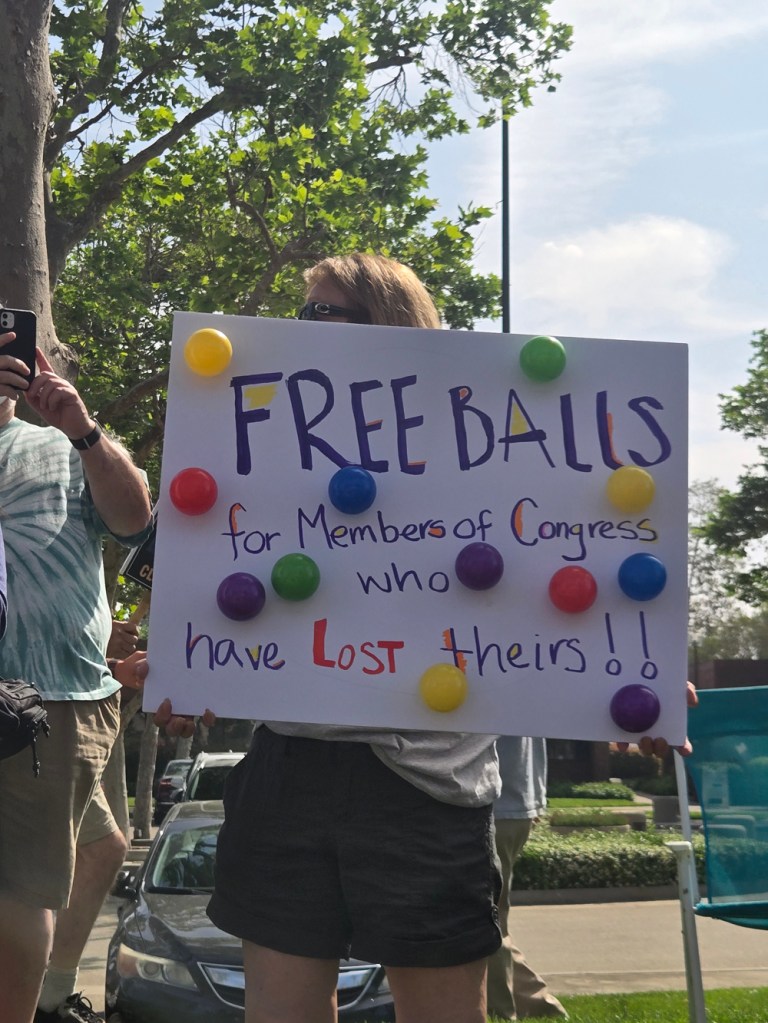
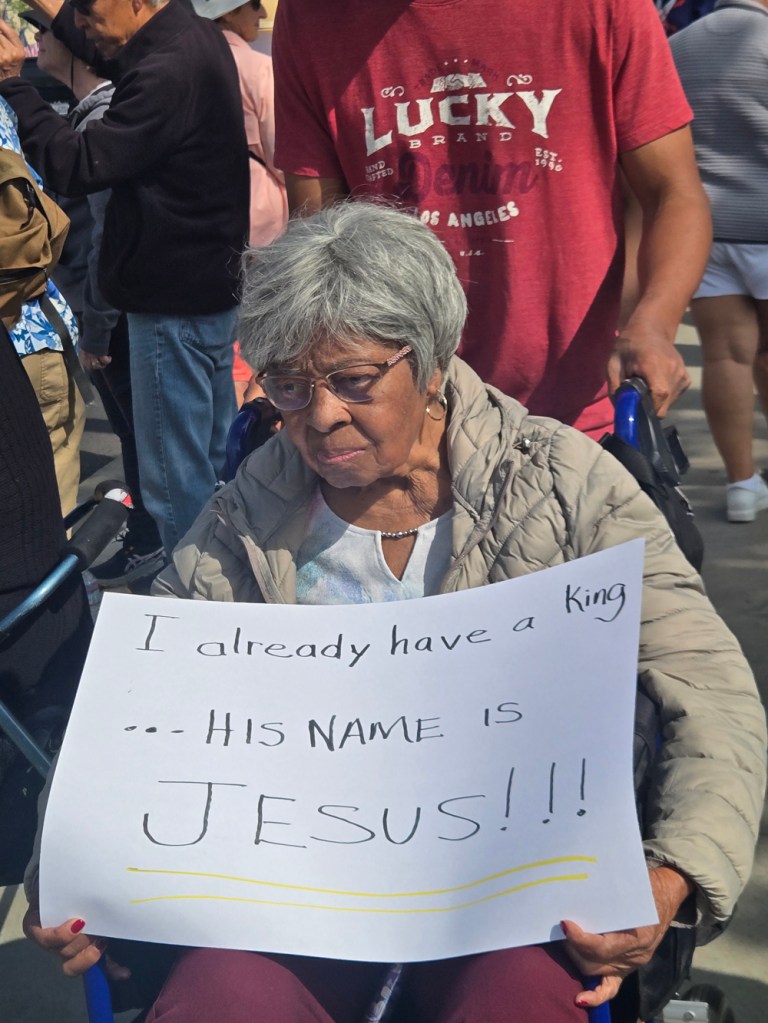
I went to the lake this morning, seeking the peace, sustenance, and perspective it so often provides. I had been particularly distressed and distraught the day before after watching the documentary on Christian Nationalism, “Bad Faith.” It was chilling to say the least.  Among other things, the film demonstrates the longevity of Christian Nationalism in this country, dating back at least to the Ku Klux Klan, founded in 1865.  However, the central theme of the documentary is the staggering influence of conservative political operative Paul Weyrich, who orchestrated the merger of conservative Evangelical Christians with the Republican Party in the 1980s.  He founded the Moral Majority with Jerry Falwell, the Heritage Foundation which authored Project 2025, the American Legislative Exchange Council, and the Council for National Policy – all of which seek to undermine democracy in order to bring about what these organizations and their followers call a “Christian nation,” by force if necessary.  But as former Republican strategist Steve Schmidt states in the film, there is nothing “Christian” about this movement.  It is pure nationalism, a striving for power requiring the dismantling of the institutions of democratic government as we know them. These extremist Republican strategists found a powerful base of voters by tapping into Evangelical Christians and manipulating the messages they received to fill them with fear, and found just the puppet they needed in the charismatic and amoral figure of Donald Trump.  As we’ve seen in recent years, they have been quite successful in the destruction of government.  After filling the Supreme Court with their chosen nominees during Trump’s first term, getting Christian Nationalist Mike Johnson installed as Speaker of the House, and getting Trump elected a second time despite the January 6th insurrection, or perhaps because of it, they are now successfully dismantling or otherwise destroying the Departments of Education, Health and Human Services, Energy, Defense, Agriculture, Justice and more along with the Environmental Protection Agency, the Food and Drug Administration, the Social Security Administration, the Federal Regulatory Agency. . . the list goes on. It’s all part of the plan to fulfill the “Seven Mountain Mandate” of dominionism[i], which seeks to impose its beliefs in seven spheres of influence: religion, family, education, government, media, arts and entertainment, and business. As one of the Christian Nationalists interviewed in the film proudly said, “It’s the Christian Taliban.”

Continue reading “I went to the lake this morning . . . by Beth Bartlett”

Hospicing Hope by Sara Wright

9/30/2012 – 6/11/2025

  6/12

Part One

Hope in March 2025

Hope’s black eyes pierced my soul- body as she stood staring through me, ears erect. It was time. Are you sure? Yes. She lay back down. I immediately got up.

 Walking helps me to process what I must do. A half an hour later I called.

A numbing drive, walking into a room lit with three candles, and a brief wait before the two kindly women appeared.

Hope washed my tearful face as I held her, reminding me that we would never be separated. For thirteen years she had showered me with kisses beginning each day and again at night before we slept. A long low sigh, before Hope took her last breath. Her body suddenly felt limp, heavy in my arms. I didn’t need anyone to tell me that her heaped up overflowing heart had ceased to beat.

  Lucy, her twelve year old adopted sister peered anxiously at me as I looked down at her, eyes perplexed. Seconds later Lucy’s pencil thin tail went limp as the knowing seeped in. As usual we conversed beneath words.

A blurry drive home.

Continue reading “Hospicing Hope by Sara Wright”

Legacy of Carol P. Christ: What is the Nature of the Hope that Can Trump Despair in the New Year?

This was originally posed on December 20, 2013

carol-christ“All hope abandon, ye who enter here.” These words posted on the gates of hell in Dante’s Inferno have an eerie resonance in our time. 

Marie Cartier recently posted a blog on children and hunger with facts so devastating I could not finish reading it. Earlier in the month Jassy Watson wrote about her deep feelings of grief on hearing Luisah Teish’s “Prayer for Disappearing Species.” Grief, despair, and sadness about the injustices in our world can be overwhelming.

A friend of mine has recently fallen into a deep depression. When I try to talk her out of it, she repeats that they are threatening to cut down the last remaining old growth forest in her home state of Oregon and that she can no longer eat fish because radioactivity released in the Fukishima nuclear plant disaster is reaching the seacoast of Oregon.

When I tell my friend she should not dwell only on these things and that she must remember that the world is still a beautiful place, she responds, “I do not want to give up my feelings. I know I must find a way to acknowledge my sadness and make a place for joy, but I don’t know how to do it.”

I have been in the grip of deep grief about the planet myself, not once but many times. But this happens less frequently than it used to.  When I think about the differences between how I once felt and how I feel now, I think the difference is that I have come to terms with and accepted the likelihood that “the world as we know it” is “going to hell in a handbasket”—as I put it.

I believe that the most likely conclusion of the choices human beings are making on planet earth today is massive environmental destruction leading to great suffering and probable extinction for human and many other species on planet earth. This is what I believe, but I also remind myself that I cannot know for sure. The earth and its species including human beings may have resources of resistance and survival, transformation and adaptation,that I do not know about and cannot imagine.

When I began to accept that the world I know and love (where spring follows winter, where birds sing, and where there is hope that injustice can be rectified) may not exist in the very near future, I had an astonishing insight. The death of the world I know and love will not mean the death of our planet or the end of the evolution of the universe.

Thinking about the disappearance of species and the death of human beings from starvation often feels too much to bear. None of this should be happening. Still, it can be strangely comforting to remind myself that the world I love is not the only possible world. There have been other worlds on this very planet—the time when the first cells were formed, the time of the dinosaurs, and many others. Evolution will continue on planet earth for several billion more years, and when our sun burns out, other suns will most likely still be shining in the universe.

This insight was followed by another. The reason for hope is not the conviction that we will be able to save the world we love. The reason for hope—and the reason to keep trying to save our world—is the deep knowing that it is right to try. Even if we cannot save the world we love for all time, we can savor the gift of life, and we can continue to try to create a world in which the gift of life is shared widely today and tomorrow.

I have written many times that we must learn to love a life that ends in death. I was speaking about accepting that each one of us will surely die. I do not fear death. Overcoming this fear has opened me to a greater and more clear-sighted love for life.

Can we learn to love life while accepting that the world we love may be dying? Can we continue to work to improve the conditions of life for individuals and species knowing that the world as we love it may not survive? Do we have any other choice?

For me the hope that can trump despair in our time begins in gratitude for a life that has been given to us, a life that has come down to us through the generations, and through billions of years of the evolutionary process on our planet.

Let us bless the Source of Life.

Let us bless the Source of Life, and the cycles of birth, death, and regeneration.

Let us turn back from despair.

Let us embrace the gift of life and share it with as many others as possible in the new year.

Carol P. Christ  learned to be grateful for the gift of life in Crete on the Goddess Pilgrimage to Crete she leads through Ariadne Institute.  It is not too early to sign up for the spring or fall pilgrimages for 2014.  Carol can be heard on a WATER Teleconference.  Carol’s books include She Who Changes and Rebirth of the Goddess and the widely-used anthologies Womanspirit Rising and Weaving the Visions. She wishes you great joy in the new year.

The ‘Current’ of Patriarchy: Feminization of Rivers in Indian Mythology by Dhruv Kabra

The Ganga, Yamuna, Saraswati, Kaveri, and Godavari are all goddesses. In contrast, the mountains- Meru, Kailasa, Himalaya are male gods or their celestial abodes. Perhaps this is not just a coincidence but a deliberate gendered imagination that reveals how patriarchal structures flow through the very geography of the sacred.

Indian rivers are predominantly personified as women, with the lone masculine river, Brahmaputra serving as a subversive exception that divulges the somewhat gendered logic of sacred geography.

The Containment of Divine Power

Ganga, the most revered river goddess in India, is born in the heavens, but her descent to earth is mediated by Shiva. His matted locks absorb her torrent, lest her power shatter the earth. Ganga’s sacredness is based on her containment. Feminine energy is revered, but only if domesticated by a male god.

Continue reading “The ‘Current’ of Patriarchy: Feminization of Rivers in Indian Mythology by Dhruv Kabra”

Pasang Lhamu Sherpa: The Fearless Sherpa Lady Who Conquered Everest and Shattered Patriarchy by Bikash Khanal

Introduction: Beyond Being a Mountaineer a Feminist Icon of the Himalayas

Wikimedia common, by Krish Dulal

When we hear the name Mount Everest, the world’s highest mountain, we involuntarily think of rugged, macho explorers battling ice and thin air. Pasang Lhamu Sherpa’s existence defies that stereotype. Not only was she the first Nepali lady to reach the summit of Everest, but she was a living testament to feminine strength, determination, and will. Her life is a stirring affidavit to feminism in its very extreme forms, where gender discrimination is as hard to overcome as the mountains themselves. 

Early Life: A Sherpa Girl Raised Among Giants Dreams beyond Tradition

Born in 1961, in the high-altitude town of Lukla, Pasang Lhamu Sherpa was brought up in the shadow of the Himalayas, under a centuries-long patriarchy-dominated culture. Sherpa women had assumed support roles—cooks, caregivers, assistants to climbing expeditions—while the men assumed the risky climbs.

But ever since childhood, Pasang was captivated by the mountains, her aspirations reaching as high as the mountains themselves. Defying cultural expectations that she seek domesticity, Pasang applied herself diligently and acquired competence which would make her a trailblazer in the years ahead.

Continue reading “Pasang Lhamu Sherpa: The Fearless Sherpa Lady Who Conquered Everest and Shattered Patriarchy by Bikash Khanal”

The Erotic as Power, Notes on Audre Lorde by Janet Maika’i Rudolph

I’ve long kept a tract of Audre Lorde’s seminal piece The Uses of the Erotic near my computer. “The Erotic as Power” is her subtitle. If you haven’t read it, please do.  It is in her book Sister Outsider. And you can find it as a stand-alone here. It was written in 1978.

Lorde points out how the erotic is the opposite of pornography, in fact pornography is ultimately a denial of the erotic because it emphasizes sensation without feeling. “The erotic is a resource within each of us that lies in a deeply female and spiritual plane . . .” She goes on to note how it is through our bodies that we recognize and access this power. But she goes on, “We have been taught to suspect this resource, vilified, abused and devalued within Western society.”  In the hands of patriarchy this amazing and important resource often lies out of reach because it has become a source of shame and a sense of inferiority for women.[1]

I would add to the definition of patriarchy that one of its main goals is to damp down, even destroy, the erotic. We have seen this play out over thousands of years of history. Women are often viewed as either saints or sinners. Saints are denuded of this deep earthy power and sinners are those who flaunt it, or at least in the eyes of patriarchy.

Continue reading “The Erotic as Power, Notes on Audre Lorde by Janet Maika’i Rudolph”

Reflection on the Fourth of July by Sara Wright

Early Summer Days 2025

Hermit thrush’s trill and the bittern’s kerplunk are only two of the birds that mark this dawning with squawks or song. Red eyed vireo sings from the highest pine. My little Lucy (Lucia means Light in Italian, one of my mother tongues) and I bring in the day listening to bird symphonies as the sun star rises over the trees splashing verdant leaf tips in gold.  First the ferns and then sparks of light sweep through the forest lighting patches of brook waters, lemony splotches appear here and there on deep humus, the rich soil that is conversing with the roots below the forest floor. Listen and you will hear that hum.

The phoebe family is fledging, and I feel privileged to be part of their story. Especially because they lost their first nest to a giant squirrel. Flicking their tails just like their parents the fledglings land on the little cherry growing just beyond my window before diving towards ground covers for tasty insect morsels.

The Mark of the Bear is upon us.

Continue reading “Reflection on the Fourth of July by Sara Wright”

Legacy of Carol P. Christ: Patriarchy As An Integral System of Male Dominance Created at the Intersection of the Control of Women, Private Property, and War, Part 3

carol p. christ 2002 colorPatriarchy is a system of male dominance, rooted in the ethos of war which legitimates violence, sanctified by religious symbols, in which men dominate women through the control of female sexuality, with the intent of passing property to male heirs, and in which men who are heroes of war are told to kill men, and are permitted to rape women, to seize land and treasures, to exploit resources, and to own or otherwise dominate conquered people.

As the discussion of patriarchy* I began last week and the week before shows, patriarchy is not simply the domination of women by men. Patriarchy is an integral system in which men’s control of women’s sexuality, private property, and war (including violence, conquest, rape, and slavery) each play a part. These different elements are so intertwined that it is impossible to separate one as the cause of the others.  Patriarchy is an integral system of interlocking oppressions, enforced through violence, and legitimated by religions.

The model of patriarchy I have proposed argues that the control of female sexuality is fundamental to the patriarchal system.  This explains why there is so much controversy about the “simple matter” of access to birth control and abortion in the US today. It also explains why so much vicious anger is directed at single mothers by politicians and commentators.  Any woman who dares to control her own sexuality is questioning the foundations of the patriarchal system. Continue reading “Legacy of Carol P. Christ: Patriarchy As An Integral System of Male Dominance Created at the Intersection of the Control of Women, Private Property, and War, Part 3”

Legacy of Carol P. Christ: Patriarchy as a System of Male Dominance Created at the Intersection of the Control of Women, Private Property, and War, Part 2

carol p. christ 2002 colorPatriarchy is a system of male dominance, rooted in the ethos of war which legitimates violence, sanctified by religious symbols, in which men dominate women through the control of female sexuality, with the intent of passing property to male heirs, and in which men who are heroes of war are told to kill men, and are permitted to rape women, to seize land and treasures, to exploit resources, and to own or otherwise dominate conquered people.*

In last week’s blog, I explained patriarchy as a system in which men dominate women through the control of female sexuality with the intent of passing property to male heirs. How did a system that identifies a man’s essence with his property and the ability to pass it on to sons come about? I suggest that the answer to this question is war and the confiscation of “property” by warriors in war. Patriarchy is rooted in the ethos of war which legitimates violence, and in which men who are heroes of war are told to kill men, and are permitted to rape women, seize land and treasures, to exploit resources, and to own or otherwise dominate conquered people.

My argument is that the origin of “private” property, defined as property owned by a single (male) individual, and as that which defines the “essence” of that individual, is the “spoils” of war, which are divided up by victorious warriors.  The “spoils” of war are the tangible treasures “looted” or taken by the victors from the conquered, such as jewelry and sacred objects.  The “spoils” of war include land “taken” as the result of warfare, along with the right to exploit resources, directly or through taxes and levies. The “spoils” of war also includes the right to “take” the women of the defeated enemy and to confirm ownership of them (and humiliate their fathers or husbands) by raping them.  The “spoils” of war also include the right to “take” these raped women and their young children home to serve as slaves and concubines. Continue reading “Legacy of Carol P. Christ: Patriarchy as a System of Male Dominance Created at the Intersection of the Control of Women, Private Property, and War, Part 2”

Legacy of Carol P. Christ: Patriarchy as a System of Male Dominance Created at the Intersection of the Control of Women, Private Property, and War, Part 1

Moderator’s Note:  We here at FAR have been so lucky to work along side of Carol P. Christ.  She died July 14, 2021.  We have been reprinting her blogposts every Monday as that was her “day” for many years. This year we have decided that in honor of Carol we would reprint her important three part series on Patriarchy on three consecutive days. We plan to do this each year. In a world that seems to have gone mad, we feel that this series is crucial to understanding so much of our patriarchal world and it should not be forgotten. 

Recently feminist scholar Vicki Noble commented that this is the best definition of patriarchy she has read–but she hadn’t read it earlier. I am reposting it now in the hopes that all of you will share it with your social media so that it will be more widely known.

Patriarchy is often defined as a system of male dominance. This definition does not illuminate, but rather obscures, the complex set of factors that function together in the patriarchal system.  We need more complex definition if we are to understand and challenge the the patriarchal system in all of its aspects.

Patriarchy is a system of male dominance, rooted in the ethos of war which legitimates violence, sanctified by religious symbols, in which men dominate women through the control of female sexuality, with the intent of passing property to male heirs, and in which men who are heroes of war are told to kill men, and are permitted to rape women, to seize land and treasures, to exploit resources, and to own or otherwise dominate conquered people.*

Marx and Engels said that the patriarchal family, private property, and the state arose together. Though their understanding of the societies that preceded “patriarchy” was flawed, their intuition that patriarchy is connected to private property and to domination in the name of the state was correct.  It has long seemed to me that patriarchy cannot be separated from war and the kings who take power in the wake of war.  Many years ago I was stunned by Merlin Stone’s allegation that in matrilineal societies there are no illegitimate children, because all children have mothers. Lately, I have been trying to figure out why the Roman Catholic and other churches and the American Republican party are so strongly opposed to women’s right to control our own bodies and are trying to prevent access to birth control and abortion. In the above definition of patriarchy, I bring all of these lines of thought together in a definition which describes the origins of patriarchy and the interconnections between patriarchy, the control of female sexuality, private property, violence, war, conquest, rape in war, and slavery.  Continue reading “Legacy of Carol P. Christ: Patriarchy as a System of Male Dominance Created at the Intersection of the Control of Women, Private Property, and War, Part 1”