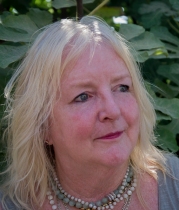
It’s been wonderful to read so many posts remembering Carol Christ. The FAR community was so important to Carol: as has been pointed out, she not only offered her own posts each Monday, she also read and responded to every post, every day. Through the FAR ‘family’ I feel comforted by connecting with others who knew and loved her and miss her as as I do.
Online Memorial Gathering On December 20, Carol’s birthday, all friends of Carol and friends of FAR are warmly invited to an online Memorial Gathering and ritual in Carol’s honour. Many of Carol’s friends will share cherished memories (please email me if you would like to say a few words) and I will show some photographs from her personal archive. (If you have photos of Carol you would like to share, please email them to me at laura@laurashannon.net.) We’ll also talk about the future of Carol’s Goddess Pilgrimage in Crete. Please register with your email address at this link.
This week’s Torah portion is Vayechi, or Genesis 47:28-50:26. It is the last part of the Joseph saga (For my thoughts on two other parshot relating to Joseph, see Mikeitz and Vayigash). While there is much that could be said, there are three aspects of the parshah which I would like to concentrate on for this post: blessings being associated with fertility; verses 50:19-20’s troubling theodicy; and its women.
Let us begin with the last topic: women. Women are mentioned four times in Vayechi. Jacob recalls the burial of Rachel in verse 48:7. Joseph’s beauty is such that women often look at him (49:22). The blessing that Jacob gives to Joseph includes the blessings of both mother and father (49:25-26). At present, I will focus my commentary on Jacob’s request for burial, the fourth mention of women in this parshah.
A still from Will Allen’s 2016 documentary “Holy Hell.”
Many, many moons ago, when I was still living in England, my husband and I thought it would be a wonderful idea to join a local meditation group.
Meditation, after all, is rightly praised for conferring countless benefits for body, mind, and soul. Renown teachers such as Pema Chodron, Jon Kabat-Zinn, and Jack Kornfield have popularized the idea of Buddhist-inspired meditation being just what stressed Western people need to live more joyfully and mindfully.
Alas, Pema Chodron, Jon Kabat-Zinn, and Jack Kornfield were all on the other side of the Atlantic. In this pre-Zoom age we had to make do with what was available to us locally. So, we went to a free taster evening led by a Western Buddhist monk who seemed like a kind and well-spoken young man. The venue was pleasant, the participants were friendly and welcoming. The meditation practice itself, a visualization of breathing white light into the heart space and breathing out the gunky stuff, created a heightened mood and expansive state of mind. In this altered state, we listened to the monk speak about Buddhist philosophy. I didn’t agree with everything he said—he was a bit too ascetic and world-denying to my taste. Even so, the meditative experience itself was so enjoyable that we became regulars and befriended the other regulars. Not only did we attend the weekly meditation sessions, but we also joined the group activities, such as fundraising walks and other events.
Fast forward a few months. Our teacher asked if I would lead a few sessions, as he had teaching commitments elsewhere. At first, I was honored. But then as I understood this was meant to be a regular thing and not the one off, it began to seem very strange. In most traditions, students study meditation for considerably longer than a few months before they are asked to lead classes. I wasn’t even an actual Buddhist and had never taken refuge vows.
Yet not only was I asked to lead the meditation, I was expected to lecture on Buddhist philosophy. I was told to purchase a book by the monk’s spiritual leader, study each chapter, and talk about the message. I learned that in this school of Buddhism, people were only allowed to read books written by their spiritual leader and not by other Buddhists of any other school. Some of the stuff in this book just seemed off. Any act of self-assertiveness or personal agency was denounced as “self-cherishing,” supposedly a dangerous obstacle to enlightenment. However, shame was celebrated as good thing as it helps herd a straying student back to the One True Path. This caused my alarm bells to go off big time.
I also learned that this branch of Buddhism preached a fanatical opposition to the Dalai Lama. They worshipped a protector deity called Dorje Shugden, shunned as a malevolent spirit by other schools of Tibetan Buddhism. My teacher was urging people to picket and protest the Dalai Lama’s upcoming visit to the UK.
My head exploded. To think that my innocent desire to practice meditation in community had landed me in some bizarro spirit-worshipping, Dalai Lama-hating cult!
The NKT is a new brand of pseudo-Buddhism, made in the United Kingdom. Very keen on fundraising, they have opened numerous meditation centers and residential centers across the UK and across the world. Tibetan Buddhists from actual lineage traditions won’t go near them.
An NKT advertizing flyer. It might look innocent, but . . .
I was lucky. By the time I learned how toxic this group was, my husband and I could get out unscathed. We had invested some time and money, but weren’t deep into the organization. Others weren’t so fortunate. Seduced by the feel-good meditations and the lure of enlightenment, flattered to be asked to teach, other people got roped into opening residential centers, volunteering their time as cooks at the NKT cafes, or even making monastic vows to the organization. The last option is a poverty trap. The monks and nuns subsist on social benefits from the UK state while spending all their time volunteering to teach, fundraise, and run the residential and retreat centers.
If I had it to do over again, I would have done my online research before attending the first class. This is what I now recommend to everyone joining a spiritual group or even a harmless-sounding meditation evening. Google the name of the organization or the leader and then add the words “cult,” “controversy,” or “criticism” in the search box and see what comes up.
Uma has created a comprehensive 13-point checklist of warning signs to let you know when you have accidently stumbled into a toxic group. You can access the list below. If I’d had this list way back when I joined that meditation group, I would have been able to extricate myself a lot earlier.
Meditation and Yoga can and should be liberating in every sense of the word. Let’s work together to ensure that the world of Yoga and meditation is a safe refuge for every seeker.
Happy Holidays!
Mary Sharratt is on a mission to write women back into history. Her acclaimed novel Illuminations, drawn from the dramatic life of Hildegard von Bingen, is published by Mariner.Her new novelRevelations, about the mystical pilgrim Margery Kempe and her friendship with Julian of Norwich, is now available wherever books and ebooks are sold. Visit her website.
Moderator’s note: This marvelous FAR site has been running for 10 years and has had more than 3,600 posts in that time. There are so many treasures that have been posted in this decade that they tend to get lost in the archives. We are beginning this column so that we can all revisit some of these gems. Today’s blogpost was originally posted January 20, 2018. You can visit it here to see the original comments.
Really – everywhere we look – there are dead white guys. National holiday? Most likely in honor of a dead white guy. Statue on a green? Founder of a major Christian denomination? Dead white guy. Classic literature, painting, play, music ‘everyone’ is supposed to know about? Yup, probably by a dead white guy.
It’s a little exhausting.
It’s easy to develop a pretty negative attitude about all these dead white guys. I mean, some of them were pretty questionable if not downright oppressive people. Enough, already! Am I right?
Yes! Yes. Well… sort of. The thing is, some of them really did say and do wonderful, important things. I suppose we should not dismiss an entire portion of our history just on race and gender alone. And, truth is, I have a confession to make. I kind of really love the insights of some of these folks. I guess it’s easy to complain about all these dead white guys… until you fall in love with one of them.
Journeying with students into the woods to dive deep into our spiritual connections with nature, I would invoke these words from Carol Christ: “There are no hierarchies among beings on earth. We are different from the swallows who fly in spring, from the many-faceted stones on the beach, from the redwood tree in the forest. We may have more capacity to shape our lives than other beings, but you and I will never fly with the grace of a swallow, live as long as a redwood tree, nor endure the endless tossing of the sea like a stone. Each being has its own intrinsic beauty and value….”[i] How can one listen to these words and not be changed? Taking in the meaning of these words, paradigm shift happens. Herein lies the gift of Carol Christ to ecofeminism.
Ecofeminism posits that the oppression and domination of women, nature, and colonized others are inextricably linked. This is largely due to two aspects of the Western cultural paradigm: 1) mind/body value dualism, and 2) what ecofeminist Karen Warren has called “the logic of domination.” Mind/body value dualism is the creation of an artificial binary of opposites which values everything associated with the mind — spirit, transcendent, men, humans, white-bodied peoples, over everything associated with the body – earth, immanent, women, nature, colonized Others. The “logic of domination” is the use of this supposed inherent superiority of those associated with the mind to justify their domination of everything associated with the body. As Western culture has spread throughout the world, this value system is now found practically every on earth.
We gathered roses and bright zinnias to crown their heads with flowers, these shining daughters who we’ve cradled and fed and loved with everything we have and everything we are. We knelt before them and sang, our hands gently washing the feet that we once carried inside our own bodies and that now follow their own paths. For a moment, time folded and we could see them as babies in our arms, curly hair and round faces, at the same time seeing the girls in front of us, flowers in their hair, bright eyed and smiling, and so too we see women of the future, tall and strong boned kneeling at the feet of their own girls as the song goes on and on. We tried to tell them what we want them to know, what we want them to carry with them as they go on their ways: You are loved. We are here. You are loved. You are strong. You are magical. We treasure who you are. This love that carried them forth into the very world they walk on, we hope it is enough to embrace them for a lifetime, and so we kneel and sing and anoint and adorn and hold their hands in ours. We are here. You are not alone. You are wise in the ways. You belong. We are not sure if tears can say what we mean to say, but they fall anyway as we try our best to weave our words and wishes and songs and stories, with strength and confidence into a cloak of power that will encircle them with magic, no matter how far away from us they journey.
What does this little narrative have to do with feminism you ask? Why everything! It speaks to the journey of one woman from young adulthood into old age, a woman who learns along the way that Nature/ Earth/Immanence is also the Way of the Goddess, and that living a life of meaning (in a finite loving body) is the path the goddess set her upon at birth…
It is the day before thanksgiving. For too many years, this was a time of great sorrowing – a day on which a young motherless woman said goodbye to her grandmother… a grandmother she couldn’t afford to lose, and later, much later, a grandmother she couldn’t become….
Here we are in December—and what a year 2021 has been. Let’s not even think about what we’ve survived—continuing pandemic, climate change, people with guns, violations of voting rights, the Orange T. Rex still at large. No no no. Let’s celebrate the coming holidays with the antique ancestor of the Feast of Fools. Let’s celebrate the Saturnalia.
Some background: Saturn, who was sometimes conflated with the Greek Titan, Cronus (who became a god of time), was an ancient Latin agricultural god whose name may derive from satur, “stuffed,” or sator, “a sower”; in either case, he stands for abundance. He was a working god who oversaw viniculture and farming and was the king of Italy during the golden age before the rise of imperial Rome. When Jupiter came to conquer him, he hid himself (latuit) in the region that came to be called Latium. The Romans soon proclaimed that Saturn’s body lay beneath the Capitol in Rome. Because his reign (and presumably his hidden corpse) brought prosperity to the city, the state treasury and the standards of the Roman legions were kept in his temple when the army was at home. Saturn’s statue was bound in woolen strips to keep him from leaving Rome. In addition to Saturn, the Romans honored Ops and popular gods like Sol Invictus, Mithra, Consus, Juventas, and Janus in their winter festivals.
, elders are people who have illuminated my path, inspired me to see my own potential. To open my eyes, all my senses, even those I did not know I had. Elders show bravery and model for us how to be strong.
What is an Elder?
The word elder comes from an Old English word which also meant ancestor or chief. A lot can change in a thousand years and many of us no longer honor older people or seek out them out for advice.
In my experience, elders are people who have illuminated my path, inspired me to see my own potential. To open my eyes, all my senses, even those I did not know I had. Elders show bravery and model for us how to be strong.
My first wise woman teachings came from my family. My mother, and her mother, taught me to be myself, to love being outdoors and the importance of having a garden. Feeling the joy of flowers, cooking with fresh herbs, planting a tree to honor the dead. These are a few ancient traditions of my ancestors that have survived even in a modernized and urban setting.
As I rediscover my connection with the earth, my eco-consciousness inspires me to transform. As I go back to nature, I re-awaken my ancient cellular memories of living in harmony with the earth. I feel called to dance barefoot, play drums, make offerings, bathe in moonlight, harvest with my own hands. As I move forward on a path which is both new and old, it is my beloved elders who have shown me how to find my way.
What is an Elder?
The word elder comes from an Old English word which also meant ancestor or chief. A lot can change in a thousand years and many of us no longer honor older people or seek out them out for advice.
In my experience, elders are people who have illuminated my path, inspired me to see my own potential. To open my eyes, all my senses, even those I did not know I had. Elders show bravery and model for us how to be strong.
My first wise woman teachings came from my family. My mother, and her mother, taught me to be myself, to love being outdoors and the importance of having a garden. Feeling the joy of flowers, cooking with fresh herbs, planting a tree to honor the dead. These are a few ancient traditions of my ancestors that have survived even in a modernized and urban setting.
{Part 1 was posted yesterday. You can see it here}
Soon after I began to create little traditions that I follow to this day. November is the month I begin to celebrate my love for every evergreen tree on the earth. The leaves of broadleaf trees have become nature’s mulch, yet forest green stays with us until spring, thanks to the conifers. Thanksgiving week is the time I choose to go into the forest to tip balsam boughs thanking the trees for being, always choosing a mild day when I can enjoy being outdoors. Then I weave fragrant wreaths sitting on my living room floor listening to choral music sung in Latin, a language I don’t understand, thankfully (!) This year my indoor Norfolk Island pines are already lit with rice lights for a few hours each evening lending a festive glow to the soothing cloak of darkness.
Recently I decided to include a dinner for this week of Wintergreen Tree Celebration and it turned out that the foods I wanted to cook were some of the favorite foods I prepared during those exhausting and meaningless thanksgivings, cooking that I did for others, including my children at my own expense. At first this idea of cooking a feast for myself, (after all the trees couldn’t join me) seemed silly until I recalled how much I loved my own food! I am an excellent cook and I can conjure up just about anything without a recipe.