

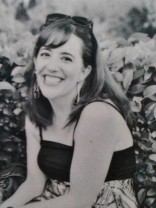
 It’s July which means we have collectively endured 7 months of uncertainty, turmoil, darkness, and light. America, we are still battling all aspects of the virus: rising numbers of infected, those that deny its existence, those refusing to wear masks to help to stop the spread, and everyone else doing their duty by staying at home, washing their hands, and wearing masks. Yet, something else has added to the mix and the COVID19 pandemic; social media. Social media has taken on a whole new level for activism and resistance.
Poem: An Ode for Nurses during a Pandemic by Marie Cartier
 — for Alex, a nurse I met who is also a poet, and all nurses
I heard that you are a poet
and a nurse. I imagine all the nurses who also
are something else—a chef, a Mom, a painter… a race car driver.
I want to image your life, this poet – and a nurse, in the middle of a pandemic.
I want to appreciate your life—and your stewardship of life and earth and what is in between.
I never knew nurses took an oath.
And I was a friend’s nurse graduation
at Royce Hall at UCLA, where we had both been to school, and when the
graduating class read the oath for nurses,
all throughout the auditorium nurses
stood up and said the oath with them. So, moving. So surprising.
I loved those nurses, nurses rising, and committing to their oath again.
And again, at every graduation they go to, they say the oath.
Bless those nurses, I thought. So grateful for your service. Continue reading “Poem: An Ode for Nurses during a Pandemic by Marie Cartier”
Pandemic Grace: A FAR Message from Xochitl Alvizo
 Hello FAR friends,
I hope you are each doing well – that you are holding up ok during these trying times. It’s Xochitl here. I’m the behind-the-scenes co-weaver keeping things afloat (to varying degrees!) on this collaborative endeavor we call Feminism and Religion.
You may have noticed some gaps in our postings these last couple of months; I want to reassure you that it’s all ok. The gaps are an indication that we are giving one another a lot of pandemic grace. These are tough times and we are all doing what we can to make it through.
FAR will keep publishing as our contributors are able to submit their pieces. We always also welcome new voices and contributions to join in. I will do my best to keep up with the correspondence, but I do appreciate your patience. We are an all-volunteer project and everything we do is done out of our heartfelt commitment. And for all of it, I am grateful.
May we all be well, may we be safe, and may we find our peace.
Rage on, friends!
~ Xochitl

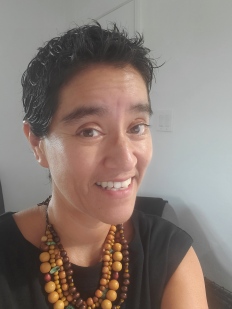
P.S. I’m growing my hair out! I figured quarantine time was a good time to experiment…we’ll see how it goes :)
All the Perils of this Night: a preview by Elizabeth Cunningham
 When I wrote Murder at the Rummage Sale, my agent warned: “You have to have a sequel in mind!” I was supposed to write a second domestic cozy, same setting, same characters, different victim. But what came to mind was a memory. When I was a troubled teen visiting England, my uncle gave me a map and let me go sightseeing in London on my own. It was early winter 1968, the war in Vietnam was raging. I did not want to be an American; so I faked an accent, wore an eccentric hat, and called myself Eliza Doolittle. When a man picked me up, I did not know how to break out of character. I ended up drunk in his flat. I just managed to fight off rape. The man must have figured out that I didn’t add up and could land him in trouble. He took me back to my uncle’s office. The kernel for All the Perils of this Night is: what if he hadn’t? What if, like so many others, I had been trafficked? I couldn’t shake that “what if.” So I wrote the standalone sequel, no domestic cozy but what I would call a numinous thriller.
In July, in honor of Mary Magdalen’s feast day, I usually post about Maeve, my Celtic Mary Magdalen. This year Maeve urged me to select an excerpt from the new novel. In the scene below Anne, teenaged Katherine’s mother, is searching for her vanished daughter in London’s red light district. A prostitute agrees to speak with her if Anne will pay for her time. Continue reading “All the Perils of this Night: a preview by Elizabeth Cunningham”
Seven Days in a Greek Hospital by Carol P. Christ
 I was released from a national hospital in Crete on Friday afternoon after a seven day stay. During that time, I had over fifteen tests, including several ultrasounds, two CTs, a colonoscopy, a gastroscopy, and an excruciating forty-five minute MRI.
The cost: nothing. As a Greek citizen, I am fully covered under the national health, due to a change in the laws initiated by the SYRIZA government a few years ago.
I had not been feeling well for a few weeks. I had little appetite, no energy, and my tummy was sore. I chalked it all up to the stress of moving from Lesbos to Crete, not to mention the stress of quarantine that preceded the move. When I was taken to the emergency room by friends, I expected to be given a few pills and sent home. Continue reading “Seven Days in a Greek Hospital by Carol P. Christ”
Peter’s Meadow by Sara Wright
 I hardly knew you.
We always met at
the meadow,
the one alive in
your imagination.
Last fall you told me
how beautiful
it would look
when wildflowers bloomed.
An Outrageously Strange, Bizarrely Weird, Completely True Tale by Janet Maika’i Rudolph

The word apocalypse keeps coming up when I talk to friends about how our present times feel. We’ve all noted how cracks in our society are tearing open and fault-lines are rising to the surface. It is disorienting yet also potentially transforming. I realized I’ve felt this way before:
In January 1997, I became an apprentice to a husband and wife shaman team. They ran an old-style mystery school with regular weekend workshops in Maine and a 4-day in the summer. In August 1997, we met on forested private property that was far from any “civilization.”
Regular weekend meetings began after dinner which gave our small NYC area contingent plenty of time for a leisurely drive up the coast. In August, our teachers wanted us to arrive earlier. We arranged to take the Long Island Sound ferry to Connecticut to avoid the time-consuming drive around the city. About ½ way through our 1 ½ hour ferry ride, a shocking event happened. An elderly woman sitting near us dropped like a rock to the ground. Her daughter began screaming. No one could rouse her. The ferry returned to NY where an emergency crew tried and failed to revive her. She had literally died at our feet. By this time, I was not only thoroughly rattled, I was also deep into contemplating issues of life and death. Because of our delayed arrival in Conn, we began hitting evening rush hour along the major cities of our route. We did not arrive in Maine until well after dark. Continue reading “An Outrageously Strange, Bizarrely Weird, Completely True Tale by Janet Maika’i Rudolph”
Octavia Tried to Tell Us: Parable for Today’s Pandemic by Monica Coleman
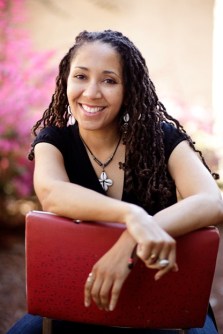 In national quarantine and sheltering-in-place or is it “safer-at-home,” all I could think about was that we were living in a scene from the late Afrofuturist writer Octavia Butler’s book Parable of the Sower. So I texted my friend, Afrofuturist writer Tananarive Due and said: hey let’s do a webinar on this. And this turned into weekly – then monthly – free webinars on the wisdom we can glean from Octavia Butler as we live through these political days.
Here, I share a recent workshop and dialogue that lifts up Octavia’s Parable of the Sower and highlights themes of prophecy, dystopia, theology and a way forward in times like these.
If you are interested in engaging more intimate work centered on Octavia’s work, visit OctaviaWebinar.com for more information.
Dr. Monica A. Coleman is Professor of Africana Studies at the University of Delaware. She spent over ten years in graduate theological education at Claremont School of Theology, the Center for Process Studies and Lutheran School of Theology at Chicago. Coleman has earned degrees from Harvard University, Vanderbilt University and Claremont Graduate University. She has received funding from leading foundations in the United States, including the Ford Foundation, the Andrew W. Mellon Foundation, and the Woodrow Wilson Fellowship Foundation, among others.
Answering her call to ministry at 19 years of age, Coleman is an ordained minister in the African Methodist Episcopal Church and an initiate in traditional Yoruba religion.
Dr. Coleman offers workshops, lectures and books for your organization, university or church. She warmly connects with people as she shares principles for growth and liberation. Read her story here.
In Search of Insight by Gina Messina
 A conversation I often have with students is focused on the ways mission and purpose are inextricably linked with our roles as human beings. Understanding what it means to say that human beings have a specific purpose can feel overwhelming and spiral us into an existential crisis; a hallmark of a “Messina class,” according to one of my students.
Regardless of religious or spiritual beliefs, we must know that we are called to a particular mission within our lives. We are gifted with knowledge and abilities that contribute to a greater whole. And when we are willing to see our own missions through, we become part of a collective effort that honors the humanity of all.
For many of us, we have a mission; an understanding of our purpose and how we can engage our communities to work toward positive social change. But as time passes, we grow, our circumstances shift, and we gain insight; as a result, our missions need to reshape.
For women, and particularly women of color, our ability to understand and engage our missions have been bogged down with oppressive structures that devalue our contributions. Dualism has forced women into roles of passive care takers who always put themselves last. Acknowledging the critique of white feminism, women of color experience such roles in a far more damaging way, expected to not only care for their own families; but also serve those who society has claimed to have a higher status based on race and wealth. Although we too are made in the image of God, our full humanity is often denied, with intersecting identities determining our level of worthiness in this broken world. Continue reading “In Search of Insight by Gina Messina”
Not yet time to join the ancestors…by Eline Kieft
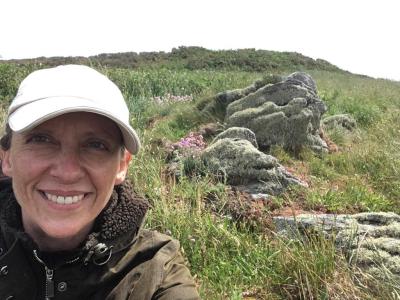 Exactly a year ago on May 22th, I didn’t join the ancestors. I had a very close shave after an undiagnosed ectopic pregnancy, and I was rushed into hospital for a life-saving operation. Ectopic pregnancy means that the foetus nested in my fallopian tube instead of my womb. This is a dangerous condition, and one of the leading causes for maternal death in the first three months. According to the doctors it had been a window of two hours. Any longer, and I would no longer be here.
I am so grateful that I could give space and attention to the healing journey, which was intense and multi-layered. I went through deserts of despair, oceans of grief, volcanos of rage… with open eyes, as much as possible. Writing poetry, journaling, painting, ceremony, and being out in nature were some ingredients that helped me integrate this experience. Continue reading “Not yet time to join the ancestors…by Eline Kieft”

