

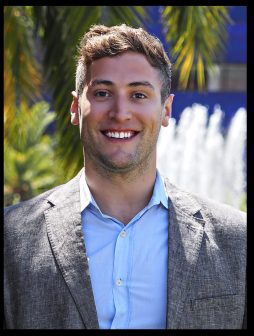
I have a Ph.D. in American Religious History but I’ve never been much of a religious person. It’s been one of the conundrums of my life but nevertheless, I found religion and its role in influencing, for good and bad, the lived experiences of the LGBTQ community something worth exploring.
I’ve been struggling with writing this post ever since I graduated and officially became “Dr. John.” In preparing for my defense, the Chair of my Dissertation Committee requested that at the start of the defense, he wanted me to introduce my project, its overall scope, and most importantly why I wrote it.
Why did I write it? How does one answer why they chose to devote 8 years of their life to a single subject in search of an original idea? While some would sit and grapple with this question, I knew what the answer was all along because it always was (and always will be) about my maternal grandmother, Gladys Hritsko.
I wanted to know what made me different. Throughout my dissertation, I interviewed people who, much like myself, grew up in similar small towns, attended the same conservative church services, and heard the same damning things that I did about my sexuality being preached from the pulpit. Many of my subjects were deeply hurt by religion and it set some of them up for years of searching and painful memories and experiences that both forced them to leave their religious and faith-based communities they grew up in or, in the worst case, being kicked out by their family as a result of their religion.
 A few days ago, a friend told me she had just learned that she had a 2x great-aunt who was a beloved and honored single white teacher in the US south in the first half of the twentieth century. The beloved teacher had a school named after her. My friend never heard anything about her distinguished relative while growing up. As a woman without children herself and a teacher, she wished she had. “There are many of us,” she commented.
 If you have not yet realized that the Christmas story is a story of liberation from oppression, it is time to realize that. I like to dust off the patriarchy and misogyny of scriptural writers to find the beautiful wisdom within the stories and songs. Here is my daily devotional for the third week of Advent, the week of Love. May our ever-birthing Goddess guide you to recognize and birth Joy, with all Creation. As the sky turns dark, may our candles shine ever brighter, together.
  Ah, Christmas. So nostalgic. So sentimental. Fat, fluffy sheep. Singing angels. The ‘little Lord Jesus,’ asleep on the hay. Happy sigh.
 From the very moment after the dust settled from the 2016 elections, notions of impeachment started to break. Now three years into the Trump Presidency, impeachment proceedings have been launched. To start, Impeachment is a Constitutionally supported right. It is an element of the “Checks and Balances” system to ensure that no one branch of the government holds too much power. Instigating impeachment processes is not treason, nor is it unpatriotic – it is a testament to the democratic procedures established by the founding fathers and maintained for the last 230 years.
 With Winter Moon’s passage and the approach of the winter solstice just a little less than a week away I am much aware of the (potential healing) dwelling place that I inhabit that also characterizes these dark months of the year.
 The other night, while I was having dinner with two Greek women friends, one of them asked me what I learned studying theology at Yale. I responded that I learned that woman was created second; that she brought sin and death into the world; and that therefore woman must obey man.
 When I was in my late teens, my mother became friendly with Beth, a woman she occasionally worked with on the post-partum unit of the local hospital. Beth had two children a little younger than I, however, when our moms got together outside of the workplace, we (the kids) sometimes found ourselves thrust together.
