“We are an overflowing river.
We are a hurricane.
We are an earthquake.
We are a volcano, a tsunami, a forest fire…”
These words written by Judith Shaw speak to the underlying merging of woman’s anger with Earth’s natural disasters, suggesting to me that women use “natural” violence in order to create change.
Violence, not the values of compassion and cooperation.
Violence and power over are the primary tools that Patriarchy uses to control women and the Earth.
Engaging in more violence will not solve the problems we face.
So many women including me are struggling like never before to survive on the edge of a culture that continues to sanction the vicious ongoing rape of both women and the Earth.
I use the death of trees as a primary example of the latter. By logging trees by the billions or killing them in “controlled burns” we are literally destroying human and non – human species. Without trees/plants we lose the oxygen we need to breathe.
We need “woman – centered” women to say NO!!! WE WON’T TOLERATE LIVING IN A DEATH DESTROYING CULTURE PREDICATED ON RAPE OF WOMEN AND THE EARTH.
We need women who are willing support other women – Women who refuse to remain neutral – Women who don’t wait until their mothers, daughters, sisters, nieces, granddaughters are assaulted to take a stand with other women – Women who refuse to stand behind their men when those men continue to support individuals (males or male identified women – the latter are often “Father’s Daughters” in Jungian parlance) – Women who refuse to support a Patriarchal system that is destroying us all.
Today I am reposting the song and story of Kassiani, the Byzantine composer, poet, and hymnographer, who is not well-known to western feminists or in western history in general. In Christian Orthodox tradition, Kassiani’s most famous song will be sung this week on Easter Tuesday night or very early Easter Wednesday morning, placing a woman’s love for Jesus at the heart of the Easter drama.
For many this song is the high point of Easter week.
Kassiani, also known as St. Kassia, was a Greek woman born into a wealthy family in Constantinople (now Istanbul) about 805 to 810 AD. According to three historians of the time, she was intelligent and beautiful and selected as a potential bride for the Emperor Theophilos. The chroniclers state that the Theophilos approached her and said: “Through woman, the worst,” referring to the sin of Eve. Clever Kassiani responded, “Through woman, the best,” referring to the birth of the Savior through Mary.
Apparently unable to accept being put in his place by a woman, Theophilos chose another bride. Perhaps relieved, Kassiani founded a monastery in Constantinople becoming its first abbess. She was an outspoken theological advocate of icons during the iconoclastic crisis (for which she was flogged). One of only two women to publish under her own name during the Byzantine Middle Ages, Kassiani wrote both poetry and hymns. Up to 50 of her hymns are known today, with 23 of them being part of the Greek Orthodox liturgy. Continue reading “Kassiani’s Song: Woman at the Center of the Easter Drama by Carol P. Christ”
As a minister’s daughter, I grew up almost literally in the church, its red door and ivied walls across the driveway from the rectory. On Easter the church was packed; every family received a pink or red geranium. There were Easter egg hunts, baskets stocked with chocolate rabbits and the jelly beans these magical creatures laid. The church rang with triumphant hymns: Jesus Christ is risen today. Although like all children I reveled in holidays involving excessive sweets, it was not the candy or the or the requisite rejoicing that moved me most.
It was the women, or in the Gospel according to John, the woman, bereft and brave, who went to the tomb to tend Jesus’s body. The male disciples had scattered and gone into hiding. In the Protestant Episcopal Church, Christmas Eve and Easter were the only times women played a prominent role in the story. Those were not the loud, triumphant moments. They lived in my child’s imagination as the quiet, mysterious times, Mary giving birth in the night attended by cows, donkeys, and stars. Dawn in a garden, wet with dew, the only sound birds waking and singing, the only people, the women, or the one woman who captured my imagination and, in my story, has her own apotheosis on that morning.
I did not question the miracle of resurrection. Miracles and magic made sense to me as a child. Theology didn’t. My father liked to expound on Jesus’s utterance from the cross “My God, my God why hast though forsaken me.” He insisted that Jesus was not crying out in despair but quoting Psalm 22, which ends in triumph. The Gospel narratives emphasize Jesus’s rising again “in accordance with the scriptures,” implying that he knew he would come back to life on the third day.
Even though I realized at least 17 years ago that it makes no theological sense to limit our symbols of the Divine to male symbols – Lord, God, Father – it took several years for this idea to embed itself into my subconscious. Over time, male language moved from ‘unnoticed’ to ‘noticed’ to ‘distracting’ to, eventually, ‘oppressively violent when used exclusively, without female images to balance out millennia of the idolatry of maleness.’
One of my favorite ways to dislodge this subconscious, internalized patriarchy has involved rewriting favorite old hymns. I usually try to incorporate a combination of images, to represent the incarnate divinity of all genders and all Creation. But let’s be honest: female terms for the Divine remain startling in many religious and secular, cultural contexts. In my own Methodist tradition, even though progressive Methodists sign up on paper to the idea that “God” (there we go again with the male terms) is bigger than any symbol or gender, I’ve as yet only ever been to one Christian church that used balanced gender images of the Divine, and that was a queer welcoming Methodist ministry with intentionally inclusive theology and liturgy.
I think that church saved my life. Some days, I also think it ruined my life. It showed us all what Methodism can be; and then, its time ended, and we alums drifted into the diaspora to try to take the hope and healing we experienced there into our own journeys. Some of us remain within Methodism and continue to work for the vision of welcome, of the kin-dom, that we sought together there. Personally, I love being Methodist. Grace, the journey, grace, the quadrilateral, grace.
Today, Good Friday, marks the seventh anniversary of one of the most significant dates in my life – the adoption of my daughter, Sarah. On Easter Sunday, 2012 I wrote about the resurrection of my family.
Much has changed since the government acknowledged that Sarah is my child – something I knew from the moment we saw each other. My seventeen year marriage ended, I lost significant persons in my life to death — and to the 2016 presidential election, and my career has had many ups and downs. While many of us think of our lives as a path to resurrection, what I have come to understand in being a mother, is that resurrection is not a once and for all thing. Every day, I find salvation in the moments I experience with Sarah. I recognize the ways my loved ones are resurrected in me. And I have found new appreciation for the joys life brings, even when they seem few amongst the ways we experience suffering and loss.
In the years that I have been blogging, this is by far my favorite post and I have been so grateful for the many wonderful responses I have received from it. It seems an appropriate time to revisit this incredible experience and once again, give thanks for the experience of salvation in my life, and proclaim the miracle of my family.
*******************************************
As I had written about in a previous post, my ex-husband and I had a very long struggle with infertility. After nine years, multiple failed rounds of infertility treatments, and much heartache, we decided to look at alternative options to grow our family. Once we had made the decision to adopt, I felt new hope. There was a light at the end of the tunnel and I knew a child would be coming home to us before long. I had a dream that Mary, the mother of Jesus, had come to me and told me that I would be a mother. She promised that a child was waiting that needed and wanted mg love and would arrive soon. I began praying to a shrine of Mary at a local parish near my home; she became my source of strength and solace.
Not long after being approved for the adoption waiting list, I embarked on a trip to Italy with my family to visit my father’s hometown and meet our relatives. It was quite an adventure and during our excursion I stopped in every church I passed to say a prayer to Mary. Half way through the trip I received a call that a child was matched with me. To say I was overjoyed would be a complete understatement. I tried to catch an earlier flight home but was unable. A once in a lifetime trip was suddenly of no interest as I sat around my hotel room looking at baby items, reading parenting info, and preparing for the homecoming of my daughter.
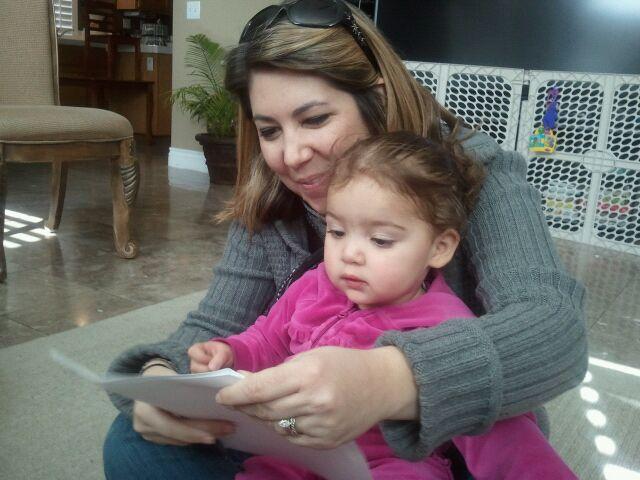
Mommy and Sarah meet for the first time.
I met my daughter – Baby S – for the first time in January, 2011. She was 20 months old and from the moment I saw her, I knew we were destined to be together. I had been terrified on our way to meet her wondering what she would be like. Would she like me? Love me? Would she accept me as her mother? When I entered her foster home and came around the corner, we locked eyes as she ran toward me giggling; I picked her up and we embraced and I instantly fell in love. She was the child Mary had promised me.
After my daughter had been home for about a month, I was notified that there was a problem with her adoption. A biological relative had hired an attorney and was seeking custody. It was an incredible shock; I was frightened and found that I had no rights in the process because I was considered a foster parent until the adoption was finalized. After three months of having my daughter home a court ruled that she had been placed with me in error. Baby S was taken from my custody and my world crashed around me.
The grief I felt was unbearable and I questioned what kind of God would be so cruel. My family was lost, as was my dream of being a parent. I had given up on motherhood; after losing Baby S I could not imagine bringing another child into my home.
Five months passed when I received the unexpected and unbelievable call from the adoption worker that the relative was no longer able to care for Baby S; she had asked that Baby S be returned to my care. It was a miracle, my daughter was coming home to me.
From the time I received the call until Baby S came home, nearly three weeks had passed. Again, I was worried about seeing her for the first time. How difficult would it be for her to move again? What had her life been like for five months? Would she accept me as her mother? When she finally arrived Baby S walked into our home and into my arms. Our connection had never faded. She was my daughter. Mary had known it, and at that moment, I knew it.
Baby S has been home for a little over six months now. She has changed my life in so many ways and every day I wake up thankful to be her mom. While the grief I had (and Sarah too) endured was unspeakable, the end result was worthy. I have come to know Baby S’s biological family well. They are wonderful people and together we all share a deep love for Baby S and want what is best for her. We will have an open adoption, a true gift in so many ways. Had we not gone through this entire ordeal, we would have never come to know her biological relatives. I believe Baby S’s life will be better for it, as will ours.
I had been unable to share our wonderful news previously because our adoption was pending. However, on Good Friday we entered a courtroom with Baby S and her adoption was finalized. I wept as the judge who had removed Baby S from my custody a year ago stated that it was clear she belonged with me. It was the moment I had been waiting for; although Mary told me Baby S was destined to be my child, although I have known she is my daughter for sometime, the legal system has finally recognized this as well. So here, on this Easter Sunday, I am writing to tell you our family has been resurrected.
Gina Messina, Ph.D. is an American feminist scholar, Catholic theologian, activist, and mom. She serves as Associate Professor of Religious Studies at Ursuline College and is co-founder of FeminismAndReligion.com. She has written for the Huffington Post and is author or editor of five books including Jesus in the White House: Make Humanity Great Againand Women Religion Revolution. Messina is a widely sought after speaker and has presented across the US at universities, organizations, conferences and on national platforms including appearances on MSNBC, Tavis Smiley, NPR and the TEDx stage. She has also spoken at the Commission on the Status of Women at the United Nations to discuss matters impacting the lives of women around the globe. Messina is active in movements to end violence against women and explores opportunities for peace building and spiritual healing. Connect with her on Twitter @GMessinaPhD, Instagram: @GinaMessinaPhD, Facebook, and her website ginamessina.com.
Let me share with you the Goddess most honored as the Goddess of liminal time and space. It is our beloved Hekate, Great Goddess of the Three Ways, bridging Earth, Sea and Sky as we travel between worlds.
In modern times, She is seen by many as a “hag” or old witch stirring the cauldron. This idea was popularized by Roberts Graves’ book, The White Goddess. In early writings, however, she is portrayed as a beautiful and powerful maiden goddess.
“I come, a virgin of varied forms, wandering through the heavens, bull-faced, three-headed, ruthless, with golden arrows; chaste Phoebe bringing light to mortals, Eileithyia; bearing the three synthemata [sacred signs] of a triple nature. In the Aether I appear in fiery forms and in the air, I sit in a silver chariot.” (Chaldean Oracles)
She was the only one of the ancient Titans that Zeus allowed to retain her power after the Olympians seized control. She shared with Zeus, the awesome power of granting all wishes to humanity (or withholding, if she chose).
I caution myself to be critical and nuanced. I’m sorry, folks. I just haven’t had such dazzling hope or remote interest in politics since. . . well, since I was a puppet junior high evangelist for an independent candidate my Dad liked, and I don’t want to try to remember who it was. But I was 13. And I’m 38 now. What hath made this cold, indifferent, anxious millennial’s soul to warm?
I am into mindfulness, contemplative studies, Eckhart Tolle, Don Miguel Ruiz, Nhat Thich Hanh, the kind of comparative religious studies scholar who has eastern spirituality leanings, so when I heard Marianne Williamson was a presidential candidate, I got curious. I’ve not read A Course in Miracles (although I think I’ve avoided it for the same assumptions Williamson says she initially made) or actually any of her books. Williamson is Jewish and has a pluralistic perspective when it comes to noting the basic underlying wisdom of all religious and spiritual beliefs (I realize we have discussed this before when I called them “wisdom traditions” – is any tradition actually wise/can you separate the violence, oppressions, and misogynies of them?).
She speaks in cool, rushing waters and has a platform that still sounds “political”/political (she breaks down what this word actually means in her latest CNN Town Hall) and is spiritual and based in a rhetoric of love. After the complete loss of hope in what [T . .] represents, and the not-yet healed wounds from [B. . .], she sounds like a reasonable adult, much like Obama did during his years. I wonder if they are friends? They should be.
Passover is a holiday of remembrance, of ritual re-enactment: this, we say, is what our ancestors experienced. This is what they felt and knew, what they tasted in their blood. The movement from slavery to liberation, from the soul’s winter to spring. We must never forget, we say, we must always remember, be thankful for our freedom, never take it for granted. “In each generation,” the Haggadah enjoins, “we should feel as if we personally had come out of Egypt.”
This year, I celebrated the Jewish feast of Passover on March 31st–almost three weeks before the holiday’s official start on the evening of April 19th, the 15th of Nissan. It turned out to be my best Passover yet.
Because I’d been accepted for a residency at an artists’ colony beginning on April 17th, I had known since last Fall that I would not be home for the holiday. Given Passover’s importance for me–a Jew who left Egypt in her own lifetime, part of what some have called the “Second Exodus”–I had thought I might postpone the residency and even considered turning it down. But the colony could not change the dates, and, after much deliberation, I decided that my work as a fledgling translator was worth missing my usual gathering of family and friends. I told myself I could mark the arrival of Passover internally.
Last week, In the Room of Undressing where women strip themselves to the bone, my great-great-grandmothers on my father’s side spoke in me. I had been afraid they would judge me for not being a wife and mother like they were, but they did not.
The story continues with my great-great-grandmothers on my mother’s side.
Ingrid Mattsdottor, born 1829, Överhogdal, Jämtlands Län, Sweden, died 1918, Kansas City, Missouri, proprietor of a boarding house, mother of five daughters:
I was the oldest of eight children. Our father died when I was eleven. At sixteen I was sent to work as a servant in a village far from home. I stayed for six years. After that, I worked for two years on a farm in our village. I was twenty-nine, and wondering if I would be an old maid, when Olof and I married. Our five daughters came quickly. I knew a lot more about work and children he did, so I took charge. When the crops failed all over Sweden for two years running, I said enough was enough. As soon as our last daughter was born, I sold the farm, and we left for America.
Iowa was worse than Sweden. Our little Carin died the first year. Olof gave Ingrid to a wealthy Swedish couple without so much as a word to me. He kept talking about going back to Sweden. One day he took the money I set aside and bought his ticket.
By the time he came back for us, Anna, Sarah, Belle, and I had moved to Kansas City. I was running a boarding house. I told Olof that we had no intention of going back to Sweden with him. When Anna married, instead of moving out, she brought her husband and his children to live with us. Belle became quite the business woman and took over my role as provider. Sarah and her family were always close by.
I worked as hard as any man and Belle did too. “Far better off on our own,” we would often say. We are proud to have another strong woman in our family. I am sorry you didn’t get to meet Belle. You would have liked her.
In “Time Telling in Feminist Theory,” Rita Felski suggests that there are four main ways feminists discuss and use time: redemption, regression, repetition and rupture. They are aptly named as they behave similar to their labels. Redemption is the linear march of time, hopefully progressing step by step towards a redeemed, or at least better, future even if sometimes things get momentarily worse. Regression is the want to go back in time or at least return to idyllic and/or imagined pasts: to matriarchy or to a time before patriarchy’s violent arrival. Repetition is a focus on the cyclical nature of time in bodies, in daily chores, in seasons and so on. Rupture posits a break in time in a way what was before no longer makes sense or doesn’t exist. Think utopia or dystopia.
While she speaks of them individually, she also acknowledges that no one is bound to one manner of speaking of time and that, in many ways, they overlap and intertwine. Most feminist theorists use more than one although she asserts that feminism as a whole, “Unlike Marxism or liberalism… does not fold a temporal vision into its very core” (22). What she means exactly by this is unclear. Yet, if she means that feminism doesn’t share one unified vision of time or of the future, then I would agree with her. If she is suggesting that feminism isn’t really all that concerned with time, then I disagree. Feminism is all about creating a better world for us and for future generations. Continue reading “No Hope, No Problem: Reflections on Pesach, Time and Paradox. by Ivy Helman”



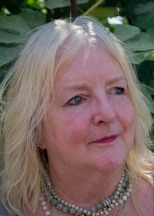 Today I am reposting the song and story of Kassiani, the Byzantine composer, poet, and hymnographer, who is not well-known to western feminists or in western history in general. In Christian Orthodox tradition, Kassiani’s most famous song will be sung this week on Easter Tuesday night or very early Easter Wednesday morning, placing a woman’s love for Jesus at the heart of the Easter drama.

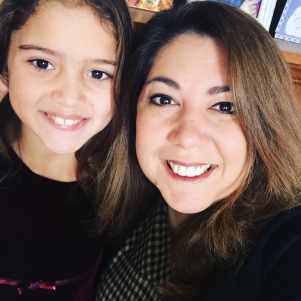 Today, Good Friday, marks the seventh anniversary of one of the most significant dates in my life – the adoption of my daughter, Sarah. On Easter Sunday, 2012 I wrote about the resurrection of my family.





 This year, I celebrated the Jewish feast of Passover on March 31st–almost three weeks before the holiday’s official start on the evening of April 19th, the 15th of Nissan. It turned out to be my best Passover yet.
 In “Time Telling in Feminist Theory,” Rita Felski suggests that there are four main ways feminists discuss and use time: redemption, regression, repetition and rupture. They are aptly named as they behave similar to their labels. Redemption is the linear march of time, hopefully progressing step by step towards a redeemed, or at least better, future even if sometimes things get momentarily worse. Regression is the want to go back in time or at least return to idyllic and/or imagined pasts: to matriarchy or to a time before patriarchy’s violent arrival. Repetition is a focus on the cyclical nature of time in bodies, in daily chores, in seasons and so on. Rupture posits a break in time in a way what was before no longer makes sense or doesn’t exist. Think utopia or dystopia.
