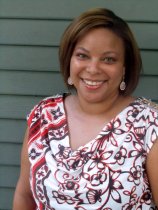
Dreams are my window on my wildest self. They are also a way to observe the conflicts within, and therefore they are a feminist practice, teaching me about my relationship to power, gentleness, love, and brokenness. Claiming my dreams is a way of claiming all the parts of myself. I am inspired in my dream practice by my own Jewish tradition, which has many dream practices, as well as by contemporary knowledge about dreams. Frequently in my dreams, I am able to observe my own longing for the company of women and for the presence of Goddess—deity in a female mode—in my life. Frequently, I learn about my experience as a woman by watching my dreams.
In one recent dream, I found myself in a town called Ursula, visiting a cave. Inside the cave were statues of holy women. After my visit, I expressed a desire to move to this town, Ursula. When I woke up, I remembered a painting I had seen in London when I was young: a depiction of St. Ursula, a fourth-century Catholic saint said to have led eleven thousand women on pilgrimage. Ursula is also the she-bear, an archetype of the sacred feminine. The desire to live in the town of Ursula could be read as a desire to live in the realm of the she-bear: in the company of women. The town of Ursula is also a town of the ancestors: the priestesses, prophetesses and wise women of old, represented by the statues in the cave. Though the imagery in my dream comes from a variety of cultures, the dream reminds me of my desire to connect to the women my tradition through dreams.
I teach Jewish dreamwork (based on biblical, Talmudic, kabbalistic and contemporary texts) to rabbinical and cantorial students at the Academy for Jewish Religion. I have seen how deeply it adds to my students’ spiritual lives. And, as one of the co-founders of the Kohenet Hebrew Priestess Institute, I have seen dreamwork transform the lives of women who are becoming ritual leaders and healers. Kohenet’s dream practice includes dream circles in which each participant offers a different reading of each dream, beginning with “In my dream of this dream.” We begin this way because each of us has a different understanding, influenced by who we are.
At Kohenet retreats, we often find that the dream of one person provides powerful healing for the whole community. For example, one woman dreamed of finding a bearded father-figure in a house. When she went into the basement, she found her mother working and writing next to a goddess shrine (Jill Hammer and Taya Shere, The Hebrew Priestess: Ancient and New Visions of Jewish Women’s Spiritual Leadership, p. 70). The dream expressed an experience many of us shared: the process of unearthing the power of women and the mythic feminine in our own lives.
A former monk and hospice worker Rodney Smith, now the Founding teacher in Seattle Insight Meditation Society uses the phrase: “Be complete in incompleteness” quite a lot.
When applied to Feminism, to me it means a couple of things. First, I find it hard, but I have to accept the fact that I will not probably experience the fullness of triumph of Feminism in my lifetime. I am of the “I want it all and I want it now” variety, but in this case I will have to come to terms with the fact that even my closest loved ones might not be fully feminist.
Only recently a woman close to me criticised Angela Merkel for her masculine style of clothing. I honestly thought that we had stopped judging politicians based on their gender or the clothes we think appropriate to that gender.
I have called it, The Terrible Transition Year, this year of finishing dissertation, uprooting from home, moving cross-country, and starting a new full-time teaching job. Last year at this time I was in LA for a 7-8 week stay, away from home – which at the time was in Boston – writing dissertation nonstop. I spent the holidays apart from my family and shared in none of my traditional holiday celebrations as I intensely pushed forward to complete the dissertation. After (seemingly) endless edits back and forth with my advisor and second reader, I finished the dissertation just in time to successfully defended it in May.
During most of this dissertation-writing time, I never had the sense that there would be a successful end to it all. I wrote and submitted each chapter-draft always with the underlying fear that I would be told my work was unworthy, my logic lacking, and my thesis unsubstantiated. So I vividly remember the moment (I can actually still feel it) when I got definitive affirmation that my dissertation would reach a successful end. I remember the shock, the relief, and the physiological rush that coursed through my body as I read the words of approval that came in response to my last chapter. I remember my body shooting up off the chair and saying, “No!” as I read the email. It was a “No” of disbelief, as in “Can this really be?!” And it was. And only at that point did I believe my dissertation would be successful. Continue reading “My Terrible Transition Year and the Return of my Humanity by Xochitl Alvizo”
I am not fond of Christmas and these holidays are very difficult for me to deal with. This has nothing to do with me being a Muslim. I have been a Grinch before this. I do not like excessive noise or crowds of people. It bothers me especially the excess, the lack of meaning and loud claims for kindness and mercy to decorate our lives for few days. This year is proving particularly hard for me.
Experiences of 2015 have forced me to question the paradigms under which I had lived until now. Life is suing me for an extra effort of introspective, growth and openness and that can be painful at times. A few weeks ago, I was venting my sorrows and doubts to my mother. I told her that the last thing I wanted to do was install a Xmas tree. She looked at her own Xmas tree full of golden balls and said:
“You know why I like Christmas trees? You were born a week before Pinochet’s coup. That year, the Dictatorship forbade people to buy, sell or cut pines trees under punishment, which ruined our Xmas, since plastic ones were very expensive. I built a tree for you at home, made of brass and wood. The center was a broomstick and the branches of wire. I cut leaves from empty cans of milk. I lost a child before you came to my life. And you were born in a country that suddenly lost freedom. I could not deny you hope. The Christmas tree has been my way to convey hope. That was my present.”
Listening to my mother, Christmas took on new meaning for me, a sacred dimension. I understand the sacred as those things, memories and spaces that are vital for us, all of what gives our lives meaning, purpose, reason and inspiration. I come from a family of women where husbands, brothers and male cousins are scarce. Joy, mourning, religion, knowledge or strength have been developed and shared from womb to womb. Continue reading “Xmas and Feminine Wisdom by Vanessa Rivera de la Fuente”
I originally shared this post in 2011. Here we are, nearly 5 years later and I while I don’t think a great deal has changed, some things have. Many may not agree with my avid support of Hillary Clinton’s presidential bid; nonetheless I think it is clear that Clinton is focused on running a women’s centered campaign, and that is something I find very hopeful.
While I still have not heard Clinton refer to herself as a feminist – please correct me if I am wrong – her focus on gendered issues is much more prominent. She has also acknowledged that while we should not vote for her just because she is a woman (there are many female politicians who would not get my vote) – her abilities to serve as president are critical – gender is an important factor in this race.
Joan Wages, President of the National Women’s History Museum has pointed out time and time again, you cannot be what you cannot see. If we want to raise our children – especially our daughters – to know they can be whatever they want when they grow up – they must have the opportunity to see a woman serve in office.
In Clinton I believe we have a candidate that is committed to working towards positive social change that will impact our children’s lives – my daughter’s life. A woman in office will finally shatter the ultimate glass ceiling.
My point here is not meant to be a political ad for Hillary Clinton, but rather acknowledgment that while change is slow – it is happening. And so, my post from 2011 on the ways women are strategic in upholding their feminist values.
————————————–
July 11, 2011
Last week Cynthia Garrity-Bond shared a post about Michele Bachmann and the misuse of the word feminism to describe her. Commenter Kate Barkernoted that Bachmann does not self-identify as a feminist, a very important point I think. It led me to wonder whether there are any women in politics who self-identify as feminist, and while there may certainly be some or even many, I cannot think of any who do so publicly.
During the Democratic National Convention in 2008, Hillary Clinton spoke of working towards women’s rights around the world, putting 18 million cracks in the glass ceiling, and being a member of the “sisterhood of the traveling pantsuits,” but did not directly identify herself as a feminist. I found Clinton’s membership to this “sisterhood” an interesting method of feminist self-identifying without employing the label.
It seems to me, to call oneself a “feminist” in the world of politics today would be to commit career suicide. This term has joined the likes of “communist” or “socialist” and is utilized to create fear. “Feminism” has become the new “F-word” and to self-identify as such, in politics, in religion, and in other spheres, often leads to marginalization.
Although we have been having conversations about feminism for quite sometime, entering the 21st century, we – society in general – continue to struggle with the meaning of the word. Does it only acknowledge women? Does it exclude men? Is it a Western term supporting a Western agenda?
Rosemary Radford Ruether’s definition (“What is Feminism and Why Should we do it?”) addresses these questions stating that feminism is “the affirmation of the full humanity of women… a critique of patriarchy as a system that distorts the humanity of both women and men…[and] is relevant cross culturally because all known cultures presently existing have been shaped in one way or another by patriarchy.” This is why her article has become such a central piece to this blog.
All this being said, we continue to struggle with feminism as an ugly word and thus women and men look for creative ways to identify with feminist values, like Clinton’s reference to the “Sisterhood of the Traveling Pantsuits.” While teaching a theology course this past semester I had several students comment that they felt the word “feminism” should be trashed in favor of a new term that doesn’t have such baggage. An interesting idea, but wouldn’t we simply be throwing in the towel and allowing a patriarchal system to define a term meant to support women’s full humanity?
To wrap up, I think this video from IFC’sPortlandia (which is highly amusing) does a great job of mocking some of the issues we face with feminism. For your entertainment:
Gina Messina-Dysert, Ph.D. is Assistant Professor of Religion and Gender Studies at Ursuline College and Co-founder of Feminism and Religion. She writes for The Huffington Post, has authored multiple publications and most recently co-edited the highly acclaimed Faithfully Feminist: Jewish, Christian, and Muslim Feminists on Why We Stay. Messina-Dysert is a widely sought after speaker and has presented across the US at universities, organizations, conferences and on national platforms including appearances on MSNBC, Tavis Smiley, NPR and the TEDx stage. She has also spoken at the Commission on the Status of Women at the United Nations to discuss matters impacting the lives women around the world. Messina-Dysert is active in movements to end violence against women and explores opportunities for spiritual healing. Connect with her on Twitter @FemTheologian, Facebook, and her websiteginamessinadysert.com.
As a maternal health advocate, I cherish the season of Advent as an opportunity to connect a beloved Christian story to the lives of women today who struggle to bring new life into the world under horrific circumstances. Every year I write something about Mary’s pregnancy and birth. In many ways she is no different from the “Marys” around the world who are young, poor, and unexpectedly pregnant, and who go on to give birth in unclean environments. I often pose the question to communities of faith, wasn’t the Christmas miracle equally that Mary survived the birth? How different would Jesus’s life have been if he’d never known his mother?
I continue asking these questions, but after my daughter was born last October, I have found my Advent reflections shifting to mirror my own parenting experiences. I began to think beyond Mary’s birth and into her early months of motherhood. One morning last December, after a particularly awful night’s sleep, I came downstairs to hear “Away in a Manger” playing on the radio. When it got to the line “But little Lord Jesus/No crying he makes,” I rolled my eyes dramatically and pictured Mary doing the same as she bounced a screaming baby Jesus in her arms. Continue reading “What If Jesus Had Gone to Daycare? by Katey Zeh”
Just before I went out on Friday night in Lesbos, my friend and sister feminist theologian Judith Plaskow emailed me from New York: “Right now we’re headed down to the Plaza Hotel to attend and try to disrupt a Trump luncheon!” That night, a friend asked me how I felt about Donald Trump. I threw my hands in front of my face and said: “I’m really glad I am not an American anymore.” Of course I am an American, but sometimes I don’t want to be one.
When I first started back on my journey to reclaim Judaism, I distinctly remember the first Hanukkah I lit candles. Not only was I bringing light into the literal darkness of night, I was also kindling the divine spark within myself. Each night I walked through a meditation I had created using the letters of the word Hanukkah, since there were eight letters and eight nights. I remember some of the words I had assigned to the nights: Holiness, Attentiveness, Night, Understand, Knowledge and Keep. I can’t remember the rest, but I do remember feeling the calm of the candlelight and the deepness of the meditation. I also remember that at some point, either I missed a night of lighting or I repeated one night twice because the days were officially over, and I still hadn’t lit all eight candles.
That has happened to me twice since I returned to Judaism. Yes, twice. Maybe three times. Oh, I don’t know. Now every time the festival approaches I worry that I’m going to do it again. I’m constantly rechecking the calendar so that I am certain I know which night we are on and so that I don’t miss one. I know it sounds like a mundane worry. Yet, in many ways Judaism works on turning the mundane into the holy. This was clearly a lesson on the ways in which the routine of life had too much control over me. Continue reading “I Missed a Day Again: Reflections on Hanukkah by Ivy Helman”
This holiday season, in the midst of our ever-repeating mass shootings and debates about the welcoming of Syrian refugees, I have seen a meme, a pithy quote, a bumper sticker time and time again amidst my fellow liberals:
“If only we had a seasonally appropriate story about Middle Eastern people seeking refuge being turned away by the heartless.”
Similarly, many have posted pictures of nativity scenes with a tongue-in-cheek quip, “I’m so glad people are placing these lawn ornaments in their yards to indicate that they welcome refugees into their homes.”
Myriad articles have been published encouraging Christians to remember our calling to welcome the refugee, and as an ordained clergywoman, I affirm these thoughts. I believe it is our responsibility, as Christians and particularly as feminist Christians, to welcome the marginalized, the oppressed, the refugee. I am also a strong believer in the separation of church and state, a distinctive imperative both to my Baptist tradition and to my home country of the United States. So, in many ways, it doesn’t really matter politically that my faith tradition teaches me to welcome the refugee because my country is not a Christian nation, but it does matter that the primary symbol of my country—the Statue of Liberty—proclaims boldly and without apology: “Give me your tired, your poor, Your huddled masses yearning to breathe free, The wretched refuse of your teeming shore. Send these, the homeless, tempest-tossed to me, I lift my lamp beside the golden door!” Continue reading “Painting Marys, Welcoming Refugees by Angela Yarber”
“I was born in a strange little country town that may be like all other country towns, but I do not know. It was the world I was born to. The world is such a place that you need special things to understand it. I do not think I am a fool, but I do not understand life. It is like I am always standing in the dark somewhere. It could be on the edge of a cliff by a deep ravine… Or on a flat piece of all the land in the world… and I would not know. I would not know whether to step stand still. Either one could be a danger… When I am alone. Some lives are like that. Depending on the kindness of everybody.”
-from “Feeling for Life “ in Some Soul to Keep by J. California Cooper
In my previous post, I wrote about the truths we learn from black women’s literary tradition and from listening to the stories of those we too often ignore. Continuing that reflection over the next few months, I’d like to share some of the lessons from J. California Cooper’s short stories. The quote above is taken from the opening paragraph of one of her works.


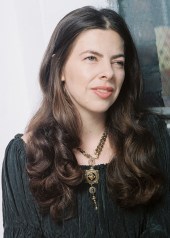 Dreams are my window on my wildest self. They are also a way to observe the conflicts within, and therefore they are a feminist practice, teaching me about my relationship to power, gentleness, love, and brokenness. Claiming my dreams is a way of claiming all the parts of myself. I am inspired in my dream practice by my own Jewish tradition, which has many dream practices, as well as by contemporary knowledge about dreams. Frequently in my dreams, I am able to observe my own longing for the company of women and for the presence of Goddess—deity in a female mode—in my life. Frequently, I learn about my experience as a woman by watching my dreams.
 A former monk and hospice worker
  Only recently a woman close to me criticised Angela Merkel for her masculine style of clothing. I honestly thought that we had stopped judging politicians based on their gender or the clothes we think appropriate to that gender.
 I have called it, The Terrible Transition Year, this year of finishing dissertation, uprooting from home, moving cross-country, and starting a new full-time teaching job. Last year at this time I was in LA for a 7-8 week stay, away from home – which at the time was in Boston – writing dissertation nonstop. I spent the holidays apart from my family and shared in none of my traditional holiday celebrations as I intensely pushed forward to complete the dissertation. After (seemingly) endless edits back and forth with my advisor and second reader, I finished the dissertation just in time to successfully defended it in May.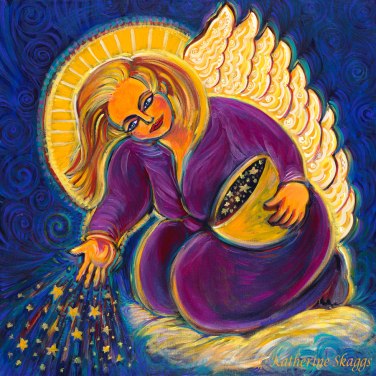
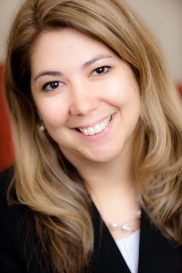 I originally shared this post in 2011. Here we are, nearly 5 years later and I while I don’t think a great deal has changed, some things have. Many may not agree with my avid support of Hillary Clinton’s presidential bid; nonetheless I think it is clear that Clinton is focused on running a women’s centered campaign, and that is something I find very hopeful.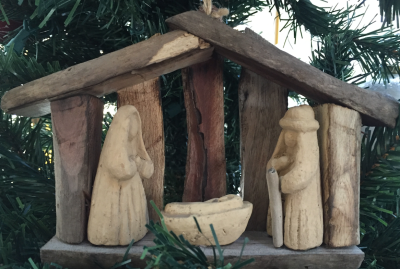
 Just before I went out on Friday night in Lesbos, my friend and sister feminist theologian Judith Plaskow emailed me from New York: “Right now we’re headed down to the Plaza Hotel to attend and try to disrupt a Trump luncheon!” That night, a friend asked me how I felt about Donald Trump. I threw my hands in front of my face and said: “I’m really glad I am not an American anymore.” Of course I am an American, but sometimes I don’t want to be one.
 This holiday season, in the midst of our ever-repeating mass shootings and debates about the welcoming of Syrian refugees, I have seen a meme, a pithy quote, a bumper sticker time and time again amidst my fellow liberals: