Green Tara by Jassy Watson

JassyGoddess Tara is one of the oldest goddesses who is still worshipped extensively in modern times. Tara originated as a Hindu goddess, a Great Goddess or Mother Creator, she who represents the eternal life force that fuels all life. In Sanskrit, the name Tara means Star, but she was also called The Great Compassionate Mother and The Great Protectress.

A version of the Goddess Tara exists in most cultures. It is believed that she will assume as many forms on earth as she is needed by the people.

Adopted by Buddhism in the third century BCE, Tara came to be the most widely revered deity in the Tibetan pantheon. Not only is she a Tibetan Goddess, but she is considered a female Buddha; an enlightened one was has attained the highest wisdom, capability and compassion. One who is able to take  human form and remain at one with every living thing.

The Celts called their Great Goddess Tara. Her name is thought to be the root of the word Tor, which is a mound of earth or hill imbued with spiritual energy or connection to the other worlds.

Her name is also echoed in the Latin word Terra, meaning earth; yet another connection between Tara and the idea of a “Mother Earth”.

The Goddess Tara is also associated with Kuan Yin, the great Chinese goddess of mercy compassion who is also another manifestation of Divine Mother.

There are many embodiments of Tara, but the best known are the White and Green Tara.

Green Tara is known for the activity of compassion. She is the consort of the Dhyani Buddha Amogasiddhi, and is incarnated in all good women. White Tara is also known for compassion, long life, healing and serenity. Red Tara is the fierce aspect associated with magnetizing all good things. While Black Tara is associated with power and Yellow Tara with wealth and prosperity.

In her numerous incarnations the goddess Tara has many gifts to share with modern women. She is an embodiment of the feminine strengths of deep care and compassion. She can offer support during stressful moments, helps to overcome obstacles and is a constant source of sustenance and protection. She is here to remind us of our “oneness” with all of creation and the importance of nurturing the spirit within.

My following painting of Green Tara is embodied as “Mother Earth”, she holds the earth gently and compassionately in her hands. New growth in the form of a tea leaf sprouts from the earth with the sacred red thread extending from the roots and into her hair which flows to her garment becoming the ocean – source of life. For me, she is a reminder to BE compassion and at one with the earth. She also came as a guide of peace and love on my continuing journey of transformation.

Om Shanti

I send peace for all human kind, peace for all living and non living beings, peace for the universe, peace for each and every thing in this whole cosmic manifestation.

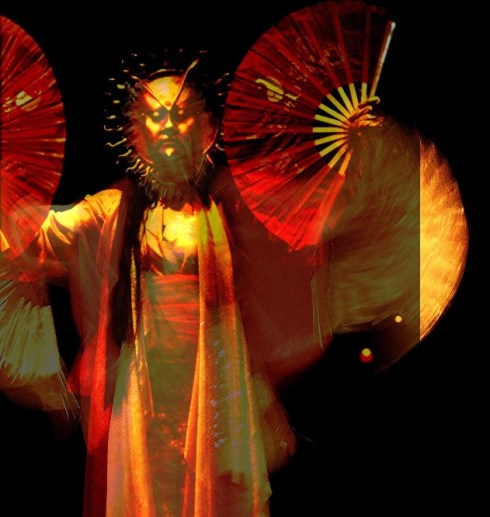
Green Tara by Jassy Watson

Poppaea & Paul: Was This About A Female Challenge To Male Privilege? by Stuart Dean

Poppaea Sabina as portrayed on a Roman coin minted 62-65 CE.


As suggested in my first post on Poppaea it is likely she knew one or more of the women Paul refers to in Romans. Of particular interest is the woman Paul refers to as his ‘mother’ (Romans 16:13).  If Poppaea knew her she surely knew about Paul.  If that was the case, then it seems all but certain Poppaea was among those members of the imperial household to whom Paul refers at Philippians 4:22.  Corroboration of that may have been in the source(s) of an anecdote Saint John Chrysostom tells, attributing Paul’s incarceration and execution to Nero’s anger at his interaction with a woman with whom Nero was erotically involved.

Though it is difficult to place much reliance on Chrysostom’s anecdote without more knowledge about his source(s), in the aggregate the evidence for Poppaea knowing about or even meeting with Paul is relatively strong, especially when compared to the sort of evidentiary problems with which ancient historians regularly grapple.  Furthermore, it is easy to spot the issue Poppaea would have focused on (that precisely because it relates to sexuality could have led in antiquity to the sort of distortion or misunderstanding of her motivation in meeting with Paul) that may underlie Chrysostom’s anecdote: circumcision.  The problem with understanding that issue today, however, ironically relates to modern perceptions of no relevance whatsoever to the ancient evidence. Continue reading “Poppaea & Paul: Was This About A Female Challenge To Male Privilege? by Stuart Dean”

Normativity, Naming, and the Divine Image by Natalie Weaver

Natalie Weaver editedOver the past two days, I have been considering the challenges and competing perspectives on Carol Christ’s post, “Who is Gender Queer?”  I’d like to weigh in with some thoughts on normativity, naming, and the divine image.

I do not identify as genderqueer.  But, like Carol describes in her post, I have often felt misfit or misnamed.  As we all do, I internalized categories of masculine and feminine in childhood and somehow felt myself to be “masculine” in my physicality, my dark eyebrows (which people – frequently strangers – felt regularly inclined to describe, critique, and even molest in bathrooms, checkout lines, and salons), my hairy legs (which seemed hairier than my girlfriends’ legs in grade school), my interests, even the way I thought.  My sense of my sexual self felt somehow masculine because I never experienced my body passively.  I climbed and jumped and ran more than my female classmates, and I had much smaller breasts than the women in my family.  The real proof for me, though, was that I never had a period on a 28-day cycle.  I grew up thinking I was defective and generally not a very good female.  All of this, of course, I now know merely reflects the onslaught of normative messages I unwittingly accepted in my formation about the experience, presentation, and performance of physical sex and gender.   Continue reading “Normativity, Naming, and the Divine Image by Natalie Weaver”

“‘A’ is for Adjunct:” National Adjunct Walkout Day #NAWD

"Scooped" by Vanessa Vaile onto A is for Adjunct
“Scooped” by Vanessa Vaile onto A is for Adjunct

On Wednesday February 25th, adjunct faculty across the United States walked out of their classrooms, and hosted teach-ins, lectures, film screenings and rallies, to protest the employment conditions faced by adjunct and all contingent faculty members of colleges and universities. I am adjunct faculty; and encouraged by what I learned in my own participation in the protest, I would like to share my experiences with you in this blog.

While many Universities last week held massive protests and walkouts on campus, I realized when planning my own protest that if I walked out, I would probably be standing outside on the lawn with very few other protesters. There are plenty of adjunct faculty on my campus—75% to be exact, the national average for all college and university campuses— but I know very few of my adjunct peers and we have no organized voice at the school. Weighing my options (admittedly last minute), I found a great power point presentation on the National Adjunct Walkout Day Facebook page prepared by a Texas adjunct professor, Dr. Jenny Smith, and made available for use by all through Slideshare. Instead of walking out, I taught-in; and I was surprised by how little my students knew about this issue, though I was incredibly heartened by their responses.

Continue reading ““‘A’ is for Adjunct:” National Adjunct Walkout Day #NAWD”

Who Is Gender Queer? by Carol P. Christ

carol p. christ photo michael bakas“It seems to me that calling oneself queer can be a way of affirming the parts (or all) of oneself that do not fit into the heteronormative paradigm. In my case, though I am white and straight, I am too tall, too smart, too assertive, too strong, too bold, too flashy, too unwilling to be controlled by men to fit the heteronormative paradigm of woman as in every way a little less than man–not as tall, not as smart, not disagreeing too much, not putting herself forward too much, not taking too many risks, not standing out in a crowd, and at least letting men think they are in charge. From this perspective, a whole lot of women are queer.”*

I wrote the above statement in response to a question posed to Vanessa de la Fuente after she called herself a gender queer Muslim feminist. Ivy Hellman asked if it is appropriation for a woman who does not herself identify as LGBTI to identify herself as queer: “where have you left room for queer individuals in their specificity and with their concerns? As a queer person (who happens to be Jewish and not Muslim), I have a problem with this because you end up losing what is particular about a certain group of people and their contributions as well as their particular gifts, struggles and perspectives within Islam (in your case) and Judaism (in mine).”

Vanessa responded that she claimed the term gender queer to describe herself as a feminist Muslim convert with dark skin who along with the “the women who participated in the mosque of women project” was about to “march along with feminist collectives, women theologians, trans women, lesbians, immigrant women, rural women, sex workers women, indigenous women, housemaids unions, all together to call for the early adoption and passing of the bill that legalizing abortion and ask on behalf of all women of Chile that our government hears each of our particular demands .”

I agree with Ivy that it is wrong for others to claim lesbian, gay, Jewish, or Muslim identities as a way of supporting struggles to end discrimination against particular groups. But am not so sure about the term “gender queer.” Though queer theory originally called attention to the ways in which butch lesbians and drag queens challenge gender stereotypes, the word “queer” has broader connotations, including “strange” or “different.”

*

Not long ago my friend Cristina called me “eccentric,” and I cringed. When I was very young, very tall, and very thin, my mother used to say to me, “You should be careful never to  gain weight because then you will not only be taller than the other girls, you will be bigger too.” While recognizing that in many ways I do not fit the “norms” that define the ideal female, I have spent a lifetime trying to pretend that I am “normal.” The idea I might be able to affirm that I am not normal but that I am nonetheless fine just as I am was an idea that my mother and I simply were not able to consider.

When I asked Cristina please not to call me “eccentric,” she responded that for her eccentric is a positive term because the last thing she would want to be is normal. Cristina’s embrace of her eccentricity caused me to wonder why I was still expending so much energy trying to claim my normality.

These questions were in my mind when in a ritual at the Skoteino Cave on the recent Goddess Pilgrimage to Crete, I dropped a stone down a deep hole affirming my desire to let go of my fear of being different. While sitting in meditation in darkness of the cave, I was surprised to hear the words from a Sesame Street song my little brother used to sing form in my mind: “One of these things is not like the others. One of these things just isn’t the same. If you can tell me which thing is not like the others, then we’ll finish our game.”**

As the words from the song swirled in my mind, I found myself physically raising my hand like a school child and while answering silently, “I am. I am the one who is not like the others.” This meditation was powerful because being taunted, excluded, or categorized because of my difference had caused me to spend a life time wanting to be like the others.

*

Before I posted my response to Ivy and Vanessa, I asked my theological pal Judith Plaskow (who like Ivy identifies as lesbian) if she would categorize me as gender queer because I am so much taller than women are supposed to be. She said yes. She went on to say that she gets tired of insisting that a woman can be as smart as she is and still be a woman. Sometimes, she mused, it is easier just to acknowledge that she is gender queer.

I was reminded that identity theories and politics name the experiences of excluded groups in order to call attention to injustice and to offer more inclusive theories. My work on women’s experiences is situated in this framework. While it can be exhausting to explain that women are, can be, and have been different than gender norms have dictated, I (along with Judith) continue to insist that our theories and our politics take account of and value all of women’s multifaceted and intersectional experiences.

Queer theory challenges identity theory by asking whether there are any fixed identities at all. Vanessa speaks to this point when she writes, “I think the beauty of being human is being able to flow, to mutate, to be free of categories and asserting oneself to embrace our quirks and our dark areas and our sorrows and doubts, without wanting to be anyone but myself and without wishing to be anywhere else than in the present moment . . . I am a queer person for many reasons . . . I surrender to the possibilities of life, of my body, of my mind, of my soul.”

As Vanessa states so eloquently, identifying as queer means no longer having to try to fit in, to be like the others, to be normal. Identifying as queer means that it is fine to be different, eccentric, not like the others. It means telling the gender police to “go jump in a lake and swallow a snake and come out with a belly ache.”***

*

Before beginning to write this piece, I watched the most recent episode of Grey’s Anatomy. I was delighted to see the camera focus on the way the character played by Geena Davis (who is six feet tall) “towered over” Arizona, Amelia, and Bailey. I hope Davis’s character will survive her brain surgery because it is such a rare treat for me to see a woman who is different in the way I am different have a part on television program. Thanks to Shonda Rhimes for creating a series where women who are not like the others are celebrated in their difference.

*The quote is edited slightly from the way it appears in the responses to Vanessa’s post.

**The Sesame Street game taught children to identify difference: for example, colors or apples and oranges.

***A children’s rhyme used to respond to being taunted.

Carol leads the life-transforming Goddess Pilgrimage to Crete (facebook and twitter)–space available on the spring and fall 2015 tours.  Carol’s books include She Who Changes and and Rebirth of the Goddess; with Judith Plaskow, the widely-used anthologies Womanspirit Rising and Weaving the Visions; and forthcoming next year, Goddess and God in the World: Conversations in Embodied Theology. Photo of Carol by Michael Bakas.

Being Scared: Fear and Authenticity by Ivy Helman

meblogMy partner is a lawyer who works with asylum seekers and other immigrants here in the Czech Republic (ČR). She’s amazing at her job and I’m constantly in awe of her passion and commitment along with her righteous anger at systematic injustices. In fact just last week, her workplace, together with a consortium of other immigration organizations in the ČR, helped organize a demonstration in the center of Prague to protest the Czech Republic’s refusal to admit Syrian children and their families into the country. She invited me to attend the event with her. I went.

It was my first time attending a public demonstration in Europe. It was moving to see many of her co-workers there and inspiring to listen to the passionate speeches against xenophobia, Islamophobia, racism, the plight of the Roma people as well as the need to come together and welcome diversity. In addition, there were signs in Czech, German and English saying “No One is Illegal,” “End Xenophobia,” “Do Syrian Children Have to Wait for their (Nicholas) Winton?” “I want to have a Syrian Friend!” and “Refugees Welcome!” I wanted to hold each one of those signs! Continue reading “Being Scared: Fear and Authenticity by Ivy Helman”

Connection by Deanne Quarrie

DeanneAs an introvert, I do a lot of listening. However, I have noticed that when I am in a group and think I am listening, quite often I have tuned out and am lost in my own thoughts. That doesn’t happen nearly as often when I am with one person, sharing in conversation.

Clearly there are times when I am with someone who is a “talker” and our conversation is mostly a monologue. I find this need to talk comes either from being alone most of the time or from not being listened to by anyone. So when I care about someone, I simply listen as they rattle on. Pretty soon however, the pace slows down and the content of the conversation takes on substance and if we are lucky, a true conversation can begin. If it doesn’t, then at least the other person who needed to be heard got a chance. Continue reading “Connection by Deanne Quarrie”

On Not Being A Big Hollywood Film Director, and Other Life Choices by Marie Cartier

MARIE CARTIER- YOUNGAs you read this, dear FAR community, it will be my 59th birthday. I was born February 27, 1956. I have one year to go before I turn 60. For this last year I desperately wanted to dye my hair blue, purple and green and let the roots go gray.

However in a long conversation with my hair stylist she helped me realize that I have spent so many years dying my hair various shades of brown, dark brown and burgundy that if I bleach the hair out to white (so that I can then go blue, purple and green) the hair will fry and fall out—ah, Ok. I willhair live with my brown, black and burgundy hair until I am ready to go completely gray and watch it grow out (my hairdresser tells me it will take three years). Or I will decide to live with the choice I made to dye my hair since I was 35 or so and let it be and keep dying it – and have that be the choice I made. Continue reading “On Not Being A Big Hollywood Film Director, and Other Life Choices by Marie Cartier”

Abuse Does Not Have “Fifty Shades of Grey” by Michele Stopera Freyhauf

WARNING: This article or pages it links to contain information about domestic abuse and sexual violence which may be triggering to survivors.


Freyhauf, Durham, Hahn Loeser, John CarrollNo matter what you call it abuse is abuse. This is highlighted in the popular book and now movie Fifty Shades of Grey. Because of the stir this book caused, I delved into the first book and my initial reaction was that of repulsion and wonderment. How could a woman let a man control her like that? Why would she let him do things like that to her and continue to come back to him? Why is this book so popular?

Are women sexually repressed in a way that their own sexual experiences are routine and boring (the book is full of BDSM) or they have never orgasmed (every time they have intercourse, Anastasia is guaranteed to orgasm)? Why do we find it okay to label body parts as “love boxes” or “considerable length” or the multitude of references to a man’s penis or woman’s vagina that is meant to sound sexy or romantic? Why does he announce “I am going to f*** you now” every single time they have intercourse? Can’t the reader figure out what is going on without making this announcement?

However, after I got beyond my initial reaction (or shock), I took a step back and became upset and outraged.  In essence, the overall issue with the book can be summed up in one word: control. Some women argue that the awkward doe-eyed virgin journalist exercises control over the sexually deviantPicture from fanpop.com

Picture from fanpop.com

billionaire that keeps him coming back to her – I disagree. I see control exercised by the sexually deviant man over a woman enamored by him in such a way that is sexually, physically, and psychologically exploitative and abusive. Yes – I understand this is fiction, but this type of writing causes immense problems.

In a culture that embraces “Blurred Lines,” money and power, and “the bad boy persona,” this storyline fuels the fodders of the fire with a sensationalism that plays on sexual fantasies and/or those wishing prince charming will sweep them away. One needs to look no further than “The Bachelor” or Bret Michaels’ “Rock of Love” television shows that promote the exploitation of women’s desires to be with the rich handsome man at any cost to self and dignity. In fact, an article posted about the movie stated that if Christian Grey was not a billionaire and behaved in the same way, he would be arrested and labeled a sex offender. So again, is the message we want to send to our daughters, nieces, and friends is that the rich can do whatever they want and you should let him? I think not.

Continue reading “Abuse Does Not Have “Fifty Shades of Grey” by Michele Stopera Freyhauf”

Credhe, Celtic Goddess of Love and Spirit Contact by Judith Shaw

judith Shaw photoCredhe, also known as Creide or Cred is an Irish Faery Queen Goddess of Love and Spirit Contact. She is associated with Danu’s mountains, the Paps of Anu.  These are two gently rounded high hills that were adorned by the ancients with earthen and rock mounds and cairns positioned on top to represent erect nipples.  Her Sidhe was most likely located near the Paps of Anu.  She is also associated with crystals, the color pink and rose oil.

Continue reading “Credhe, Celtic Goddess of Love and Spirit Contact by Judith Shaw”