Freedom and Faith by amina wadud

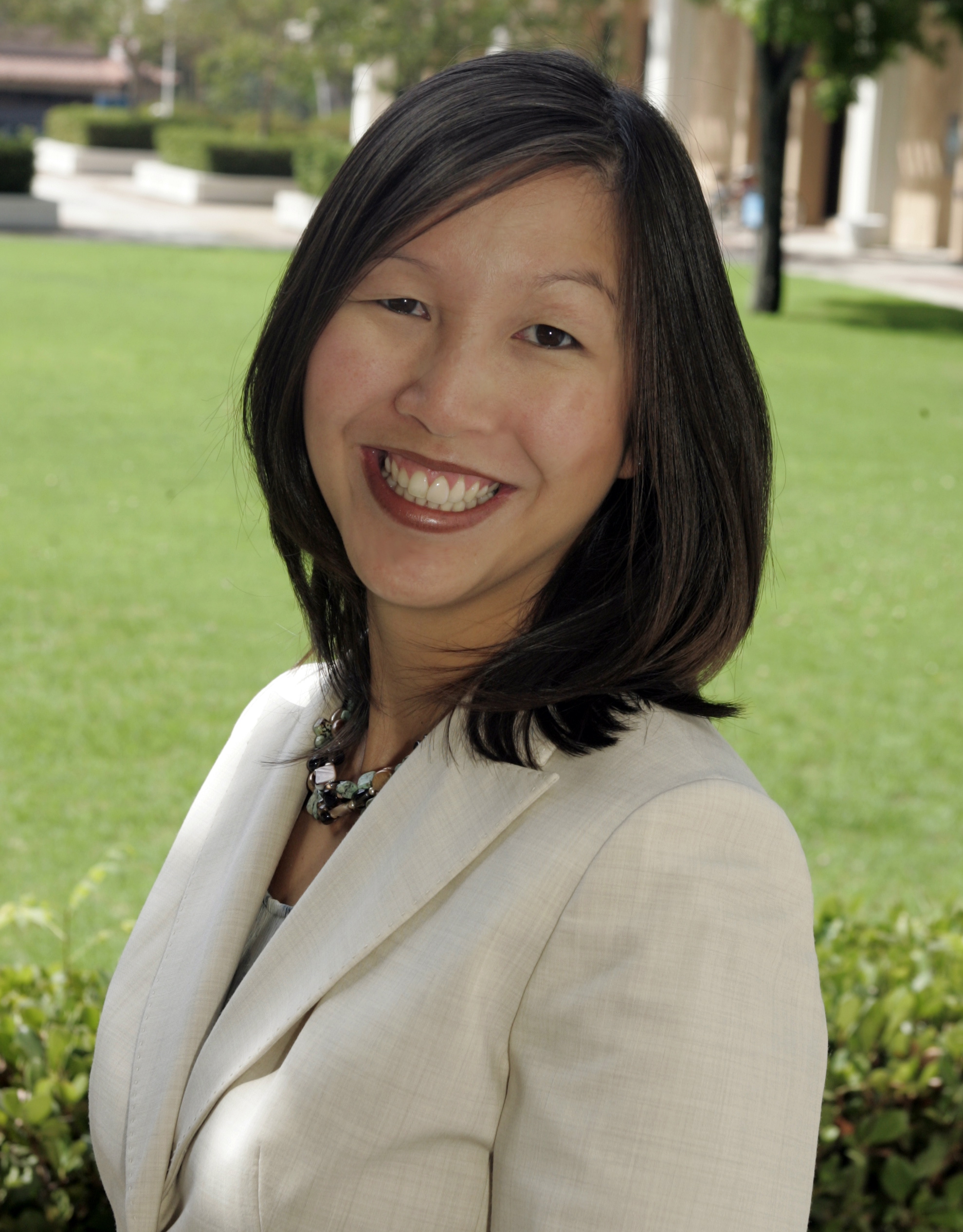
amina 2014 - cropped

 In September past I travelled to Zanzibar with a long time friend from Singapore. I intentionally planned to visit the places where other Africans, like my ancestors, were bought, sold, and held in waiting like fish in the fish market.  The slave trade in east Africa is linked to this historical island, which was like a Fed Ex hub: a central location to facilitate the transfer of slaves—stolen, captured in war, kidnapped, or bought elsewhere to be traded, from there to parts of Persia and Arabia.

I explained to my friend, EVERY African-American identifies intimately with slavery.  We talk as if it were only yesterday.  We say “we,” as though speaking of relatives in another city or town. We also say “they” about slave masters and traders, about the over seers who beat us, the men who raped our foremothers and sold off their children, the few who taught us to read in secret, or turned a blind eye at our efforts to escape. Yet, I know of NO WHITE person who identifies with their history as slave masters.

My intention was to perform some simple ritual interface at the markets and holding cells. I had not planned any details, I had only reflected on the value of sacred expiation and the reality of living blood still flowing because my ancestors gave their blood, sweat, and tears. Perhaps my blood would mingle with the spirit of the blood of my ancestors.  At least I hoped I could, through some selected prayers or liturgy, release anger, pain, and humiliation in exchange for a life of freedom. I owe my life to them and I wanted to consciously renew the bond and then, like Nelson Mandela’s walk to freedom, to LET it go. To honor my ancestors I must live fully and in freedom. Continue reading “Freedom and Faith by amina wadud”

Goodnight, Sweet Friends by Natalie Kertes Weaver

Natalie Weaver

Yesterday, to this day of my writing, two of my friends died.  Both endured years of struggle against cancers, and both finally yielded to death at nearly the same hour.  I received notices of their passing within moments of one another.  We sat vigil with the family of one of my friends until late in the evening, while the other friend was prepared for repatriation in the land of her ancestors.

In the home where we sat vigil, I entered the room where my friend had passed away.  I wanted to feel the last fading traces of her physical presence.  I don’t know whether any part of her was there or not, but I was grateful to be in the place where she had been.  The room was very full.  It held the medical equipment that had briefly sustained her life for the last few days, but it was mostly stuffed with the clutter and the souvenirs of a life.  Porcelain trinkets, formal family portraits, travel photographs, colorful shot glasses collected from the cities she had visited, and everything covered with a fine layer of dust. Continue reading “Goodnight, Sweet Friends by Natalie Kertes Weaver”

“Inheriting Our Mother’s Gardens”: Trans/lating, Trans/planting and Trans/forming Life by Sara Frykenberg

Sara FrykenbergThis Friday, March 7, 2014, the Women’s Caucus (WC) of the American Academy of Religion, Western Region will be hosting its annual “Professional Development Panel and Workshop” in Los Angeles, CA.  During the workshop panelists and attendees will consider what ‘gardens’ we have grown in, who our ‘mothers’ are and how this impacts what we bring to the table or what ‘gifts’ we bring to the table when dialoging with and across differences.  Our title and praxis at this event is also meant to honor our feminist mothers.  Specifically I would like to recognize and honor Letty Russel, Katie Geneva Cannon, Kwok Pui Lan and Ada Maria Isasi-Diaz.  Among many other accomplishments, these women edited the 1988 volume entitled: Inheriting Our Mothers’ Gardens: Feminist Theology in Third World Perspective.  This book helps to give voice to women marginalized within feminist theological discourses and is the inspiration for our panel’s title this year. 

Preparing for this panel, I reflected that many of those who contribute to this blog have written about their mothers (biological or non-biological) and mothering.  (Most recently I found myself inspired by Marie Cartier’s meditation on aging, health, her mother and religion.)  I realized that I have said very little about my own mom; my mom, who I am so like, who I look like, and who is both my mother and my friend.  I have definitely ‘inherited her garden,’ so to speak: flowers, herbs, weeds, rocks and all.  So, momma, this blog is for you.

Continue reading ““Inheriting Our Mother’s Gardens”: Trans/lating, Trans/planting and Trans/forming Life by Sara Frykenberg”

Was Ariadne the Most Graceful Bull-leaper of All? Deconstructing and Re-visioning Greek Mythology by Carol P. Christ

carol-christSometimes we think of Greek myth as a pre-patriarchal or less patriarchal alternative to the stories of the Bible. After all, Goddesses appear in Greek myths while they are nearly absent from the Bible. Right?

So far so good, but when we look more closely we can see that Greek myth enshrines patriarchal ideology just as surely as the Bible does.  We are so dazzled by the stories told by the Greeks that we designate them “the origin” of culture. We also have been taught that Greek myths contain “eternal archetypes” of the psyche. I hope the brief “deconstruction” of the myth of Ariadne which follows will begin to “deconstruct” these views as well.

bull leaping ring before 2000 bc phourniAriadne is a pre-Greek word. The “ne” ending is not found in Greek. As the name is attributed to a princess in Greek myth, we might speculate that Ariadne could have been one of the names of the Goddess in ancient Crete. But in Greek myth Ariadne is cast in a drama in which she is a decidedly unattractive heroine.

In the story told by the Greeks, Ariadne falls in love with Theseus, a handsome young man who was sent with 11 other Greek young people to be fed to a monster (who is half man, half bull) known as the Minotuar. The Minotuar is Ariadne’s half brother (see below). Because of her “love” for Theseus, Ariadne helps him to murder her brother.  She then flees with Theseus on his boat.

However, this “love story” does not have a “happy ending” as Theseus abandons Ariadne on a nearby island–long before he arrives home in Athens. Theseus is ever after celebrated as a hero who killed a monster, while Ariadne is just another cast-off female.  Whose story is this? Continue reading “Was Ariadne the Most Graceful Bull-leaper of All? Deconstructing and Re-visioning Greek Mythology by Carol P. Christ”

Persephone by Barbara Ardinger

Here we are, creeping up on the vernal equinox (March 21), which astronomers and weathermen on TV tell us is the start of spring. I see Imbolc (as described by Deanne Quarrie) as the true beginning of spring, however. It’s when we see the first little crocuses popping up through the snow…..oh, yeah…..well, maybe not this year, when more than half the U.S. is buried under mountains of snow. Let’s just agree that in ordinary years crocuses pop up and bloom and trees start showing us their tiny green leaves in February. The equinox is really the turning point of spring, the hinge of time when the rising energy tips over into falling energy that is flowing toward summertime, which will arrive at Beltane (May 1 or 2).

Persephone
Demeter and Persephone

We’re probably all familiar with the story of Persephone, who under her childhood name, Kore, was out picking flowers in the meadow one day when her Uncle Hades roared up out of the earth in his mighty chariot and kidnapped her. This led her mother, Demeter, the grain goddess, to search for her and finally go on strike and let the world turn back into winter. This went on until Aunt Hecate told Demeter where her daughter was. When Persephone, now queen of the underworld, came back up with her mother—voilà! It was springtime. That’s how the vegetation myth goes. Continue reading “Persephone by Barbara Ardinger”

Melding Consciousness by Safa Plenty

SafaWe, becoming lost 
in the chaotic whirlwind of existence,
within its patterns and dimensions,
between seven layers of separation,
weaving us through
 a multitude of realities.
 
We, puzzling at hairline fractures,
arising from lapses of our consciousness,
exposing our humanness
agitating our frontal lobes,
levering us from our perception
into a sensory mode.
 
We, portal points of perception
 passing from potential
 to actual existence in an instant
 to bear witness
 to the infinite storehouses
 of what loved to be known
 through the senses.
 
Yes, this Out-breath of pure existence
 beyond dimensions situated
in space and time,
  clay and water,
   grape and wine,
beats and rhymes
   suspended in between
   bap and boom,
 & the kaf and the nun
 of the Kun f’ya kun
 the ripples of time,
conscious spirit.
 
We, reverberating through
 physical finite mystical hindsight
– I am in the opinion of my slave –
 not all apertures are set to take
 in the same amount of divine light.

Melding Consciousness ©2014

 
Safa N. Plenty is an educator and mental health counselor. She holds a Masters of Social Work from Columbia University in Applied Generalist Practice and Programming and an undergraduate degree in interdisciplinary studies with a minor in Africana Studies. Her research interest include Sufism, Attachment to God, indigenous eschatology, particularly Native American and Somatic psychology. She is also interested in religious mysticism, mindfulness practice in Buddhism and the role of feminism and religion in cultivating a peacemaking capacity among young Muslim women. Safa is currently working to develop a faith based healthy relationships program for Mothers and daughters. She enjoys writing poetry, research, and contemplative practice in art and crafts in her free time.

Celtic Goddesses – a Personal Journey by Judith Shaw

Judith ShawWhen I first discovered the Goddess as a young woman, I was drawn to the Goddess of prehistory. I felt Her power and importance through the statues, figurines and shrines that were uncovered, as Her names and stories have been lost to us.

Later I discovered, in the first written tablets found, the story of Inanna, the Sumerian Goddess. Her story covers all the aspects of a woman’s life – the maiden, the lover, the queen, the mother.  She brought the gifts of civilization to Her people.  She descended into the underworld and was reborn.  As Queen of Heaven and Earth, She ruled all.  I worked with images of Her for many years.

Continue reading “Celtic Goddesses – a Personal Journey by Judith Shaw”

Birthdays and Aging and Feminism and Religion by Marie Cartier

marie candles full“Spring passes and one remembers one’s innocence.
Summer passes and one remembers one’s exuberance.
Autumn passes and one remembers one’s reverence.
Winter passes and one remembers one’s perseverance.”
Yoko Ono

If you are reading this on February 28, 2014, then you are reading it on the day after my birthday—I am 58 years old now. I wrote previously about aging and feminism and reclaiming our bodies—my fears of wrinkles—well, not fear…my surprising distaste/revulsion of them, and then yes, fear. My ability to maintain peace inside my aging body came about because I have a life-long history of feminism and I practice yoga. I explored all of this in one of my first blog posts for this site, “If You’re Lucky, You Get Old.” That was two years ago.

I am happy to say that I am no longer scared by my face—by its changes. I believe that “if we are lucky, we get old.” Now—I don’t want to just “get old,” I want to get old and be healthy—and by healthy I mean I want to keep my mind.

This past month I went back to the East Coast to attend the funeral of my mother. She died of Alzheimer’s. Yes. Feminism and Alzheimer’s. Women get Alzheimer’s more than men—women constitute 2/3 of those who get the disease. I know many friends who are afraid now—their mothers had it—are we going to get it? There is a lot of research on Alzheimer’s and little information. There is however the information that women get it more often than men. Some of the things that can prevent Alzheimer’s are physical exercise, healthy diet and social activity. Are these harder for women to attain than men? Continue reading “Birthdays and Aging and Feminism and Religion by Marie Cartier”

Encountering “the Change” as a Personal Exodus and Liberation by Michele Stopera Freyhauf

Freyhauf, Durham, Gender, John Carroll, Menopause, Celebration, ExodusThe story of Exodus, through a liberation lens, has different meanings depending on the person’s experience in life.  I recently experienced my own kind of liberation, a freedom from decades old enslavement.  Through this realization, I celebrated with many other women with the reminder – you are not alone!

The story of the Exodus is a familiar one. It is a text of oppression, journey, and freedom – a freedom that finds us in new surroundings, a place of revelation and transformation.  Many have written about the Exodus text found in the Hebrew Scriptures from different ideological lenses and social locations.  For me, I propose to apply this to menopause (also known as the “change”).

It is not too far fetched to look at menopause as a transformative event in a woman’s life.  For a woman like me, who struggled with the disease Endometriosis since my teen years, menopause it is not only transformative, but liberative.  The only effective treatment for this disease (for me) was the injections of Lupron Depot that put my body in “medical menopause.” Because of that experience,  I felt like my  body was being liberated from disease – this disease that debilitated me monthly or, at the very least, caused me tremendous pain.

A few weeks ago, I had the experience of attending a musical with a group of friends. I am not in the habit of blogging about my personal life, but I cannot help but wonder if my story and experience might help another.  The problem about “the change” is that we joke about it and usually face it with unbelievable dread.  I propose to look at the “change” as a positive – a new beginning, with a reminder to all women out there – you are not alone!

I received this revelation several months after my surgery at a musical named – you guessed it – Menopause!  What started out as a much needed get together of friends turned into an awakening and celebration. Something that has me celebrating the change – even as I fan myself through the hot flashes (I prefer “personal summers”), tear-up during emotional commercials for no reason (something I haven’t experienced since pregnancy), clinching my teeth due to a quick-igniting temper that causes me to exercise remarkable restrain (and you thought patience was a gift to children and teens), to searching every cabinet for that holy grail of comfort food – chocolate.  As I reflected on that evening, it occurred to me that I was living my own exodus story and the very thing that enslaved me can no longer hurt me – I am now free – renewed and emerged, but still in a strange wilderness that holds different challenges. Continue reading “Encountering “the Change” as a Personal Exodus and Liberation by Michele Stopera Freyhauf”

Making Our Way – Updating the Guide for Women in Religion by Kecia Ali

dissertation, Advising, feminism and religion

Mary E. Hunt, Monique Moultrie, and I are updating the Guide for Women in Religion. The original version was edited by Mary with an impressive cast of contributors and first published ten years ago. Organized with entries from “A” (AAR) to “Z” (Zeitgeist), it was the successor to the 1992 Guide to the Perplexing, which billed itself as a “survival manual” and was team-written by a group that includes several now-legendary figures in the field, then junior folks trying to find their way in the sometimes hostile, often bewildering landscape of academic religious studies, particularly at the AAR and SBL.

With each iteration of the Guide, some important things have changed. (Others have not, but that’s another blog.)

One thing that has changed for the better:  There are now plenty of women in senior positions, women who have attained the rank of full professor (and retired as emerita), or direct major organizations, who are recognized as leaders in their scholarly fields. Women’s studies in religion has gained prominence as a serious subfield, and gender as a crucial category (or factor, or variable, or consideration, or analytic lens) appears in a great deal of scholarship and not a few job ads. Continue reading “Making Our Way – Updating the Guide for Women in Religion by Kecia Ali”