

 We live in an age when there are overall changes in our society in the values of respect and compassion. I no longer see people pulling back chairs or opening doors for others. Actually, I am constantly witness to a general lack of respect everywhere. From vulgar profanity in public places to downright abuse of others – this saddens me. Where I see this lack of respect most of all is within social media. There, people write anything they want – about anyone they want and to anyone they want without consideration of the grievous harm they might cause. Continue reading “Values of Respect and Compassion for Others by Deanne Quarrie”
Stories from the Yoga Mat: Sleep as Spiritual Necessity (Part Two) by Marie Cartier

This is a follow up to my July 2013 blog: Stories from the Yoga Mat: Sleep as Spiritual Necessity.
Last month I wrote about “sleep as spiritual necessity,” and posted information about how even the Dalai Lama believes spiritual practice will suffer without sleep—and compassion must be practiced for the self—by giving the self—sleep.
If you didn’t get a chance to read that column—there is some pretty compelling evidence gathered there from an informal search of recent web articles attesting to the importance of sleep.
But, for now, let’s assume that we all agree—sleep is important and without it life is much harder than with it.
“Sleep on it.” “Things will look better in the morning.” And other common place sayings show us how much we believe in this. And yet—sleep is elusive for so many of us. So–this month I am following up with tips– including a brief yoga therapy overview to combat insomnia. Continue reading “Stories from the Yoga Mat: Sleep as Spiritual Necessity (Part Two) by Marie Cartier”
Matriarchal Societies of Peace Make Sound Social Policy by Carolyn Lee Boyd

The true measure of a society’s success should be the well being of those who live in it. Are they healthy and happy? Do they have their basic needs met? Are they free from the fear of violence? While the matriarchal “Societies of Peace,” as described the book of the same title edited by Heidi Goettner-Abendroth, represent many differing eras and places and each is unique, in general they succeed in creating such lives for those who live or lived in them. Carol Christ recently explained what characterizes these matriarchal societies:
Matriarchal societies have 4 characteristics in common:
1) They practice small-scale agriculture and achieve equality through gift-giving as a social custom.
2) They are egalitarian, matrilocal, and matrilineal. Women and men are defined by their connection to the maternal clan which holds land in common.
3) They have well-developed systems of consensus decision-making that insure that everyone’s voice is heard and considered.
4) They honor principles of care, love, and generosity which they associate with motherhood and teach both genders to express. They often view the Earth as a Great Mother.
Feminism vs. Humanism by Gina Messina
 Recently Susan Sarandon was asked if she is a feminist and her response left many asking if perhaps we are moving towards a post-feminist world. Of course, the very fact that Sarandon was asked if she is a feminist well demonstrates that gender politics continue (certainly, men are not asked such questions).
According to Sarandon, “I think of myself as a humanist because I think it’s less alienating to people who think of feminism as being a load of strident bitches.” She went on to explain that “feminist” is an “old-fashioned word” and is actually used to minimize women and girls.
Sarandon’s comments left many questioning what the difference is between humanism and feminism, particularly when a definition of feminism calls for the honoring of the full humanity of all women and all men, as it does here on Feminism and Religion. Why not move to a humanist identification and leave behind the baggage of feminism? Continue reading “Feminism vs. Humanism by Gina Messina”
The Philadelphia Ordinations and Pope Francis in Rio by Alla Renée Bozarth
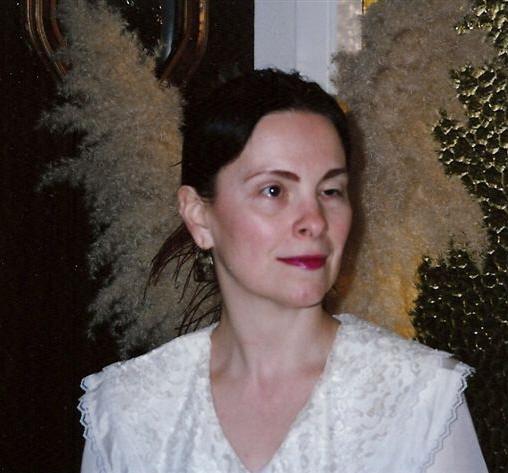
On July 29, 2013, I read the feminist theologian Mary Hunt’s fine account of Pope Francis’ visit to Brazil, with commentary on his informal conversation with press people on the way back to Rome.
When asked for a statement about the role of women in the Roman Catholic Church, a question which indirectly refers to women in the priesthood and episcopacy, he reiterated the position that the door to the ordination of women is closed. In response, I was inspired to write in the way that most intensely felt responses come out~ as a poem.
As I wrote, I couldn’t help but hear an older poem, “Water Women,” in the background. Perhaps the fact that Pope Francis had been to Rio, the Spanish word translated into English as river, inspired this association. Perhaps it was reinforced because Mary Hunt, whose article had moved me, was the co-founder and co-director of the organization WATER (Women’s Alliance for Theology, Ethics and Ritual). I wrote the poem “Water Women” a few years after the historical Philadelphia Ordinations, in which eleven women put a significant crack in the stained glass ceiling barrier in the Episcopal Church by being ordained to the priesthood on July 29, 1974. That fait accompli event opened the doors to the ordination of women into all three Holy Orders. The Roman Catholic Women’s Ordination Conference began later that same summer. I wrote “Water Women” in response to a question asked of me and others in a small group of Roman Catholic and Episcopal feminists during a press conference, just as I wrote “Pope Francis in Rio” on the 39th anniversary of the Philadelphia Ordinations because of a press conference, this time with Pope Francis during his flight back to Rome.
Continue reading “The Philadelphia Ordinations and Pope Francis in Rio by Alla Renée Bozarth”
Coming Together to Honor the Mother by Carol P. Christ
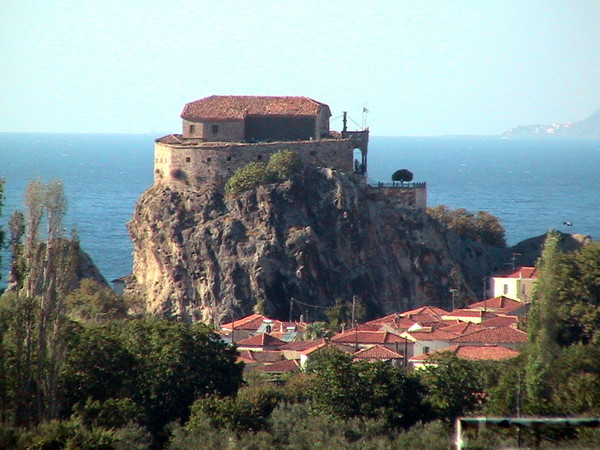
 From the evening of the 14th through the day and night of the 15th of August, thousands of pilgrims ascended the Holy Rock of Petra to honor the Panagia—She Who Is All Holy.
There is “something really beautiful”* in being among them.
Six of us set out from Molivos at 7:30 on the 14th to meet in the square of Petra to ascend to the church. Petra was already full of so many pilgrims that police had forbidden traffic in the main square and were directing cars into a nearly full parking lot in a field. When we got out of the car, the two others who came with me and I had a perfect view of the steady stream of pilgrims climbing the rock, which was already lit up in the twilight.
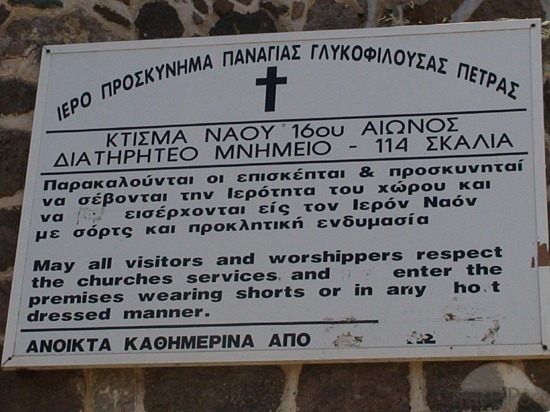
When we found the others, I said that we would climb to the church on the top of the rock where we would light candles and approach the icon of the Panagia to silently pray or express a wish for the coming year. The others followed me through the square into the winding streets lined with stalls and gypsy beggars to the bottom of the rock. While we waited for our turn, we saw the sign advising pilgrims of proper dress (read carefully).
Continue reading “Coming Together to Honor the Mother by Carol P. Christ”
Tibetan Buddhist Nuns Take First Round of Geshema Exams by Karen Nelson Villanueva
 When I signed up to support a nun through the Tibetan Nun’s Project, I was pleased to be paired with someone who reminded me of me. Phunsok Dolma is a woman in her 50’s, trying to better her life and educate herself without a spouse. My first letter from her contained a photograph of a tanned woman appearing strong, hearty, and accustomed to agricultural work. I responded with my photo to establish sisterhood and solidarity. Through her determination, Phunsok chose to live in a monastic community and practice her faith.
With my meager income as a doctoral student, I chose to assist another human being to repay the kindness of the Dharma in my life. In terms of Western culture, I am struggling, but this struggle is minor compared to the lives of many nuns. My annual budget for a Venti cup of coffee at Starbuck’s equals the basic survival for a nun for over two years. One hundred percent of my sponsorship money of $30 per month provides a nun with food, clothing, medical care, and educational opportunities. I am fortunate to have food, housing, and the ability to pursue the study of my heart’s desire. In other words, I am in a position to help someone else.
All efforts make a difference. By supporting a nun through the Tibetan Nun’s Project, I can repay the kindness of what I have received from many Dharma teachers; I can help support my sisters as they struggle to thrive in another part of the world. Recently, I learned with pride that 27 of the nuns sponsored by the Tibetan Nun’s Project sat for the Geshe examination to become teachers of the Dharma to the world. This act affirms my conviction to support these women as I struggle to support myself. Continue reading “Tibetan Buddhist Nuns Take First Round of Geshema Exams by Karen Nelson Villanueva”
Mindfulness of Putting Ourselves Down by Oxana Poberejnaia
 From the Buddhist point of view, all phenomena are conditioned, i.e. they arise, carry on, and come to an end because of other phenomena. Buddhism does not look at anything we experience as “things”, but rather as processes.
Confusion arises due to various factors, chief among them : 1) vague sense of “ego”, and 2) language. The vague sense of ego is portrayed in Khemaka Sutta as the last delusion that a monk drops before getting Enlightened, so we won’t worry about it now. Where language is concerned, Buddhism stands on similar positions to those of postmodernism and feminism, i.e. our social world is defined by how we speak about it. One can say that we actually create society by the act of speaking.
Continue reading “Mindfulness of Putting Ourselves Down by Oxana Poberejnaia”
Some Friendly Advice for Female Graduate Students by Grace Yia-Hei Kao
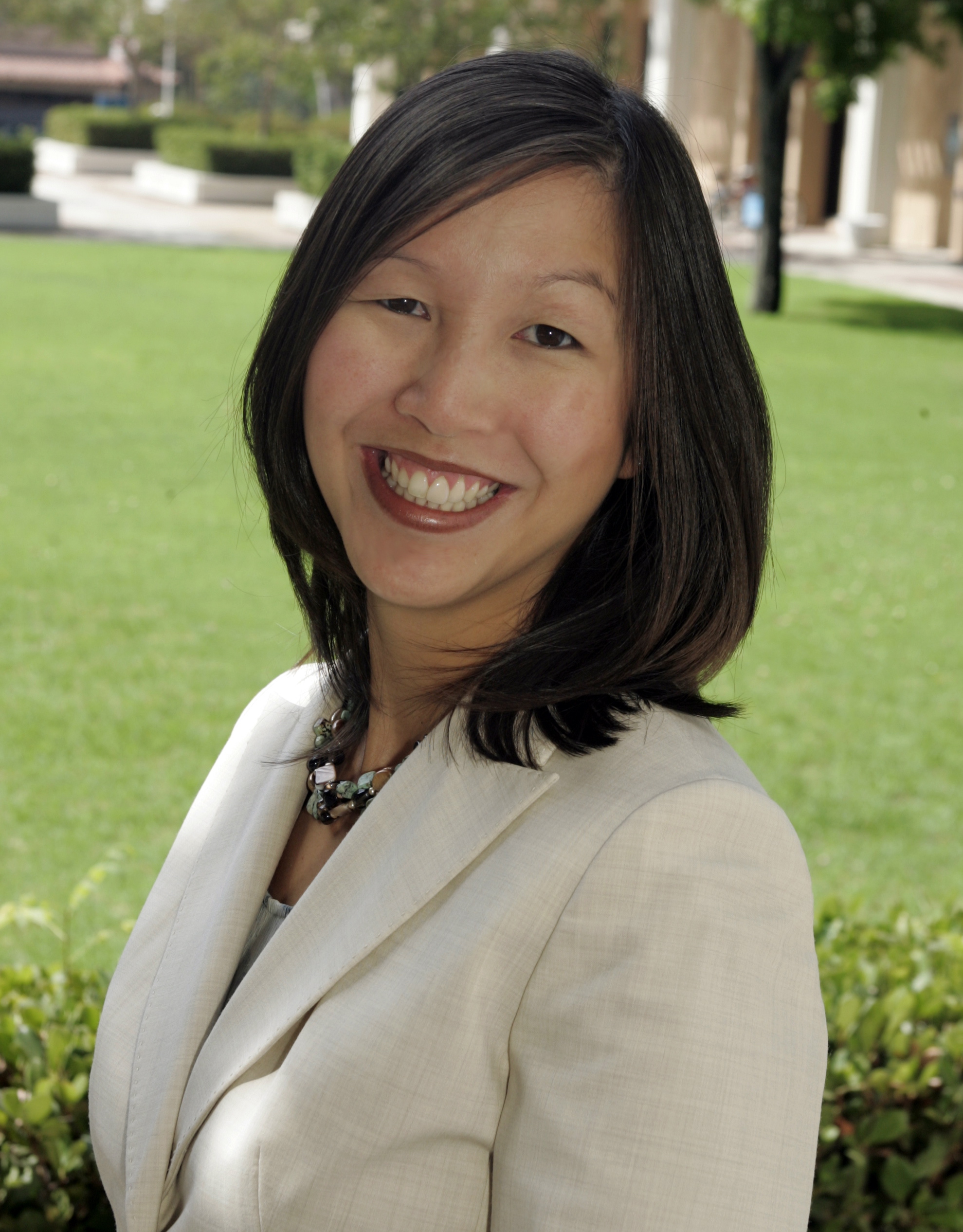
I’m officially in “back to school” mode, as I put the finishing touches on my syllabi, get my course websites ready, and prepare my 5-year old son for Kindergarten.
As I think about new graduate students studying theology or ministry, I’m reminded that while women make-up approximately 1/3 of all seminary students nationwide, at the place at which I work (Claremont School of Theology), they comprise half of the student body.
In honor of all the new, especially female, matriculates (at my school or elsewhere), I’m reposting below one of my first entries on this blogsite. It was entitled “Undermining Our Own Authority.” The advice I gave then still captures what I’d say now.
Continue reading “Some Friendly Advice for Female Graduate Students by Grace Yia-Hei Kao”
Forgiveness (is a two-way street) by amina wadud

I don’t know why this came to me as the discussion I want to have in blog form today, but here you go–
Imam al-Ghazzali (d. 1111) said that Allah (God) only stops forgiving when the believer stops asking for forgiveness. This is the crux of the Islamic view of divine forgiveness. Start with the fact that we have NO FALL story, because despite mis-conduct in the Garden, Adam and Eve ASKED for and were granted forgiveness. Thus, they leave without the mark of some eternal “original sin.” They live as we all do, here on earth, not as some punishment but because that is where they were intended to live in the first place. The creation story in Islam describes human creation as per a primordial conversation between the Creator and the unseen creatures known as angels, when God says, “Indeed, I will create ON THE EARTH a khalifah (moral agent, vice-regent of God).”
Thus, the relationship between divine forgiveness and human sin or error is fixed in a dialectic where sin and error might be part and parcel of the human being but likewise forgiveness is part and parcel of the Divine Creator. In fact, the language used is telling. Taubah, which is also translated as forgiveness, means “returning to the original place/station.” Our original place is at one with the Creator, and we are in that station in harmony with all of creation ~ a sort of cosmic bliss. When we err, we fall away from our true nature and the nature of the entire universe so must return to realign ourselves with this cosmic harmony… and everything will be alright. Continue reading “Forgiveness (is a two-way street) by amina wadud”

