IN THE NEWS: Fr. Roy Bourgeois to Speak at CGU

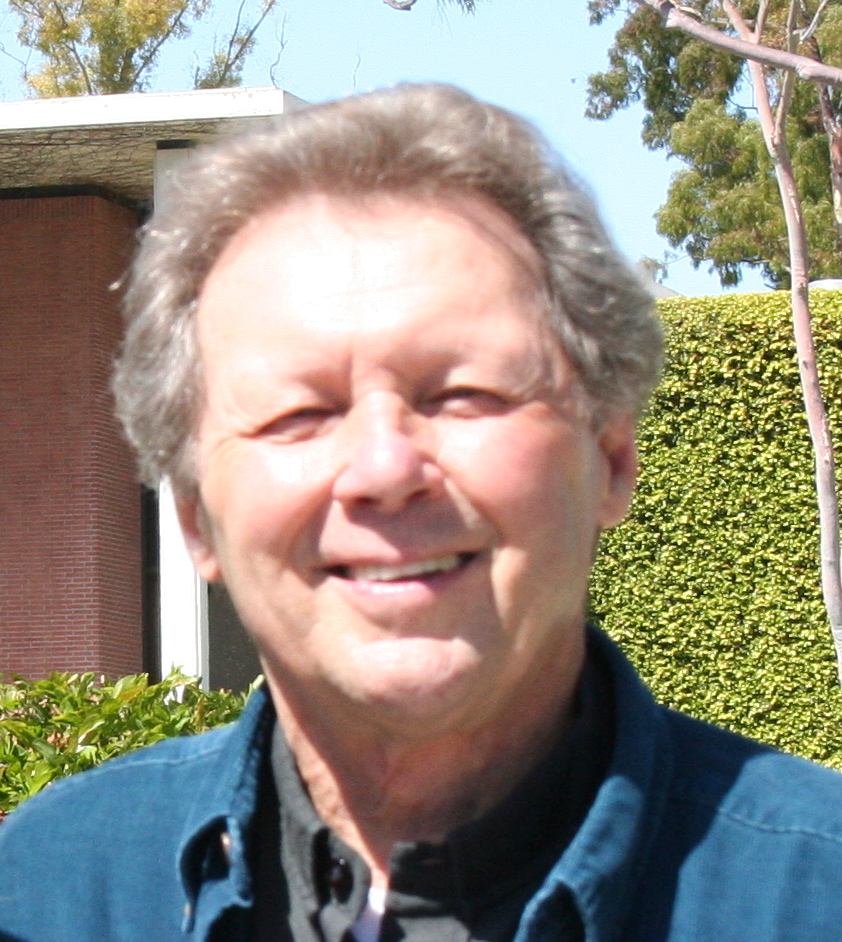
This week on November 1st and 2nd Fr. Roy Bourgeois will be at Claremont Graduate University to offer discussions on the topics of women’s ordination and the School of Americas Watch.

Fr. Roy is a Maryknoll priest, social justice activist, and founder of the School of Americas Watch.  Here on FAR we have had many discussions and posts about women’s ordination.  However we have had far less about the destruction caused by the School of Americas (SOA) now known as the Western Hemisphere Institute for Security Cooperation (WHINSEC).

Renamed in 2001, this institution is a combat training school for Latin American soldiers located in Fort Benning, Georgia and has been dubbed “School of Assassins.”  Continue reading “IN THE NEWS: Fr. Roy Bourgeois to Speak at CGU”

The Mago Hedge School: Why Remember Mary Daly? By Helen Hye Sook Hwang

Prologue

By writing this, I do not intend to defend Mary Daly’s position in any dispute. A controversial figure, Mary Daly never let go of her fight with those whom she thought on the other side of her feminist war. Like anyone else in history, Mary Daly belonged to her time and culture, and I leave her unresolved issues up to her. What I write here is my fond memory of her, whose feminist thought left an indelible mark on my being as well as humanity as a whole. Daly’s contribution remains to be reassessed from the fresh eye of new generations. In the meantime, I begin to speak for my part. Without Mary Daly’s thought, I would not have been in this place where I stand right now. It has empowered me to actualize my dreams to the fullest as a wo/man who was born and raised in Korea but had come from the One Home in origin.

I first hear of the hedge school
“Have you heard of the hedge school, Hye Sook?” asked Mary. “No, I haven’t heard of it,” I answered. This conversation took place during the conference called the Feminist Hullaballoo held in Santa Fe, New Mexico in 2007. We met there and spent three days as chums. Mary was with another friend, Yvonne Johnson, so the three of us hung out together. It was a very special time for me – I felt as if I were wrapped up in the eye of the storm. (In fact, my life feels so.) At the conference, someone asked me how I came to be invited as a featured speaker. I was among such renowned feminist speakers as Sonia Johnson, Paula Gunn Allen, and Mary Daly herself. They felt like giants to me. I told her that Mary Daly invited me. Mary had asked me if I would like to go and speak at that conference. I did not have an inflated ego. I would not have been hurt if I were not chosen. But I said “Yes” without hesitation. At the time, it felt like another one of the many “outlandish” adventures that I had undertaken throughout my life. In retrospect, however, this was a very special “Yes” to the beginning of my life’s new phase.   Continue reading “The Mago Hedge School: Why Remember Mary Daly? By Helen Hye Sook Hwang”

WHAT DOES “GOD INTEND”? by Carol P. Christ

Indiana Republican candidate Richard Mourdock’s statement that pregnancies resulting from rape are “something God intended” not only shows an appalling lack of empathy and distain for the experiences of raped women, it also is bad theology.

The controversy ignited by Mourdock provides a good opportunity to discuss the theological mistake of “divine omnipotence” also known as the “zero fallacy.”  Mourdock’s belief that God intends the pregnancies of raped women is rooted in the notion that “whatever happens” is the will of God.

The theological category of “divine omnipotence” means that God is all-powerful.  It also means that God has all the power. From this it is said to follow that everything that happens must in some way be the will of God.  Such views are held not only by many devout believers, but also by everyone else who asserts that “there must be a reason” when bad things happen.

The notion that a good God is responsible for all the events that occur in the world is rendered questionable by every bad thing that happens–particularly by bad things that happen to good people. This was the question of Job, and there has never been a satisfactory answer to it. If God can intervene to stop the innocent from being harmed, why does he not do so?  God’s failure to stop rape suggests that either that God is not good, or that a good God chooses a really bad outcome, or that God is not the cause of everything that happens in the world.

Charles Hartshorne called the notion of divine omnipotence the “zero fallacy.” Continue reading “WHAT DOES “GOD INTEND”? by Carol P. Christ”

Translations of the Bible (and Translators) are Important to Women by Jennifer Sharp

One of the most interesting topics is the theory that YHWH’s roots may be found in information about the ancient Goddess IO, and that YHWH is an inclusive name for an inclusive deity.

Some years ago I read the Bible and objected to passages about women. That was when works by Ruether, Stone, Daly, Schüssler Fiorenza, Eisler, etc. became available. I read all of the feminist writers I could find. Because of this reading, I looked up biblical passages in different Bibles.  I began to notice something rather curious. A passage in one Bible would say “she did it” – the same passage in another Bible would say, “he did it.” “This,” my current minister would say, “This is the word of God. You can believe in it.” “Believe in it”? Which biblical passage was I supposed to believe – the “she” or the “he”?

Being a questioning person, I got serious. I searched the University of Wisconsin bookstore shelves for required reading in Hebrew and Semitic studies, acquired references listed in bibliographies of those books, read about the development of the biblical text, purchased interlinear Bibles, Hebrew and Greek grammars, analytical lexicons, concordances, commentaries, and more English versions of the Bible and eventually took a class in Hebrew. Continue reading “Translations of the Bible (and Translators) are Important to Women by Jennifer Sharp”

LGBT Activism and the Holy Spirit By Dawn DiPrince

Last Sunday before Mass, I was in the sacristy preparing for the First Reading that I would later be sharing with the congregation. The music director and Monsignor were there too, discussing Church-related matters. When they saw that I was there, the music director (who is really informally in charge of all operations) says: “Oh, Dawn, I saw you on TV the other night.” I responded with a smile and a subtle nod of my head. Monsignor asked: “Oh really, what for?” And, she answered for me: “She was at the City Council meeting talking about same sex partners.” Monsignor quickly walked away without further comment. And, I just sheepishly shrugged my shoulders. Continue reading “LGBT Activism and the Holy Spirit By Dawn DiPrince”

“I do, I do, I do believe in gay marriage” by Marie Cartier

I do believe in gay marriage. I mean fairies, I mean gay marriage. I’m a lesbian. I’m approaching my legal fourth year anniversary on October 29, 2012 with my wife. I’m voting for Obama for many reasons, and one of the strongest for me is that he is the only president who has “come out” in support of gay marriage.

An acquaintance recently said to me, “I don’t believe in gay marriage.” There is not a counter narrative to this in my vocabulary. I cannot say “I don’t believe in heterosexual marriage.” I can say I don’t support it—but even that is not true because my taxes do support a system which privileges partnering legally over not partnering. The metanarrative of religious discourse privileges belief statements. So when someone says “I don’t believe in gay marriage”—they are encasing my life in the world of theology where we cast our lot with belief or non-belief.  I’m Catholic—I believe in the Virgin Mary. I believe in the canon of saints. I don’t believe in Hell, however, or Purgatory. I’m not sure of my belief system regarding Heaven. As a New Age practitioner– among these practices are Wicca, yoga, martial arts, Western inspired meditation practice, psychic readings, etcetera– I feel empowered to question the belief systems of the Church, and even more so as a feminist. Continue reading ““I do, I do, I do believe in gay marriage” by Marie Cartier”

Why are We Drawn to the Black Madonna? by Judith Shaw

judith Shaw photoOnce the opportunity came my way to spend two weeks with my sister in Paris, I knew I had to visit the Black Madonnas at Chartres.  I had been to Chartres many years ago,  before I knew about the Black Madonnas scattered throughout Europe.  I felt the power of the site at that time, but had little understanding of where that power came from.

History of the Black Madonna 

Isis

The indigenous goddess worship of Europe, was influenced by Phoenician traders who introduced statues of dark skinned African and Middle Eastern goddesses such as Isis, Inanna, and others to the European continent from 1550BC to about 300BCE.  The worship of these goddesses continued  with The Roman invasion of Gaul (France) and other parts of Europe.

Once Christianity took hold in Europe, churches were built on top of sacred pagan sites. But old ways die hard; many of these dark skinned goddesses were incorporated into the newly built Christian churches.  Today there are more than 500 known Black Madonna statues and paintings throughout the world, the majority in France. Continue reading “Why are We Drawn to the Black Madonna? by Judith Shaw”

IN THE NEWS: A Feminism Survey in the U.K.

Over the course of a 24 hour period, a popular parenting website in the U.K., Netmums, recently conducted a survey with 1300 of their users to “find out what feminism means to both girls and women living in the UK in 2012.” The report of their findings has inspired another wave of  “feminism is dead” declarations. Nothing new there of course, it resonates with the same old hackneyed  stereotypes of what it means to be a feminist. Nonetheless, it reminds us of the continually needed conversation about how to make feminist activism and goals accessible and communicable to more people lest Netmums founder Siobhan Freegard’s statement go uncontested: “The study starkly shows modern women feel traditional Feminism is no longer working for them, as it’s aggressive, divisive and doesn’t take into account their personal circumstances.” Continue reading “IN THE NEWS: A Feminism Survey in the U.K.”

Sexist Responses to Women Writing About Religion by Sarah Sentilles

IN RESPONSE TO my recent memoir, Breaking Up with God: A Love Story, several reviewers came close to calling me stupid. Many suggested I didn’t know what I was talking about. As the title of the book suggests, I used the analogy of a romantic relationship gone wrong to describe my faith and its dissolution. These reviewers seemed to believe I understood my metaphorical romantic relationship with God to be a literal one. They wrote about me as if I actually thought God was my real boyfriend, as if I sat around waiting for God to take me to the prom and just couldn’t understand why my date never showed up. Silly girl. Continue reading “Sexist Responses to Women Writing About Religion by Sarah Sentilles”

Reading Plato’s Allegory of the Cave as Matricide and Theacide by Carol P. Christ

When I read Plato’s allegory of the cave as an undergraduate, I was told it had something to do with the idea that the “form” of a table is more “real” than the table itself. I must confess that I had no idea what this could possibly mean.

As a graduate student, I struggled with philosophical and theological ideas rooted in Platonism.  Rosemary Radford Ruether named the flawed worldview created by a “classical dualism” that separates mind from body, spirit from the world, rationality from emotion, and male from female.  Her ground-breaking essay “Mother Earth and the Megamachine” clarified the difficulties I was having.

Western philosophy, described by Alfred North Whitehead as a series of footnotes to Plato, had gotten off on the wrong foot. At its very beginnings, western philosophy had attempted to sever mind from the body and nature, alleging that “man’s true home” was not life in the body on planet earth. Continue reading “Reading Plato’s Allegory of the Cave as Matricide and Theacide by Carol P. Christ”