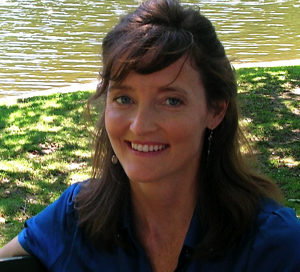
A Feminist “Nutt” Point of View by Shannon Nutt

This is the first blog post I have written, so the concept of being a blogger is a little foreign to me.  But I will just jump in!

I grew up in a religious house that became far more religious after my mother passed away from brain cancer when I was thirteen.  My single father became heavily involved in the Lutheran Church, thinking this was the best way to raise his two daughters.  I was happy to go to church and get the structure that the church provided.  I was also grateful that I went to a church that had a female pastor.  Lacking a mother, it was nice to have a strong female role model who was breaking into the “boys’ club” that was the church.  Having found a postitive, female role model, I was really upset when I heard very conservative members of other churches and my own family say that women have no business speaking or leading people in church.  I was around sixteen when this was happening, and it broke my heart to see women telling other women that they have no right to be heard in the church.  Continue reading “A Feminist “Nutt” Point of View by Shannon Nutt”

Navigating the Academy with an Accent by Amanda Pumphrey

“Where are you from?” I wish I had a dollar for every time someone has asked me that question since moving to California. I would be able to make a substantial payment towards my student loan debt by now. No one knows I’m “different” here in SoCal until I open my mouth. My thick Southern accent happens to be my signifier.

Before I moved to Claremont to begin graduate school, I never considered my accent a problem. Despite the fact that when I moved outside of my hometown to college only two hours away, some of my friends teased me about my accent. Since I grew up in the very southwestern corner of Georgia, I lived right along the Alabama border. Some of my college friends from other regions of Georgia thought I sounded more Alabamian. Still, mostly everyone I went to college with had some form of a Southern accent and that was okay. It was safe. It was normative.  Continue reading “Navigating the Academy with an Accent by Amanda Pumphrey”

“Passing” for White to Get Into Harvard? By Grace Yia-Hei Kao

“[G]rowing numbers of Asian Americans are not taking a ‘wait and see’ approach about whether elite colleges are discriminating against Asian Americans on account of their race, but have been acting under the assumption that they have been and still are.”

Asian Americans and Harvard University have been in the news and on my mind recently. The bigger story has been about the “Linsanity” surrounding (Harvard grad) New York Knicks player Jeremy Lin who continues to take the NBA by storm.

The smaller story, though one that also made national headlines in early February, is of the recent decision by the Education Department’s Office for Civil Rights to investigate a complaint that Harvard and Princeton Universities discriminate against Asian Americans in admissions. Continue reading ““Passing” for White to Get Into Harvard? By Grace Yia-Hei Kao”

Bareed Mista3jil: Negotiating Gender, Sexuality, and Religion in Lebanon by Amy Levin

It’s not often (enough) that I (have the time to) come across non-academic books that articulate and reflect some of the most complex intersections between religion, gender, and sexuality. Those that do are commonly produced in the Western hemisphere, often representing the voices of Euro-American cultures and religious traditions. That is why I want to give voice to Bareed Mista3jil, a book, or collection of “41 true (and personal) stories from lesbians, bisexuals, queer and questioning women, and transgender persons from all over Lebanon.” Bareed Mista3jil was published in 2009 by the organization Meem, a community of lesbian, bisexual, queer women and transgender persons (including male-to-female and female-to-male) in addition to women questioning their sexual orientation or gender identity in Lebanon. The purpose of the book is to give voice to those in Lebanon with non-conforming sexualities and identities in order to give hope to this under-represented, often silenced population. Here is a description from Meem on the origin of the book: Continue reading “Bareed Mista3jil: Negotiating Gender, Sexuality, and Religion in Lebanon by Amy Levin”

Feminism and the Emerging Church By Xochitl Alvizo

What is emerging in the emerging church will not be faithful, liberative, or just if it continues to perpetuate the erasure of women’s herstory. 

There has been on ongoing conversation among Christian identified people for about 20-30 years now. It originally started in the U.K. and Australia before making its impact in the U.S.  It has its roots in evangelical Christianity but has since extended more broadly to Christians of all stripes including Catholic ones. This conversation is often referred to as the Emerging Church, the emerging church movement, or, as preferred by many, the Emerging Conversation. Phyllis Tickle has written a book, The Great Emergence, suggesting that this movement represents a much larger historical transformation of Christianity that occurs about every 500 years prompting a kind of house cleaning and rummage sale of the church. Continue reading “Feminism and the Emerging Church By Xochitl Alvizo”

Do Women Disappear When Women and Men Integrate? A Mormon Case Study by Caroline Kline

Pulitzer Prize winning historian, Harvard professor, and Mormon feminist, Laurel Thatcher Ulrich, recently gave a talk in which she examined the history of the LDS Relief Society, Mormonism’s women’s organization. In her talk she documented the rise and decline of this organization, originally developed in 1842 as a parallel to the men’s priesthood quorums.  In the late 1800’s and early 1900’s, this organization opened hospitals, published its own newspapers/magazines, developed its own curriculum, participated in promoting women’s suffrage, managed the Church’s social services program, and engaged in various economic endeavors. However, as the 20th century wore on, the Relief Society lost much of its autonomy, as male priesthood channels took over many of these endeavors. Continue reading “Do Women Disappear When Women and Men Integrate? A Mormon Case Study by Caroline Kline”

I am Beginning to Understand by Carol P. Christ

Elizabeth Kelly Inglis died in 1927 at age 62 from complications of a stroke. Secondary causes were malnutrition and exhaustion.

When I was a child, my father, though he was very close to his own parents and sister, spoke very little about his ancestors. I knew that both of his parents lost their fathers when they were small children. I was told that the Christs were German and the Inglises were Scottish and Irish. My grandmother Mary Inglis Christ was as Irish as the day is long. She prayed to the blessed Virgin and took me to church with her in the early mornings where she lit candles and whispered the rosary while fingering faceted lavender beads. She voted for Kennedy because he was Irish and Catholic—to the horror of my father and his father who had no use for the Democrats. My grandmother sometimes cried when she showed us photographs of her family, especially when she pointed to her sister Veronica, called Very. I sensed that my grandmother felt sad to have left her family in New York when she moved with her husband and children to California during the depression, but I was too young to understand fully. As far as I know, I never met any of the relatives from her side of the family, even when I moved to “back east.” Continue reading “I am Beginning to Understand by Carol P. Christ”

Practice What You Preach by Corinna Guerrero

The underlying principle that links a feminist critique to every other critical lens since the rise of feminist discourse is the “hermeneutic of suspicion.” Essentially,  a hermeneutic of suspicion identifies the disconnect between rhetoric and a lived reality. The lived lives of women are different than the pontifications espoused directly and indirectly by the traditionally patriarchal social, political, cultural, religious, and educational structures in which individuals participate.

I like to think that I live my life bucking these structures whenever possible because the roles a woman plays in her own life should: 1) be determined by her; and 2) if she negotiates more “traditional practices” (e.g. marriage, motherhood, etc.) then these practices do not limit her to traditionalist practices (e.g. staying at home, spousal servitude, etc.). Granted, I used the two most generic examples of traditional and traditionalist practices, but the point is still valid. When I go to holidays with my extended family there are very few questions or comments about my PhD program, but many comments about the fact that I do not make a plate of food  for my husband.   Continue reading “Practice What You Preach by Corinna Guerrero”

Goddess Communities in Australia by Patricia Rose

Australia has a very diverse and rapidly expanding number of people for whom the Goddess, however She is understood, is significant. The 2006 census revealed that there were over 30,000 Pagans or followers of other earth-based religious traditions in Australia and, given the way in which religions are classified in the census, this is undoubtedly a serious underestimation. We await the findings of the 2011 census with great interest.

Prior to European settlement in Australia, Aboriginal and Torres Strait Islander peoples followed their own rich spiritual beliefs, which were based on the forces of nature, a reverence for the land and its creatures, and the influence of ancestral spiritual beings. Recently, non-indigenous Australians have become increasingly interested in the indigenous connection to the land and indigenous spirituality.

While it is important not to appropriate indigenous culture, Goddess women and men in Australia are keen to express their spirituality in ways that are relevant to this land and to the Australian culture. We recognize the need to become more attuned to the ways of Australia, to her seasons and her natural cycles, and we can learn from the experiences of indigenous peoples, garnered from millennia of living on and with this land. Continue reading “Goddess Communities in Australia by Patricia Rose”

Feminism, Impasse, and the Redemption of Hugo Schwyzer by Cynthia Garrity-Bond

In Constance FitzGerald’s article Impasse and Dark Night,* she draws from sixteenth century Spanish mystic and reformer St. John of the Cross-and his Dark Night of the Soul.  FitzGerald moves from the individual’s experience of impasse to a larger societal impasse.  By impasse she means those experiences that bring life as you know it to a stand still, where every attempt of extracting the self from suffering is a lost cause. In what is known as the principles of  “first order change”—reason, logic, analysis, and planning, do not work to move the self forward and out of impasse. In other words, the skill set you have come to rely upon to move you out of the grip of darkness no longer works. Continue reading “Feminism, Impasse, and the Redemption of Hugo Schwyzer by Cynthia Garrity-Bond”