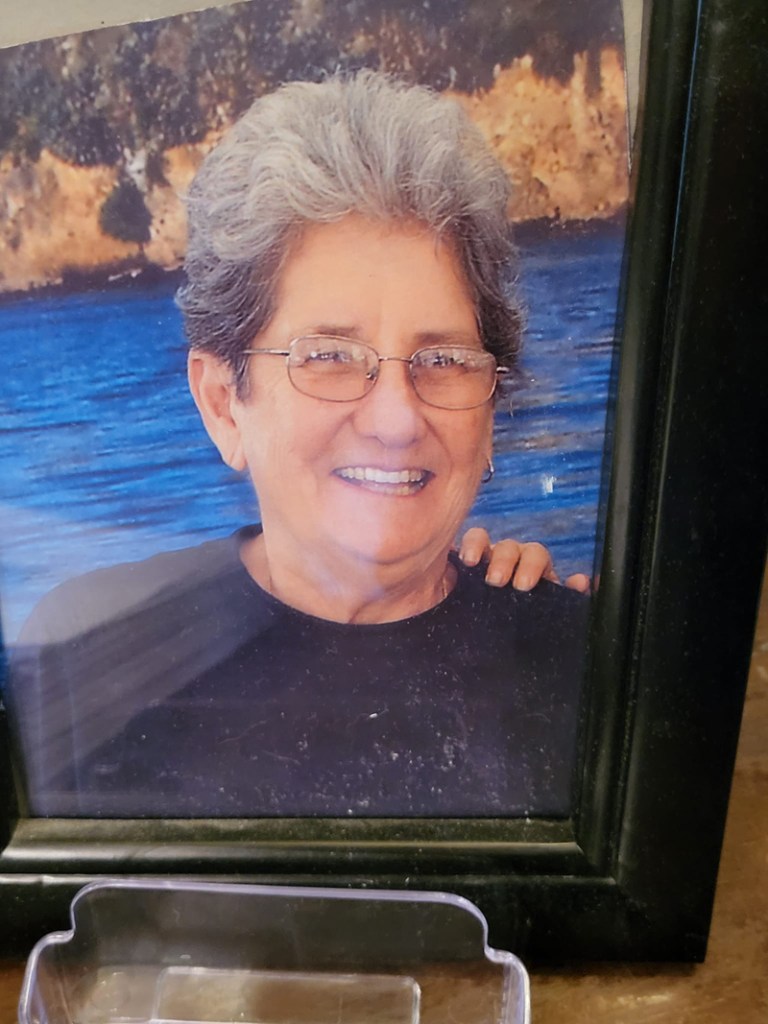
Nancy Valverde was sent off to REST IN POWER April 20, 2024, having passed at her home in the LGBTQ+ senior living space, Triangle Square Triangle Square Senior Apartments – Los Angeles LGBT Center, March 25. An icon, a great friend, a mentor… we had a warrior on our side when she was here with us… and now we have an archangel wielding a sword. Heaven just got a lot more interesting.
The loss is so big. The lessons of a life well lived go on forever.
The day began with a Mass of Christian Burial, conducted by Catholic Dignity priest DIGNITY Los Angeles – Home Page Rev. Dylan Littlefield and five other presiding celebrants, conducted the Mass, followed by a Final Commendation and Burial.
This was uniquely in Catholic tradition, followed by a reception at the iconic East LA bar Redz Redz (Former) – LA Conservancy that had closed as a lesbian bar in 2015. Lost Womyn’s Space: Redz It is recognized as a “lost womyn’s space” but was re-opened as “Redz Angels.” Even though it is more a neighborhood bar now it still is very queer friendly. It was primarily a Mexican lesbian bar, estimated to have first opened in the late 50s and for Nancy’s memorial party transformed back to the original Redz, complete with its iconic logo. Nancy helped turn the bar from straight to gay in the 50s, when as she said, ” they made the mistake of hiring a lesbian bartender, so they gave an inch…we took a mile.”
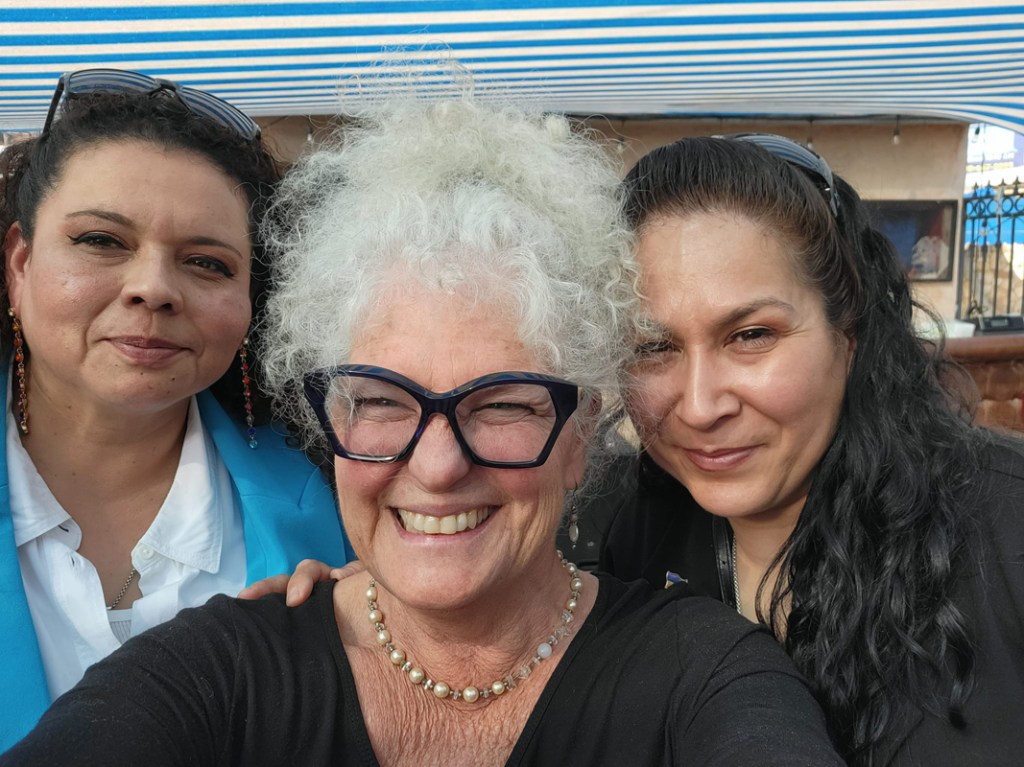
Nancy was a key informant in my book Baby, You Are My Religion – Women, Gay Bars, and Theology Before Stonewall, a dear friend, and part of my chosen family. This is the work of ethnography, I think, to transform us from often interviewee and interviewer to chosen family—we learn so much about each other.
She lived from March 5, 1932 to March 25, 2024 and had a square named after her in Los Angeles, June 22, 2023, at the intersection of 2nd Street and Main in Downtown LA, Lesbian Activist and Trailblazer Nancy Valverde Honored in Downtown Los Angeles – Los Angeles LGBT Center. At this event Los Angeles Police Department Commander Ruby Flores, apologized to Nancy and the LGBTQ Community on behalf of the LAPD. LAPD issues apology to LGBTQ+ community during ceremony honoring Cooper Do-nuts and LGBTQIA+ activist Nancy Valverde – ABC7 Los Angeles And, as you can see from the photo—there was even a squad car from the LAPD in rainbow LGBTQ+ colors at her funeral in the parking lot.
A friend of mine, Marna Deitch, Lesbians and Allies Unite for Unofficial Dyke March in WeHo – WEHO TIMES West Hollywood News, Nightlife and Events, herself a gay icon and recipient of the Melissa Etheridge Award, wrote on social media that Nancy provides a “history lesson” for all of, “Whether you’re straight or LGBTQ+, you owe a debt of gratitude to this woman…If you’re a woman who wears pants, Nancy is your heritage. If you’re a man with long hair or an earring, or a female with short hair, Nancy is one of your legal precedents.”
Nancy started working at the age of eleven picking apricots and cotton in California. At thirteen, she assisted women in the kitchen at a local restaurant. Even though she did not have a driver’s license, she worked driving pastry deliveries around Los Angeles; and then at age fourteen also driving prostitutes to their “appointments” for a fee. At seventeen, she worked as a manager for an apartment complex. She later became a barber. Since she had not completed her education beyond 6th grade, she could not enter barber school, but upon passing an IQ test, she received her barber’s license. Though she was paid less than her male colleagues, it was her work at a local barbershop in East Los Angeles that made her famous. Nancy Valverde – Los Angeles LGBT Center – Senior Services.
Valverde experienced discrimination as a Chicana, a lesbian, and as a masculine presenting woman, with short hair and masculine clothing. She was often harassed by the LAPD, who charged her with violating what were known as masquerading laws, How Dressing in Drag Was Labeled a Crime in the 20th Century | HISTORY which prohibited men and women from wearing gender nonconforming clothes. Nancy identified as a woman but chose to wear men’s clothing for comfort, so was often targeted. Lavender Los Angeles – Roots of Equality, Tom De Simone, Teresa Wang, Melissa Lopez, Diem Tran, Andy Sacher – Google Books. She was harassed and detained multiple times at Lincoln Heights jail, in a section of the Sybil Brand Institute (SBI) for women known as the Daddy Tank. Situational Lesbians & the Daddy Tank: Women Prisoners Negotiating Queer Identity and Space, 1970-1980 | Genders 1998-2013 | University of Colorado Boulder. The Daddy Tank was a private wing of SBI where butch women (masculine presenting women) were held. After doing research at the Los Angeles County Law Library in 1951, Nancy found legal proof that it was not in fact a crime for a woman to wear men’s clothing—if deemed necessary for her job. Her lawyer used this to end the ongoing arrests. Nancy From Eastside Clover, Lincoln Heights (Queer History) | Barrio Boychik.
She is survived by her love of 18 years, Andi Less Seagal, her son, grandchildren, great-grandchildren and her siblings – and a large circle of chosen family and friends.
In offering her eulogy, the presiding reverend recounted a retort Nancy gave to an LAPD officer in the 50s. She had been released from one of many masquerading convictions and the officer said, “Next time I see you, I expect to see you wearing a dress!”
Nancy spoke right back, “Next time I see you–I expect the same.”