Legacy of Carol P. Christ: Time to Dismantle the Myth of the Nation State?

This was originally posted on February 25, 2019

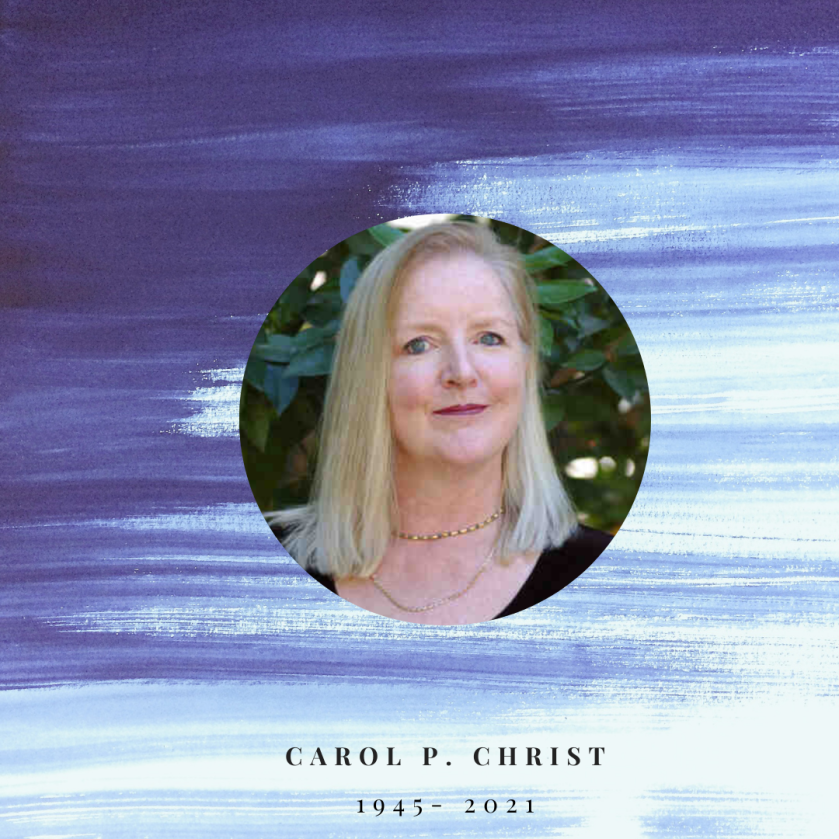
I am a citizen of two countries currently being torn apart by popular nationalism. In Greece, the cry is “Macedonia is only Greek,” while in the United States a nation of immigrants is being told that it must fear being invaded by immigrants. The truth is that the idea of a nation state is a fiction created in the nineteenth century. It is high time to dismantle it.

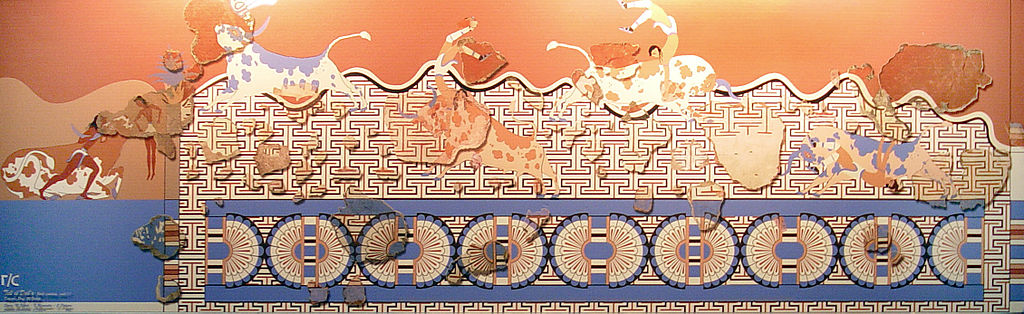
Here is the Greek case. Phillip of Macedon invaded from the north and created a federation of Greek states in 338 BCE. His son Alexander the (so-called) Great conquered territories extending as far as India before his death in 323 BCE, establishing the seat of his empire in the newly founded city of Alexandria in Egypt. Phillip and Alexander are claimed as Greek, but in fact Phillip forced independent Greek-speaking city states into union under his rule.

Continue reading “Legacy of Carol P. Christ: Time to Dismantle the Myth of the Nation State?”

Every Atom of Our Being by Annelinde Metzner

In the vibrant, sensual, lush season of Beltaine, when all the world (at least in our hemisphere!) awakens to greenness, rebirth and new life, I’m pulled to express myself through the body.  The Goddess is our body, and the Earth’s body, and that of all beings.  The sacred is in every atom of our being.  The snake, and the apple, and the tree are all symbols of Her, and She gives us the many gifts of our body without shame.  She loves to hear us singing back, as She sings to us.

Continue reading “Every Atom of Our Being by Annelinde Metzner”

Dancing for Rain: Life-Giving Gift from Heaven to Earth by Laura Shannon 

Since ancient times people have danced for rain, the life-giving gift from heaven to earth. Rain rituals were seen as important work and were usually performed by women, traditional bringers of life and fertility. Both bearing and raising children, and cultivating the land to nourish the community, are activities dependent on, and psychically equated to, rainfall. Women’s ability to bring rain when necessary was a key belief of indigenous European culture and is found in many places today. Many women’s dances, songs and rituals in Eastern Europe and the Near East express this connection, and women’s folk costumes often feature long fringes representing water. 

Continue reading “Dancing for Rain: Life-Giving Gift from Heaven to Earth by Laura Shannon “

Common Ground: Part Two:  On Enclosure, the Commons, and Awe by Beth Bartlett

Can we rise to ourselves and see what is in the nature of the soul to see – that we exist on this common ground together?” – Susan Griffin

The ideology, discussed in Part One, that land that is not being cultivated, mined, lumbered, or otherwise used to create goods and capital is ‘waste” continues its devastating effects to this day in mountaintop removal, destruction of old growth forests, fracking and drilling and mining of once pristine lands, plowing the plains into dust and spreading herbicides and pesticides over the land. Devastate – from the Latin devastare, meaning to “lay waste, ravage, make desolate.” Devastate – to de-vast – is to destroy the vastness. And so has the vastness of lands around the world been plundered, laid waste, so as not to “waste” it.

Continue reading “Common Ground: Part Two:  On Enclosure, the Commons, and Awe by Beth Bartlett”

Common Ground: Part One:  On Enclosure, the Commons, and Awe by Beth Bartlett

I spent the first half of my academic career studying and teaching the history of Western political philosophy – the works of Plato, Aristotle, Augustine, Aquinas, Hobbes, Locke, and Rousseau to name a few.  It gave me the best possible grounding in understanding the foundations of patriarchy.  In more recent years, I have used these works to explain the Western paradigm of thought to my ecofeminism students so they could better understand how women, colonized others, and the earth have been defined and dominated based on these assumptions.

Continue reading “Common Ground: Part One:  On Enclosure, the Commons, and Awe by Beth Bartlett”

Feeding the Birds by Sara Wright

In most cultures white is the color of death. No wonder brides wear white.

When I finally stepped into my life at 39, I entered a mythic world. I married myself to the serpent of life, a creature who is now wrapping itself (both male and female) around the earth four times and squeezing the life out of Her, according to Mythologist Martin Shaw (see Emergence magazine). The serpent, once life bringer for feminists now courts death.

I will always remember Marion Woodman, a Jungian analyst (and personal friend), who stated that every symbol carries both light and dark, and one side of the symbol will always shift into the other… She was speaking metaphorically but my mythic education and life experience as a naturalist have taught me/and continue to teach me that symbols like the serpent that were once holy beings are also living beings that were worshipped by Pre-Christian cultures, and then demonized by Christianity, recovered, and reverenced by feminists. Until now. Today the dark side of serpent has risen again and is swallowing us whole.

Continue reading “Feeding the Birds by Sara Wright”

Legacy of Carol P. Christ: The Ninth Touchstone: Repair the Web

This was originally posted on September 3, 2018

As I reflected on the Nine Touchstones again recently, I was pleased to discover that the first and the eighth touchstones are articulations of the central values of egalitarian matriarchal societies. Few of us live today in egalitarian matriarchies, and it would not be possible for all of us to return to cultivating the land. I offer the Nine Touchstones in the hope that they can help us to find a way to express and embody the values of egalitarian matriarchal cultures in the modern world. The touchstones are intended to inform all our relationships, personal, communal, social, and political.

Continue reading “Legacy of Carol P. Christ: The Ninth Touchstone: Repair the Web”

From the Archives: Archy and Mehitabel by Barbara Ardinger

This was originally posted on December 1, 2019

Archy the Cockroach and Mehitabel the Cat were introduced to the world in 1916 by Don Marquis, a columnist for the New York Evening Sun. Marquis was more than a mere columnist; he was a social commentator and satirist admired by nearly every famous writer of the first quarter of the 20th century. Franklin P. Adams, for example, said Marquis was “far closer to Mark Twain than anybody I know” (see note).

Continue reading “From the Archives: Archy and Mehitabel by Barbara Ardinger”

From the Archives: Green Tara by Jassy Watson

This was originally posted on March 6, 2015

Goddess Tara is one of the oldest goddesses who is still worshipped extensively in modern times. Tara originated as a Hindu goddess, a Great Goddess or Mother Creator, she who represents the eternal life force that fuels all life. In Sanskrit, the name Tara means Star, but she was also called The Great Compassionate Mother and The Great Protectress.

A version of the Goddess Tara exists in most cultures. It is believed that she will assume as many forms on earth as she is needed by the people.

Adopted by Buddhism in the third century BCE, Tara came to be the most widely revered deity in the Tibetan pantheon. Not only is she a Tibetan Goddess, but she is considered a female Buddha; an enlightened one was has attained the highest wisdom, capability and compassion. One who is able to take  human form and remain at one with every living thing.

Continue reading “From the Archives: Green Tara by Jassy Watson”

Who Will Plant and Who Will Harvest by Marie Cartier

A Poem 3/27/23

We see the beginnings of fruit trees.
The first fruit, my Jewish friend says:

            The best of spring—as fruit
            Is what makes luxury, she says.

We could just eat vegetables –but
With fruit we have extra luxury, we have extra—
We have wine. Cheers- we have luxury.

Continue reading “Who Will Plant and Who Will Harvest by Marie Cartier”