
Lotus in the Mud: A Metaphor for Humanity on our Darkest Days by Elisabeth Schilling

BeachThere are days I find myself so overwhelmed with sadness concerning the state of our world that I break down crying. Last week, I saw an episode of Mars, a scripted documentary shown on the National Geographic channel about human colonization of the red planet in 2033. One of the astronauts “interviewed” prior to leaving was asked why she was taking such a risk to inhabit Mars. She said something like, “We will give everything for this.” Why not give everything for Earth?

If we would give everything for the planet we evolved on, then we might immediately transition to a life where we would be self-sustainable, build greenhouses in our backyards, give up our carbon-emission- producing cars, and abandon all the unnecessary businesses that are only there to fill our loneliness and boredom. The idea on the psuedo-documentary was that humans are putting this planet in danger, so it might be smart to have a backup. Isn’t that insanity’s way: trash one place and then find another place to live? The insurmountable amount of money we spend on space expeditions could be spent healing our own world. This is not the time for luxuries. Continue reading “Lotus in the Mud: A Metaphor for Humanity on our Darkest Days by Elisabeth Schilling”

Touch the Earth by Oxana Poberejnaia

oxanaI suddenly felt sad. Not depressed, but low and sorrowful. I realised that it must have been because I had just exploded and answered my husband in an angry, tense voice. He had said something and I reacted in this overblown manner. What he said could have been construed as an encroachment on my rights as a woman and a human. Whether this was the case or not, I was saddened by my own violent reaction.

How did that happen? Earlier that very day I was walking outside, quietly surveying autumn scenery of the North West England. The leaves were starting to turn in earnest. The birch trees sent their yellow carved leaves to the other side of the road, which did not have birch trees. I was in a state where my “I”, my “Ego” was relaxed and not constricted to just the confines of my body. I became conscious of this fact and a thought arose: “Here we go, finally I am getting close to Liberation.”

Continue reading “Touch the Earth by Oxana Poberejnaia”

Hard Work without Getting Anywhere by Elisabeth Schilling

BeachWhen my students read about the Buddhist concepts of non-resistance, non-attachment, and living in the present, one of the first protests I end up addressing is how these ideas seem to negate progress, goal-setting, or success. What my students don’t yet see is how clinging to a particular end can hinder creativity and the pleasure of the journey to a degree that sometimes compromises success.
For instance, when writers create for academic purposes, they/we can feel desperate to finish a project.  We can feel overwhelmed by the need for perfectionism or by the fear of failure. Perhaps even the hard work it takes layered with the uncertainty of really getting anywhere is what stirs feelings of resistance. Writing seems to transmit the energy frequencies of the writer, and what I do not want is for any reader of mine to feel that kind of struggle. Instead, I hope for narratives with at least some level of warmth, compassion, and generosity.

Roshi Pat Enkyo O’Hara, zen spiritual practitioner and author, says that we know we have done something well when we have been nourished by the experience of the doing. Wow. I love this. Yet how forgetful I can be when getting to that sticky spot in my own writing, when I could pause to take a deep breath or walk around the neighborhood or do whatever it might take to refresh and reset my mind. Continue reading “Hard Work without Getting Anywhere by Elisabeth Schilling”

Whose life is this: yours or your identity’s? By Oxana Poberejnaia

oxanaWhat is, would you think, one of the foremost problems that my Russian friends and relatives mention to me? Economy? Politics? Personal and family issues? Nope. It is immigrants in Europe. I hear genuine concern and aversion when my friends mention the number of Muslims in the UK or the fact that there are predominantly black arrondissements (city districts) in Paris.

This mystified me. I sensed that although they were talking about countries foreign to them, they perceived the situation as a personal threat. Why should this be so?

I postulate that it is my old frenemy, identity (or “ego”, or “self” – whichever you prefer) that is at work here. I also realised that the same mechanism works wherever people protest against feminism, contrary to all and any rational arguments. Very often, even women protest, to their detriment.

Continue reading “Whose life is this: yours or your identity’s? By Oxana Poberejnaia”

The Fringe is Our Stronghold by Oxana Poberejnaia

oxanaRecently I have come across several stories of women’s fringe spiritual movements or practices. This made me think about the role of outsiders’ or minority views in religions and society.

Patriarchy pushes women and their issues to the margins of society and religion. It seems that there women sometimes invent their own spiritual practices. These allow women to stand their own ground in religious matters, to preserve self-respect and to keep the hope of the highest spiritual attainment.

Quite often these beliefs and practices seem shocking in their bizarreness and their stubbornness not to accept orthodox norms.

Continue reading “The Fringe is Our Stronghold by Oxana Poberejnaia”

O Tempora o mores by Oxana Poberejnaia

oxanaI have entitled this post O Tempora o mores after a sentence by Cicero, meaning “Oh what times! Oh what customs!” I would like to discuss how some of the messages we get from religious writings are defined by the age in which they were written.

As a result, I argue that it is wiser to pay more attention to the overall message of a given spiritual tradition, rather than to subject our view on a single quote.

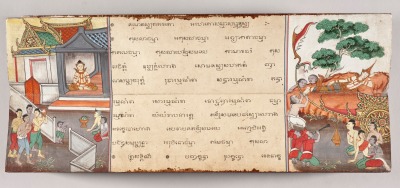
Phra_Malai_Manuscript_LACMA_M.76.93.2_(11_of_21)One of the most popular texts in Thai Buddhism (which is of Theravada tradition) is called Phra Malai Klon Suat, “Chanted Version of Phra Malai.” It was reproduced copiously in the 19th century, with the earliest version dating from the 18th century. However, its origins are believed to be more ancient, coming from the original Indian Buddhism.

Continue reading “O Tempora o mores by Oxana Poberejnaia”

“Suchness” of inequality vs. the “story” of patriarchy by Oxana Poberejnaia

oxanaIn the TV film about American suffragists “Iron Jawed AngelsAlice Paul (played by Hilary Swank) says to a psychiatrist who came to prison to assess her mental state during her hunger strike:

You asked me to explain myself. I just wonder what needs to be explained. Let me be very clear. Look into your own heart. I swear to you, mine’s no different. You want a place in the trades and professions where you can earn your bread? So do I. You want some means of self expression? Some way of satisfying your own personal ambitions? So do I. You want a voice in the government in which you live? So do I. What is there to explain? Continue reading ““Suchness” of inequality vs. the “story” of patriarchy by Oxana Poberejnaia”

Feminism and Buddhism: constructive wave interference by Oxana Poberejnaia

oxanaAlthough it can be said that the Buddhist teaching can benefit all, including feminists, it can also be argued that Feminism has a lot to teach Buddhist practitioners. Rita M. Gross made this point brilliantly in her “Buddhism After Patriarchy: A Feminist History, Analysis, and Reconstruction of Buddhism.”

While Buddhism generally encourages investigation, it is still easy for a Buddhist practitioner to become complacent. This complacency can be caused by the feeling of safety that your particular school of Buddhism provides. How your mind works, how the world works are all explained, all is well, just keep practising in the assigned paradigm, there is no need for thinking outside the box.

However, Buddhists often forget that it is exactly outside the box where the Buddha has been pointing with his every teaching, ever since he got liberated. When a Buddhist practitioner is stuck, the vigour of Feminism can provide inspiration. Feminists simply never stopped, do not intend to stop now.

Continue reading “Feminism and Buddhism: constructive wave interference by Oxana Poberejnaia”

Drop the sense of entitlement towards life by Oxana Poberejnaia

oxanaAt the time of climate change and crises of capitalism we need to drop our sense of entitlement to comfortable life or even to life at all. Nature will not spare us just because we are humans. When the meltdown of economic and environmental systems occurs, we are all going down: humans and non-humans, women and men, spiritual or not. We have almost run out of time.

Victor Pelevin, my favourite contemporary Russian author, has a novel called “The Sacred Book of the Werewolf“. I love it in part because, like Kill Bill, it is a rare creation by a male author, which manages to capture the female warrior spirit.

surprise___you__re_a_werewolf_by_mightywarlordIt starts with the main character, a Chinese Buddhist Were Fox who lives in present-day Moscow, consoling herself: “What else (or What the fuck) did you expect from life, A Huli?” A Huli is her name, supposedly meaning Fox A in Chinese. It is also a swear phrase in Russian, meaning “What the fuck?”

Continue reading “Drop the sense of entitlement towards life by Oxana Poberejnaia”

Pause, Stop and Re-evaluate your place within patriarchy and capitalism by Oxana Poberejnaia

oxanaThere are three vicious circles: patriarchy, samsara and wanton destruction of environment. All three lead ultimately to annihilation of life. All three are incredibly difficult to escape. One of the reasons for this difficulty is that there are pay-offs. Someone or something benefits from keeping the cycles going.

Men and Mothers-in-Law seemingly benefit from patriarchy. However, the privileges granted by patriarchy are based on a pyramid scheme of tyranny. You get to bully people who are below you on the patriarchal pecking order: women, men of the lower status, daughters-in-law. Everyone at the higher level gets to bully you. The top man lives in constant fear of de-throning. Continue reading “Pause, Stop and Re-evaluate your place within patriarchy and capitalism by Oxana Poberejnaia”