Mother of All Buddhas by Oxana Poberejnaia

oxanaQueen Maya, the Mother of the Buddha of our age, who before his Enlightenment was known as Siddhartha Gautama, died shortly after his birth. So the future Buddha was raised by his aunt and stepmother. It is said that the womb of the Buddha’s Mother needed to remain unsullied by further pregnancies. This is similar to the belief that Mary Mother of Christ did not bear any more children after Jesus, which is held by some Christian traditions.

280px-Dream_Queen_Maya_BM_OA_1932.7-9.1In addition, the Buddha’s conception and birth were both miraculous, according to the legend and some Mahayana texts (such as the 44th chapter of the Gandavyuha Sutra). The Buddha was conceived when a white elephant entered Queen Maya’s right side, or, in the Sutra, light entered the Queen’s body. The Buddha was born from his Mother’s right side. The light was emanating from every pore of the body of the Bodhisattva Buddha, while he resided in the Tusita (joyous) heaven before descending to earth. This light reminds us of the golden rain form that Zeus took to reach Danaë in her cell to conceive Perseus, and links these two Indo-European patriarchal discourses. Continue reading “Mother of All Buddhas by Oxana Poberejnaia”

Broken heart, soft heart by Oxana Poberejnaia

oxanaToday my topic is a bit weird – it is about broken heart, but in a good sense.

I’ll start with an example. My best friend and I once went to see “La Bohème” at the Leeds Opera House. It was great: the singing, the modern production. Nevertheless, the story, is, of course, heart-breaking. A working-class woman dies. However, although my friend and I were sad at the end of the opera, we also felt strangely uplifted. My friend commented on that and I said that I recall that in Christian Orthodoxy they say that a broken, shattered heart (сокрушенное сердце) is a way to God.

Open_Heart_by_charcoaledsoulIn Buddhist terms this broken heart could be described as shattered walls of an identity. It can be interpreted as a complete disillusionment with samsara: the world of the conditioned phenomena, where one thing begets another and everything revolves according to the law of conditioned arising. The broken heart may happen from realising that everything is subject to this law, but in particular: your own personality, or identity (which I discuss quite a lot in this blog).

Continue reading “Broken heart, soft heart by Oxana Poberejnaia”

Body through Buddhist Lens by Oxana Poberejnaia

oxana

One of my concerns with the philosophy of contemporary women’s spirituality movement is what I see as uncritical adoption of views about body from patriarchal culture.

I feel that often the seemingly “new” and radical ideas about women’s bodies that originate from contemporary Sacred Feminine movement are simply reversals and counter statements to dominant patriarchal notions.

menstruationTent I myself have been working with my menstrual cycle. However, I also can say that this is one of the classic examples of a “reversal”. While patriarchy says that menstruation is something hidden, dirty and corrupt, the new view is that menstruation is something worthy of open discussion, sacred and a source of spiritual power.

Continue reading “Body through Buddhist Lens by Oxana Poberejnaia”

Women are like countries: both need to fight hard for independence by Oxana Poberejnaia

oxanaRita M. Gross in her book Buddhism After Patriarchy presents portraits of prominent women from Buddhist history. Some stories are extraordinary for the brutal details they contain. For example, Yeshe Tsogyel was raped, kidnapped and beaten by her suitors to the point that her back was a bloody pulp. She subsequently escaped to meditate in a cave.

In a patriarchal society, religious fervour is not recommended for women. Submission and obedience – yes. The life of an ascetic, a wanderer or a hermit – no. A son is relatively free to pursue religious activities (especially if he is one of the younger children and the issue of inheritance is sorted out). However, all daughters are better off tucked into a marriage. Supporting your husband and sons on their spiritual path – yes. Independent striving away from family life – no. Continue reading “Women are like countries: both need to fight hard for independence by Oxana Poberejnaia”

“Don’t break the bucket” by Oxana Poberejnaia

oxanaVictor Pelevin is a prominent contemporary Russian author, with books translated into a multitude of languages. To me, his novels act as a series of Dhamma talks (Buddhist sermons, if you will).

I have also always thought that Pelevin’s novels can be broadly divided into two groups: “This is how to do it” and “This is how not to do it” groups. For instance, “The Clay Machine Gun” and “The Sacred Book of the Werewolf” are “How to do it” stories, with the protagonists reaching his and her (respectively) destinations. “Babylon”, on the other hand, is the “How not to do it” story, as the protagonist ends up enslaved by the world he has created.

Victor Pelevin
Victor Pelevin

One of my favourite novels by Pelevin is “Life of Insects”, which tells the tales of a number of characters, all of them “How not to do it” stories bar one. One of the most interesting quotes from the positive story for me is “Don’t break the bucket”.

Continue reading ““Don’t break the bucket” by Oxana Poberejnaia”

Identity as an enemy of Feminism by Oxana Poberejnaia

oxanaRita M Gross is her “Buddhism after Patriarchy” says that Buddhism is Feminism. I think I understand what she means.


The goal of Buddhist practice, Enlightenment, is often called Liberation. Liberation can be seen as the goal of Feminism too. In different schools of Buddhism is interpreted differently, but one of the classic explanation is that it is freedom from or absence of anger, lust and ignorance. Enlightenment is also described as a state of ego-lessness.


Rita M. Gross justifiably clarifies the Buddhist understanding of “ego” and “ego-lessness”, which is different from conventional Western notion of ego as “strength” or “scale” of personality. Rita M Gross points out that sometimes feminists say that women need larger egos, not smaller or no egos.

Continue reading “Identity as an enemy of Feminism by Oxana Poberejnaia”

Heart of the Matter by Oxana Poberejnaia

oxanaMy friend whom I teach frame drumming teaches us shamanic journeying. There was an episode in one of my journeys, when, unable to see the way forward, I put the palm of my hand on the ground and went down a hole I was creating to the core of the earth. Since then, this scene came into my mind several times when I was talking to friends about inner truth. Also, the posture itself bears uncanny resemblance to the iconic Buddha posture of touching earth with his right hand.

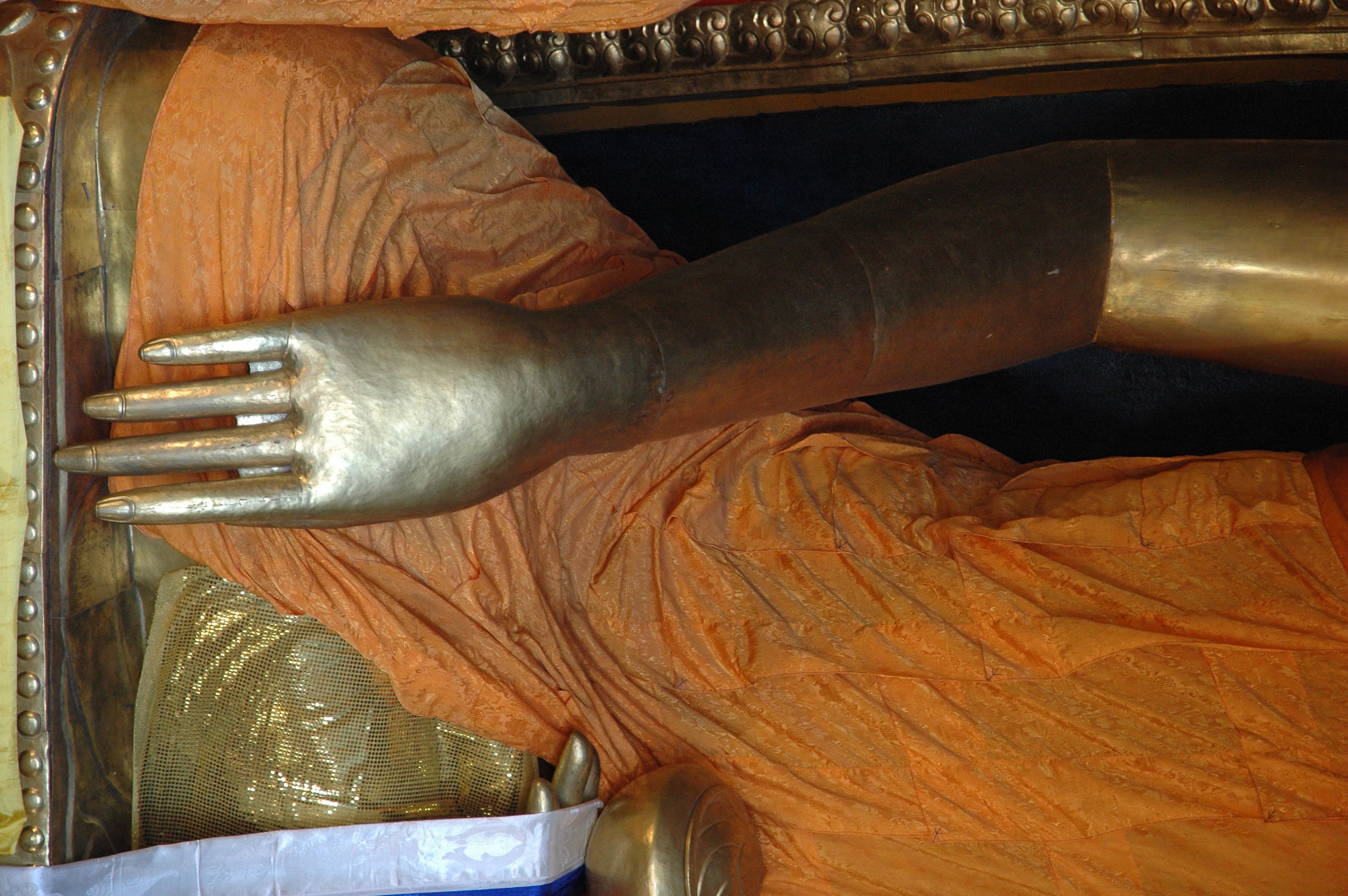
Touch the Earth Mudra

According to a Buddhist legend, on the night of Enlightenment Prince Siddhartha encountered Mara, the Lord of Death, who threw various hindrances the Buddha’s way to prevent him from attaining Supreme Enlightenment.  The final challenge was Mara’s claim that the Buddha had no right to be in the seat of Enlightenment. The Buddha then touched the earth with his right hand to call Her as a witness of his past spiritual achievements and his right to gain Enlightenment.

Continue reading “Heart of the Matter by Oxana Poberejnaia”

A Song For All Beings by Jassy Watson

At the Jennifer Berezan concert
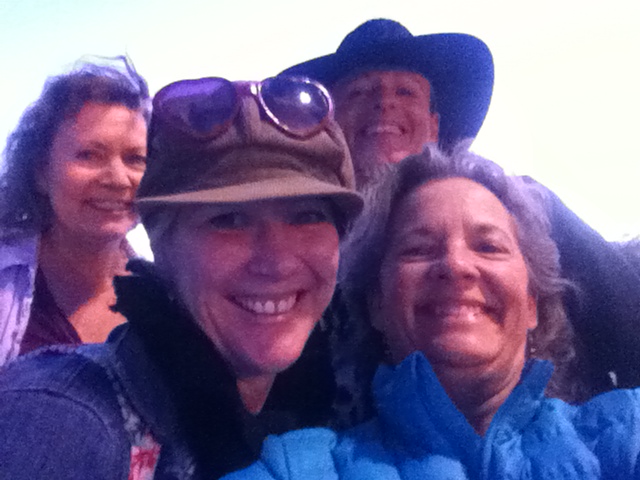
Jassy and sisters at the Jennifer Berezan concert

Last month I was blessed to have attended Jennifer Berezan and friends concert “A Song for all Beings” with Shiloh Sophia and a tribe of Cosmic Cowgirl Alumni sisters while visiting California – a long way from my Australian home. I first heard Jennifer’s music on tour with Carol Christ in Crete. I clearly remember  “Returning” being played as our bus descended the mountains on dusk one evening, and I was deeply moved. I now have a selection of her music and have played ‘A Song for all Beings’, inspired by the Buddhist practices of Lovingkindness and Compassion, nearly every day since.

To have been given the opportunity to see the show in the flesh was a wonderful gift. It was the seemingly endless recital of the ‘Prayer for the Disappearing Species’ by Luisah Teish that left the greatest impression: Leatherback Sea Turtle, Northern right whale, Javan Rhinocerous, Siberian Tiger, Mountain Gorilla, Giant Panda, Orangutan, Polar Bear, Tiger….this is just a handful. Hearing this led me on a search to find out more about animal conservation efforts. Continue reading “A Song For All Beings by Jassy Watson”

Peace of mind vs Dogma and Capitalism by Oxana Poberejnaia

oxanaWhen I said in my response to Carol P. Christ’s comment that on one level Goddess spirituality and Buddhism are about the same thing, I am afraid it could have sounded shallow. What I wanted to express is that for a Goddess adherent, the primary goal is not to go through death and be reborn. Neither is the primary goal for a Buddhist to go through death and not be reborn. I believe they both seek the same thing: to be happy in this lifetime, to be comfortable with themselves and the world, to be OK with the reality of their own death. Carol says: “For me, regeneration applies to the community, to nature, to the whole, not to the individual”.

The two faiths just lead to this result by using different theology and practices. One of the ways Buddhism installs this peace of mind is by dissolving the very notion of an “individual” and thus, their impending death becomes less of a problem. From the Goddess side of things, listen to an episode of Karen Tate’s Sex, Religion, Politics podcast Enlightenment for the Rest of Us/Shamanism with Polly Campbell, author of Imperfect Spirituality: Extraordinary Enlightenment for Ordinary People. Karen is a Goddess advocate, and what Polly was teaching could be called secular Buddhism: the same breathing techniques, being in the moment and being grateful.

Continue reading “Peace of mind vs Dogma and Capitalism by Oxana Poberejnaia”

Cultural conditions and Spiritual Subtleties by Oxana Poberejnaia

oxanaI am very grateful to Carol P. Christ and other contributors for their insightful comments and thoughtful questions to my post “Blindness of the Gals”. As I promised to Carol, here is my post that starts answering some of the issues raised in the comments.

I cannot say that it was giving birth to my daughter that first made me question my blindness to patriarchy in religion and culture. Rather, it was a gradual process of educating myself by reading works by feminist thinkers, and learning about the brave women and men who have been fighting and are still fighting for women’s rights.

Continue reading “Cultural conditions and Spiritual Subtleties by Oxana Poberejnaia”