“No, just full of hope. You got more hope than most people do. It’s a beautiful thing to have a little hope for the world, you know.”
This question was posed by Amy Jellicoe, played by Laura Dern, at the end of the HBO television series Enlightened. Unemployed, single, and in debt after she was fired for “whistle-blowing” on the corrupt activities of the corporation where she worked, Amy wondered if she had done the right thing. The answer of her ex-husband Levi brought tears to my eyes.
The notion of the earth as the body of Goddess has taken on deeper meaning for me in recent years. I have felt connected to nature all of my life. Yet often, though not always, I have related to nature in general rather than in specific ways. Some years ago, after reading Hartshorne’s essay “Do Birds Love Singing?” I stopped for the first time in the wetlands of Kalloni, Lesbos, to see the flamingoes that live in the salt pans there.
A few days ago, a German-speaking friend spoke with an Eiloff relative of mine who lives in St. Nikolaus, Saarland. My relative remembered hearing the story that Heinrich Eiloff, my 2x great-grandfather, emigrated to the United States in the mid-1800s. Since we connected, I am experiencing an incredible lightness of being.
This is the first time my two years of genealogical research have led to a “Kunta Kinte” moment, a connection with a relative in “the old country.” I have been unable to trace most of my ancestors back to the places of their birth.
My relative in St. Nikolaus was perplexed by a call from Greece from a woman claiming to represent his American relative. But when she explained that I only want to find my roots and perhaps visit relatives in St. Nikolaus, he said, “that would be very nice.” He promised to speak with other living relatives and said we should call in a month or two and he would tell us what he found.
She changes everything She touches and everything She touches changes. The world is Her body. The world is in Her and She is in the world. She surrounds us like the air we breathe. She is as close to us as our own breath. She is energy, movement, life, and change. She is the ground of freedom, creativity, sympathy, understanding, and love. In Her we live, and move, and co-create our being. She is always there for each and every one of us, particles of atoms, cells, animals, and human animals. We are precious in Her sight. She understands and remembers us with unending sympathy. She inspires us to live creatively, joyfully, and in harmony with others in the web of life. Yet choice is ours. The world that is Her body is co-created. The choices of every individual particle of an atom, every individual cell, every individual animal, every individual human animal play a part. The adventure of life on planet earth and in the universe as a whole will be enhanced or diminished by the choices we make. She hears the cries of the world, sharing our sorrows with infinite compassion. In a still, small voice, She whispers the desire of Her heart: Life is meant to be enjoyed. She sets before us life and death. We can choose life. Change is. Touch is. Everything we touch can change.
When I was an undergraduate, I was very naive and barely dating. I was not as prepared for college work as most of the other students, and I devoted myself to my studies. I had a favorite professor, and I spent a lot of time in his office talking about books and about God. This professor encouraged me to go on for a Ph.D. in his field at a time when a woman with a Ph.D. was an oddity. His belief in my intelligence gave me the courage to overcome my parents’ opposition to the idea that I would pursue a doctorate. His recommendations helped me to win Danforth and Woodrow Wilson Fellowships. I naturally assumed that this professor respected me.
This was originally posted on April 2, 2012 and updated on December 30, 2016
Annie Corliss was my great-great-grandmother. The Corliss name, also spelled Corlis, Corless, Corlies, Corlers, and Carlis, is derived from “careless” meaning someone who is “carefree” or “happy-go-lucky.”
Annie Corliss was the daughter of James and Mary Corliss, both born in Ireland. Her parents may have been tenant farmers, but given that their surname could refer to someone who doesn’t settle or own property, they may have been Irish Travellers– itinerant craft persons and traders, sometimes called tinkers because they mended cooking pots and farm implements. “Irish Travellers are a traditionally nomadic people of ethnic Irish origin, who maintain a separate language and set of traditions. … Irish Travellers have their roots in a Celtic (and possibly pre Celtic) nomadic population in Ireland.”
This was originally posted on Feb. 6, 2012 with updates added later.
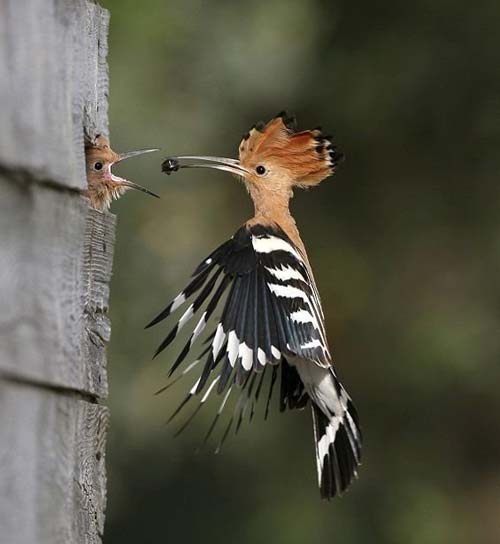
I believe that we should we care about birds because it is right to do so. If we do not, we will contribute to extinction of species, and we will leave a diminished world to those who come after us. We must not give up hope that we can save the world for birds, for other wildlife, and for our children’s children.
On February 2, 2012, the International Day for Wetlands, the Greek government signed into law a Presidental Directive mandating protection of the small wetlands of the Greek islands. There is no assurance that this law will be enforced. There are still no measures in effect to protect most of the larger wetlands in Greece, even though this is required by the European law Natura 2000, which requires all of the countries in the European Union to protect bird and wildlife habitats.
When I became a birdwatcher, I could not have told you what a wetland is. Now I know that wetlands are fragile bodies of water shallow enough for wading birds from flamingoes to sandpipers to stand in “without getting their bottoms wet” while feeding on shrimp, small fish, frogs, and other watery treats. Wetlands often take the form of pools near the sea, but they also include the deltas at river mouths and seasonally flooded fields. In the twentieth century and today many wetlands were designated “swamps” and drained.
This is my body, given for you. This is my blood, given for you.
While these words are the center of a Christian liturgy celebrating the sacrifice of Jesus as the Christ, they are more appropriately spoken of our own mothers. Your mother and my mother and all mothers, human and other than human, mammalian, avian, and reptilian, give their bodies and blood so their offspring might have life. True, mothers do not always make conscious choices to get pregnant, but almost all mothers affirm life in their willingness to nurture the young who emerge from their bodies and from their nests. Had mothers—human and other than human–not been giving their bodies and their blood from time immemorial, you and I would not be here.
This was originally posted on September 10, 2012. Moderator’s Note: While Mitt Romney is not running for office at this time, there are many politicians, of varying religions, who are and who deserve to be questioned in this manner.
Why has Mitt Romney’s Mormon faith mostly been a non-question in his political life? John Kennedy was asked if he would obey the Pope or make his own decisions, Jimmy Carter was asked how his Baptist faith would affect his Presidency, and Barack Obama was asked if he agreed with the sermons of his preacher. Why is the press afraid to ask Mitt Romney if he agrees with the patriarchal teachings of his church and if so, if this affects his views on the rights of women?




 Feminism and Religion