Drop the sense of entitlement towards life by Oxana Poberejnaia

oxanaAt the time of climate change and crises of capitalism we need to drop our sense of entitlement to comfortable life or even to life at all. Nature will not spare us just because we are humans. When the meltdown of economic and environmental systems occurs, we are all going down: humans and non-humans, women and men, spiritual or not. We have almost run out of time.

Victor Pelevin, my favourite contemporary Russian author, has a novel called “The Sacred Book of the Werewolf“. I love it in part because, like Kill Bill, it is a rare creation by a male author, which manages to capture the female warrior spirit.

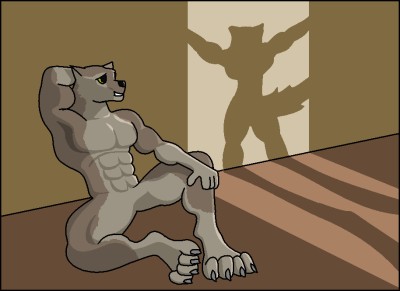
surprise___you__re_a_werewolf_by_mightywarlordIt starts with the main character, a Chinese Buddhist Were Fox who lives in present-day Moscow, consoling herself: “What else (or What the fuck) did you expect from life, A Huli?” A Huli is her name, supposedly meaning Fox A in Chinese. It is also a swear phrase in Russian, meaning “What the fuck?”

Continue reading “Drop the sense of entitlement towards life by Oxana Poberejnaia”

The Great Dragon, Níðhöggr by Deanne Quarrie

Deanne Quarrie, D.Min.I am a student of the Northern European/Old Icelandic worldview known as Seidr. What I find particularly fascinating in my studies are not the deities but rather the creatures living on the World Tree, along with the Primordial Giants who predated the gods. One such creature is Níðhöggr, the “Derision Striker.” Níðhöggr is a great dragon who lives at the base of Yggdrasil, the World Tree. She gnaws on the roots of the tree, stimulating new growth. Her home stretches from icy Niflheim, near what is called the “Roaring Kettle”, the sacred well of all the rivers of Niflheim, all the way to Dead Man’s Shore in Helheim where she devours the piled corpses.
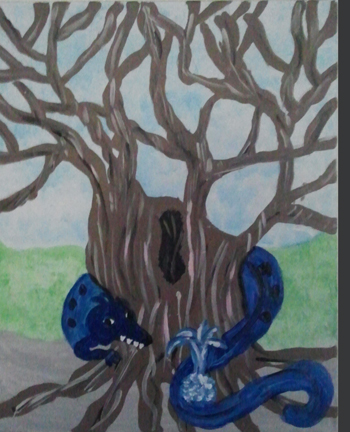
NíðhöggrNíðhöggr embodies the principle of rot, which is that all things must decay to make room for those things that are new. It is Níðhöggr’s job to clean up the mess! She is involved in acts of undoing. She reminds us of the impermanence of life and that eventually, all that is must become undone. It is important to know this so that we can be prepared for unexpected or difficult changes in our lives.

Níðhöggr is there to devour nasty things in one’s self, both physical and emotional. She is there to take away anything that no longer serves us, as long as we are willing to give it to her. She also is there to help anyone working to clean up the environment, especially from our own pollution.

Many fear Nidhogg because of the job she must do but without this part of the life cycle there would be no cycle at all. We make every effort to hide things that are unpleasant. We flush our human waste into our water supply instead of simply giving back to the Earth where we can restore it and use it as nourishment for new life. Menstrual blood is hidden away as if somehow shameful. We hide all that is ugly or that which makes us uncomfortable. And so it is too, with creatures and characters in mythology. Somehow in our dualistic world, the lines between good and bad, negative and positive are clearly drawn. So often those things we suppress, hide and call negative are actually, what save our lives. They are the things in our basic natural spirit that propel us forward into becoming better human beings.

Níðhöggr also serves us as a moral agent, reminding us that our own cruelty, especially harmful acts that undermine another’s sense of self. Bullying behavior is a good example. She reminds us that our actions always have consequences to the energy of the whole, not just our own lives.

Her work is much like that of the vulture, a bird so ugly it is beautiful. I have always thought of vultures as the great recyclers, returning what is lifeless and no longer useful back to the Earth to make ready for new growth.

She is truly all about roots, and keeping them clean. As that, she reminds us that real strength is found in one’s roots.

In her story, at the end of days, Níðhöggr chews through a root and upends the World Tree. Clearly if this were the root upon which all else depended, the mighty tree would fall. Perhaps this would represent our own failure to clean up after ourselves, both in our own lives as well as here in this place we call home, the Earth.

Deanne Quarrie. D. Min. is a Priestess of the Goddess. She is the author of five books. She is the founder of the Apple Branch where she teaches courses in Feminist Dianic Witchcraft, Northern European Witchcraft and Druidic Shamanism. She mentors those who wish to serve others in their communities. She is also an Adjunct Professor at Ocean Seminary College and is the founder of Global Goddess, a worldwide organization open to all women who honor some form of the divine feminine.

The Greek Elections and the 1% by Carol P. Christ

Alexis Tsipras of Greece & Pablo Iglesias of Spain hope to change Europe for the 99%

On January 1, 2016, 1% of the world’s population will own 50% of the world’s wealth, according to Oxfam.

On January 26, 2015 Alexis Tsipras will be in the process of forming a new anti-austerity government in Greece. Some believe this will be a new beginning not only for Greece, but for the world–if others follow the Greeks in resisting the domination of their economies by the international monetary interests that represent the 1%.

The bondholders and the international press tend to portray the Greek economic crisis as a morality play in which foolish Greeks borrowed too much and must suffer the consequences to pay back their loans. If Greece were a lazy teenager appearing on Judge Judy, tough love might be the answer.

But this simplistic equation cannot be made to work for a country of 10 million people, only some of whom colluded in taking out loans they could not pay back. Continue reading “The Greek Elections and the 1% by Carol P. Christ”

Belonging to the Land by Carol P. Christ

Carol Christ in LesbosI believe that we can restore our hope in a world that transcends race by building communities where self-esteem comes from not feeling superior to any group, but from one’s relationship to the land, to the people, to the place, wherever that may be.—bell hooks

In these words from her poignant memoir-reflection-analysis Belonging, bell hooks suggests that rather than creating identity by comparing ourselves to others, whether in the academy, in communities, or in the larger society, we would do better to root our identity in the land.

Hooks “left home” in rural Appalachia in order to pursue “higher” (why do we call it that?) education including a Ph.D. which enabled her to teach at prestigious universities in the urban north. Despite her considerable success as an academic and a black feminist, hooks suffered persistent depression in the cities where she taught. Eventually she diagnosed her dis-ease as a longing for the home she had left behind, specifically as a need to connect with the traditions of her ancestors, the mountains, and the land that had sustained them since the end of slavery. Continue reading “Belonging to the Land by Carol P. Christ”

Social Responsibility of the Artist by Jassy Watson

JassyAn artist’s place in society is ambiguous and one not often discussed. Artist’s often have difficulty claiming themselves as ‘artist’ for fear of criticism and rejection both inside and outside the art world and from within. Historically, artists have had their work labeled as narcissistic, sexist, racist, classist, elitist, indulgent, hermetic…and the list goes on.

I have been on the end of some harsh criticism. Comments made by the board of Queensland’s most prestigious art school have stayed with me for over 15 years. “Impressive folio” they said, however, using images of indigenous persons is ‘cultural appropriation’ and ‘unacceptable’. They were referring to a series of pieces I had been encouraged to create under the mentorship of a fine, accredited artist Wim De Vos. Continue reading “Social Responsibility of the Artist by Jassy Watson”

IN THE NEWS: Global Climate Change by Carol P. Christ

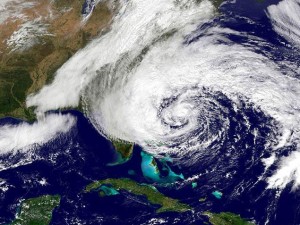
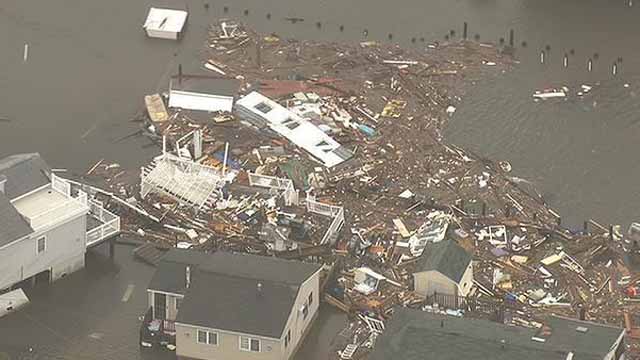
Climate change is in the news again due to the devasting storm known as Hurricane Sandy.  Scientists, activists, journalists, and politicians are telling us that Sandy is not just another “unpredictable event” brought to us by “Mother Nature.”  Will we listen this time?

Hurricane Sandy is a human-made and entirely predictable and sure to be repeated environmental consequence of the use of fossil fuels, especially oil and coal. Burning fossil fuels puts carbon dioxide into the atmosphere. This raises the global temperature in the air, land, and sea. Melting of polar ice caps is a result of the rise in global temperatures. This will cause a 3 foot or more rise in the seas, leading to the permanent flooding of the seacoasts and sea coast constructions, including homes, restaurants and shops, office buildings, and harbors and ports.

The warming of the seas is also producing extreme weather conditions, including high winds and hurricanes, along with colder winters and hotter summers.  Extreme weather conditions will lead to regular storm-related flooding of rivers and sea coasts, erosion of hills and mountains in winter, followed by catastrophic fires in summer.  Prolonged droughts and unseasonal rains will devastate farms and food production. Wildlife habitats will be destroyed. Places where people live will become too hot, too cold, too wet, and generally unfriendly to life.

Continue reading “IN THE NEWS: Global Climate Change by Carol P. Christ”

Cry The Beloved Country by Carol P. Christ

With the final day of voting in the US election less than 24 hours away, I feel a deep sadness descending on my soul. 

This election will have far-reaching consequences in relation to a number of issues I care deeply about. Among them are health care, social services, a social safety net, a graduated tax structure that taxes the rich and to a lesser extent the middle classes in order to provide services for the poor, equal pay for equal work, a woman’s right to choose, and gay rights.  On these issues there is a clear choice between the two candidates for President and the two parties. 

Democrats believe that health care is a human right, that social services should be provided for those who need them, that taxes should be paid by those who can afford to do so, that women have a right to equal pay and control of our own bodies, and that gays and lesbians should have all the rights of other citizens. Republicans believe that government does not need to provide or control health care, that social services are largely unnecessary, that it is unfair to tax the rich, that equal pay is not important if women have husbands, that the church and state should be making decisions about women’s bodies, and that homosexuality is a unnatural.  There is a clear choice on these issues. 

For this reason, I urge all of you who have not voted yet—and those of you who are considering not voting–to vote, no matter how long the lines are, no matter what intimidation you may face, and no matter what discouragement and disappointment you may be feeling.*

Nevertheless I feel like crying.

I feel sad that just about half of all Americans who intend to vote will be voting for the rich, against the poor, and against women’s—my–independence.  Continue reading “Cry The Beloved Country by Carol P. Christ”

What I Learned (and Found) Dumpster Diving, Part II, by Grace Yia-Hei Kao

“I had known that dumpster diving is subversive….What I hadn’t considered previously is its arguable feminist and biblical precedents.”


The following is a continuation of a two-part blog. Read part I for what prompted me to go dumpster diving, what freeganism is, and what three things surprised me the most about dumpstering beyond the sad and shocking reality of tremendous waste. 

My Dumpster Dive Haul

After sorting through several trash bags of edible food in the approximately 10 minutes that we spent at one site in my first ever urban scavenging trip, this is what I ultimately brought home.


(Reminder: As explained in part I, I have intentionally photoshopped out the store’s name and the use-by/best by dates).

Continue reading “What I Learned (and Found) Dumpster Diving, Part II, by Grace Yia-Hei Kao”

What I Learned (and Found) Dumpster Diving, Part I, by Grace Yia-Hei Kao

“I get that consumers generally prefer to buy produce that looks a certain way, but can the routine act of trashing whole bags of clementines, apples, or tomatoes because of a few imperfections be justified in a world that is full of hungry and malnourished people?”


Renowned climate change activist and author Bill McKibben spoke at our graduation earlier this year. Among the charges he gave to all of us in attendance (i.e., not just the graduates) was for us older folks to be willing to bear more of the possible “costs” of political activism. His reasoning was that being a 20-something with an arrest record was not a particularly good thing for young job-seekers today.

I was inspired. I thought to myself, “I have tenure, I work with colleagues who champion prophetic civil disobedience, and my class privilege would allow me to post bail if arrested.”

When chatting with a graduate that afternoon, I told him that I’d like to make good on something we once discussed in class during a session on the ethics of consumption—I’d like to go dumpster diving with him.

Mind you, I don’t fit the stereotypical urban scavenger profile (although middle class dumpster diving is on the rise). I grew up in a gated community, once brought my portable curling iron on a junior high church group camping trip, and today am more bourgeois than Bohemian. So what interest did I have in electively digging through garbage?

Continue reading “What I Learned (and Found) Dumpster Diving, Part I, by Grace Yia-Hei Kao”

Why Should We Care About Birds? By Carol P. Christ

I believe that we should we care about birds because it is right to do so.  If we do not, we will contribute to extinction of species, and we will leave a diminished world to those who come after us. We must not give up hope that we can save the world for birds, for other wildlife, and for our children’s children.

On February 2, 2012, the International Day for Wetlands, the Greek government signed into law a Presidental Directive mandating protection of the small wetlands of the Greek islands.  There is no assurance that this law will be enforced.  There are still no measures in effect to protect most of the larger wetlands in Greece, even though this is required by the European law Natura 2000, which requires all of the countries in the European Union to protect bird and wildlife habitats.

When I became a birdwatcher, I could not have told you what a wetland is.  Now I know that wetlands are fragile bodies of water shallow enough for wading birds from flamingoes to sandpipers to stand in “without getting their bottoms wet” while feeding on shrimp, small fish, frogs, and other watery treats.  Wetlands often take the form of pools near the sea, but they also include the deltas at river mouths and seasonally flooded fields.  In the twentieth century and today many wetlands were designated “swamps” and drained. Continue reading “Why Should We Care About Birds? By Carol P. Christ”