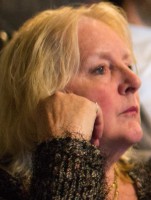
Elegy for An Old Life Gone: A Feminist Says Goodbye to Football by Marcia Mount Shoop

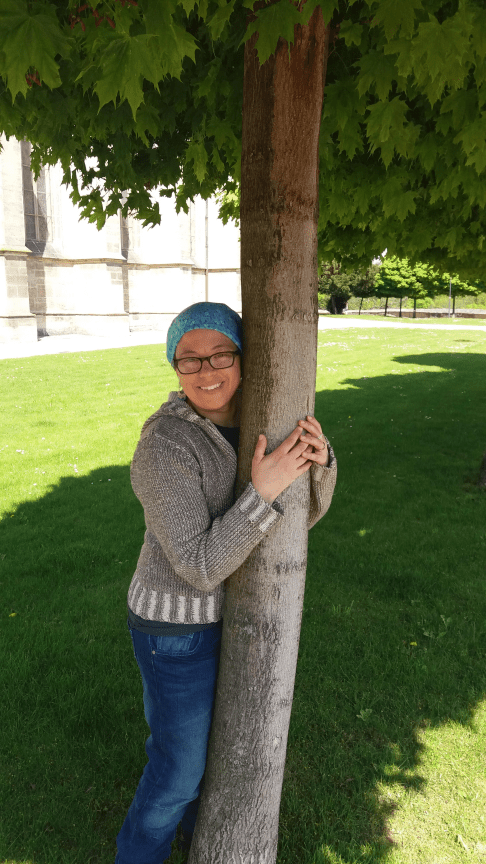
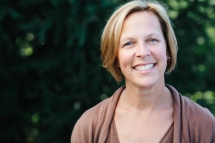
MMS Headshot 2015

I married into your strange cadence
A drumbeat that never felt natural
All consuming was your intention
But I protected pieces of myself from your designs
And more pieces retrieved me
As you showed me your true colors
You were a ruthless, untrustworthy friend
You were a harsh, seductive suitor
You gave me just enough of what
I never dreamed of
To capture my attention
My intentions, all these years
You, an adored brother of the one I love
You, a superlative dissembler
And people love you for the mythic way you tell
A story
Yours, ours, theirs
I gave into parts of you, I found some contorted freedom there istock-football
Some iteration of voice
Some impulse to make the best of you
Laying you to rest is cumbersome, Continue reading “Elegy for An Old Life Gone: A Feminist Says Goodbye to Football by Marcia Mount Shoop”

Digging My Well by Joyce Zonana

James River
The James River

I write this from the heart of a ten-day silent yoga retreat deep in central Virginia.  The peace within and without fills me as I gaze over the James River, meandering through its wide valley, thickly carpeted in green.  The late summer thrum of cicadas rises and falls around me, and in the far distance I hear what sounds like a mower circling a field.  Earlier today, during meditation, I watched a pileated woodpecker pry its meal from the hollow of an ancient oak.  Rather than silently repeating my mantra with eyes closed, I had my eyes open, and I experienced the sacred vibration in the bird’s rhythmic taps.

440px-PileatedWoodpeckerFeedingonTree
Pileated Woodpecker

Now a soft breeze touches my face, bringing with it the sweet scent of wet grass.   “There is a blessing in this gentle breeze,” I remember the opening of William Wordsworth’s Prelude, and I am reminded as well  of Elizabeth Barrett Browning’s heroine Aurora Leigh, celebrating “the body of our body, the green earth.”  Yes.  This earth is my body, and I am blessed to be in it, here, at the ashram of my guru, Swami Satchidananda, silently  practicing hatha yoga, meditating, breathing, simply being.

Continue reading “Digging My Well by Joyce Zonana”

Maiden, Mother, Crone: Ancient Tradition or New Creative Synthesis? by Carol P. Christ

Carol P. Christ by Michael Bakas high resoultionThe image of the Goddess as Maiden, Mother, Crone is widespread in contemporary Goddess Spirituality. The Triple Goddess honors three ages of women, in contrast to the wider culture that: affirms young women as sex objects while shaming them as sluts; celebrates mothers on Mother’s Day, while providing few legal and economic protections for mothers; and ignores older women.

Though Goddess feminists have created rituals for menstruation and birth, I suspect that a greater number of rituals have celebrated “croning.” The reasons for this are twofold. One is that women have time and space to reflect on the meaning of life in middle age. The other is that aging women are not honored and respected in the wider culture–creating a need for rituals that do just that. Many women I know have spoken of the empowerment they felt in their croning rituals.

On the other hand, many women I know have not been particularly interested in a croning ritual. Continue reading “Maiden, Mother, Crone: Ancient Tradition or New Creative Synthesis? by Carol P. Christ”

Khutba “A Call to Radical and Angry Women of Faith” by Vanessa Rivera de la Fuente

Sacred+Circle+home+page+image+oneI am grateful to the Interfaith Group of Feminist Theologians and Women of Faith for remembering my spiritual affiliation and giving me the opportunity to lead this service in this fully of blessings month of Ramadan and share with you a reflection in the form of a sermon or khutba. Perhaps you know that in orthodox Islam, tradition, without any theological basis, still forbids women to speak or lead rituals. So, this is a joyful occasion for me and I want to start with my usual invocation:

I thank God for this day. I praise Allah for the paths I had to walk that led me to its light and the present day. I ask the protection of the Divine that lives in the essence of everything. and I invite my female ancestors to walk with me in this journey.

A Call to Radical and Angry Women of Faith

My dear sisters, I want to invite you this evening to reflect on what it means to be a radical woman of faith, in a context of extreme upsurge of violence against women and minoritized groups we live in. What does mean being a radical woman? As we know, radical women are feared even by their activist and feminists peers. For the mainstream of society, a radical woman is a little crazy, a little witch, a little ugly, and especially, a very angry woman.

Well, they are right about anger. To be radical is to be as outraged enough to, fearlessly and tirelessly, claim and work for the total end of all kinds of oppression. You heard it right, the total end of all kinds of oppression. For women of faith, like us, who believe in social justice as the prior duty and principle of living in the creation, the current status of abuse, violence and exploitation to which a part of humankind is subjected must provoke us to rage, anger and outrage.

Aren`t you upset? Because I am. Religious patriarchy has historically exercised and endorsed, until today, violence against women and those group defined as “minority.” This religious patriarchy, composed for priests, imams, lamas and rabbis legitimize multiple forms of exclusion of women, sexism, control of our bodies, misogyny and rape culture.

This week we mourn the death of about 50 of our Latino siblings in Orlando. We have to add to this list the hate crimes against queer people in Veracruz, México, as well the slaughtering of women in thousands of gendercides that have become the standard cover of newspapers every day, and the violence against lesbians and trans women, crimes that fail to capture the visibility and solidarity of a homophobic and androcentric society.

Without denying the misogyny and homophobia existing in my community, I want to say that the specific religion of those criminals doesn´t matter, you know why? The pernicious influence of religious patriarchy extends beyond the limits of our assemblies. People blame misogyny and LGTBQphobia on religions as if this is something external to their lives. But each day, at the school, workplace and media our society reproduces all that hetero-sexist, colonial, racist, elitist violence. Heterosexuality as a political regime, validated by hegemonic religious narratives, present in all belief systems, is a source of violence and a form of terrorism itself. Continue reading “Khutba “A Call to Radical and Angry Women of Faith” by Vanessa Rivera de la Fuente”

Sisterhood is . . . (Well) Complicated by Carol P. Christ

When I wasCarol Molivos by Andrea Sarris 2 a girl, the women in the neighborhood looked out for each other, and my mother had a wide circle of women friends. My grandmother lived nearby, and she and my mother spoke on the telephone nearly every day. My mother and I had a close relationship cemented by caring together for my baby brother.

In graduate school when I was one of a few women in a male-dominated field in a hostile environment, I discovered that “sisterhood is powerful” when I joined a group of women who came together to share experiences and change our lives. Having grown up in a community in which women supported each other, I found it relatively easy to support and seek support from women in a feminist environment.

At the same time, my newfound feminist identity deepened a rift that had opened in my relationship with my mother when I decided to go to graduate school. Continue reading “Sisterhood is . . . (Well) Complicated by Carol P. Christ”

The Denied Trans-Childhood of Medusczka by Vanessa Rivera de la Fuente

13162008_266379727041652_171093612_n

One of my articles in April featured one of the “Niñas Santas Trans”(1). I have been asked often where I came across her and if there are more liken her. Well, she is part of a colorful and provocative project of mexican trans-feminist artivist and illustrator Medusczka Gorgona, who developed a series of images that mix religion Mexican popular culture and trans identities to make visible the non-conforming childhood subjugated by heterosexual discipline.

I have known Meduscka for a while. I am personally fascinated with each one of those beautiful and cheeky “Niñas Santas Trans.” Now is your chance to meet her and her “Niñitas”(2), through this short interview she agreed to have for this site. Continue reading “The Denied Trans-Childhood of Medusczka by Vanessa Rivera de la Fuente”

The Power of Love by Marcia Mount Shoop

Love does not create powerful empires or concentrations of wealth or military might. Love is not what fuels the tanks of commerce or political clout or financial success. Many would say that love slows things down, mires us in complication. Love is not the way the successful and the effective move–it’s not fast enough, it’s not ruthless enough, it’s not excellent enough.

It’s no coincidence that women have often been seen as the carriers of love–the mothers of how we are loved and how we wish to be loved. The domain of women has been traditionally seen as “behind the scenes.” Women are the nurturers, the familiar narrative goes. Women are the ones who provide a soft landing after a hard day, an understanding ear for all the stresses of the world “out there.”

The extended narrative is that women will have to become masculinized to “play the game” of public life. Women will have to learn to be “like men” in order to compete, in order to win, in order to make an impact. Underneath these narratives of nurture and impact are the contours of power in patriarchy. Imprinting women with the responsibility to love in a context where love is secondary or even tertiary to things like aggression and competition, means women will often relegate themselves to the margins of public power. Not because we think we should be powerless, but because that’s where we often feel the most at home. And sometimes ceding public power can feel like the price women pay to truly love–to love ourselves, to love who we love, and to love the world around us. The contours of power in patriarchy can distort not just women’s lives, but everyone’s lives in ways that carry the weight of this distortion of love.

These gendered expectations of how and where love gets to live and move and breathe in this world distorts the power that love brings with it. After almost ten years of life working from the margins of institutions (church and academy) as an independent scholar and “freelance theologian” I have felt the push back about love as a respectable methodology and mode of operation enough to recognize it quickly.

Institutions often answer my invitation to a loving attentiveness to bodies, particularly to traumatized bodies, with legalities and anxieties: the language of “boundaries,” “reporting laws,” and “misconduct” can shut down work or conversation. The patriarchal hyper-sexualizing of love makes it a no-no or at least something to be feared as a slippery slope in institutional life. In ecclesial settings, where love is supposed to define our mode of operation, these conversations rapidly find their way to sin and human failure. Love is “in spite of” who people are, not because of who they are. Love is impossible without lots of grace and patience and overlooking the problematic things that people do. Love is, if we’re honest with ourselves in these contexts, a real chore in this iteration of its nature. And people default into feeling like a burden, not wanting to bother anyone with their problems, and feeling ashamed of who they really are.

Love is about trust: trusting a moment, trusting a space, trusting each other. And love struggles in contexts where spaces, moments, and people are not trustworthy. So many with whom I work in consulting, retreats, spiritual direction, and teaching struggle to trust and to love. They struggle to trust and love anything because they have encountered so many untrustworthy spaces along the way. The competitive intensity of doing good work can translate into a diminishing and demeaning cycle of “never enough” and the need to protect and defend.

It is amazing to witness what happens to people when they realize they can trust a space–even if it is just a temporary space, a pop-up beloved community where you can really be yourself and won’t be judged or scrutinized. The conventional standards of excellence might suggest such settings work from the lowest common denominator and the generated “product” will suffer from a lack of competition or lack of scrutiny. On the contrary, I see over and over again the beautiful things people can be and do and say and feel when they are loved and accepted. Art, poetry, unique insights, oratorical wisdom, powerful music, deep healing, a sense of freedom, clarity, creativity, peace, support, friendship, and good work all emerge in startling and potent ways when people encounter trustworthy love.

The academy and the church define themselves as places where people can learn and grow and find community. These institutions were formed by patriarchy, but are they doomed to reiterate the diminishing returns of patriarchy forever? Their aspiration is to help people find their way in the world in the most constructive ways they can. And in the world today, people need trustworthy love to truly find the music of their soul. The power of love can transform the spaces of enlightenment and ecclesia into truly collaborative, supportive, loving places of work. Far from screeching to a halt, these spaces might finally hit their stride.

Marcia Mount Shoop is an author, theologian, and minister. Her newest book, released MMS Headshot 2015from Cascade Books in October 2015, is A Body Broken, A Body Betrayed: Race, Memory, and Eucharist in White-Dominant Churches, co-authored with Mary McClintock Fulkerson. Marcia is also the author of Let the Bones Dance: Embodiment and the Body of Christ (WJKP, 2010) and Touchdowns for Jesus and Other Signs of Apocalypse: Lifting the Veil on Big-Time Sports (Cascade, 2014).  Find out more at www.marciamountshoop.com

Islamic Feminism and Heterosexual Dogma by Vanessa Rivera de la Fuente

12065675_170600583286234_3734458453482361154_n
Santa Niña Marica

Reza Aslan says in his book “No God But God” that religions are myths. He explains that “religion” is a set of stories fluctuating between truth and fantasy that serve to explain and answer questions about human fate. Taking this idea as base, I think “religion” is a historical product that enables other mythical stories and must be addressed critically about its truth and meanings.

Patriarchal religious discourses, currently mainstream, have a common element that often is left outside the reading of equality and is part of the myth: Heterosexual belief.

Feminisms in Religions aim at challenging patriarchal readings. However, questioning the nature of God is not enough if we don´t challenge heterosexual belief that may or may not include the idea of a God Father/Male. In Islam, Allah has no sex or gender, is not masculine nor feminine. However, the heterosexual belief exists in the Islamic religious narrative. Continue reading “Islamic Feminism and Heterosexual Dogma by Vanessa Rivera de la Fuente”

Feminism and “The Force:” Thinking Through “Star Wars: The Force Awakens” by Sara Frykenberg

Kylo Ren (Adam Driver), on the other hand, works to resist the call of the “light.” The Force Awakens puts emphasis on the villain’s perspective; and my question is, is this because many of us who are in the audience need to see how we are also like this villain?

Sara FrykenbergSci-fi fan that I am, I would feel remiss if I failed to discuss Star Wars: The Force Awakens here on feminismandreligion.com (warning, spoilers ahead). Yet, despite the fact that I have seen the movie two times since its release and the many, many discussions of this movie already out there, I have yet to form some conclusion as to the relationship between feminism or religion, and Star Wars.

Latest-The-Force-Awakens-Trailer-Description
Image sourced from here.

On the one hand, The Force Awakens is just like the other Star Wars movies. ‘Good guys’ fight the ‘bad guys,’ a hero/ine emerges and some characters are tragically lost, either by choosing the wrong side or when killed by emerging villains. Interesting iterations of “the Hero’s Journey,” these movies fulfill standard mythic tropes—mythic tropes that also tend reinforce our existent social structures and ideals… so, often kyriarchal ideals of power. Continue reading “Feminism and “The Force:” Thinking Through “Star Wars: The Force Awakens” by Sara Frykenberg”

Birth and Community by Sara Frykenberg

My daughter Hazel was born on a November afternoon. Just over two weeks old, my own individual role as mother is too young to comment on much here—I am thinking too much and too little about what it means, adjusting to my little one’s schedule, feeling like my boobs are going to fall off from my breastfeeding efforts, and loving in a new way. (It’s amazing how excited one can get about ‘poopy’ after baby has been struggling for days, isn’t it?)

But when I am lying in my bed, sometimes at night, I find myself amazed and grateful for the community it took to bring my daughter into being. I was pregnant but I also had a pregnant community. I labored with community; and what I am learning, is that my motherhood is also a function of community—something, for me, that would not have been possible without the many, many people who supported Hazel and me through the process of new birth. Continue reading “Birth and Community by Sara Frykenberg”